US Air Force reverse-engineers and 3D prints F-35 parts to beat supplier delays

4 min read
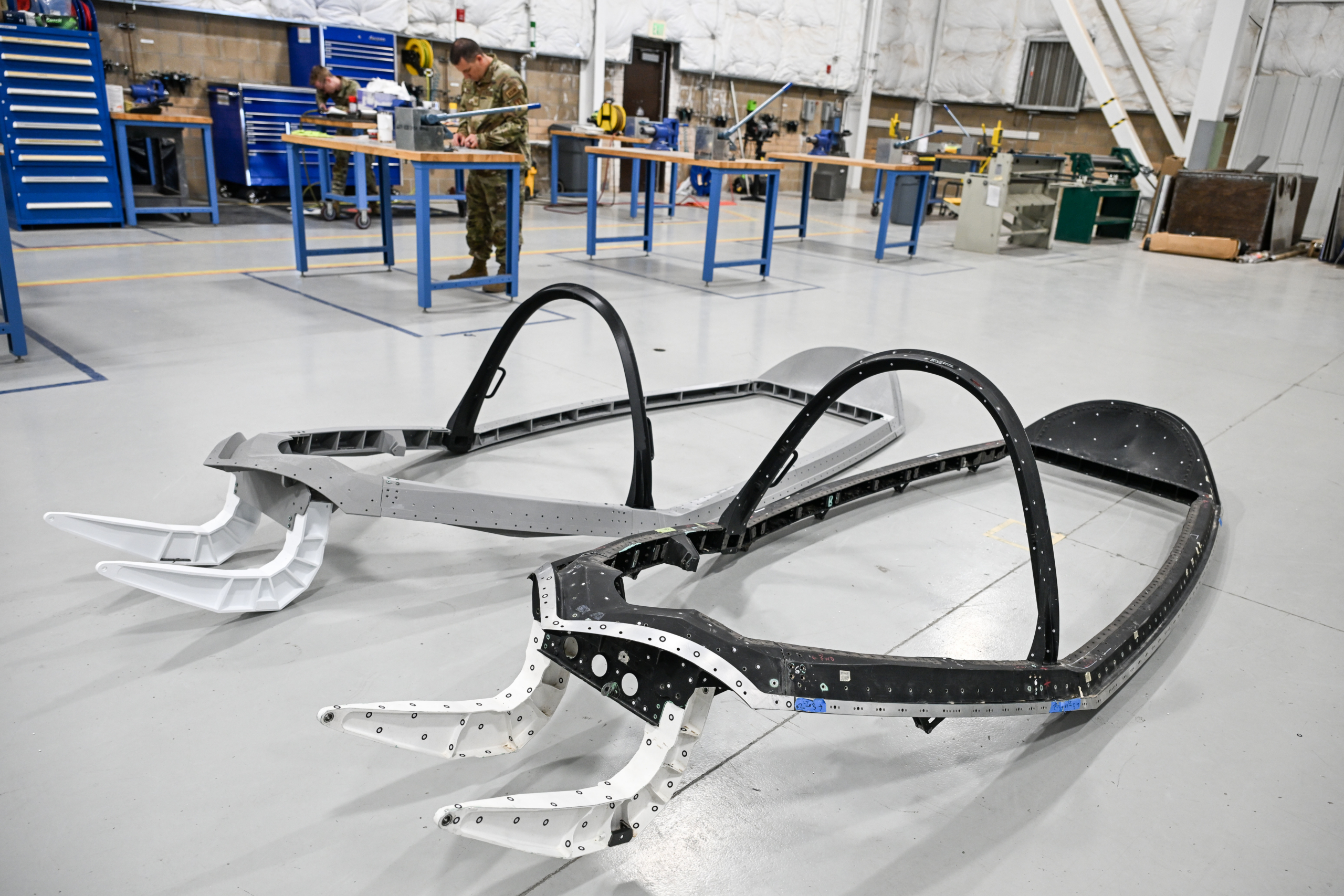

The US Air Force has reported that its RAPID Lab has successfully reverse-engineered and 3D printed F-35 canopy frames. It adds that this is just the start of bringing component manufacturing in-house after years of tussling with Lockheed over intellectual property rights.
US Air Force bypasses Lockheed Martin to 3D print F-35 canopy
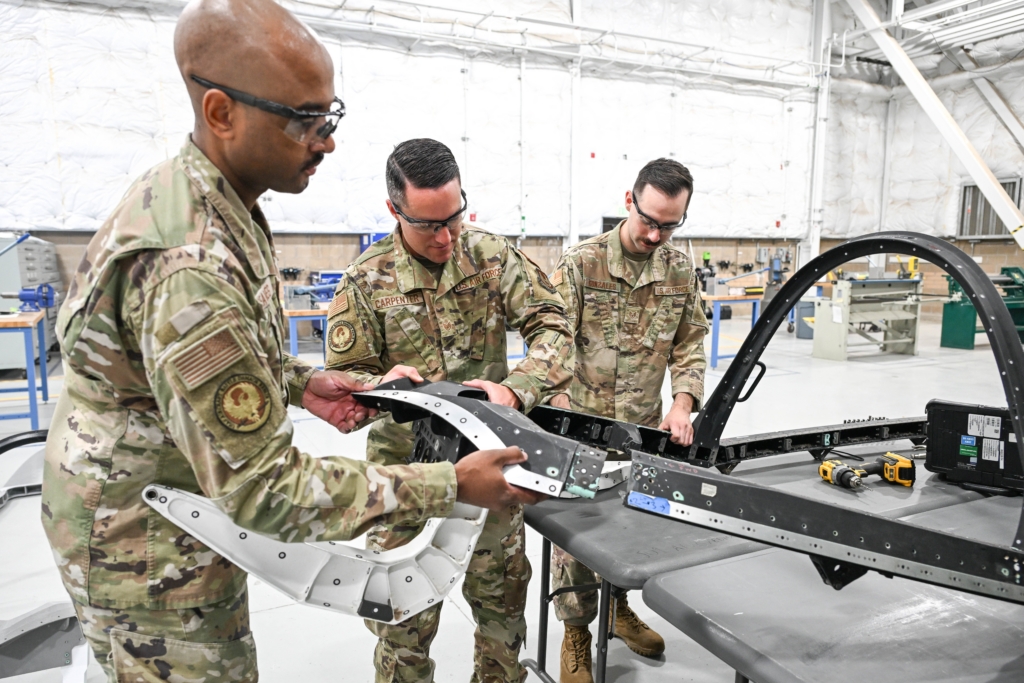
Yesterday, the F-35 Lightning II Joint Program Office (JPO) posted on X (formerly Twitter), “No parts? No problem! The 809th Maintenance Support Squadron (MSS)’s RAPID Lab at Hill Air Force Base, Utah, used 3D printing to reverse-engineer F-35 Lightning II canopy frames, closing a critical training gap and bypassing supplier delays.”
No parts? No problem! 🛠️✈️
— F-35 Lightning II Joint Program Office (@theF35JPO) June 15, 2026
The 809th Maintenance Support Squadron (MSS)’s RAPID Lab at Hill Air Force Base, Utah, used 3D printing to reverse-engineer F-35 Lightning II canopy frames, closing a critical training gap and bypassing supplier delays.
This in-house innovation… pic.twitter.com/t81xye3zGD
It added, “This in-house innovation accelerates timelines, cuts costs, and boosts readiness for the F-35 and our warfighters.”
The printing of the canopy is presented as a positive step to addressing supplier delays, cutting costs, speeding up timelines, and improving readiness.
In a full-length statement on the canopy, the US Air Force said, “By bringing the work in‑house, RAPID Lab significantly accelerated delivery timelines and increased training throughput.”
Lockheed vs Air Force F-35 intellectual property battle
While a positive post, the post was a veiled reference to a deep, long-running acquisition battle over Intellectual Property (IP) and technical data rights between the Department of Defence (DoD) and the prime defence contractor, Lockheed Martin, over the F-35.
The issue goes back to when the contract was awarded to Lockheed Martin in 2001. At that time, the Pentagon operated with a different acquisition philosophy, emphasising outsourcing long-term sustainment to the defence contractor to save the government on overhead costs.
These contracts did not explicitly secure the proprietary rights to the aircraft’s technical data. This created a “vendor lock” where Lockheed Martin owns the proprietary data rights, and the US military can’t easily give blueprints to a third-party manufacturer or military depot to build or repair spare parts.
In order to avoid paying Lockheed’s premium rates and boost readiness rates, the military has, on occasion, resorted to reverse engineering parts of the aircraft. The problem has been repeatedly flagged by Government Accountability Office (GAO) reports.
Pulling Gs. 🚀
— F-35 Lightning II Joint Program Office (@theF35JPO) June 10, 2026
An F-35B Lightning II, assigned to the U.S. Marine Corps F-35B Demo Team, executes a sharp turn during an aerial demonstration at the Oregon International Air Show at Hillsboro. pic.twitter.com/9pfH4Jp9jV
There have been legal battles over this, with the military wanting access to data to build out the supply chain independently, while Lockheed has fought to protect its control and monetise the programme, including with the Joint Simulation Environment (JSE).
Inside Defense reported in June 2026 that the Air Force will purchase some Intellectual Property rights of some F-35 systems.
Get the latest aerospace defence news here on AGN.
Air Force ‘just getting started’ on in-housing F-35
Former F-35 engineer @the_engi_nerd noted, “The government wants access to the code to get the Joint Simulation Environment working; LM didn’t like this idea. Ultimately, the lawsuit was settled, terms undisclosed.”
They then added, “I don’t blame the JPO for celebrating this. Just know there’s a definite ‘f*** you, Lockheed’ context.”
Notably, in its 650-word news release about the 3D-printed canopy, the Air Force did not reference Lockheed Martin once.
Without explicitly stating it, the JPO appears to be suggesting that if Lockheed won’t hand over the blueprints, then they can reverse-engineer many of them.
The Air Force reported, “The initiative also generated substantial cost and man‑hour savings through printed tooling, reduced procurement, lower repair cycle times, and directly support the F-35 Enterprise’s war on cost initiatives.”

Reinforcing this point, the Air Force says its RAPID Lab is identifying small, high-impact aircraft components that can be safely printed for ground use or installed on the aircraft when approved by a “cognizant engineer.”
The plan is to scale production capacity and expand outreach, so more organisations can bring projects in-house. Rulon Stitzer, RAPID Labs Flight Chief, said: “We’re just getting started.”
Meanwhile, the US Air Force is not the only air force working to break Lockheed’s control over the F-35.
In February 2026, the Dutch State Secretary for Defense suggested it was possible to ‘jailbreak’ the F-35’s computer brain, like a cellphone, to allow it to accept third-party software updates.
BIG: Dutch Defence Minister Gijs Tuinman hints that software independence is possible for F-35 jets.
— Clash Report (@clashreport) February 15, 2026
He literally said you can “jailbreak” an F-35.
When asked if Europe can modify it without US approval:
“That’s not the point… we’ll see whether the Americans will show… pic.twitter.com/f11cGvtYsO
However, this was in the context of a period of strained relations with Washington and was presented as a fall-back in case the US were to ever cut off support for the F-35s.
Featured Image: US Air Force
Sign up for our newsletter and get our latest content in your inbox.


More from


October 17, 20264 min read