Pilot drug and alcohol testing rules explained
5 min read
Air India has introduced mandatory drug and alcohol testing for all of its pilots after one of its crew members reportedly tested positive for cannabis during screening following an in-flight incident.
An internal memo seen by Reuters said the new testing regime at the airline would pick up substances including banned medications and would be carried out at the airline’s training centre, at briefing centres after flights, and at other locations to be determined by the company.
Existing safety rules in India require airlines to test at least 10% of pilots at random, but Air India and its subsidiary Air India Express plan to go much further.

It follows an incident on 4 August when an Air India A320neo operating from Phuket to Delhi unexpectedly descended by around 300 feet while in the cruise. Several passengers were injured in the incident, and the captain of the aircraft later tested positive for cannabis.
Here, Aerospace Global News looks at what the testing requirements around the world are, and the rules pilots must follow.
What are the rules for pilot drug testing in the UK?
Drug testing rules for pilots differ slightly depending on the jurisdiction.
In the UK, drugs and alcohol screening forms part of the initial Class 1 medical examination which pilots must pass in order to be deemed medically fit to hold a licence.
Initial screening normally involves breath alcohol and saliva swab testing, with additional drug testing based on clinical indication or a pilot’s declaration.
Following this, confirmatory testing can be carried out using saliva, urine, blood or hair, and positive tests are referred to the CAA.
Further blood or hair testing can be conducted to assess whether there are any longer-term consumption habits.
From 1 February 2022, the UK began carrying out alcohol testing on flight crew and cabin crew members. This is done in accordance with Article 4 of UK Regulation (EU) No.965/2012 (the Air Operations Regulation) as retained (and amended in UK domestic law) under the European Union (Withdrawal) Act 2018.
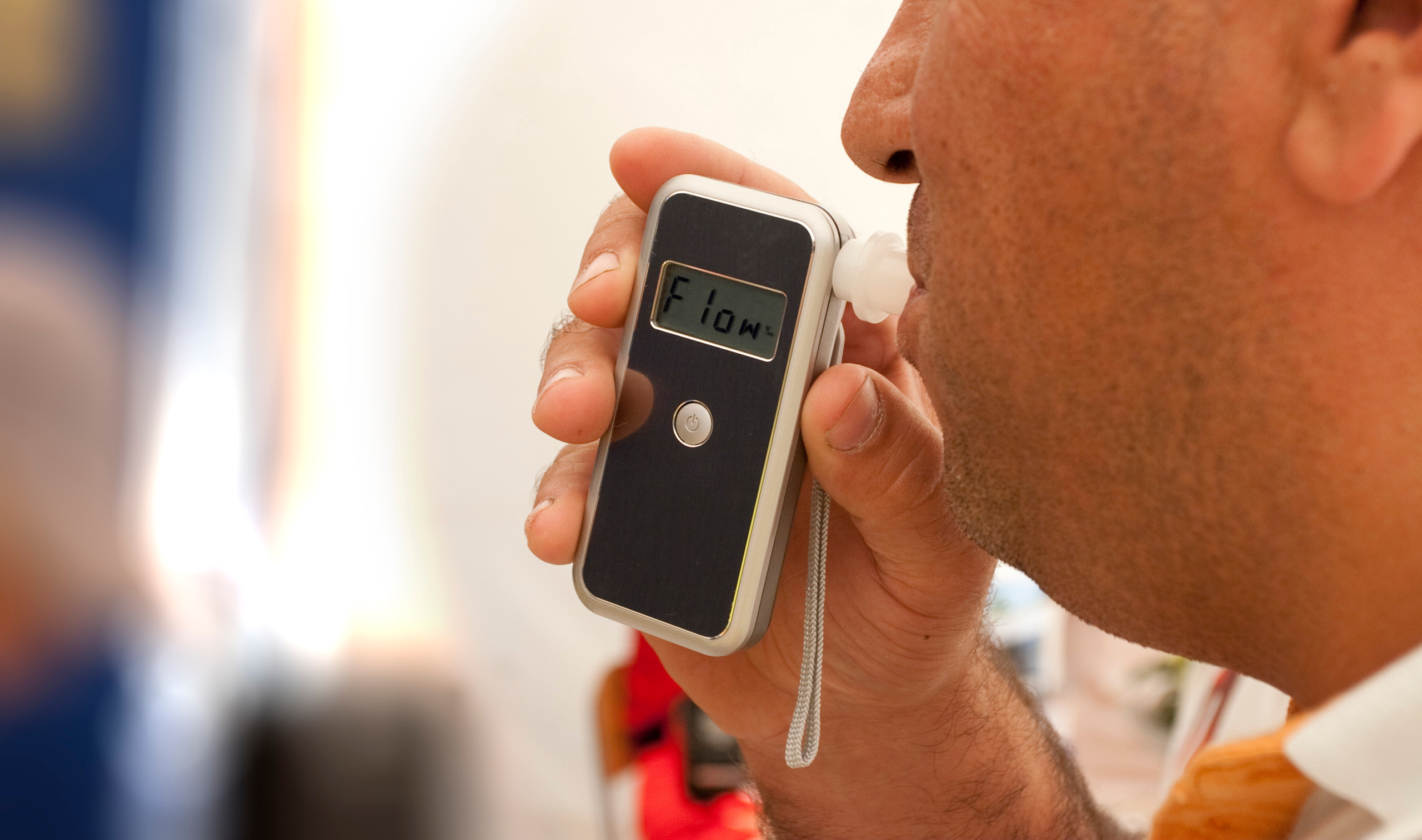
Alcohol tests are carried out by ramp inspectors, using an approved breath alcohol analyser.
The breath alcohol concentration (BrAC), measured during the alcohol test, must not exceed a level equivalent to 0.2 grams of blood alcohol concentration (BAC) per litre of blood.
Any crew member who tests positive is immediately stopped from operating the flight. Police are then notified, as is the licensing authority.
Were a crew member to refuse to take an alcohol test, this would be treated in a similar way to the pilot having failed the test.
The UK CAA requires alcohol testing to involve an initial test followed by a confirmation test if the first result is positive.
The confirmation test must be conducted as soon as possible, after a waiting period of at least 15 minutes and normally no longer than 30 minutes. During this period, the crew member cannot eat.
If the confirmation test is also positive, the crew member must receive written confirmation detailing the date and time of testing, the equipment used and the result recorded.
Is the testing regime the same in continental Europe?
The testing process is similar in countries under the remit of EASA.
Testing is risk-based, with authorities prioritising operators where existing alcohol and psychoactive-substance testing programmes are considered less robust.
Flight crew are generally prioritised over cabin crew, and selection is random in order to be deemed non-discriminatory.
The initial test is normally carried out using a breathalyser, with inspectors required to conduct it discreetly.
A result above 0.2g of alcohol per litre of blood, or the applicable national limit if lower, triggers a confirmation test.
As in the UK, this must take place after at least 15 minutes, but normally within 30 minutes, during which the crew member must not eat or drink.
If the confirmation test is negative, the overall result is treated as negative, and the crew member can resume duties.
If it remains positive, the crew member cannot continue flying. Inspectors must coordinate corrective action with the airline, which could involve replacing the crew member, delaying or cancelling the flight, or imposing other restrictions.
Refusing a test is treated in the same way as a positive result, with the crew member removed from duty.
A confirmed positive result is also notified to the relevant national authorities, although personal information is kept out of the standard ramp-inspection report.
What about testing in the US?
The US system is much more prescriptive. FAA 14 CFR Part 120 establishes drug and alcohol testing requirements for operators and other employees in safety-critical roles.
The FAA says the programme includes pre-employment and subsequent random testing.
The FAA system is considerably more comprehensive than the EASA ramp-inspection approach. In the US, pilots and other safety-sensitive aviation employees are subject to federally mandated drug and alcohol testing, including random, post-accident, reasonable-suspicion, return-to-duty and follow-up tests.
Random alcohol tests must be unannounced.
For alcohol, a concentration of 0.04 or higher prohibits an employee from performing safety-sensitive duties.
A result between 0.02 and 0.04 also triggers removal from safety-sensitive work, although the employee may return after a retest below 0.02 or at the next duty period after at least eight hours.
Drug taking carries potentially severe consequences. A verified positive result immediately removes a pilot from safety-critical duties, while a second positive can result in permanent disqualification.
Refusing a required test is also treated seriously and results in removal from safety-sensitive work.
Pilots who violate the rules must undergo a formal return-to-duty process involving a Substance Abuse Professional (SAP), education or treatment, a negative return-to-work test and unannounced follow-up testing.
Pilots are also subject to reporting requirements, with drug and alcohol testing information potentially entered into the FAA’s Pilot Records Database, where it can remain for the life of the pilot.