


India developing heavy-lift autonomous drone to carry 200 kg payloads

5 min read
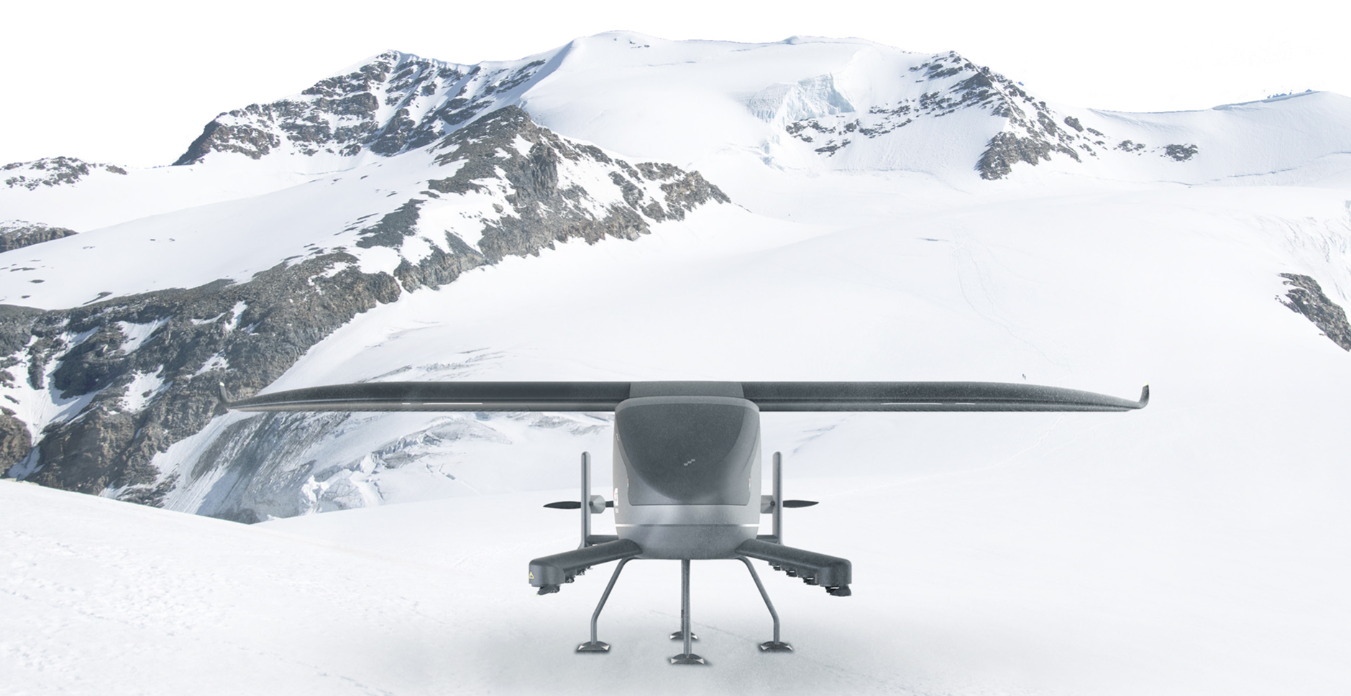
India is developing a heavy-lift autonomous aircraft designed to carry supplies to remote military positions and other difficult-to-reach locations, with a payload capacity of up to 200 kg and a targeted range of 200 km.
The aircraft, named YETI, will combine vertical take-off and landing with fixed-wing flight, allowing it to operate from small, unprepared landing areas without requiring a runway. It is being developed for demanding environments, including high-altitude regions, deserts and coastal areas.
The Indian government has now committed INR1,510 million ($16 million) in debt financing to Mumbai-based ideaForge Technology to advance the aircraft’s development. The funding, approved through the Technology Development Board under the Department of Science and Technology, will support an INR 3,020 million (approximately $32 million) programme.
Announcing the agreement on 14 October, the government said the project aims to advance YETI from Technology Readiness Level 4 to Level 9, taking it from laboratory-validated technology towards a system proven in operational conditions.le for completing development or entering production.
What is the YETI heavy-lift drone?
YETI is a hybrid vertical take-off and landing (VTOL) unmanned aircraft intended for autonomous logistics missions.
Unlike conventional multirotor drones, which rely on powered rotors throughout a flight, the hybrid design allows YETI to transition to fixed-wing flight after taking off vertically. This arrangement is intended to combine the flexibility of a helicopter with the greater range potential of a winged aircraft.
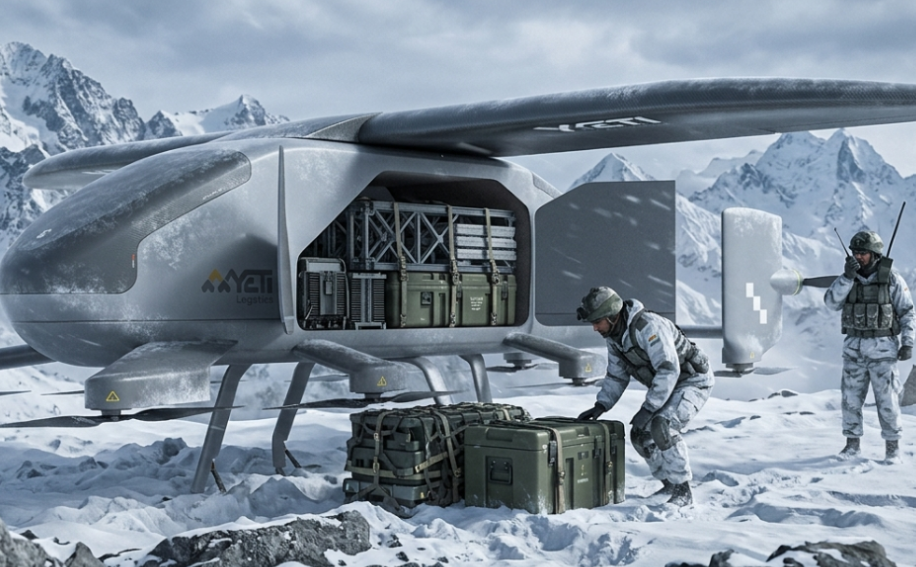
The platform is designed to operate at altitudes of up to 6,500 metres above mean sea level, making high-altitude logistics one of its principal intended applications. It is also being developed for operations in deserts, coastal environments and other locations where weather, terrain or inadequate transport infrastructure can restrict access.
According to the government, YETI is intended to take off and land within an area measuring approximately 15 metres by 15 metres. That could allow it to operate from relatively small landing sites without requiring a prepared runway.
Its proposed design incorporates redundant propulsion and power systems to reduce the risk of a single component failure disabling the aircraft.
Other planned capabilities include navigation without access to Global Navigation Satellite System (GNSS) signals, communications over distances of up to 200 km, swarm operations and containerised transportation to simplify deployment.
These remain development objectives rather than capabilities confirmed through completed operational testing.
Payload and range depend on mission configuration
Although the government’s announcement cites a maximum payload of 200 kg and a targeted range of 200 km, ideaForge’s earlier investor presentation provides a more detailed picture of the proposed aircraft’s performance.
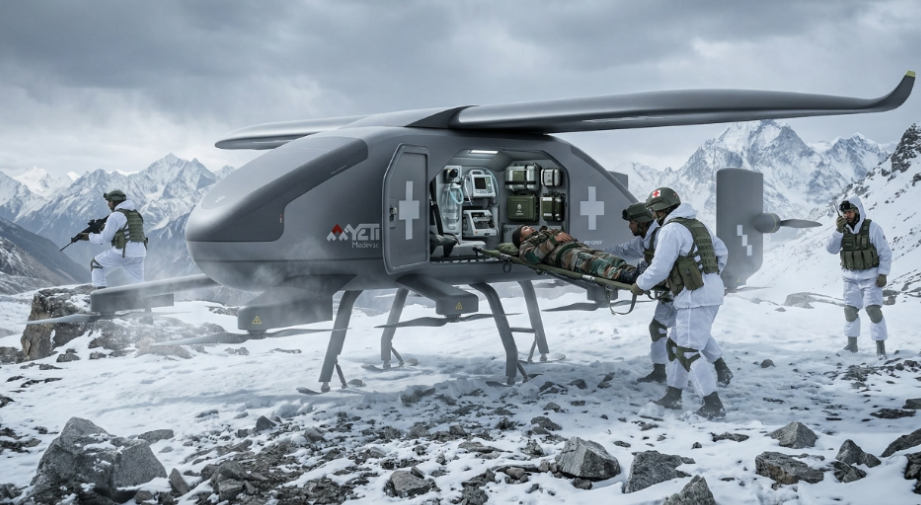
In a June 2026 presentation, the company described YETI as a logistics platform capable of operating in different configurations.
Its proposed medical evacuation and tactical transport configurations were listed with a 200 kg payload and a range of 50 km.
For cargo delivery, ideaForge indicated a payload range of 50–200 kg, with corresponding flight ranges of approximately 200–50 km.
In other words, the aircraft’s longest advertised range is associated with a lighter payload, while carrying the maximum load would reduce its operating range. That’s important for military logistics, where the weight of supplies, distance to be covered and availability of suitable landing areas determine how an aircraft can be used.
The company has identified cargo transport, medical evacuation and tactical transport among YETI’s intended applications.
For India’s armed forces, the concept could be particularly relevant to supplying remote military positions in mountainous regions, where road transport can be slow and helicopters may be needed for relatively small loads.
The aircraft could also have civilian applications in disaster relief and the delivery of essential supplies to isolated communities.
However, the government has not announced a military procurement contract for YETI.
Development programme aims for operational readiness
TRL 4 generally refers to technology that has been validated in a laboratory environment. TRL 9 represents a system proven in its intended operational environment.
The programme will therefore involve further engineering, integration, testing and validation before the aircraft can be considered ready for deployment.

That process will need to demonstrate not only whether YETI can carry the intended payloads and fly the required distances, but also whether its autonomous systems, communications and propulsion architecture can operate reliably under demanding conditions.
The proposed GNSS-denied navigation capability is especially relevant to defence applications, where satellite navigation signals may be unavailable or deliberately disrupted.
The government said development would proceed subject to applicable technical, safety and regulatory requirements.
Rajesh Kumar Pathak, Secretary of the Technology Development Board, said the project reflected the need for sustained investment in advanced autonomous systems.
“Indigenous heavy-lift aerial platforms can play an important role in improving access to remote and difficult-to-reach locations,” he said.
“Through the RDI Fund, TDB is supporting technology-intensive projects that require sustained investment to progress from advanced development towards deployment,” Pathak added.
ideaForge expands beyond surveillance drones
The YETI programme represents a move into heavier unmanned aircraft for ideaForge, which has established its business around smaller drones used for surveillance, mapping and other defence and civilian missions.
Founded by engineers from the Indian Institute of Technology Bombay, the company has developed several unmanned aircraft systems, including the SWITCH tactical UAV.
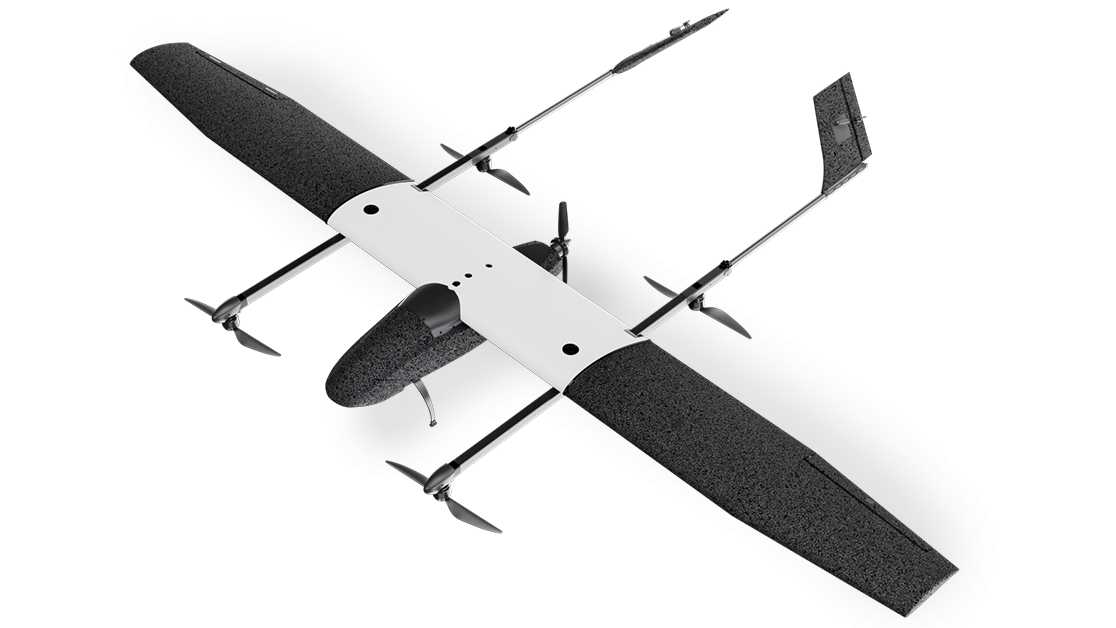
SWITCH is designed for intelligence, surveillance and reconnaissance missions, particularly in demanding operating environments.
The company has also supplied drones for civilian surveying and mapping applications, including government land-record programmes.
YETI would extend that portfolio from aircraft primarily designed to collect information to one intended to physically transport cargo.
Ankit Mehta, ideaForge’s co-founder and chief executive, described the programme as an effort to address difficult logistics requirements faced by India’s military and civilian operators.
“Our armed forces and our logistics networks face the daily reality of reaching where roads end, and weather doesn’t cooperate,” Mehta said.
“YETI is our answer to that challenge, which is engineered not just to fly, but to deliver, reliably and repeatably, in the conditions that define the toughest operational environments,” Mehta said.
The government financing comes as India seeks to strengthen domestic development of unmanned aircraft and reduce dependence on imported technologies.
For ideaForge, the immediate challenge will be to demonstrate that YETI can deliver its proposed performance across different payloads, distances and operating environments.
The agreement also provides support for that development work, but the aircraft must still complete the testing and validation needed to progress from its current technology readiness level to operational service.
Sign up for our newsletter and get our latest content in your inbox.


More from


October 13, 202612 min read





