


Snowbirds leave Toronto for final time as CT-114 Tutor farewell tour enters last six stops

6 min read
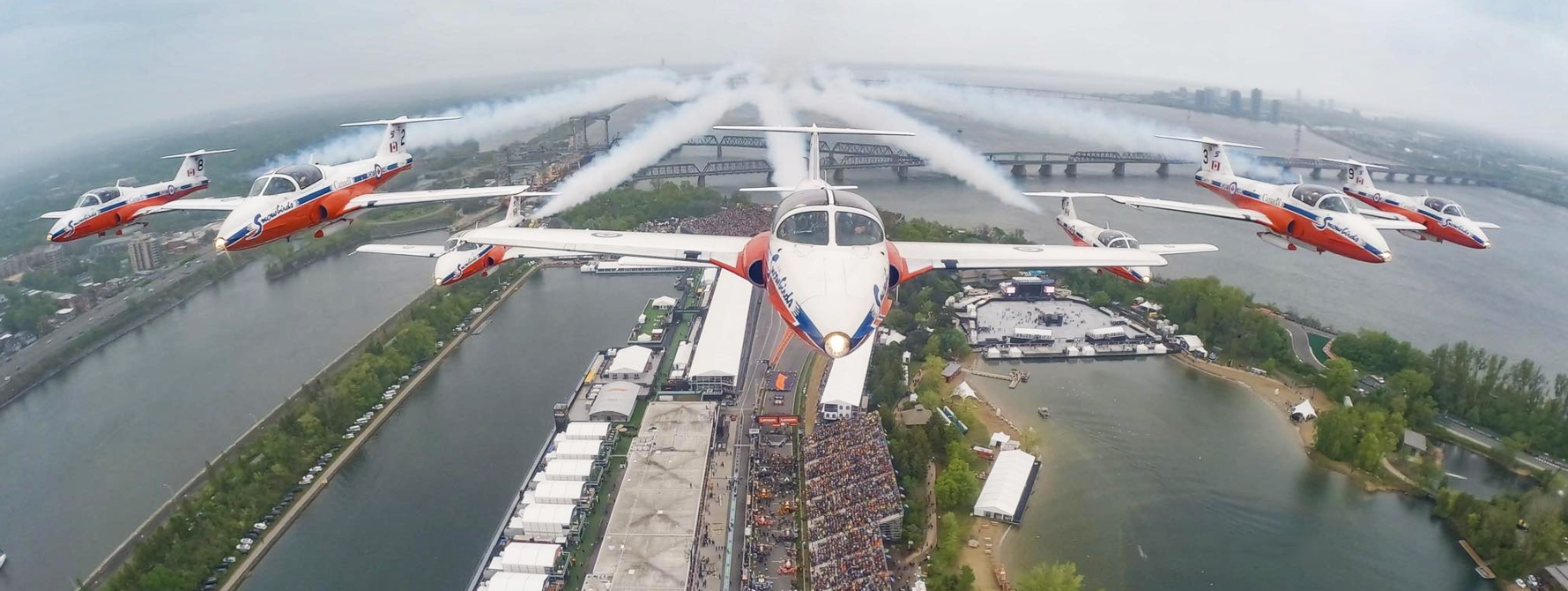
Canada’s Snowbirds have flown their CT-114 Tutors over Toronto for the final time, saluting the CN Tower before beginning the last six engagements of the aircraft’s 55th and final display season.
The Royal Canadian Air Force’s 431 Air Demonstration Squadron completed its final Toronto airshow performances over the Labour Day weekend, before returning to the city on 8 September for a special flypast marking the CN Tower’s 50th anniversary.
The Royal Canadian Air Force’s 431 Air Demonstration Squadron completed its final Toronto airshow performances over the Labour Day weekend, before returning to the city on 8 September for a special flypast marking the CN Tower’s 50th anniversary.
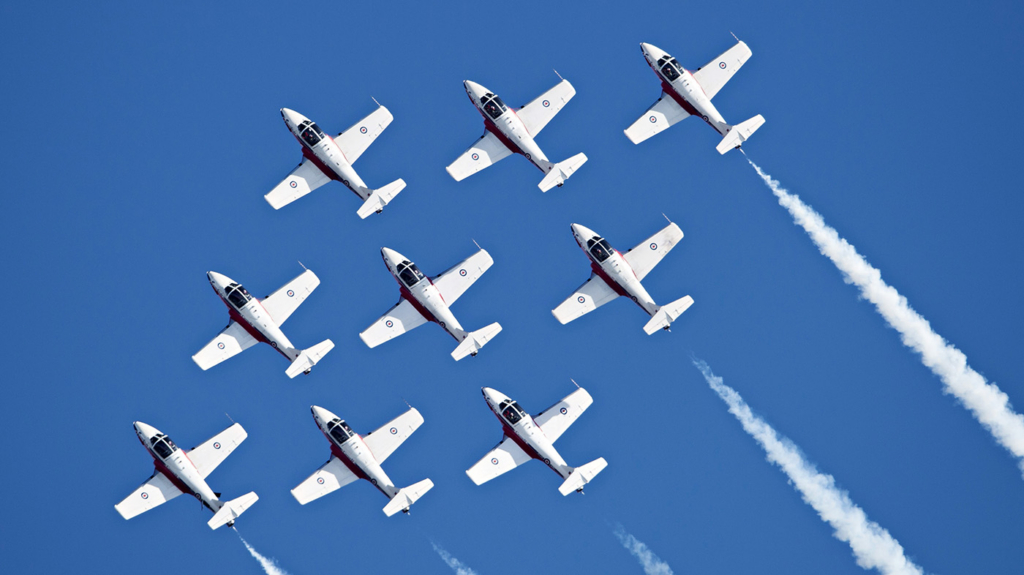
The Royal Canadian Air Force’s 431 Air Demonstration Squadron flew its final aerobatic performances over Toronto’s waterfront during the Canadian International Air Show over the Labour Day weekend.
CBC News first reported that the event would mark the team’s final Toronto appearance with the Tutor before the Snowbirds enter a multi-year hiatus awaiting their replacement aircraft.
Toronto was an important stop in the Snowbirds’ farewell season, but it was not the Tutor’s final display or flight. Six scheduled appearances remain before the aircraft is retired at the end of 2026.
The team will fly at Kapuskasing and Spencerville in Ontario, Gatineau in Quebec and two Californian airshows at Huntington Beach and Sacramento. The Tutor’s final scheduled appearance will come at the 113th Grey Cup in Calgary on 15 November.
After that, one of the world’s most recognisable military display teams will begin a multi-year absence while the RCAF prepares its replacement aircraft.
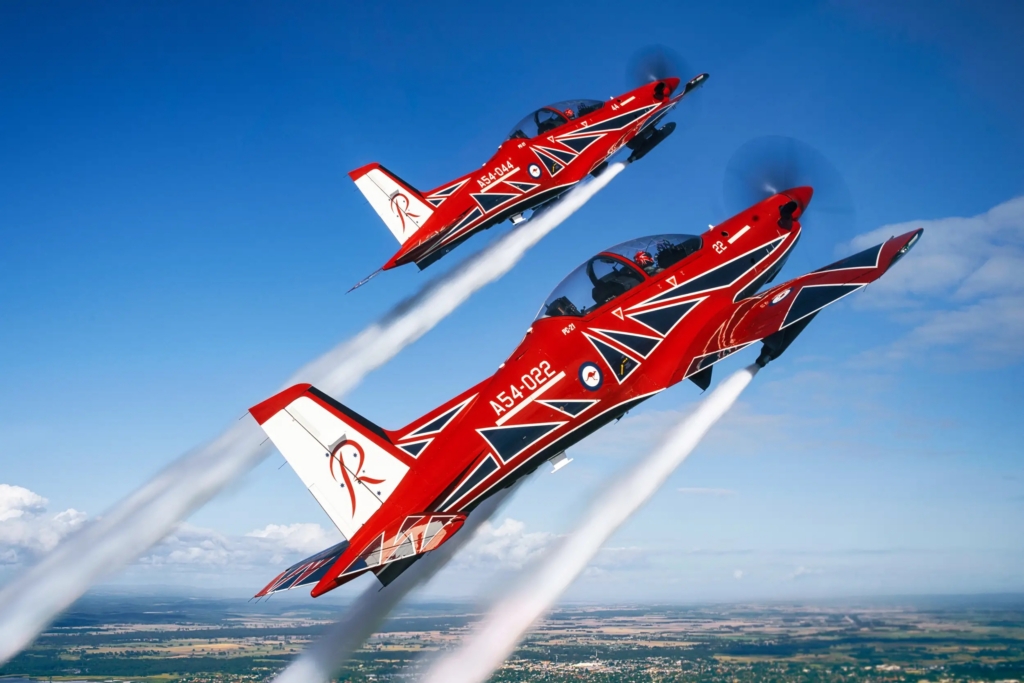
Canada has selected the turboprop Pilatus PC-21, designated CT-157 Siskin II by the RCAF, to succeed the jet-powered Tutor. The rebuilt Snowbirds are not expected to become operational until the early 2030s.
Why the CT-114 Tutor became a Canadian icon
The Tutor was never conceived as an aerobatic aircraft.
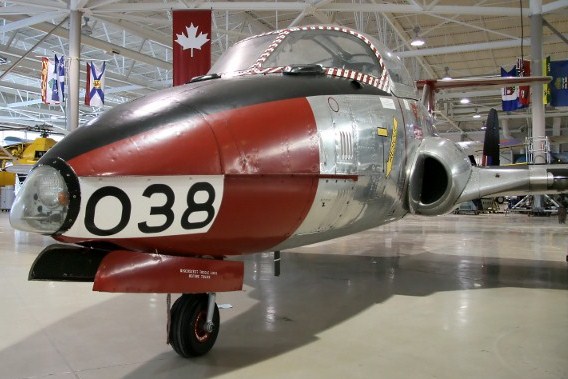
Canadair developed the compact, side-by-side jet trainer in Montreal during the 1950s, with the prototype making its first flight on 13 January 1960. Canada ordered the aircraft in 1961, and the CT-114 entered RCAF service in 1963, becoming the service’s primary jet trainer.
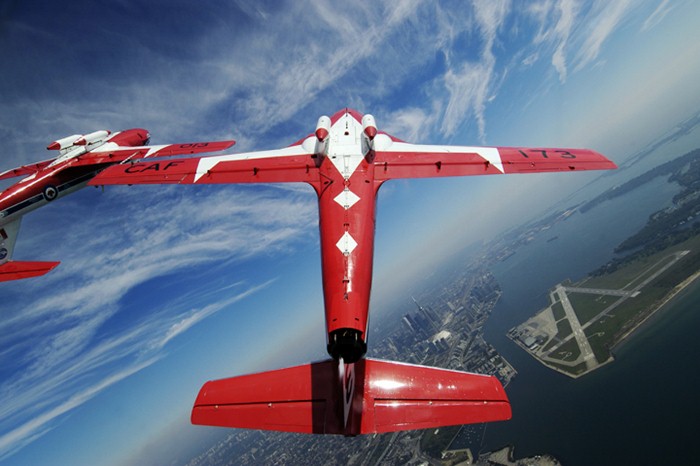
Powered by a Canadian-built version of General Electric’s J85 turbojet, the all-metal, low-wing Tutor was designed to put instructor and student alongside each other in the cockpit. Its modest size and straightforward handling eventually made it particularly well suited to close formation flying.
The RCAF used the type to train generations of pilots until 2000, when the training role passed to the CT-156 Harvard II and CT-155 Hawk. By then, Tutors had accumulated more than one million flying hours.
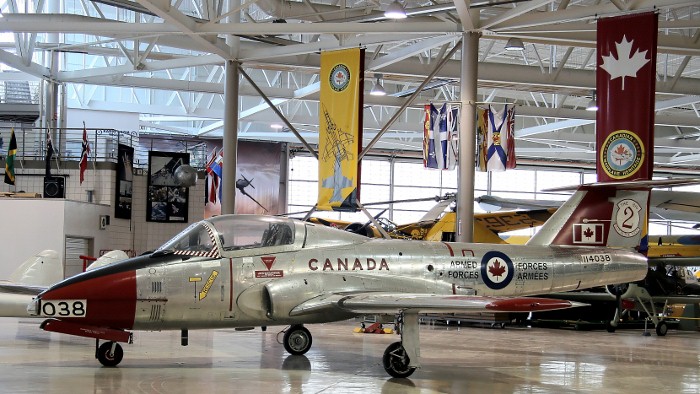
The aircraft found a second career that ultimately outlived its first.
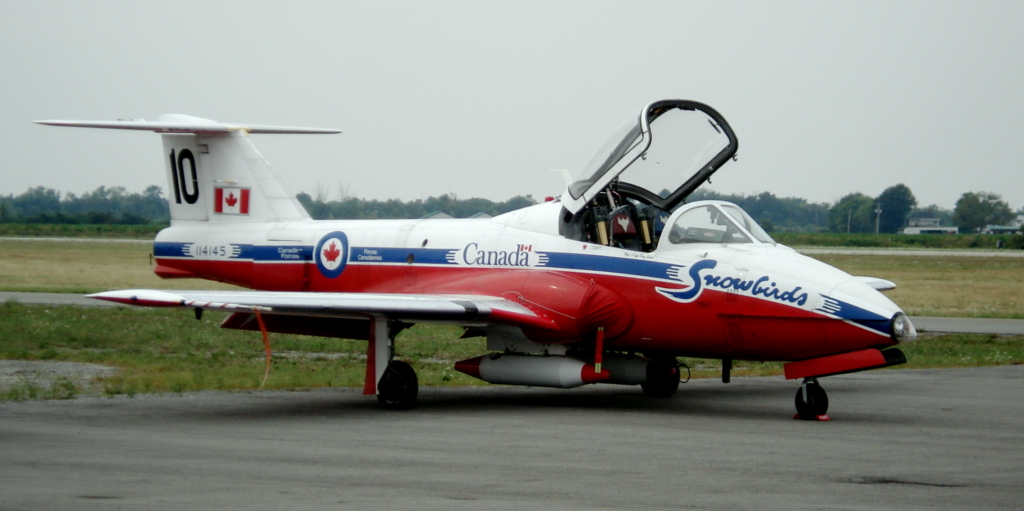
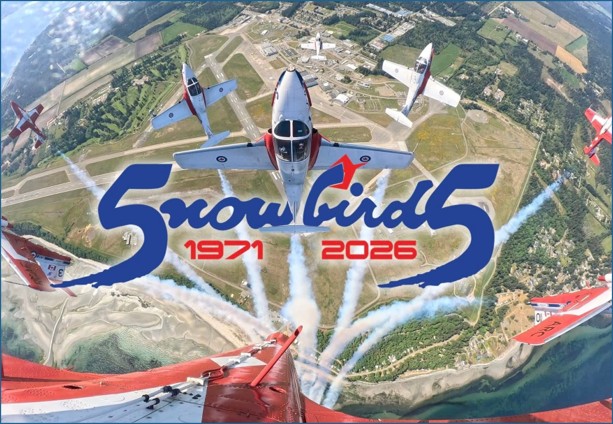
The Golden Centennaires used Tutors during Canada’s centennial celebrations in 1967. The Snowbirds followed in 1971, and the red-and-white aircraft became inseparable from the team.
The display aircraft received modifications for aerobatic work, including changes permitting solo operation from the right seat and inverted flight. The basic aircraft nevertheless remained a design whose origins predated the first human spaceflight.
In 55 years, the Snowbirds have performed more than 2,700 displays before more than 140 million spectators. Their travels have ranged from a midnight-sun display at Inuvik in Canada’s Arctic in 1974 to Zapopan near Guadalajara, Mexico, in 1993. Ten Canadian Armed Forces members have died while serving with or alongside the team, and every Snowbirds performance is dedicated to their memory.
Ageing Tutor became increasingly difficult to sustain
The retirement has been approaching for years, although the RCAF had previously intended to keep the Tutor flying until 2030.
A life-extension effort launched in 2020 was intended to carry the aircraft through the remainder of the decade. The fleet has received modernised avionics and safety equipment, including Automatic Dependent Surveillance-Broadcast, an Engine Indicating and Crew Alerting System, cockpit voice and flight-data recorders and updated navigation and communications equipment.
But keeping the cockpit current could not eliminate the problems associated with sustaining an aircraft more than six decades after it entered service.
RCAF commander Lieutenant-General Jamie Speiser-Blanchet said engineering assessments of the airframe, engine and escape system changed the calculation.
“Some of the airframe, engine and escape system program feasibility studies that were done revealed some engineering challenges because of the age of the aircraft that have changed that situation,” she said when the retirement was announced in May.
The decision was an emotional one for the service, particularly because Speiser-Blanchet herself flew the Tutor earlier in her career.
“This is a significant moment, and it is an emotional one because of the extraordinary connection that this team has built with Canadians over more than five and a half decades,” she said. “This decision was not taken lightly.”
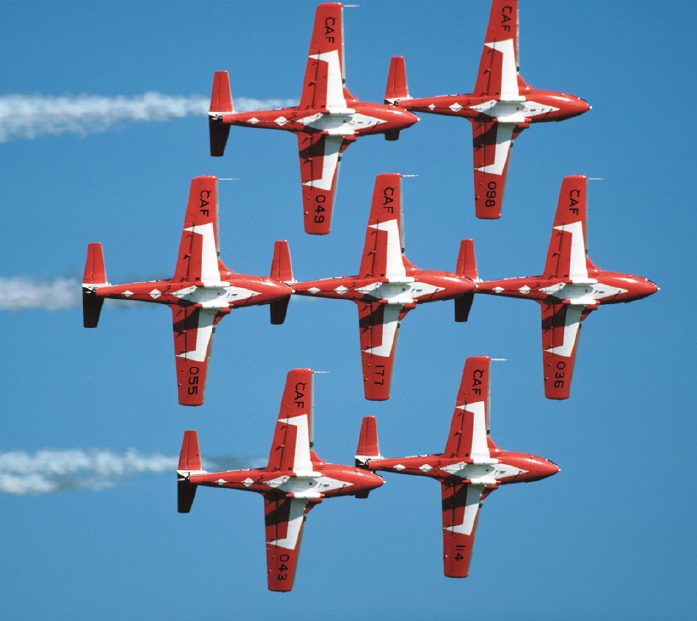
For the people who operate the aircraft, the end is being framed less as the retirement of a machine than the transfer of a culture built around it.
“After more than 65 years of service to the Royal Canadian Air Force, the Tutor has earned its well-deserved rest,” Lieutenant Colonel Guillaume Paquet, commanding officer of 431 Air Demonstration Squadron, and Chief Warrant Officer Cheryl Abernethy, the squadron’s chief warrant officer, said in a message marking the aircraft’s retirement.
“Time has made the aircraft increasingly challenging to maintain, and the RCAF it serves today is faster, more advanced, and more technologically sophisticated than the force it was originally designed to support.”
They said the squadron now had to “innovate and modernise”, while stressing that the Tutor’s legacy rested as much with the people who sustained it as with the aircraft.
“The members of 431 Squadron, past and present, who maintained and flew these jets with extraordinary dedication, professionalism, and care will carry that same spirit into the future,” they said.
Snowbirds face years without a display aircraft
The replacement represents more than a change of aircraft generation.
The CT-157 Siskin II is the Canadian designation for the Pilatus PC-21, a tandem-seat advanced turboprop trainer powered by a 1,600 shp Pratt & Whitney Canada PT6A-68B. It can reach around 370 kt, operate up to 38,000 ft and incorporates a glass cockpit, head-up display, HOTAS controls and embedded simulation.
Canada is already acquiring 19 PC-21s for its Future Aircrew Training programme, making the type part of the RCAF’s wider overhaul of pilot training. Additional aircraft will be procured for the Snowbirds, although the government has yet to disclose the final number or a precise delivery schedule.
Defence Minister David McGuinty said in May that negotiations with the manufacturer were under way and that Canada intended to obtain the aircraft “as quickly as we possibly can”.
The government has said the new capability will ultimately rebuild to the Snowbirds’ familiar nine-aircraft formation and remain at 15 Wing Moose Jaw in Saskatchewan.
The gap until the early 2030s is not without consequences. Former Snowbirds have warned that several years without a display team could erode the specialised flying, maintenance and organisational expertise accumulated over decades.
The Snowbirds Alumni Association has described the interruption as “profoundly disappointing” and raised concerns about rebuilding that knowledge when operations resume.
The RCAF says it will continue supporting Canadian airshows with other aircraft and personnel during the transition. The Snowbirds name will survive, as will the nine-aircraft formation.
What will not return is the Tutor’s distinctive jet display.


