Ukraine’s Swedish ASC 890 AEW&C narrows Russia’s airborne radar advantage

4 min read
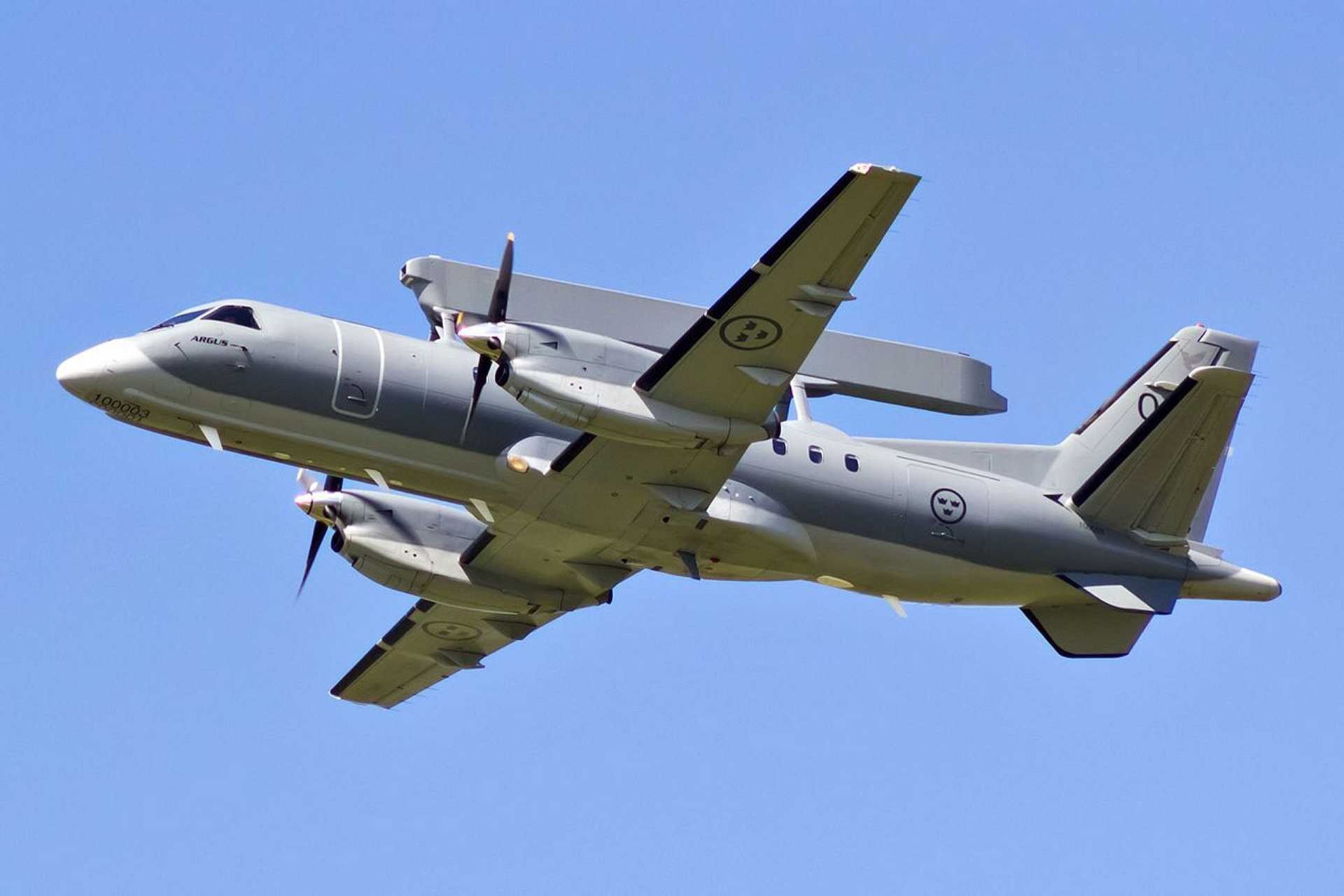
Over the weekend, the Ministry of Defense of Ukraine confirmed that at least one Saab ASC 890 Erieye airborne early warning and control aircraft pledged by Sweden in 2024 has been operating over Ukraine since March 2026.
Swedish ASC 890 flying combat missions over Ukraine
Ukraine’s Ministry of Defense described the ASC 890 as an important part of the development of the country’s air combat capabilities, revealing that its first combat sorties over Ukraine were recorded as early as March.
The aircraft can detect airborne targets at long range, provide early warning, coordinate air operations and help fighter pilots engage threats more effectively.
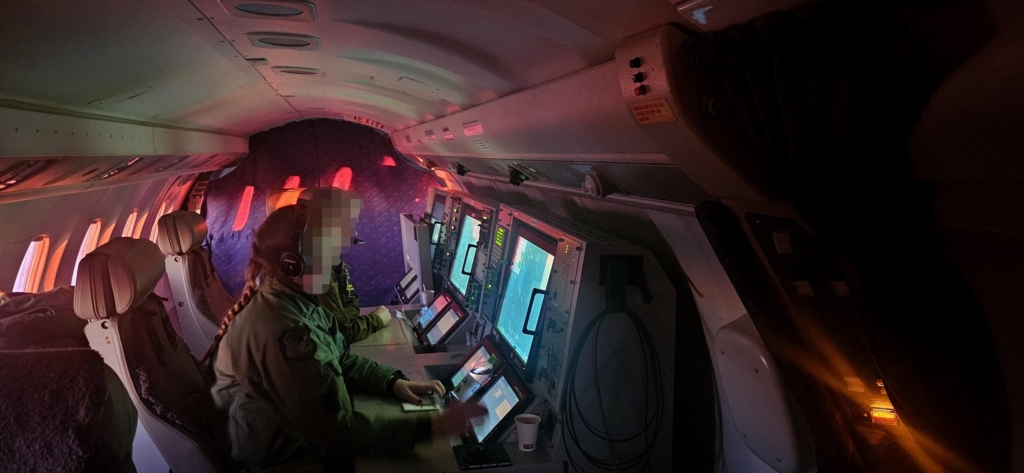
Sweden pledged the two ASC 890 radar planes from its stocks in 2024. It remains unclear whether the second aircraft has also arrived in Ukraine.
Their transfer has left a temporary capability gap within the Swedish Air Force, which is awaiting the delivery of replacement Saab GlobalEye aircraft.
According to Ukraine, the ASC 890 will operate alongside F-16, Mirage 2000 and eventually Gripen fighters to form the foundation of a networked air combat system aligned with NATO standards.
Ukraine and Sweden also signed an agreement in May covering the transfer of 16 legacy Gripen C/D fighters at no cost and the purchase of 16 newly built Gripen Es. Deliveries of the C/D aircraft are expected to begin in 2027, followed by the first Gripen Es in early 2029.
Russia’s AEW&C advantage is shrinking
The arrival of the ASC 890 marks a significant change in the balance of airborne surveillance capabilities over Ukraine.
At the beginning of the full-scale war, Ukraine had no comparable airborne early warning capability. Russia, by contrast, operated one of the world’s larger AEW&C fleets, centered on the Beriev A-50U.
Russia is estimated to have had around seven to nine operational A-50Us at the start of the war. Two have since been shot down, with their highly trained crews lost, while other aircraft may have been damaged.
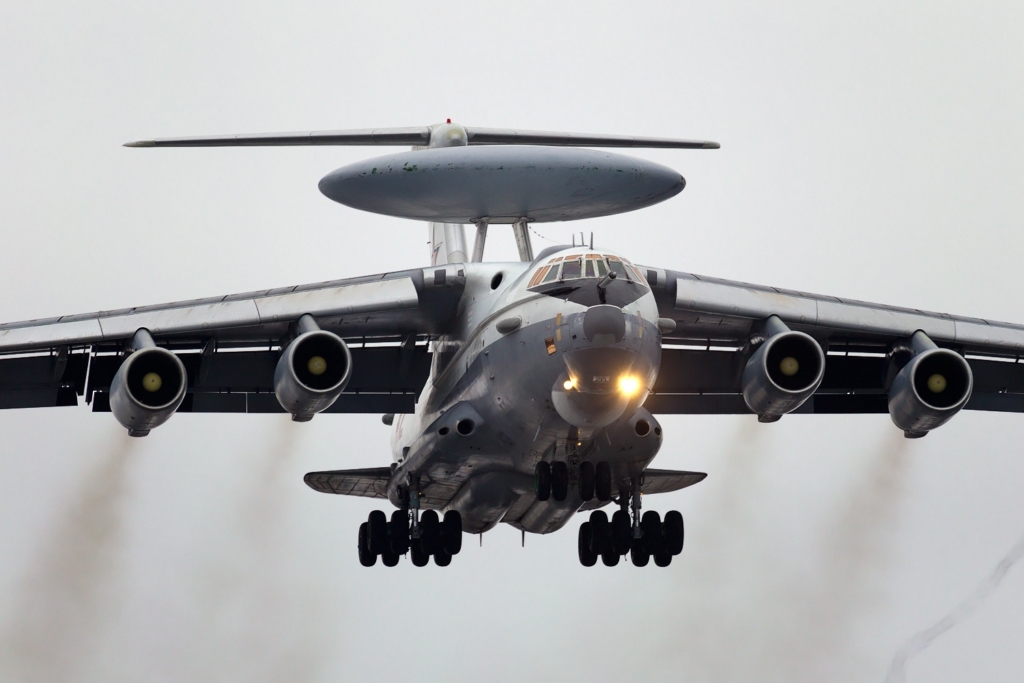
The remaining Russian A-50Us are increasingly being used to detect and track Ukrainian drones and Flamingo cruise missiles deep behind the front line. As of mid-2026, Russia was estimated to have between four and seven operational A-50Us remaining.
One consequence of Ukraine’s deep-strike campaign is that valuable Russian aircraft, including A-50Us, Su-57s and Ka-52s, are being diverted from frontline operations to hunt drones and cruise missiles over Russian territory.
Russia retains an overall AEW&C advantage, but the imbalance is no longer as pronounced. Ukraine can also combine the ASC 890 with ground-based sensors, including Patriot radars, to build a broader picture of activity in contested airspace.
Could the ASC 890 have supported the Su-35S shootdown?
On July 8, 2026, Ukraine shot down a Russian Su-35S. Although both sides acknowledged the loss, the precise circumstances remain unclear.
On paper, the Su-35S is Russia’s leading operational air superiority fighter, while the Su-57 fleet remains relatively small and continues to mature. It would ordinarily hold a significant performance advantage over Ukraine’s lightweight F-16MLUs, which received their last major upgrades during the 2000s.
Fighterbomber, a prominent Russian military aviation channel reportedly run by a former Russian Air Force pilot, claimed that several Ukrainian F-16s supported by a Patriot radar were involved in the engagement.

Later that month, US Chairman of the Joint Chiefs of Staff Gen. Dan Caine told the Senate Appropriations Committee that a Ukrainian F-16 had achieved the country’s first confirmed air-to-air kill against a Russian fighter. He did not identify the Russian aircraft, although his remarks were widely understood to refer to the Su-35S.
The ASC 890 could plausibly have supported the engagement, as Ukraine has now confirmed that the aircraft was flying combat missions by July. There is no evidence, however, directly connecting it to the shootdown.
Nevertheless, the engagement illustrates the type of operation the ASC 890 is intended to support. An older F-16 connected to airborne and ground-based sensors can potentially overcome some of the advantages held by a more capable individual aircraft.
The ASC 890 can help locate high-value Russian fighters, provide Ukrainian pilots with earlier warning and support coordinated ambushes and beyond-visual-range engagements.