


GCAP advances as FCAS collapse and UK funding boost reshape Europe

7 min read
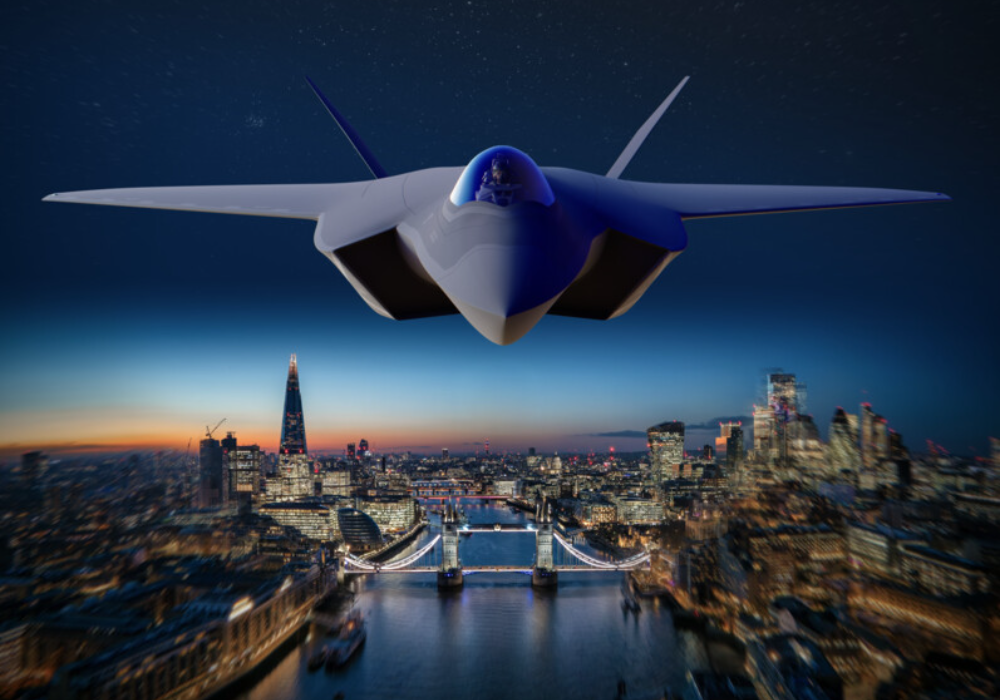
Since the start of June, the Global Combat Air Programme (GCAP), which includes the 6th generation fighter jet ‘Tempest’, has enjoyed a run of positive developments.
As of July 2026, the programme appears to be navigating the political, industrial and financial pitfalls that have derailed so many ambitious combat aircraft programmes before it.
FCAS collapse opens a new European fighter gap
In early June, Germany took the much-anticipated decision to officially terminate the troubled FCAS 6th-generation fighter jet programme with France’s Dassault and Spain. The programme had already been described as a dead man walking for some time, with little progress made on the aircraft for more than a year.
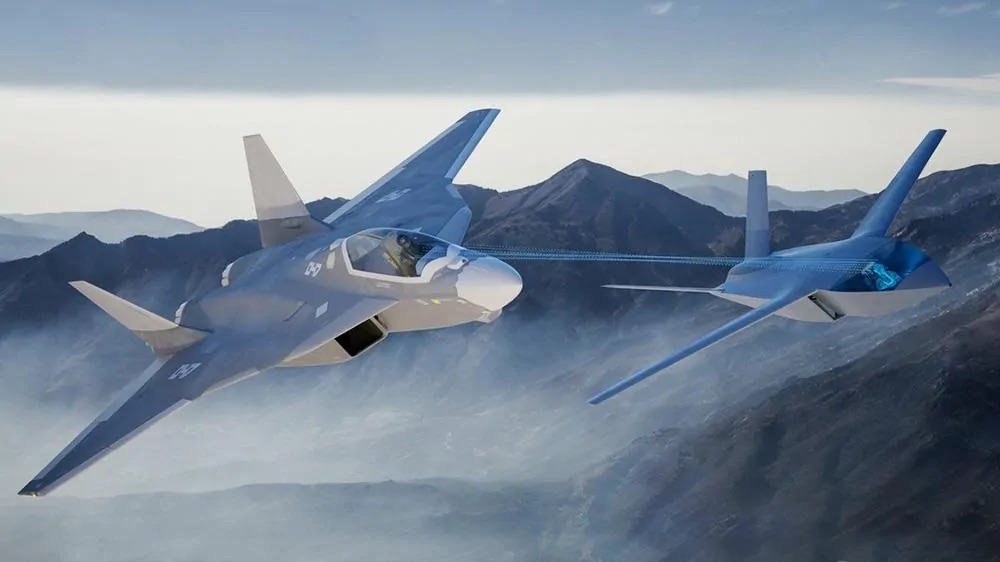
With FCAS now gone, Germany is assessing its options. One possibility is to develop another sixth-generation fighter programme with Sweden and/or Spain, an option reportedly favoured by much of the German aerospace industry, including Airbus.
Another option would be to step back from developing a sixth-generation fighter and instead focus on expanding Germany’s fifth-generation F-35 fleet, while developing advanced domestic combat drones to team with both the F-35 and Eurofighter Typhoon.
But one of the leading alternatives is for Germany to join GCAP in some capacity. While it is too late to admit Germany as an equal industrial partner, it could still contribute through investment, combat cloud development, advanced loyal wingman drones, industrial offsets and other areas.
France’s Dassault has said it will go it alone and develop a next-generation French fighter. However, without Germany, analysts expect this to be a less ambitious, smaller, carrier-based aircraft that would occupy a different niche to the large multirole air superiority GCAP aircraft.

There are also questions over France’s ability to develop next-generation engines for the fighter. This could lead to the aircraft being less French than the Rafale or force Dassault to accept compromises elsewhere in the design.
Get the latest aerospace defence news here on AGN.
UK funding boost removes a key GCAP risk
In late June, the UK announced its much-anticipated Defence Investment Plan. This came with £8.6 billion in funding for GCAP over the next four years, more than the roughly £6 billion that had been anticipated.

In the run-up to the announcement, there had been fears that the UK would cancel or, more likely, delay GCAP to save money. Japan is known to have been sensitive to any delay and has a requirement for the aircraft to enter service in 2035.
Japan assesses that it needs the jet in service by 2035 to counter China and its rising capabilities. The UK appears to have more breathing room, as it believes it will take longer for Russian fighter aircraft to effectively counter its Eurofighter Typhoons and, potentially, its F-35s.
Commitment and funding are among the biggest factors in predicting the success or failure of a fighter programme. The sheer weight of funding and political commitment behind the F-35 has allowed it to push through major engineering hurdles.

By contrast, limited apparent funding is one reason many analysts remain sceptical of Russia’s Sukhoi Su-75 and PAK DP MiG-41 programmes.
Limited funding can produce a stealthy-looking aircraft that can fly, but it takes enormous investment to produce a stealthy platform that functions as an effective integrated low-observable weapons system.
Canada and Germany underline GCAP export momentum
Beyond potential interest from Germany, a country that now has a larger defence budget than the UK or Japan, GCAP also attracted interest from Canada in June.

Canada is undergoing a soft defence procurement rupture with the United States amid geopolitical tensions and is seeking to diversify its options. The country is negotiating to purchase several dozen Swedish Saab Gripens on top of a potentially reduced purchase of F-35A fighter jets.
In mid-June, Reuters reports that Italian Defence Minister Guido Crosetto said, “The country most interested at the moment seems to be Canada as an observer; we are fully open to it.”
Later, David McGuinty, Canada’s Minister of National Defence, said Ottawa was “interested in learning more about” GCAP after meeting his Japanese counterpart. Canada described the programme as a “promising initiative.”
Other countries known to be interested in GCAP include Saudi Arabia, India and Australia. Following the collapse of FCAS, Spain and Belgium have also become potential customers.
Current and potential GCAP/Tempest partners/customers
| Select countries | Status/interest |
| United Kingdom | Full development participant |
| Japan | Full development participant |
| Italy | Full development participant |
| Germany | Exploring next-gen fighter options |
| Canada | Expressed GCAP interest |
| Australia | Expressed GCAP interest |
| Saudi Arabia | Previously negotiated joining GCAP |
| India | Exploring options with domestic & Russian fighters |
Australia has cancelled the purchase of a fourth F-35A squadron, stopping at 72 jets instead of 100. It has indicated that GCAP could be considered as a replacement for its F/A-18 Super Hornets.
Saudi Arabia has previously explored joining the GCAP programme, while India is also known to be weighing its options. The Indian decision is taking place in the context of negotiations to locally produce the Russian Su-57 and its plans to develop its own advanced fighter, the AMCA.
GCAP demonstrator now 75% complete
In another positive development for Tempest, Aviation Week reported it was one of the few news outlets permitted to see the demonstrator (called the Future Combat Air Demonstrator or FCAD) currently under production.
Understand how the impact of Tempest goes beyond defence 👇
— BAE Systems Air (@BAESystemsAir) May 26, 2026
Find out more about the programme here 🔗 https://t.co/ng47Z6hgkY pic.twitter.com/GP9asbzo7Y
Aviation Week reported, “Around 75% of the demonstrator by volume has now been manufactured, with major structural sections having spent the past 12-18 months in production as the airframer targets a rollout by the end of 2027.”
The world’s only export-oriented 6th-generation fighter jet
The collapse of FCAS has left GCAP as the world’s only heavy air-superiority multirole 6th-generation fighter jet on the export market.
There have not been any major updates from Russia’s Rostec on its next-generation fighter jet, the MiG-41 interceptor, since 2021. Many analysts believe Russia has deprioritized the programme in favour of maturing its Su-57 fighter and producing mature systems (e.g., Su-35S) to win its current war with Ukraine.

The US is rapidly developing its next-generation F-47 air dominance fighter, and the US Navy is expected to announce a winner for its carrier-based F/A-XX fighter in 2026. It is unclear if the US will develop a land-based export variant as it did with the Hornet/Super Hornet.
The F-47 is expected to be a very high-end niche weapons system designed to replace the F-22 Raptor. Its niche role is seen in that the Air Force only expects to purchase 185+ of the jets, around 10% of its program of record for the F-35A.
Smaller air forces tend to value multirole fighters, making the F-47’s potential export market small. Whereas the F-47 is designed for US Air Force requirements, GCAP is specifically designed for export. It remains an open question if Congress and future administrations will allow it to be exported.
China is known to be developing next-generation fighter jets. However, geopolitical realities preclude many countries (e.g., European states, Japan, South Korea, India, Vietnam) from considering them.
Like the US, China is also believed to be developing some of its fighters (e.g., J-36) specifically for its needs without regard for export. It is also unclear if China will offer its next-generation fighters (especially the J-36) to other countries. China appears to have an export ban on the J-20.
This said, there is no clean distinction between “5th” and “6th” generation fighter jets, and the principal future GCAP competitor will likely be a future upgraded variant of the F-35.
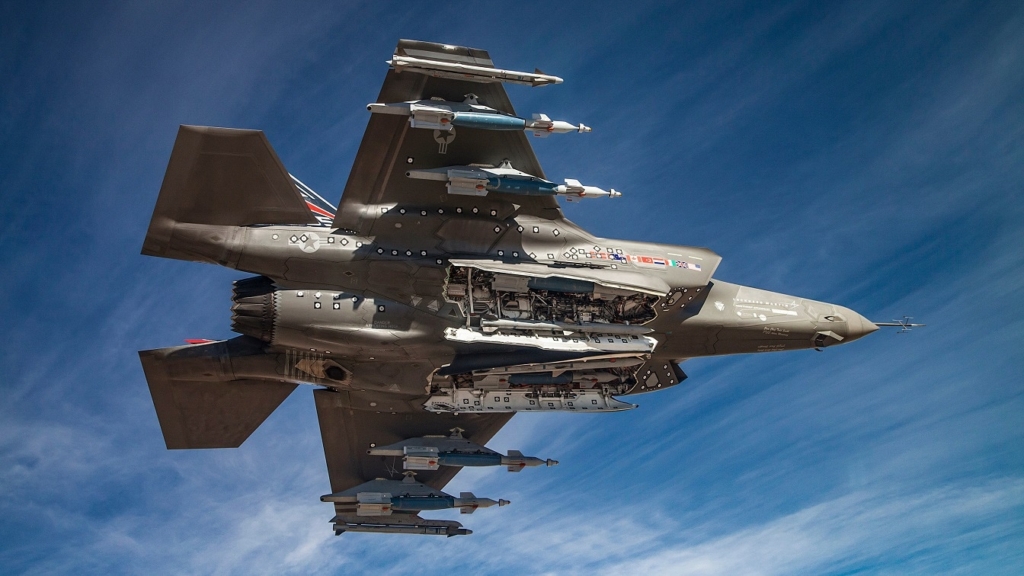
The War Zone has reported that Lockheed has already described upgraded F-35 variants as offering something like “80% of 6th-gen capability at half the price.”
Featured Image: BAE Systems
Sign up for our newsletter and get our latest content in your inbox.


More from


September 4, 20264 min read


