


Dassault Aviation wins landmark case to have private jets included in green financing in the EU

6 min read

Dassault Aviation has won a major legal challenge against the European Commission after the EU General Court annulled rules that excluded private and commercial business aircraft manufacturing from Europe’s green investment taxonomy.
The judgment, delivered in Luxembourg on 24 June in Case T-77/24, Dassault Aviation v Commission, does not mean private jets have been declared environmentally friendly. However, it does mean Brussels cannot maintain a blanket exclusion that prevents the manufacture of business aircraft from being treated as a transitional activity that contributes to climate change mitigation.
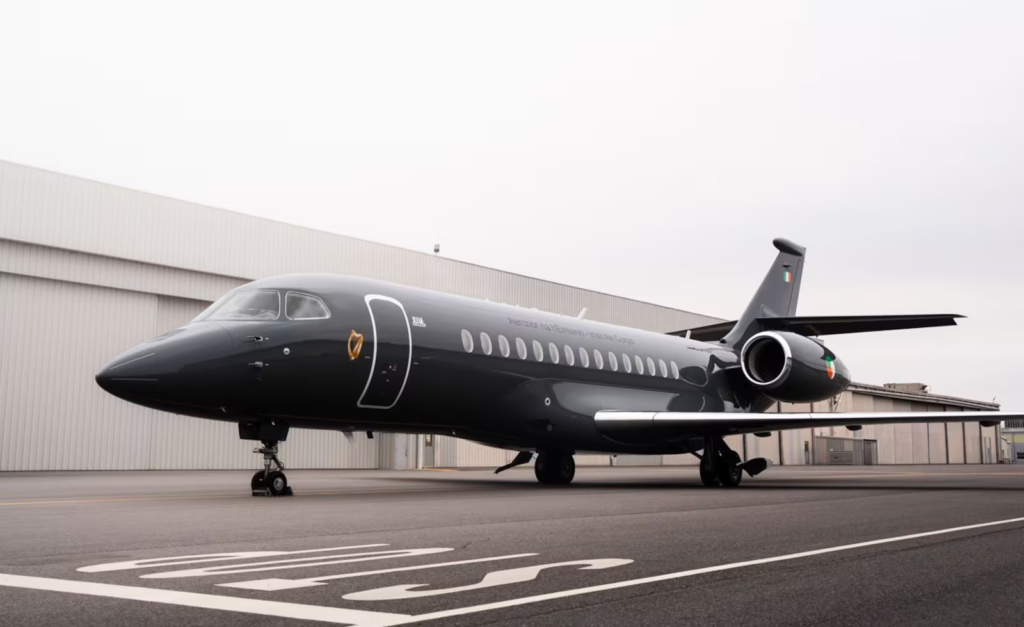
For Dassault, the French manufacturer of Falcon business jets, the ruling is a significant victory in a long-running argument over whether business aviation should be shut out of sustainable finance rules or allowed to qualify when aircraft meet technical criteria around efficiency, emissions and sustainable fuel compatibility.
The case could also have wider implications for other business jet manufacturers, particularly where aircraft financing, leasing or investment reporting is linked to EU sustainable finance rules.
Dassault ruling opens door to business jet manufacturing as green investment
The EU Taxonomy Regulation was created to give investors a common framework for identifying economic activities considered environmentally sustainable. Aviation is included in that framework as a transitional sector, meaning it is difficult to decarbonise fully in the short term but can still contribute to the transition through efficiency improvements, cleaner technologies and lower emissions.
In 2023, the Commission adopted delegated rules setting technical screening criteria for aviation activities, including aircraft manufacturing. Those rules explicitly excluded aircraft intended for private or commercial business aviation from the scope of activities regarded as contributing to climate change mitigation.

Dassault challenged that exclusion, arguing that the rule was unlawful and affected its ability to present its aircraft manufacturing activity as taxonomy-aligned in sustainability reporting. The General Court agreed that Dassault had a valid interest in bringing the case, noting that the exclusion could affect its access to funding.
The EU Taxonomy does not ban the manufacture or operation of private jets, nor does it directly regulate aircraft use. Its importance lies in how banks, investors and companies classify activities for sustainable finance. Being excluded from the taxonomy can make a sector look less investable to institutions with ESG requirements.
For Dassault, the ruling reopens the possibility that the manufacture of business aircraft could be treated in the same broad framework as other aviation manufacturing activities, provided the relevant technical screening criteria are met.
Why the EU court rejected Brussels’ private jet exclusion
The General Court found that the Commission had not properly justified the exclusion.
One of the Commission’s main arguments was based on the CO2 footprint of business aircraft per passenger kilometre compared with other modes of transport. The court rejected that approach on several grounds.
First, it said other transport modes could not automatically be treated as low-carbon alternatives to business aircraft. The court pointed to the specific characteristics of business aviation, including flexibility, speed and connectivity. In practical terms, the court appears to have accepted that a train or airline service cannot always be treated as a like-for-like substitute for business aviation, particularly on routes or missions where scheduled connectivity is limited.

Second, the court said the CO2 per passenger kilometre metric related to the operation of aircraft, rather than its manufacture. That distinction is crucial because the contested economic activity was aircraft manufacturing, not private jet operation.
Third, the court said the Commission had failed to consider relevant factors, including the ability of business aircraft to operate on sustainable aviation fuel. The court also noted that the Commission had itself acknowledged that further analysis was necessary.
The result is a ruling that does not give business aviation a free pass, but does criticise the legal logic used to keep it outside the taxonomy. In effect, the court has told the Commission that it cannot exclude an entire category of aircraft manufacturing using an operational emissions metric that was not properly rooted in the taxonomy rules.
How the EU Taxonomy rules could change after Dassault’s win
The immediate legal effect is that the contested exclusion has been annulled. The Commission now has several options.
It can appeal to the Court of Justice of the European Union on points of law, with the deadline running for two months and ten days from notification of the decision. If it appeals, the case could remain live for some time.
If the Commission does not appeal, or if the judgment stands, Brussels will need to address the gap created by the annulment. That could mean revising the aviation taxonomy criteria so that business aircraft manufacturing is no longer automatically excluded.
However, that does not necessarily mean all business jet production would become taxonomy-aligned. More likely, business aircraft would need to be assessed against the same sort of technical screening criteria that apply elsewhere in aviation. These could include aircraft efficiency, certification for SAF use, replacement of older aircraft, “do no significant harm” requirements and wider environmental safeguards.
The Commission could also try to build a revised exclusion with a stronger evidential basis. But the judgment makes clear that any future approach would need to distinguish more carefully between aircraft manufacturing and aircraft operation, and between different forms of mobility rather than assuming that other transport modes are always genuine alternatives.
What Dassault’s win means for other business jet manufacturers
The ruling is most directly a win for Dassault, but the consequences are unlikely to stop there.
If business aircraft manufacturing can no longer be excluded as a category, other manufacturers may also benefit from a more open taxonomy framework. That could be particularly relevant for manufacturers developing new aircraft with efficiency improvements.
The ruling could improve the sustainable finance argument around next-generation business aircraft, particularly where manufacturers are seeking to show that newer aircraft replace older, less efficient models.
It may also matter to lenders and lessors. If a business aircraft, engine, component, retrofit or financing structure can be linked to a taxonomy-aligned activity, that could influence how aviation assets are reported within sustainable finance frameworks.
The reputational implications are just as important. Business aviation has faced intense scrutiny over its climate impact, with private jets often criticised for high emissions per passenger. The Dassault ruling gives the sector a legal and political counterargument: that manufacturing more efficient aircraft should not be dismissed simply because the aircraft serve private or business aviation markets.
The court has not settled the environmental debate over private jets. It has, however, forced the Commission to revisit how that debate is reflected in EU sustainable finance law.
For business aviation, the ruling is a rare regulatory win. For Brussels, it is a reminder that green finance rules must be legally precise as well as politically defensible.
Featured image: Dassault Aviation
Sign up for our newsletter and get our latest content in your inbox.


More from

October 25, 20265 min read


