


Air India explores eVTOL aircraft for emergency medical logistics in India

4 min read
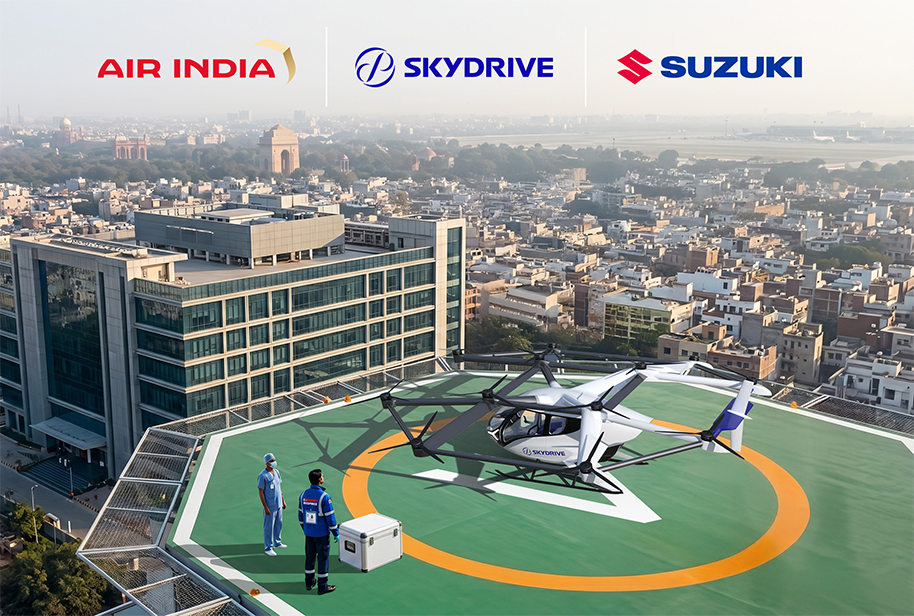
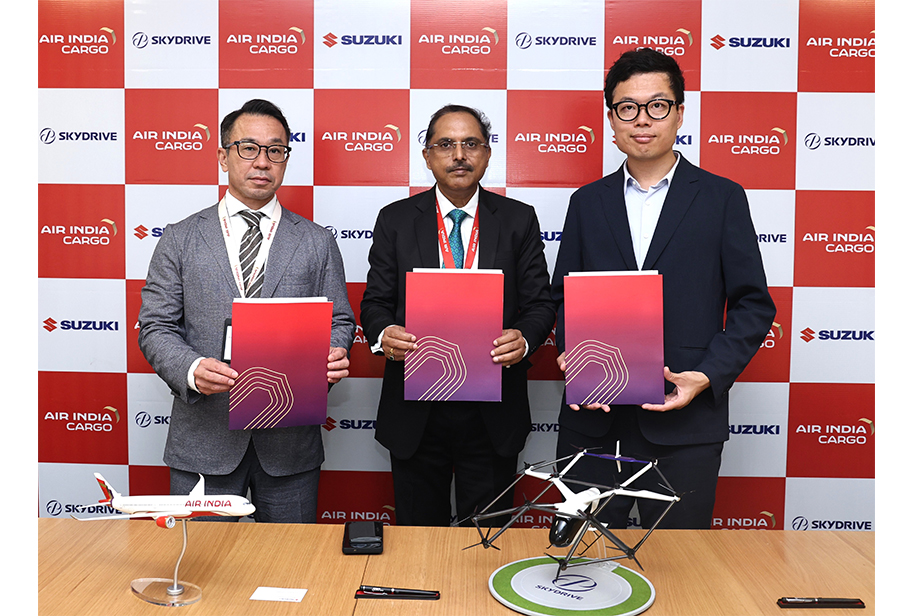
Air India is studying how electric aircraft could reshape emergency medical logistics in India through a new partnership with Japan’s SkyDrive and Suzuki.
The three companies have signed a memorandum of understanding to examine how eVTOL aircraft could be used to move time-critical medical supplies across urban areas where road congestion often delays emergency deliveries.
Rather than focusing on passenger services, the study will assess whether the aircraft can support last-mile transport of high-value, time-sensitive medical cargo, including blood products, organs for transplantation, medicines and diagnostic samples.
Each partner brings a different capability to the study
The project combines three distinct areas of expertise.
SkyDrive will contribute its eVTOL aircraft technology, while Air India will provide operational knowledge, airport infrastructure expertise and experience in cargo handling.
Suzuki, which has a long-established manufacturing and commercial presence in India, will contribute market knowledge and help evaluate how such services could be integrated into the country’s transport ecosystem.
Ramesh Mamidala, Head of Cargo at Air India, said the airline viewed advanced air mobility as a natural extension of India’s rapidly expanding aviation sector.
“The potential application of eVTOL aircraft for medical air logistics is particularly compelling because it combines technology and purpose, helping to reduce critical transit times when every minute can make a difference,” he said.
Air India said it would contribute its operational expertise, airport infrastructure knowledge and stakeholder relationships to help assess a framework for safe, reliable and scalable eVTOL operations.
Medical logistics offers a different path for advanced air mobility
While much of the global attention around eVTOL aircraft has centred on future air taxi services, medical logistics is increasingly emerging as one of the technology’s earliest practical applications.
Unlike passenger transport, emergency medical deliveries can often operate on fixed routes between hospitals, laboratories, airports and distribution centres. That makes them well suited for early deployment while regulators and operators continue developing broader urban air mobility networks.
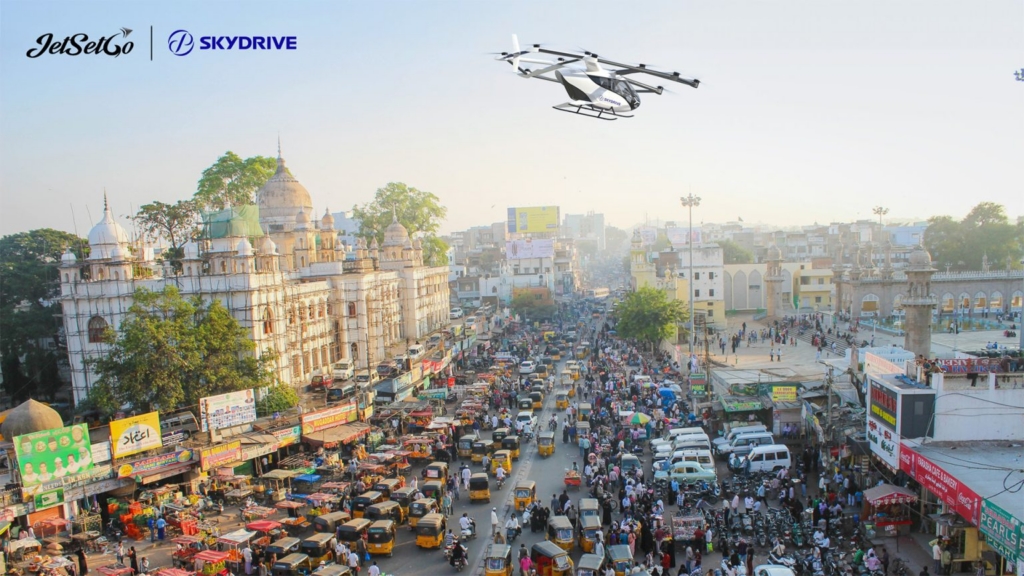
For India, where traffic congestion remains a major challenge in cities such as Mumbai, Delhi and Bengaluru, the ability to move critical medical supplies by air could significantly reduce transport times during medical emergencies.
Tomohiro Fukuzawa, SkyDrive’s founder and chief executive, said the company believed India offered an opportunity to demonstrate how eVTOL aircraft could support healthcare infrastructure.
He said the collaboration would explore advanced medical logistics capable of transporting high-value, time-critical medical supplies where speed could directly influence patient outcomes.
SkyDrive is steadily expanding its presence in India
The agreement also builds on SkyDrive’s growing activity in the Indian market.
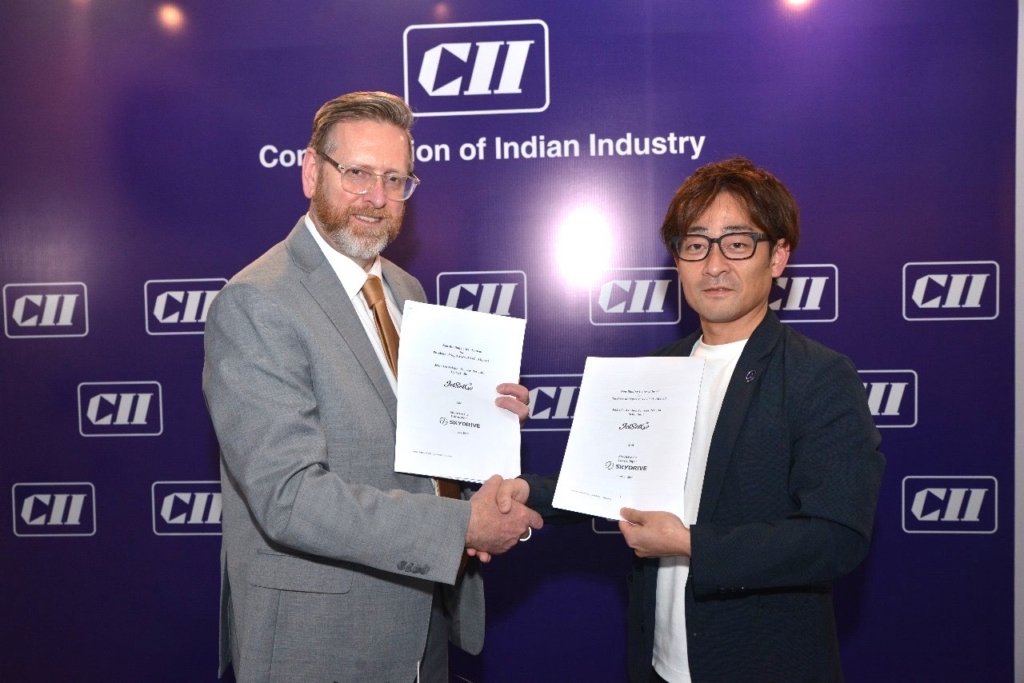
Earlier this year, the Japanese developer partnered with JetSetGo to explore commercial eVTOL operations in Gujarat, with the Indian private aviation company announcing a pre-order for 50 SD-05 aircraft. The initiative followed a strategic partnership signed with the Government of Gujarat to study the ecosystem needed for advanced air mobility operations in the state by 2027.
Last month, SkyDrive also announced a manufacturing partnership with Indian aerospace company Kineco to produce composite aerostructures for its SD-05 production aircraft, strengthening its long-term industrial footprint in India ahead of its planned commercial launch in 2028.
The company has continued to advance its development programme in Japan, where its SD-05 aircraft has completed public demonstration flights at Expo 2025 Osaka as certification activities continue. Commercial operations are currently targeted for 2028.
Study will assess operational and regulatory requirements
The feasibility study will examine not only the aircraft but also the wider ecosystem needed to support medical eVTOL operations.
That includes operational procedures, infrastructure requirements, safety considerations and coordination between aviation authorities, airports and healthcare providers before any future services could be introduced.
Suzuki executive Masao Fujitani said the company believed eVTOL aircraft could become another form of mobility supporting urban medical infrastructure. He said Suzuki would continue working with mobility partners to develop transport solutions more closely connected to people’s daily lives.
“The eVTOL aircraft being developed by SkyDrive, with which Suzuki is engaged in business and technology collaboration, represents a new form of mobility that embodies Suzuki’s philosophy of ‘Sho-Sho-Kei-Tan-Bi (Smaller, Fewer, Lighter, Shorter, and Neater)’. We believe it has the potential to play a role in supporting medical infrastructure in urban areas.
Under our corporate slogan, ‘By Your Side,’ Suzuki will continue to provide diverse mobility options tailored to customers’ needs and contribute to regional development. By collaborating with a wide range of mobility companies, including SkyDrive and Air India, Suzuki aims to realise ‘infrastructure mobility closely connected with people’s lives.’”
While the agreement does not commit the companies to commercial operations, it marks another step in India’s growing interest in advanced air mobility, with medical logistics emerging as one of the first sectors where eVTOL technology could move from concept to practical application.
Sign up for our newsletter and get our latest content in your inbox.


More from

October 25, 20266 min read

October 25, 20265 min read


