What is a ground stop and why does the FAA order one?

3 min read

The last thing you want to hear when you’re about to depart is that a ground stop is in effect. But for airlines, airports and air traffic controllers, it is an essential tool for maintaining safety and managing congestion across the aviation network.
A ground stop is an air traffic management measure issued by the Federal Aviation Administration (FAA) that temporarily prevents aircraft from departing for a specified airport or location. Instead of allowing flights to take off and potentially join an already congested arrival queue, airlines are instructed to hold affected aircraft at their departure airports.
It does not necessarily mean the destination airport has closed. Arrivals may continue, depending on the circumstances, while flights already airborne are managed by air traffic controllers.
Why might the FAA order a ground stop?
The most recent ground stop occurred on 13 November 2026, due to a communications issue with air traffic control.
However, weather is another common reason the FAA might issue a ground stop. Thunderstorms, heavy snow, strong winds and poor visibility can significantly reduce an airport’s capacity. An airport that normally handles dozens of arrivals an hour may suddenly be able to accept far fewer.
When this is the case, keeping aircraft on the ground is often safer and more efficient than allowing them to depart, only to spend extended periods in holding patterns or divert to alternative airports.
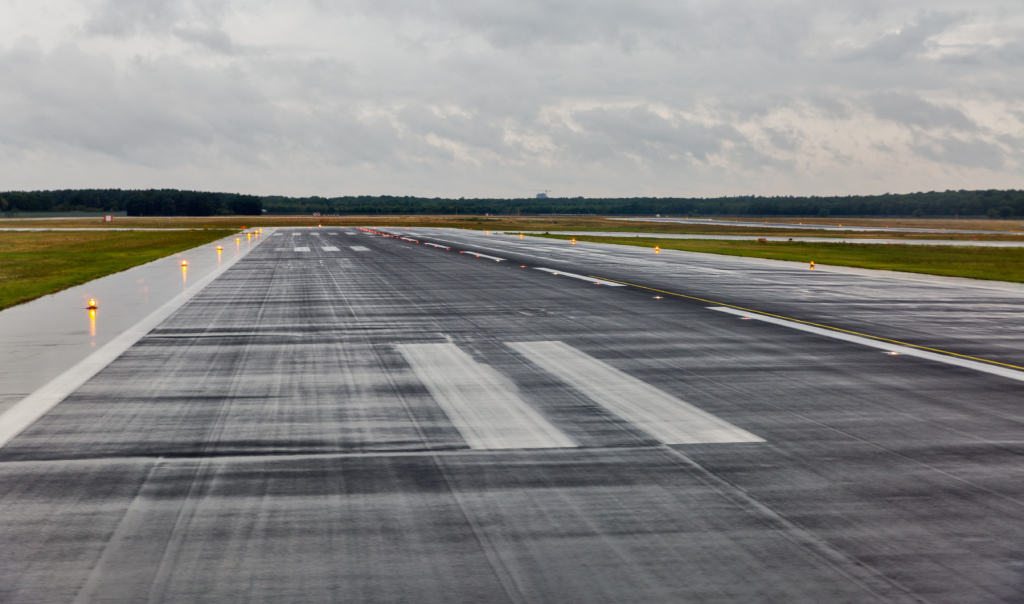
Operational problems can also trigger a ground stop. Runway closures, aircraft incidents, equipment failures and cyber attacks can all affect an airport’s ability to handle normal traffic volumes.
Staffing shortages may also play a part. If an air traffic control facility cannot safely manage the expected number of aircraft, the FAA can restrict incoming traffic until sufficient capacity is restored.
How does a ground stop work?
The FAA’s Air Traffic Control System Command Center coordinates traffic management across the United States, working with individual air traffic control facilities to respond to changing conditions.
When a ground stop is introduced, airlines receive instructions specifying the affected airport, which flights are covered and the anticipated duration. Departures are held at their origin airports, with airlines adjusting schedules and passenger arrangements accordingly.
Ground stops are not necessarily issued for a fixed period. The FAA regularly reassesses conditions and can extend, modify or lift restrictions as circumstances change.
Ground stop vs ground delay programme
Although often confused, these are two distinct traffic management measures.
A ground stop temporarily prevents specified flights from departing for an affected destination. A ground delay programme takes a less restrictive approach, assigning departure delays and calculated arrival times to regulate the flow of traffic.

The FAA uses both to balance demand with available airport and airspace capacity. The appropriate measure depends on the severity and nature of the disruption.
Keeping the skies moving safely
Ground stops can cause significant inconvenience, particularly when disruption spreads across multiple airports. However, they are an important part of managing an aviation system in which a problem at one location can have consequences hundreds of miles away.
By controlling departures before congestion becomes unmanageable, the FAA can give airports and controllers the breathing space needed to restore normal operations.
Unfortunately for passengers, it may mean a rather longer wait at the gate. But for the wider aviation network, it is a practical way of putting safety ahead of schedule.