


NASA’s twin spacecraft head to Mars after historic double Earth flyby

8 min read
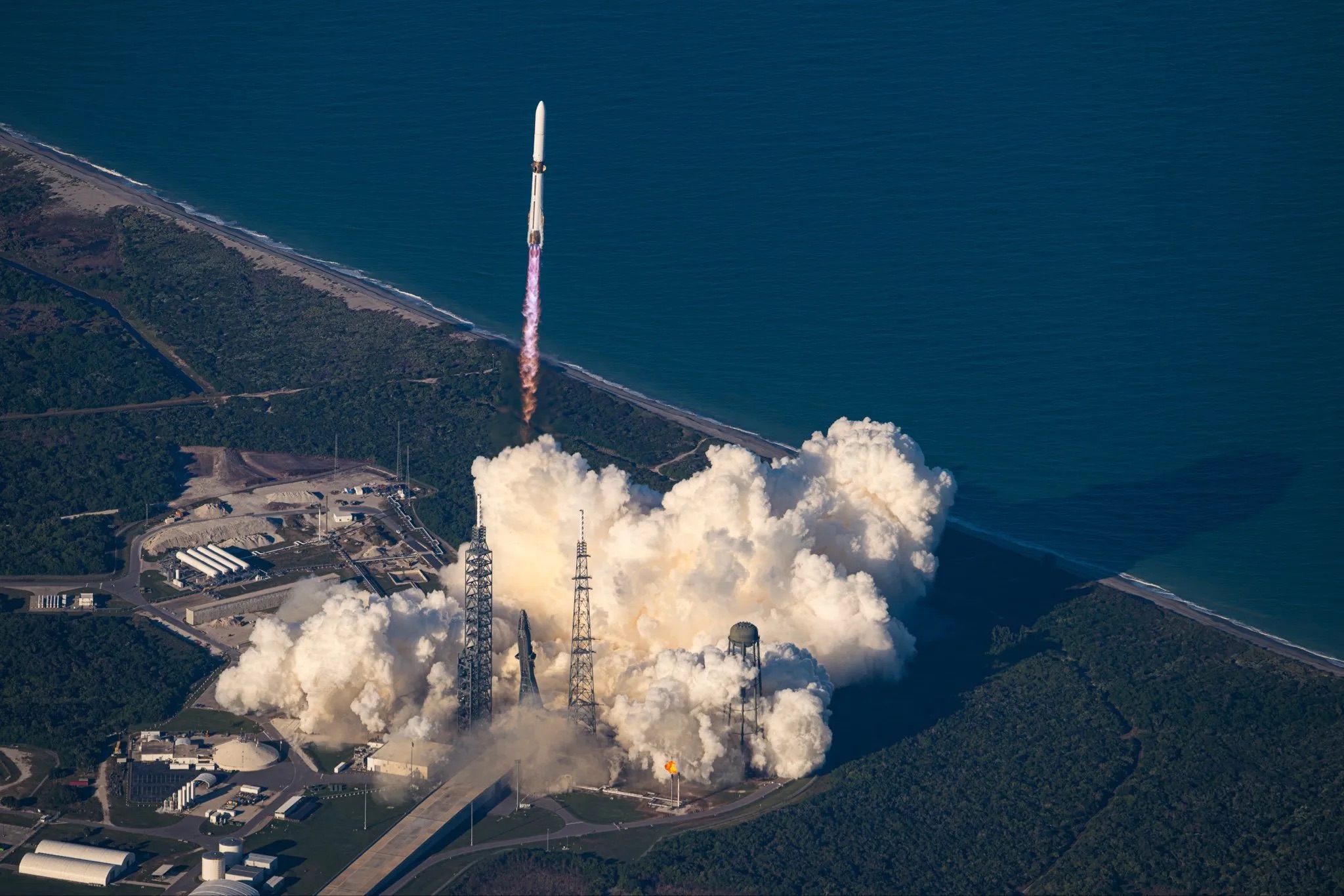
NASA’s twin ESCAPADE spacecraft are on their way to Mars after successfully completing two unprecedented powered flybys of Earth, demonstrating a new approach that could allow future missions to launch without waiting for the usual two-year planetary alignment.
The spacecraft, named Blue and Gold, used a combination of Earth’s gravity and precisely timed engine burns on 7 and 9 November to accelerate towards the Red Planet. Both manoeuvres succeeded, putting the pair on course to reach Mars in September 2027.
The achievement completes the most demanding phase so far of an unusual journey that began almost a year ago.
“This is the first time NASA has used a powered Earth flyby to propel a spacecraft toward Mars, and we’ve now executed this maneuver twice, flawlessly, in just two days,” said Asal Naseri, acting associate flight director for NASA’s Heliophysics Division.
The mission, known as ESCAPADE (Escape and Plasma Acceleration and Dynamics Explorers), is led by the University of California, Berkeley’s Space Sciences Laboratory. Its principal investigator, Robert Lillis, credited the operations team with successfully preparing both spacecraft for the critical manoeuvres.
“Our fantastic operations team put 110% into this critical manoeuvre, getting the spacecraft ready and watching like hawks for potential issues. We’re excited to now focus on our interplanetary journey. Onward, to Mars!” Lillis said.
Why NASA sent its Mars spacecraft back towards Earth
Most missions to Mars leave Earth during a relatively short launch window that opens roughly every 26 months, when the positions of the two planets allow spacecraft to make the journey with comparatively little fuel.
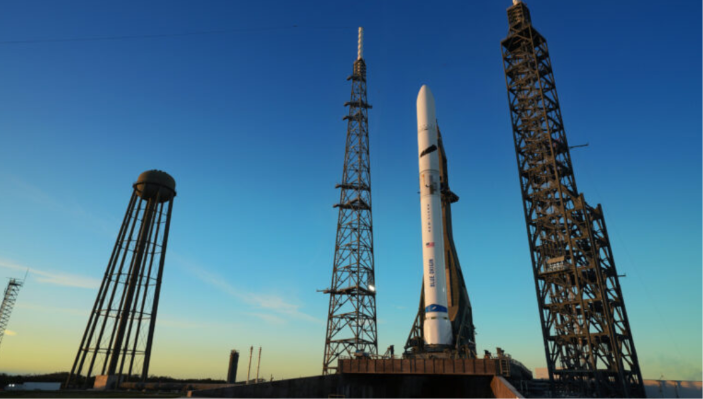
ESCAPADE took a different route. The two spacecraft launched aboard Blue Origin’s New Glenn rocket from Cape Canaveral on 13 November 2025, when Earth and Mars were on opposite sides of the Sun. Instead of heading directly towards Mars, they travelled towards a region around the Earth-Sun Lagrange point 2, approximately one million miles from Earth.
They spent much of the following year following an elongated, looping trajectory that eventually brought them back towards our planet.
By the time they returned in November 2026, Earth and Mars had moved into a more favourable alignment.
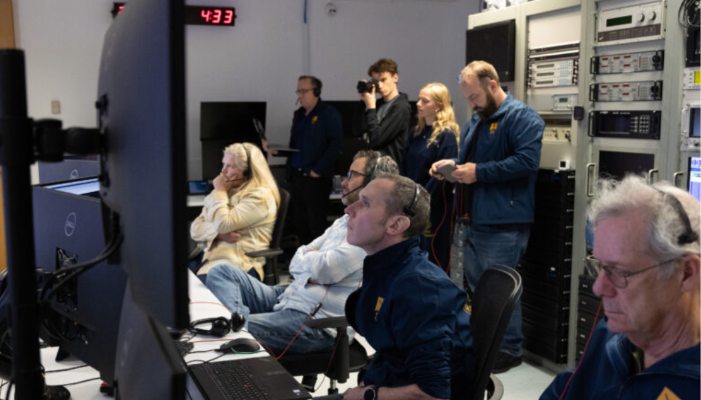
The spacecraft then used Earth’s gravitational pull to change direction and gain speed. At the same time, each fired its engine for approximately nine minutes, providing the additional acceleration needed to begin the journey to Mars.
Blue completed its manoeuvre on 7 November at an altitude of approximately 1,000 miles above Earth. Gold followed two days later, passing about 650 miles above the planet.
The engine burns increased the spacecraft’s speed by more than 1,000 miles per hour.
The technique is known as a powered gravity assist, or Oberth manoeuvre. Although spacecraft have previously used planetary flybys to change their trajectories, NASA says this is the first successful use of a powered Earth flyby to send a mission towards Mars.
Jeff Parker of Advanced Space, the mission’s lead designer, said the approach could offer considerably more flexibility when planning future missions.
“With this loiter orbit and Earth flyby, ESCAPADE is pioneering a new strategy for getting to Mars,” Parker said.
“This method provides the flexibility to launch almost anytime and then use Earth’s gravity to get a boost to Mars, rather than waiting every two years to launch there directly when the planets are aligned.”
That flexibility could become important as more spacecraft are sent to Mars.
Launching during a narrow planetary window places considerable demands on launch facilities, spacecraft preparation and mission schedules. Weather problems or technical delays can cause missions to miss their opportunity and wait another two years.
ESCAPADE has demonstrated that spacecraft can launch earlier, remain in a suitable orbit and depart for Mars when the planetary positions become favourable.
Mark Lewis, manager of Berkeley’s Space Sciences Laboratory Mission Operations Center, said the successful manoeuvres could change how missions are scheduled.
“It would open up the possibility for people to launch in between transfer windows, loiter around, and then go when it’s convenient to do so,” he said.
The approach does not eliminate the importance of planetary alignment for the journey to Mars. Instead, it separates the initial launch from Earth from the spacecraft’s eventual departure towards the planet.
Two spacecraft will investigate why Mars lost its atmosphere
Once at Mars, ESCAPADE’s two spacecraft will investigate how the solar wind, a stream of charged particles from the Sun, interacts with the planet’s magnetic environment and contributes to the loss of its atmosphere.
Mars once had rivers, lakes and a much thicker atmosphere. Today, its atmosphere is less than 1% as dense as Earth’s. The planet no longer has a global magnetic field, although magnetised rocks in its crust produce localised fields. Scientists believe the solar wind has played a significant role in stripping away atmospheric gases over billions of years.
NASA’s MAVEN spacecraft has already studied this process, but ESCAPADE will provide something different: two spacecraft making coordinated observations of the same changing environment.
This will help scientists distinguish changes occurring over time from differences between locations, something that is difficult to establish using measurements from a single orbiter.
“This will be the first science mission to choreograph two orbiters around Mars, and the first time we will be able to make coordinated observations of the Martian environment from two different locations simultaneously,” said Robert Lillis, ESCAPADE’s principal investigator at UC Berkeley.
“The formation flying will allow us to investigate how the dynamic Martian magnetosphere varies both spatially and temporally.”
Blue and Gold are scheduled to enter Martian orbit on 7 and 9 September 2027, respectively. Each will fire its engine for approximately 11 minutes to slow down and enter orbit.
Science operations are expected to begin in June 2028, following several months of orbital adjustments. The spacecraft will initially follow one another in the same orbit, allowing researchers to measure how conditions change over short periods.
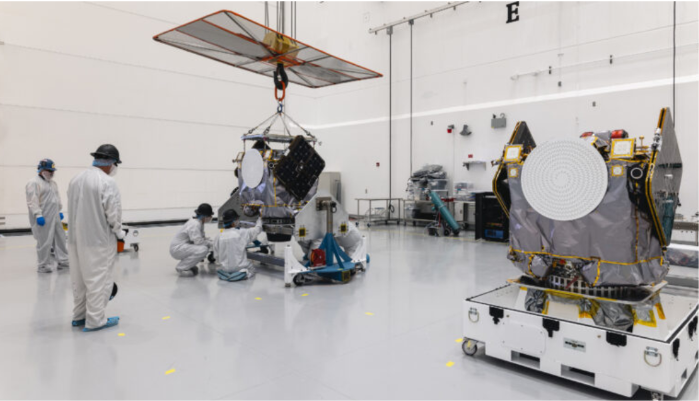
Six months later, they will move into separate orbits. One will travel farther from Mars to monitor the incoming solar wind, while the other remains closer to the planet to observe its effects. The arrangement will allow scientists to compare the solar wind with the planet’s response at nearly the same time.
What the mission means for astronauts on Mars
The research has implications beyond understanding the planet’s ancient climate.
Mars has little protection from the radiation associated with solar storms, making space weather an important consideration for future astronauts living or working on its surface.
ESCAPADE’s measurements could help scientists better understand how energetic particles behave around Mars and improve the information needed to assess radiation hazards.
“We will be making the space weather measurements we need to understand the system well enough to forecast solar storms whose radiation could harm astronauts on the surface of Mars or in orbit,” Lillis said in an earlier UC Berkeley account of the mission.
The Martian ionosphere, a region of the upper atmosphere containing electrically charged particles, is another area of interest.
Changes in this region can affect radio signals, potentially complicating communications and navigation for spacecraft, aircraft and people operating on Mars.
“Understanding how the ionosphere varies will be a really important part of understanding how to correct the distortions in radio signals that we will need to communicate with each other and to navigate on Mars,” Lillis said.
Michele Cash, ESCAPADE programme scientist at NASA Headquarters, said the mission could help prepare for future human exploration.
“By better understanding how the solar wind affects the Martian environment, ESCAPADE’s findings could help us plan and prepare for future human exploration of the Red Planet,” she said.
A smaller, lower-cost approach to planetary exploration
ESCAPADE is also testing a different model for conducting planetary science.
The mission is part of NASA’s Small Innovative Missions for Planetary Exploration, or SIMPLEx, programme, which supports lower-cost missions that accept greater technical risk than traditional large planetary spacecraft.
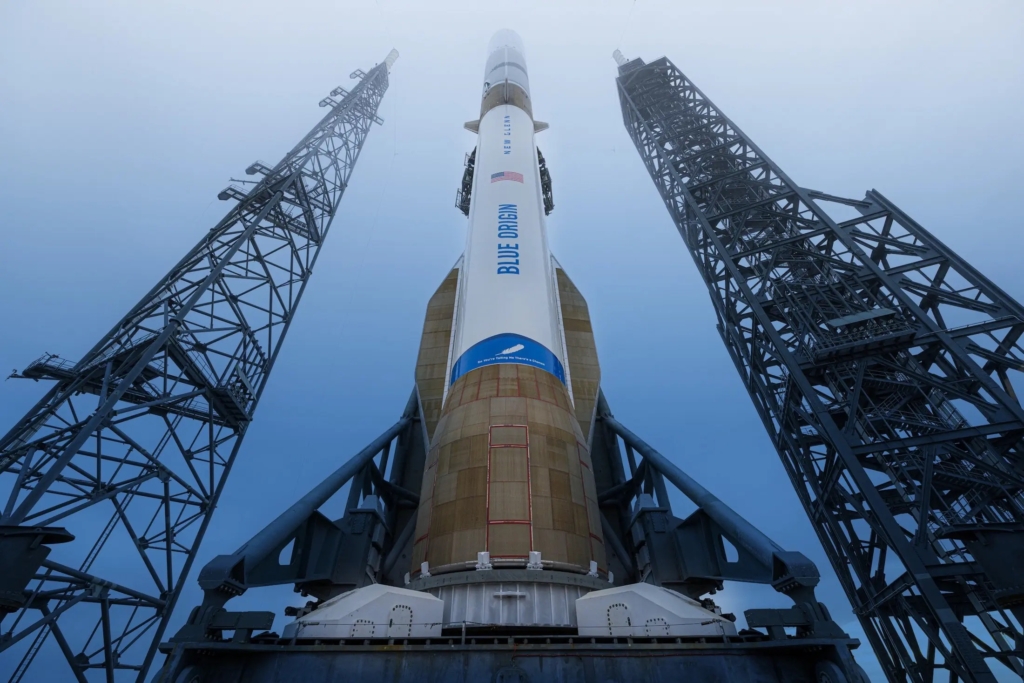
UC Berkeley leads the project, with Rocket Lab responsible for building the two spacecraft. Other partners include NASA’s Goddard Space Flight Center, Embry-Riddle Aeronautical University, Advanced Space and Blue Origin.
Berkeley’s scientific instruments include devices that measure charged particles escaping from Mars, while other instruments examine magnetic fields and plasma surrounding the spacecraft.
The mission’s scientific objectives build on decades of observations by previous Mars orbiters, but its two-spacecraft arrangement offers a capability those missions did not have.
ESCAPADE has already begun collecting useful measurements during its journey.
While travelling through its extended orbit around Earth, the spacecraft passed through distant regions of Earth’s magnetotail, the elongated part of our planet’s magnetic environment that stretches away from the Sun.
Scientists have collected observations of the structure and behaviour of that region and expect to continue studying the solar wind during the 10-month cruise to Mars.
As Lillis observed while discussing the difficulties of eventually establishing a human settlement on Mars, the challenges remain formidable.
“It is definitely going to be a challenge to establish a human settlement on Mars,” he said. “But, you know, humans are tenacious, right?”


