How long does it really take to reach the ISS, the Moon and Mars?

8 min read
Four hours, three days, nine months.
At first glance those numbers seem to tell a simple story about increasing distance. In reality, they reveal something far more interesting about how space travel works.
NASA astronaut Anne McClain spent six hours and four orbits of Earth travelling to the ISS in December 2018. Half a century earlier, Apollo 8’s astronauts spent nearly three days travelling to the Moon.
A journey to Mars, by contrast, is measured in months.
The distances are enormous: roughly 400km to the ISS, 384,400km to the Moon and anywhere from tens to hundreds of millions of kilometres to Mars. Yet distance alone does not determine the journey.
In space, getting somewhere means catching something that is already moving.
Six hours chasing a home in the sky
McClain left Earth from Baikonur Cosmodrome in Kazakhstan on December 3, 2018, with Canadian astronaut David Saint-Jacques and Russian cosmonaut Oleg Kononenko.
They launched at 6:31am EST. At 12:33pm, after four trips around Earth, their Soyuz docked with the ISS.
“Putting this journey into words will not be easy, but I will try,” McClain later said. “I am finally where I was born to be.” NASA recorded the comment in its account of her first voyage to space.
The remarkable thing is that her destination was only about 400km above Earth.
A passenger aircraft could cover 400km horizontally in well under an hour. Spaceflight is different because McClain’s Soyuz could not simply climb 400km and stop.
The ISS was moving at about eight kilometres every second.
It circles Earth roughly once every 90 minutes, making about 16 orbits each day. The Soyuz first had to enter orbit itself and then manoeuvre until its path and speed allowed it to rendezvous with the station.
The astronauts were, quite literally, chasing their destination around the planet.
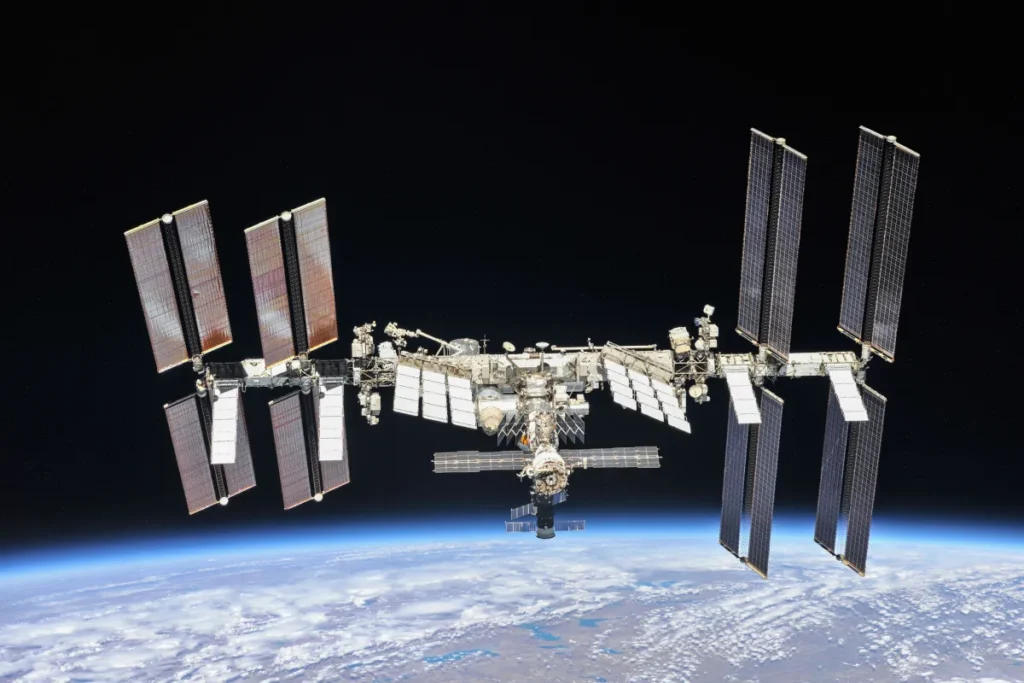
NASA says spacecraft can make the trip to the ISS in as little as four hours. Other missions take longer because the journey depends on launch timing, orbital geometry and the rendezvous profile being flown.
That leads to the first lesson in answering the deceptively simple question of how long space travel takes: 400km in space is not the same journey as 400km on Earth.
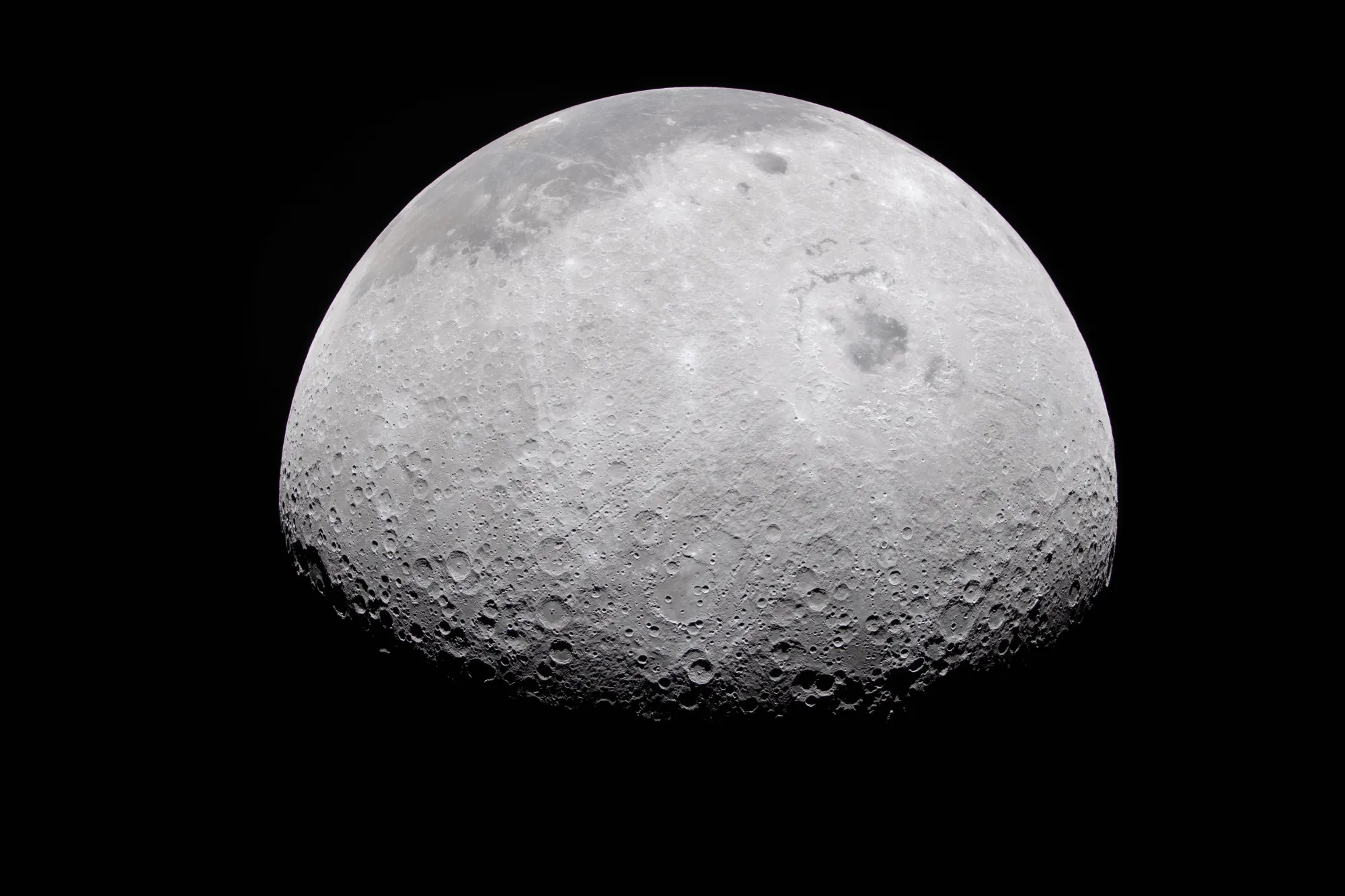
Three days to the Moon
The Moon is almost 1,000 times farther away than the ISS.
Its average distance from Earth is about 384,400km. A radio message travelling at the speed of light can make the round trip in roughly 2.5 seconds.
Humans have taken about three days to get there.
Apollo 8 provides perhaps the best account of what that journey actually looked and felt like.
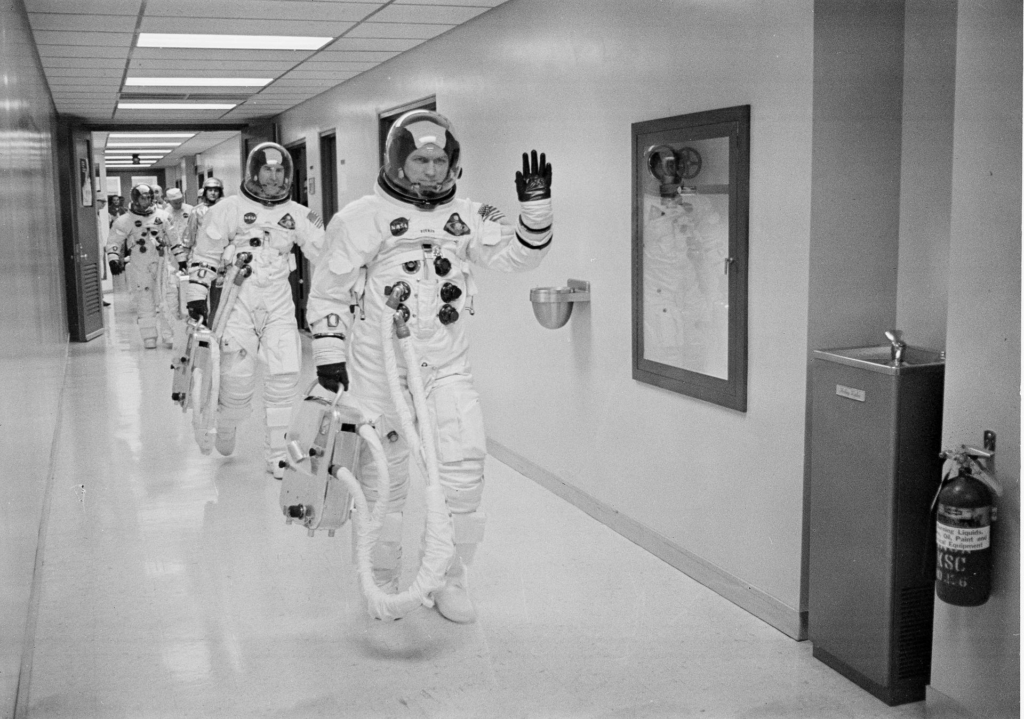
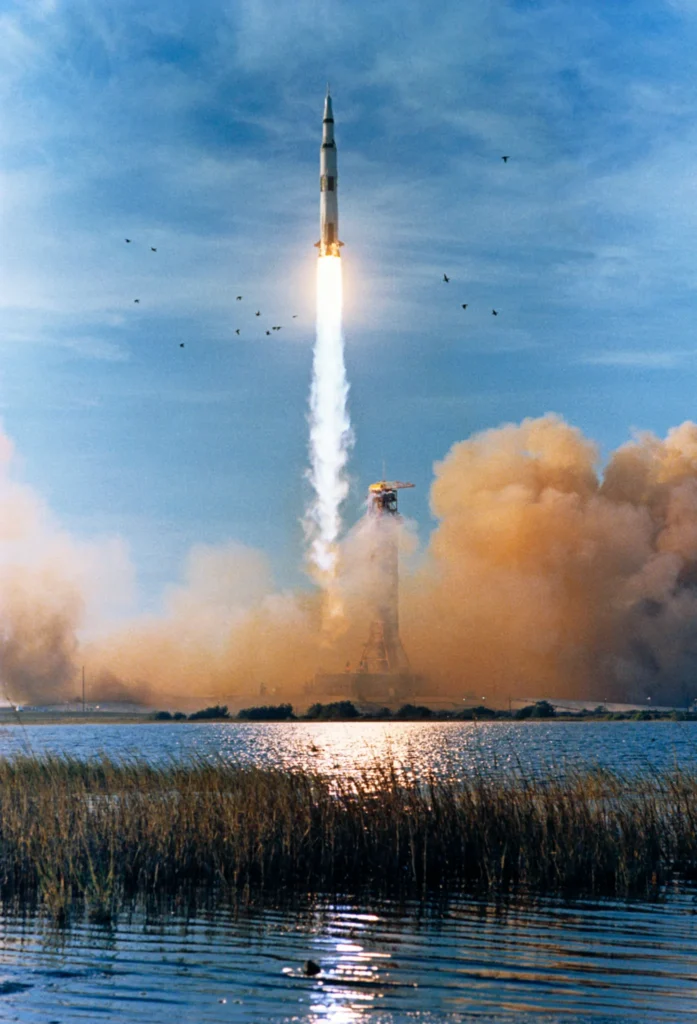
Frank Borman, Jim Lovell and Bill Anders launched on December 21, 1968, becoming the first humans to leave Earth orbit for another world. Two hours and 50 minutes after launch, the Saturn V’s third stage fired for trans-lunar injection, accelerating Apollo 8 towards the Moon.
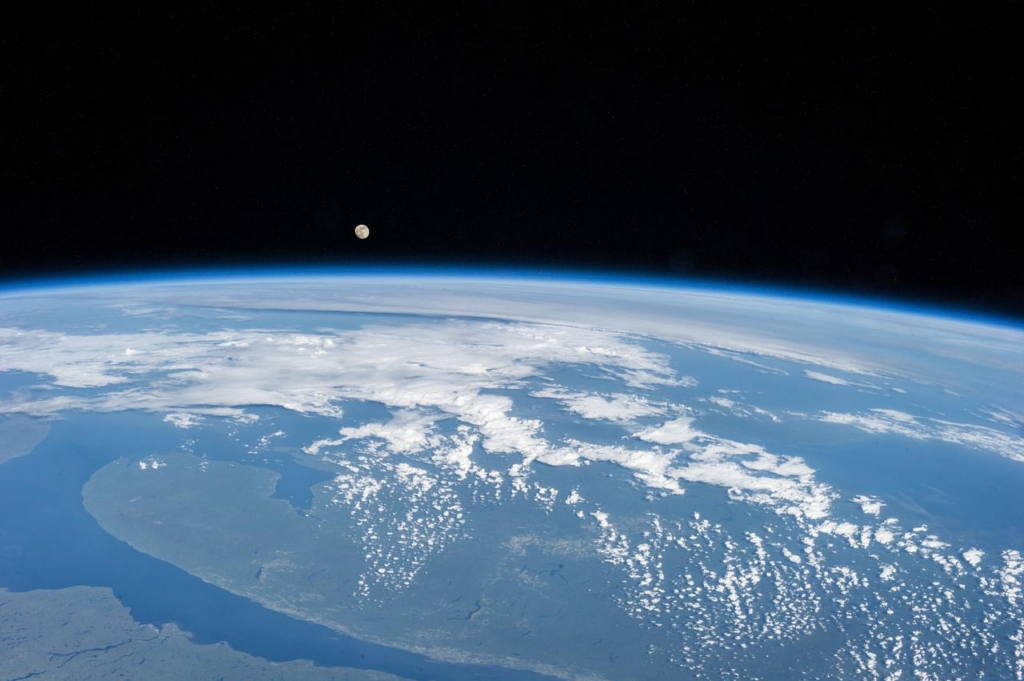
As Earth receded behind them, the view began to change.
Halfway to the Moon, Borman looked through the window at a planet that no longer filled the sky.
“It’s a beautiful, beautiful view,” he told Mission Control.
Apollo 8 reached the far side of the Moon 69 hours, eight minutes and 16 seconds after launch. The spacecraft then had to do something a probe merely racing past the Moon would not: slow down.
Its engine fired for four minutes, reducing Apollo 8’s velocity enough for lunar gravity to capture it into orbit.
That distinction explains why asking how quickly a spacecraft can reach the Moon is different from asking how long a lunar mission takes.
New Horizons, the uncrewed probe heading for Pluto, crossed the Moon’s orbital distance only eight hours and 35 minutes after its 2006 launch. It was not stopping there. Apollo 8 had to arrive and stay.
‘We’ll see you on the other side’
Just before Apollo 8 reached the Moon, the journey produced a moment that neatly illustrates another problem with travelling far from Earth.
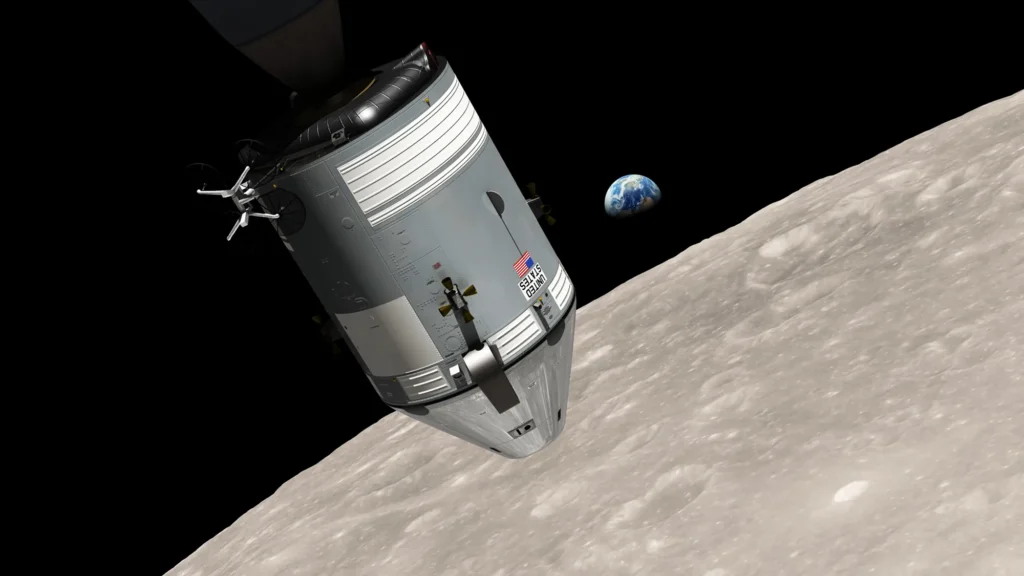
The spacecraft was about to disappear behind the Moon. Radio contact with Mission Control would be lost just as the crew performed the engine burn needed to enter lunar orbit.
“Apollo 8, one minute to LOS,” spacecraft communicator Jerry Carr told them. “All systems Go. Safe journey, guys.”
“We’ll see you on the other side,” Lovell replied. Then Houston could do nothing.
For 37 minutes and 32 seconds, Mission Control waited. When telemetry finally began appearing again, Apollo 8 was safely in lunar orbit.
Carr asked what the Moon looked like from 60 miles above. “Like dirty beach sand with lots of footprints in it,” Anders replied.
After travelling nearly 400,000km, that was one astronaut’s first description of another world. The greater surprise came when the crew looked the other way. During Apollo 8’s fourth orbit, Anders saw Earth appearing above the lunar horizon.“Here’s the Earth coming up. Wow, is that pretty,” he said.
He took the photograph that became known as Earthrise. Anders later summed up the strange result of humanity’s first voyage to the Moon: “We came all this way to explore the Moon … and the most important thing is that we discovered the Earth.”
Mars changes the meaning of ‘far away’
There is no astronaut story to open the Mars chapter. That is because nobody has been there.
With present mission profiles, NASA puts a relatively direct journey to Mars at around seven to ten months. Mars Reconnaissance Orbiter took about seven-and-a-half months; MAVEN took around ten.
Even saying how far away Mars is requires qualification.
Earth and Mars are constantly moving around the Sun. At a particularly close approach they can be about 56 million kilometres apart. When they are on opposite sides of the Sun, the distance can reach roughly 401 million kilometres.
A spacecraft therefore cannot simply be aimed at the place where Mars appears on launch day.
It has to intercept where Mars will be months later.
Think of throwing a ball to someone running across a field. You aim ahead of the runner. A Mars mission does something similar, except both the departure point and the target are racing around the Sun and the “ball” may spend most of a year getting there. Useful Earth-Mars launch opportunities occur about every 26 months.
Why not simply go faster?
This is where space travel becomes counter-intuitive. A faster spacecraft is not automatically a better spacecraft.
Going faster requires energy and propellant. More propellant adds mass, which itself has to be launched from Earth. And arriving quickly creates another problem: the spacecraft must somehow slow down.
A Mars orbiter has to reach the planet at a velocity that allows it to enter orbit. A lander has to survive atmospheric entry and then reach the surface. Those requirements constrain the trajectories mission planners can choose.
The Moon presents the same trade-off. NASA orbital dynamics expert Brent Barbee notes that trajectories designed to save fuel can take weeks or even months instead of days.
Sometimes spending time saves fuel. Sometimes spending fuel saves time. And sometimes gravity provides the helping hand.
Spacecraft travelling much farther into the Solar System can fly past planets to change their trajectory and speed without using equivalent amounts of propellant. NASA’s Galileo took a little over six years to reach Jupiter; Juno took just under five.
On Mars, even a conversation has a journey time
The distance to Mars becomes most understandable when somebody tries to send a message home.
Radio waves travel at the speed of light. Yet at interplanetary distances, even that is not instantaneous.
Depending on where Earth and Mars are, ESA puts the one-way signal delay at roughly four to 24 minutes. During the landing of NASA’s Curiosity rover, it was 13 minutes and 48 seconds.
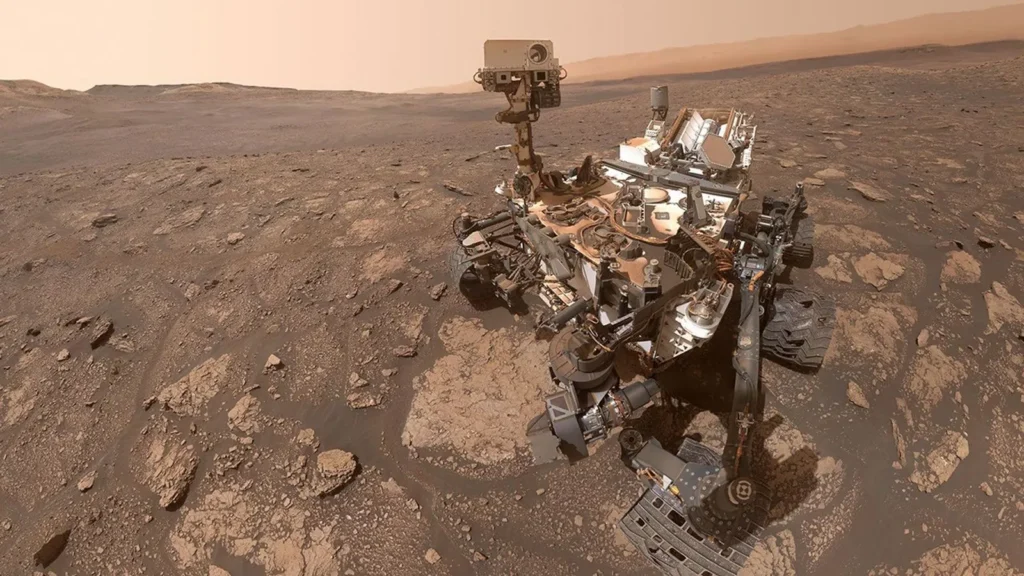
Imagine Curiosity developing a problem and sending a message to Earth at that moment.
Controllers would not know for almost 14 minutes. If they understood the problem instantly and transmitted a command straight back, another almost 14 minutes would pass before the spacecraft received it.
ESA therefore loads commands in advance and builds autonomy into spacecraft operating at Mars. A faster computer or more powerful radio cannot remove the delay. The signal is already travelling at the fundamental speed limit of the universe.
For future astronauts, that will make Mars fundamentally different from the ISS or even the Moon. A person on Mars could ask somebody on Earth a question and, at the greatest separation, wait more than 40 minutes to hear the answer.
There will be no ordinary telephone conversation with home.
Hours, days, months
So how long does it take to travel through space? For the ISS, think in hours. Anne McClain took six. For the Moon, think in days. Apollo 8 took just under three to reach lunar orbit. For Mars, think in months. With the trajectories spacecraft commonly fly today, seven to ten is typical.
But those numbers are really answers to a much more interesting problem.
A spacecraft does not travel between two stationary dots on a map. It leaves a moving Earth to meet another moving object. It has to carry enough fuel, follow the right orbit, arrive at the right moment and, crucially, reach its destination at a speed that allows it to do what it came to do.
Perhaps Apollo 8 captured that better than any calculation.
Three men travelled farther from home than humans had ever travelled before. They crossed nearly 400,000km to see the Moon close up.
And when they got there, the sight that astonished them most was the small blue world they had left behind.
Sign up for our newsletter and get our latest content in your inbox.


More from


October 17, 20264 min read