What is controlled airspace?

May 30, 2026
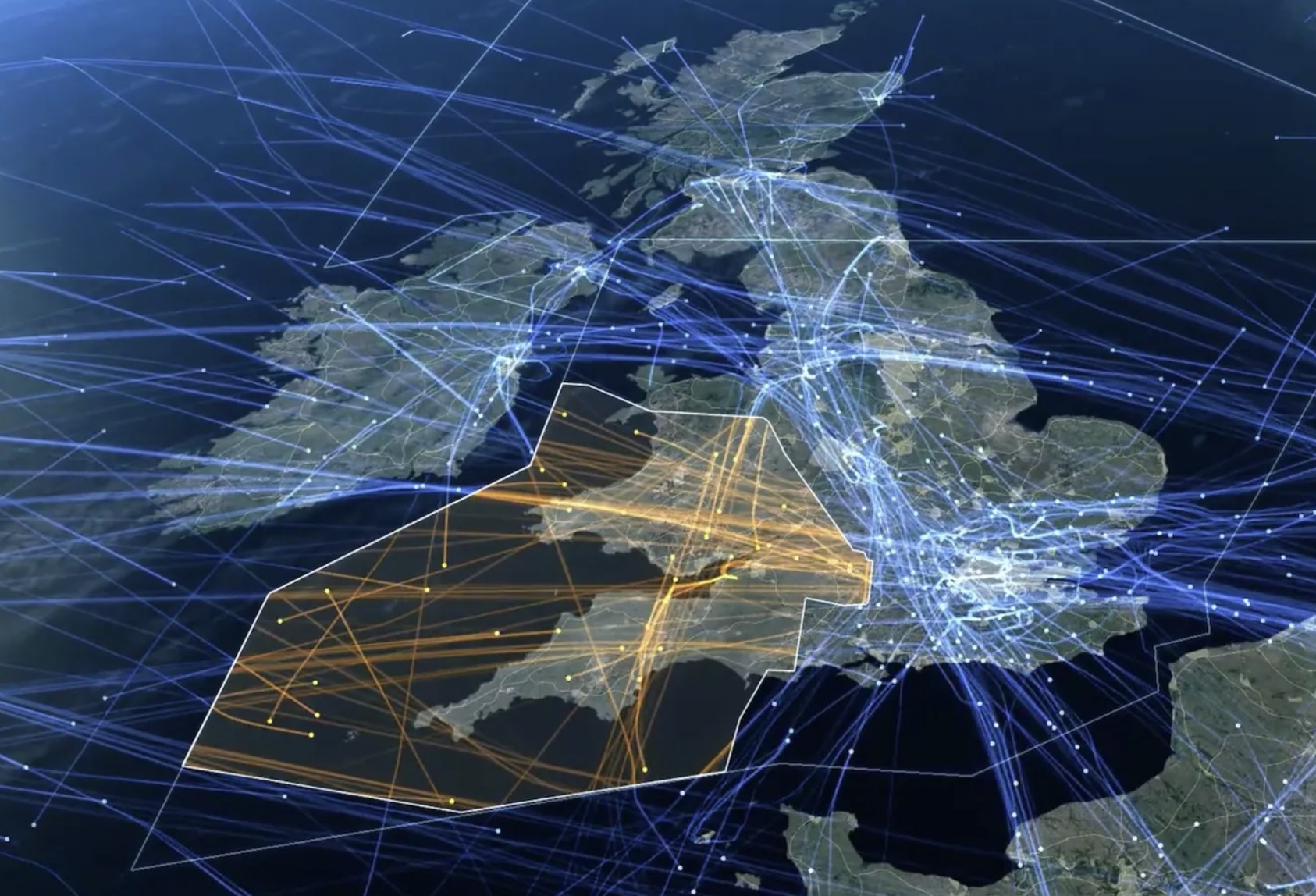
Airspace is divided into two main categories: controlled and uncontrolled.
In simple terms, in controlled airspace, aircraft operate under the supervision of air traffic control (ATC), with pilots following specific instructions and procedures.
Outside it, in uncontrolled airspace, aircraft can fly more freely, although pilots can still request air traffic services if needed.
The rules governing airspace are set internationally by the International Civil Aviation Organization (ICAO) and applied in Europe through the Standardised European Rules of the Air (SERA).
These rules determine how aircraft operate under Instrument Flight Rules (IFR) or Visual Flight Rules (VFR), depending on weather conditions and the type of flight.
What are the different controlled airspace classes?
Controlled airspace is split into Classes A, B, C, D and E, each with different levels of control and aircraft separation requirements. Some countries also use Class F, which is partially controlled.
Different countries apply the classes differently. In the UK, controlled airspace mainly uses Classes A, C, D and E, while Class G remains uncontrolled. In the United States, Class B airspace commonly surrounds major airports, usually extending from the surface to 10,000ft, with Class A above that level.
Airways, SIDs and STARS
Airspace relies on structured routes and procedures. Standard Instrument Departures (SIDs) guide aircraft after take-off, while Standard Arrival Routes (STARs) help organise arrivals into airports.
Aircraft travelling under IFR mainly operate along airways, like motorways in the sky. Airways are identified by letters and numbers and traditionally extend five nautical miles either side of a central route.
However, parts of Europe, including France, now use Free Route Airspace (FRA), allowing aircraft to fly more direct routes between entry and exit points rather than following fixed airways. The aim is to improve efficiency, reduce fuel burn and cut emissions.
TMAs, CTRs, and CTAs explained
Around busy airports, controlled airspace becomes more complex.
Terminal Control Areas (TMAs) cover regions where several major airports operate close together. The London TMA, for example, handles traffic for airports including Heathrow, Gatwick, Stansted, Luton and London City, while similar TMAs exist in Manchester and Scotland.
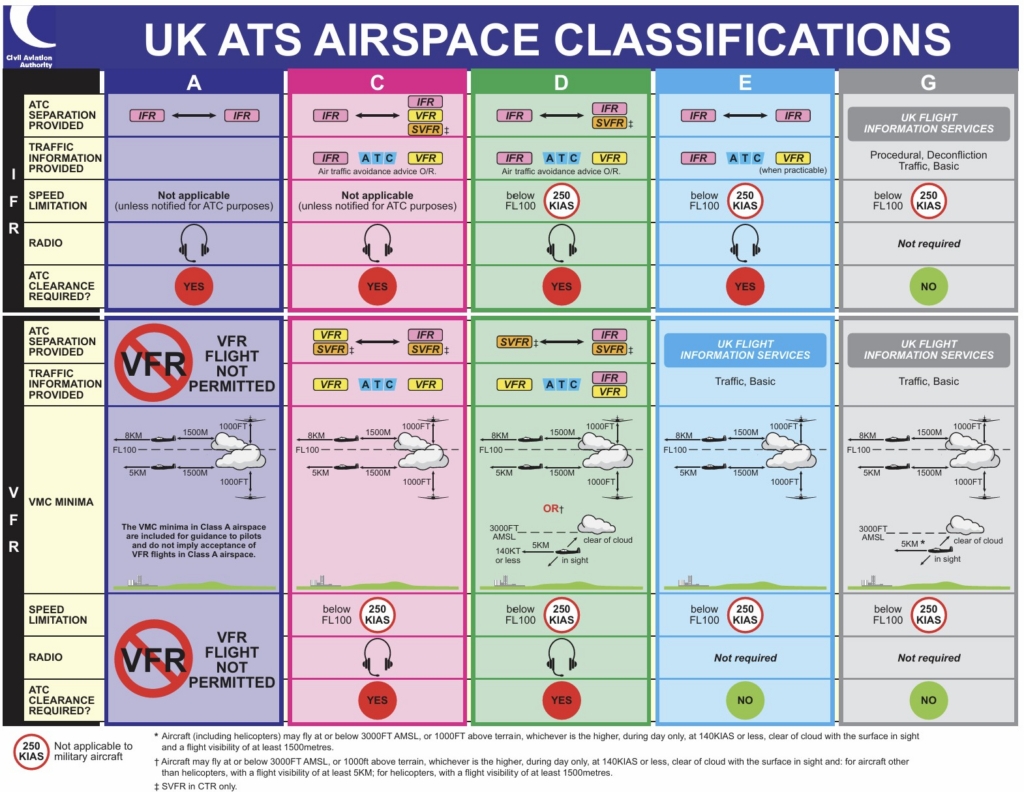
Closer to airports are Control Zones (CTRs), usually Class D in the UK, extending from the surface upwards to protect aircraft during take-off and landing.
Beyond these sit Control Areas (CTAs), which extend further outward from airports and often begin at around 1,500ft, although this varies by location.
Restricted and danger areas
Pilots must also avoid specialised airspace areas. Danger Areas may contain military activity such as weapons training, while Prohibited Areas ban aircraft entirely.
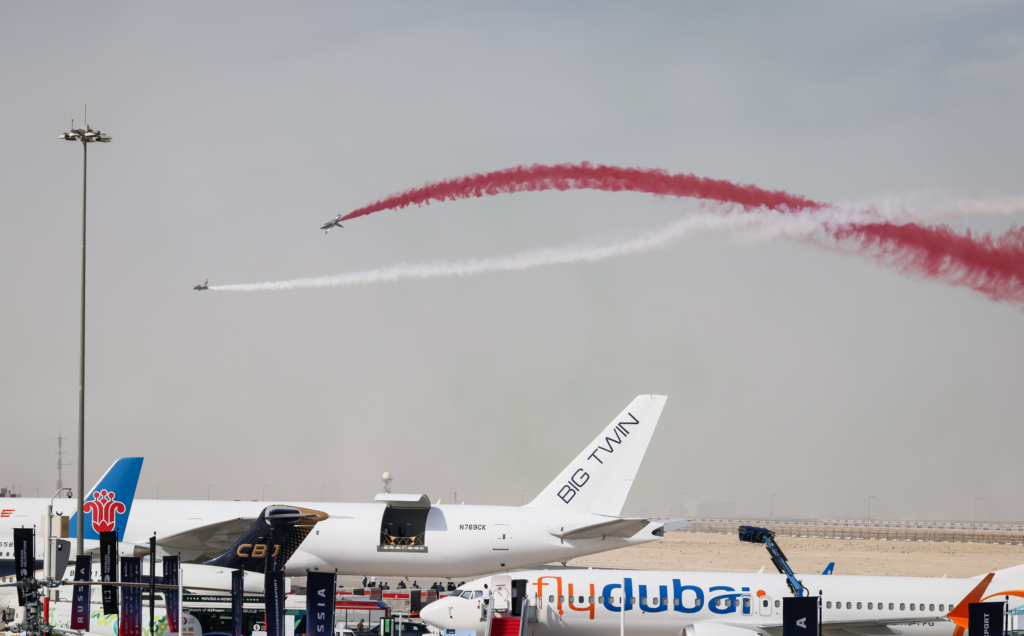
Restricted Areas can also be introduced temporarily around events like airshows or major sporting fixtures for example.
Do pilots ever accidentally enter an airspace incorrectly?
Yes, sometimes – but it’s absolutely best avoided.
Airspace infringements occur when aircraft accidentally enter controlled airspace without permission. It commonly happens to light aircraft flying under VFR.
Although GPS and moving map technology have reduced infringements, it’s still possible for pilots to make navigation mistakes or receive incorrect altimeter settings.
Around major airports, even a small infringement can disrupt operations, especially if the aircraft is not in radio contact with ATC. Departures and arrivals may need to be delayed until the situation is sorted out, which can obviously be a major headache.
In the UK, the Civil Aviation Authority (CAA) can take enforcement action against pilots involved in infringements, although the focus is increasingly on prevention and education.
In a nutshell, controlled airspace is largely invisible to passengers, but without it there would be no safe way of flying.
Featured image: NATS