ZeroAvia secures €21.4m EU grant for hydrogen-electric aircraft development

3 min read

After ground testing its prototype hydrogen fuel cell, ZeroAvia has received European grant money to convert Cessnas and continue its work. ZeroAvia is currently working with both the UK Civil Aviation Authority and the FAA on its novel engine’s certification.
ZeroAvia receives Euro grant for hydrogen-electric development
The hydrogen-electric startup, ZeroAvia, announced yesterday that it secured financing to develop its hydrogen-fuel (fuel cell-powered) powertrain technology. These aircraft are claimed to reduce greenhouse gas emissions by more than 95%.
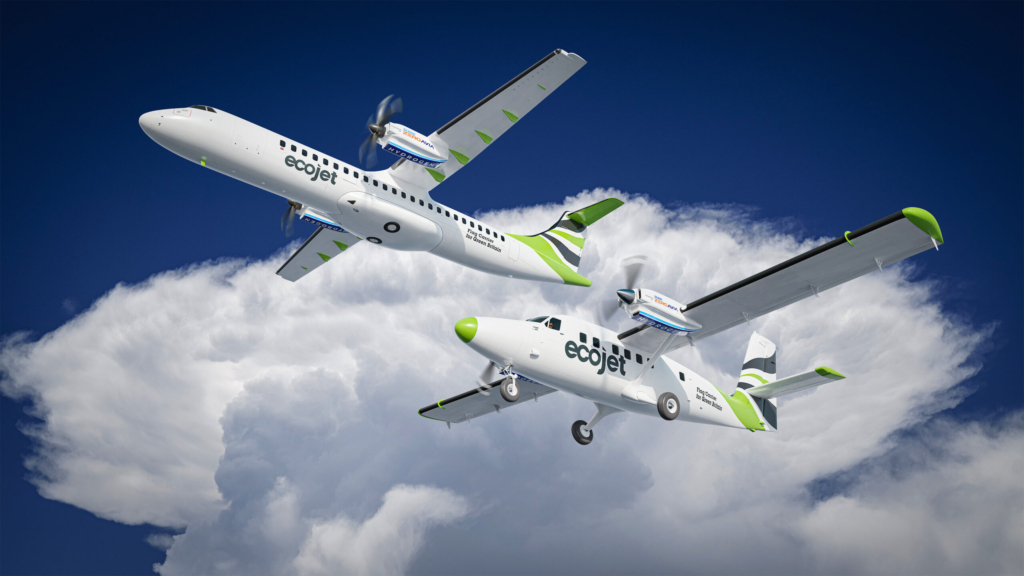
The European Union’s Innovation Fund selected ZeroAvia’s application for a €21.4 million grant under the Strategic Technologies for Europe Platform (STEP). The money will be spent on developing a hydrogen-electric aircraft, including the retrofitting of 15 Cessna Caravan aircraft with ZeroAvia’s ZA600 hydrogen-electric engines.
The zero-emission aircraft are planned to replace today’s kerosene-fuel turboprops on cargo routes. The project is also working on developing hydrogen refuelling and storage infrastructure at 15 Norwegian airports.
This will establish the world’s biggest network of zero-emission commercial flights. The air operators for the new network will be announced at a later date. ZeroAvia plans for airport infrastructure to commence operations in 2028.
Get a first look at our Electric Motor Dynamometer, which enables us to assess and optimize performance of the 600kW motor, verify quality, and perform characterization and tuning.
— ZeroAvia (@ZeroAvia) October 28, 2025
Download a 600kW motor and EPS data sheet here: https://t.co/ruOWWwe6DA pic.twitter.com/sSuOZ5g13W
ZeroAvia says it has submitted its first full engine designed for an up to 20-seater aeroplane for certification.
ZeroAvia’s quest to build up to 80-seater hydrogen aircraft
ZeroAvia was founded in 2017 and is working to develop electric propulsion for regional aircraft. Fuel cells generate electricity from hydrogen fuel without needing combustion, while the only emission is low-temperature water vapour.

The aim is to reduce emissions, noise, lower costs, and promote connectivity. It is working on developing a larger hydrogen-electric powertrain for 40-80-seat commercial passenger aircraft. It is currently working on the flight ranges of up to 700 miles.
But it’s not limited to turboprop aircraft. ZeroAvia’s targeted aircraft includes battery, hybrid, eVTOL, rotorcraft, UAV, and fuel cell-powered electric fixed-wing aircraft.
Last Friday, our team completed the first tow of our Dornier 228 from the hangar to our Liquid Hydrogen Test Facility. This involved rehearsing the towing route and conducting critical interface checks, in preparation for the first ground test and flight using liquid hydrogen. pic.twitter.com/a6ShPvs5ka
— ZeroAvia (@ZeroAvia) October 27, 2025
On its website, ZeroAvia says, “We’re initially targeting a 300-mile range in 10–20 seat electric aircraft by the end of 2026, and up to 700-mile range in 40–80 seat electric aircraft by 2028.”
Ambitions for narrowbody commercial aircraft
ZeroAvia’s hydrogen-electric ambitions extend beyond small and regional aircraft. ZeroAvia spoke to AGN, saying it plans to start supplying its powertrains to regional propeller jets like the ATR and Dash 8 before progressing onto regional jets by the mid-2030s.

Central to the plan is its planned ZA2000 multi-megawatt powertrain, which is being designed for commuter aircraft carrying up to 150 seats. The current plan is for test flights with a Dash 8 in 2027. But ZeroAvia has set its sights on Airbus’ next-generation of narrowbody aircraft.
The workhorse of modern commercial passenger aviation is the narrowbody aircraft, particularly the Airbus A320 family and Boeing’s 737 family. The company says it wants to tap this market by the mid-2030s.
Separately, Airbus is known to be in the early stages of developing replacements for its A320 family. It is reported that the replacement will be a new narrowbody powered by CFM International RISE open-fan engines.
Free #aviation lecture, RAeS HQ, 8 May, 'Hydrogen Electric Power as a Solution for Green Aviation' Jon Killerby, Chief Test Pilot & Aidy Woolven, Lead Flight Test Engineer @Zeroavia https://t.co/KHkyNVBSqx pic.twitter.com/i8BiCPglky
— Tim Robinson (@RAeSTimR) April 29, 2025
Airbus is also working on the ZEROe aircraft that will feature electric propeller propulsion powered by hydrogen fuel cells. Airbus announced that hydrogen fuel cell technology had been selected as the propulsion for the future aircraft after testing and research “supported the viability of this technology.”