


Could netting protect F-35s from drones? US Air Force explores new defences

3 min read
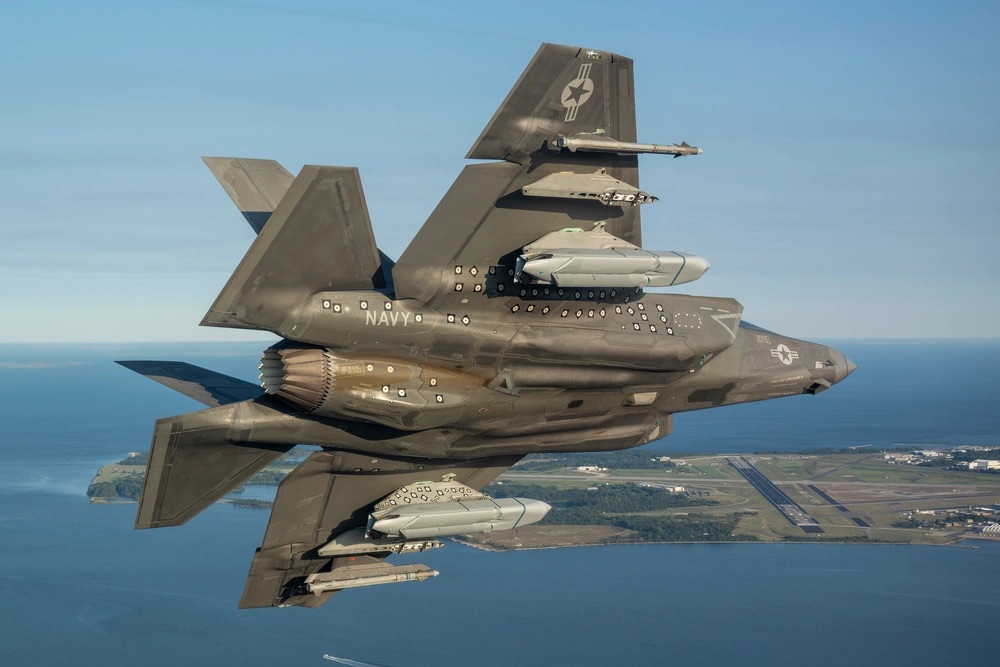
The US Air Force is looking to protect its F-35A fighter jets at Tyndall Air Force Base in Florida with netting, according to reports.
Netting remains one of the most affordable, quickest, and reliable layers of protection for parked aircraft from small UAS threats.
The Air Force’s 325th Contracting Squadron at Tyndall has issued a request for information entitled “Counter-Unmanned Aircraft System (C-UAS) Netting Installation for Aircraft Sunshade Structures.”
It explained that the USAF is conducting market research for the installation of netting on existing aircraft sunshade structures. The contract is particularly focused on small businesses.
The Air Force stated, “The Government is also interested in unique and innovative solutions, including any proof-of-concept or operational C-UAS netting installations already fielded or under evaluation at other Department of Defense installations.”
Protecting USAF’s F-35A stealth fighters
While a number of defence-tech companies are currently working on developing an array of effective counter-UAS solutions, one of the most effective solutions remains an old-fashioned net or other physical barrier.
In the procurement notice, the requirements are for a contractor to install counter-UAV netting on all four sides of six existing aircraft sunshade structures. Each structure is around 630 feet long, 65 feet wide, and 30 feet high.
The War Zone identifies that these shelters are designed to accommodate up to six F-35A stealth fighters at a time. Tyndall is a major hub for the United States Air Force’s F-35 operations and is located in Florida’s Panhandle.
The topic of netting over US fighter jets is not new. Plans have been floated to erect netting around sunshade-type shelters for F-22 Raptors stationed at Langley after mysterious late 2023 drone incursions.

Across the United States and Europe, there have been numerous reports of unexplained drones flying over air force bases and airports.
Realistically, these small drones likely present the biggest aerial threat to Allied parked aircraft in their mainland home bases in peacetime.
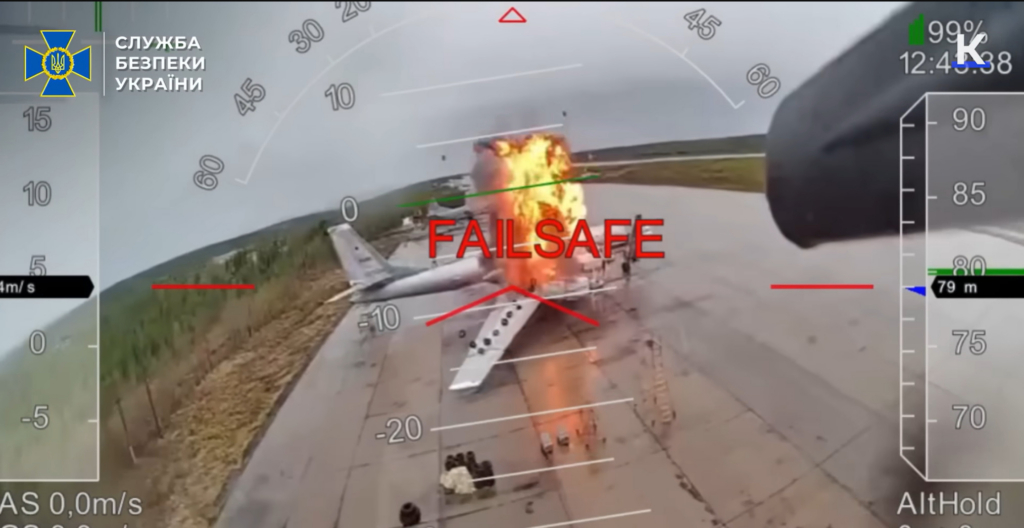
Notably, in 2026, saboteurs attempted to destroy Ukrainian Antonov An-124 Ruslan transports parked at Germany’s Leipzig/Halle Airport. At least one explosive-laden drone is reported to have found its mark but failed to explode.
An effective solution against small FPV-type drones
Netting may be ineffective against heavier one-way attack drones, missiles, and certain types of warheads, but they are very effective against many types of lower-end FPV-type drones.
The Air Force explicitly identifies the purpose as blocking Group 1 “small” drones from striking the aircraft.
Myanmar 🇲🇲: PDF resistance sources published footage which showed FPV drones damage four junta jets at the Tada-U airbase, south of Mandalay. Resistance forces just took their drone warfare to the next level. https://t.co/8FAgZygKIo
— Thomas van Linge (@ThomasVLinge) September 10, 2026
Netting may have been enough to block Ukrainian FPV strikes on Russian bombers during Operation Spider Web.
More recently, opposition fighters in Myanmar (Burma) struck junta Yak-130 light combat aircraft in their hangars at Mandalay for the first time with small drones. The outcome was unclear, but released footage appears to show the drones struggling to bypass the protective netting.
In Ukraine, roads and entire neighbourhoods near the frontline are now often encased in netting.


