


How AIM-424 Malice gives the F-35C extreme range without sacrificing stealth

4 min read
Over the weekend, the US Navy unveiled the existence of an all-new very long-range air-to-air missile called the AIM-424 “Malice” at the Tailhook Association’s convention in Reno, Nevada.
Its headline range of more than 250 nautical miles is substantial. But the real significance of Malice is not simply how far it can fly.
The Navy already has an extreme-range air-to-air weapon in the AIM-174B Gunslinger, derived from the SM-6. The problem is its size – Gunslinger has to be carried externally by the F/A-18E/F Super Hornet.
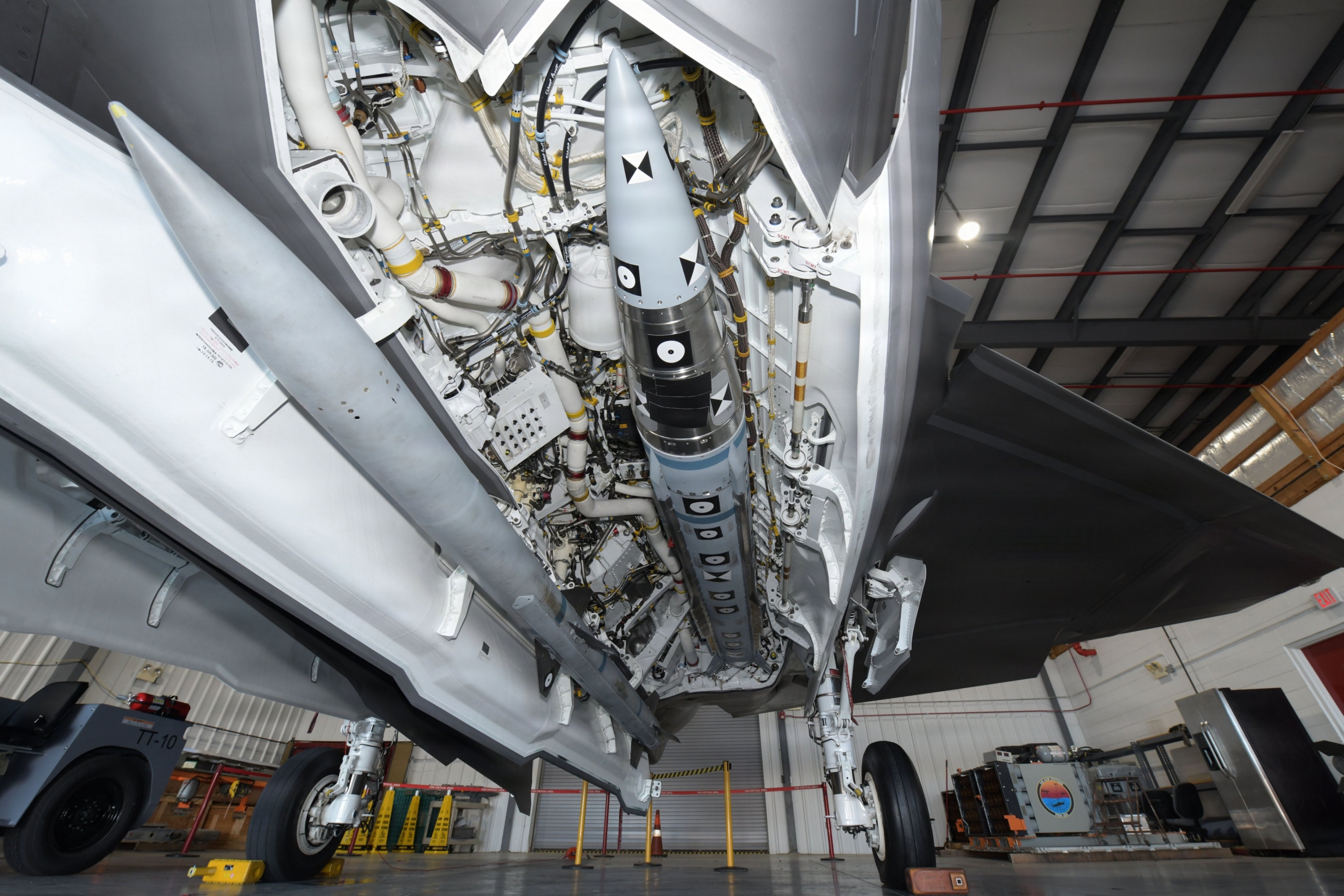
Malice, by contrast, has now been shown inside the weapons bay of an F-35C.
That potentially gives the Navy something it has not previously had: a carrier-based stealth fighter able to engage targets at extreme range without sacrificing the low-observable configuration that makes the F-35C so valuable in the first place.
AIM-424 Malice more than doubles F-35C missile reach
The Navy describes AIM-424 as “a next-generation missile intended to strengthen fleet defense and maintain a decisive air domain overmatch against advanced threats.”
Developed by Raytheon, the missile uses a solid-propellant rocket motor and measures 13.5 feet long, 13.5 inches in diameter and weighs around 1,500 lb. Its listed range is “in excess of 250 nautical miles” or 463 km, while its warhead uses blast fragmentation.
The War Zone noted that some of those figures may be deliberately imprecise for counter-intelligence reasons. Even so, Malice appears to represent a major leap over the missiles currently carried internally by the F-35C.
The latest AIM-120D AMRAAM is generally estimated to have a range of around 100 miles, or roughly 87 nm. That means Malice could offer close to three times the nominal reach while still fitting inside the aircraft.
The newer AIM-260 Joint Advanced Tactical Missile is also expected to outrange AMRAAM, although its true performance remains classified.
TWZ suggests Malice may sit somewhere between AIM-260 and AIM-174B in range, probably closer to the latter.
It also says, “LRAAM sustains the Department’s first look, first shot, first kill advantage by providing our aviators greater reach, greater survivability, and greater tactical flexibility in the air-to-air fight. Built for 4th, 5th, and 6th generation platforms, LRAAM is designed for the air wing of today and the future.”
Internal carriage for the Navy’s F-35C is the real breakthrough
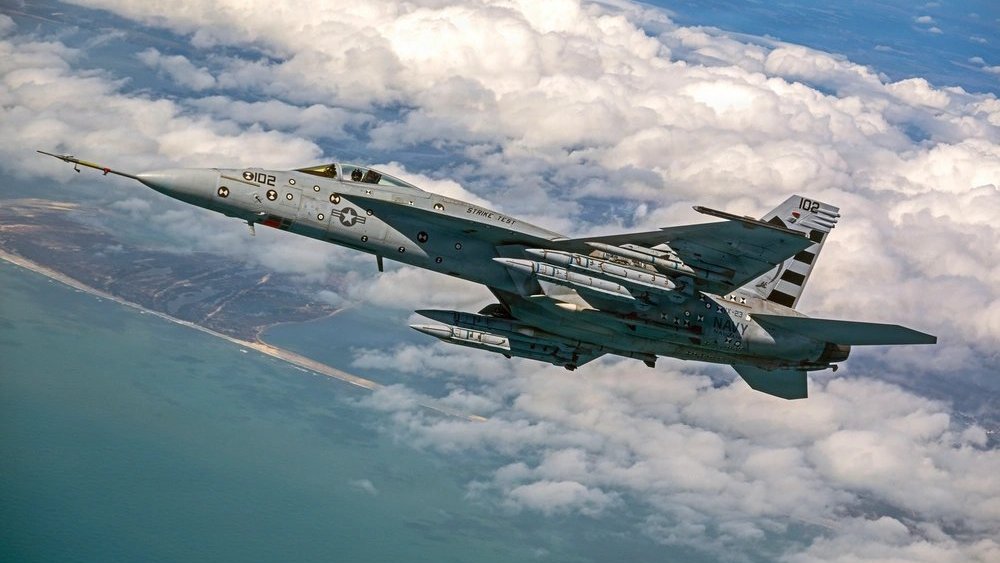
Images released around the unveiling show a Super Hornet from Air Test and Evaluation Squadron 23 carrying four Malice missiles externally. Notably, another image shows two AIM-424s installed inside an F-35C weapons bay.
Fifth-generation fighters rely heavily on internal weapons carriage to minimize their radar signature. Hanging a large missile beneath the wing immediately compromises that advantage.
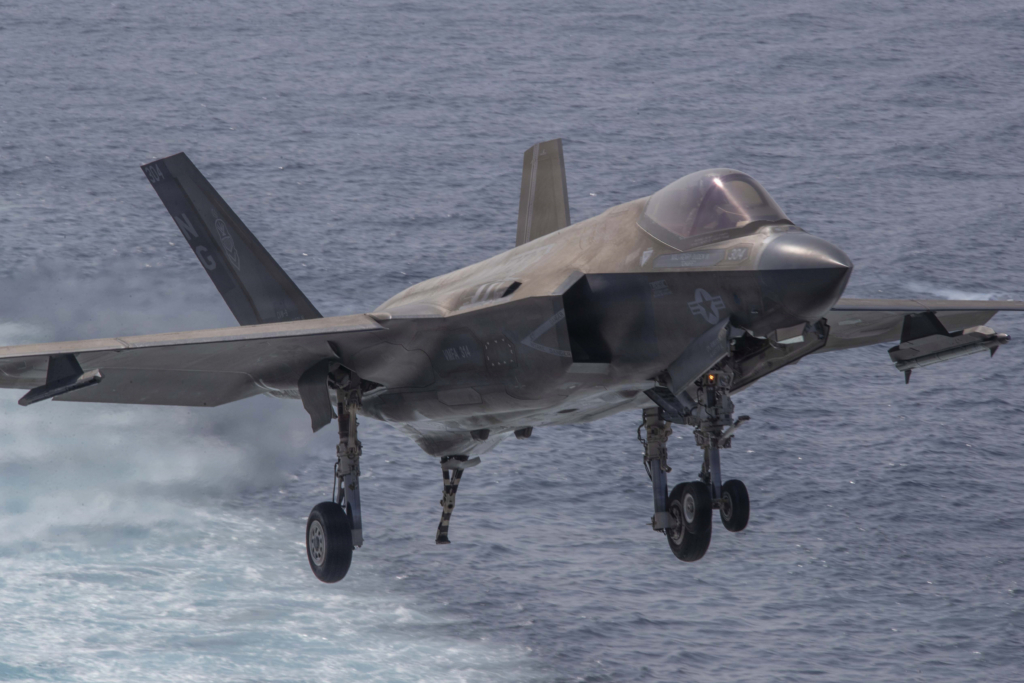
The AIM-174B gives the Navy enormous reach, but requires exactly that compromise. Malice appears to offer comparable long-range utility in a package compact enough for internal carriage.
The Navy says the weapon is being developed for fourth-, fifth- and sixth-generation aircraft, with the Super Hornet, F-35C and future F/A-XX all obvious candidates.
Internal carriage on the F-35B appears much less likely because its STOVL configuration leaves it with smaller weapons bays.
Why 250 nm air-to-air missiles matter
The US and China are increasingly competing in very long-range air-to-air weapons.
China’s PL-15 gained considerable attention after the May 2025 India-Pakistan clashes, while the longer-range PL-17 is designed to threaten large, high-value aircraft well behind the frontline.
That is also where weapons such as Malice become particularly important.
A 250 nm missile is not necessarily intended to shoot down a maneuvering fighter at maximum range. Its most valuable targets may instead be tankers, airborne early warning aircraft and other command-and-control or intelligence platforms.

Those aircraft allow fighters to operate effectively over huge distances. Forcing them farther back can reduce an adversary’s radar coverage, endurance and combat radius.
For the F-35C, that creates a potentially powerful combination: stealth to get closer without being detected, networked sensors to find or receive targeting data on distant aircraft, and a missile able to reach them from hundreds of miles away.
The Navy has not yet disclosed when AIM-424 will become operational, and its true performance remains classified.
But if Malice delivers anything close to its stated specifications, its biggest contribution may not be giving the Navy a longer-range missile.
It may be giving the F-35C extreme range without making it less stealthy to achieve it.


