UK RAF sends ‘drone-killer’ Rapid Sentry system to Kuwait to counter Iranian UAV threat
6 min read
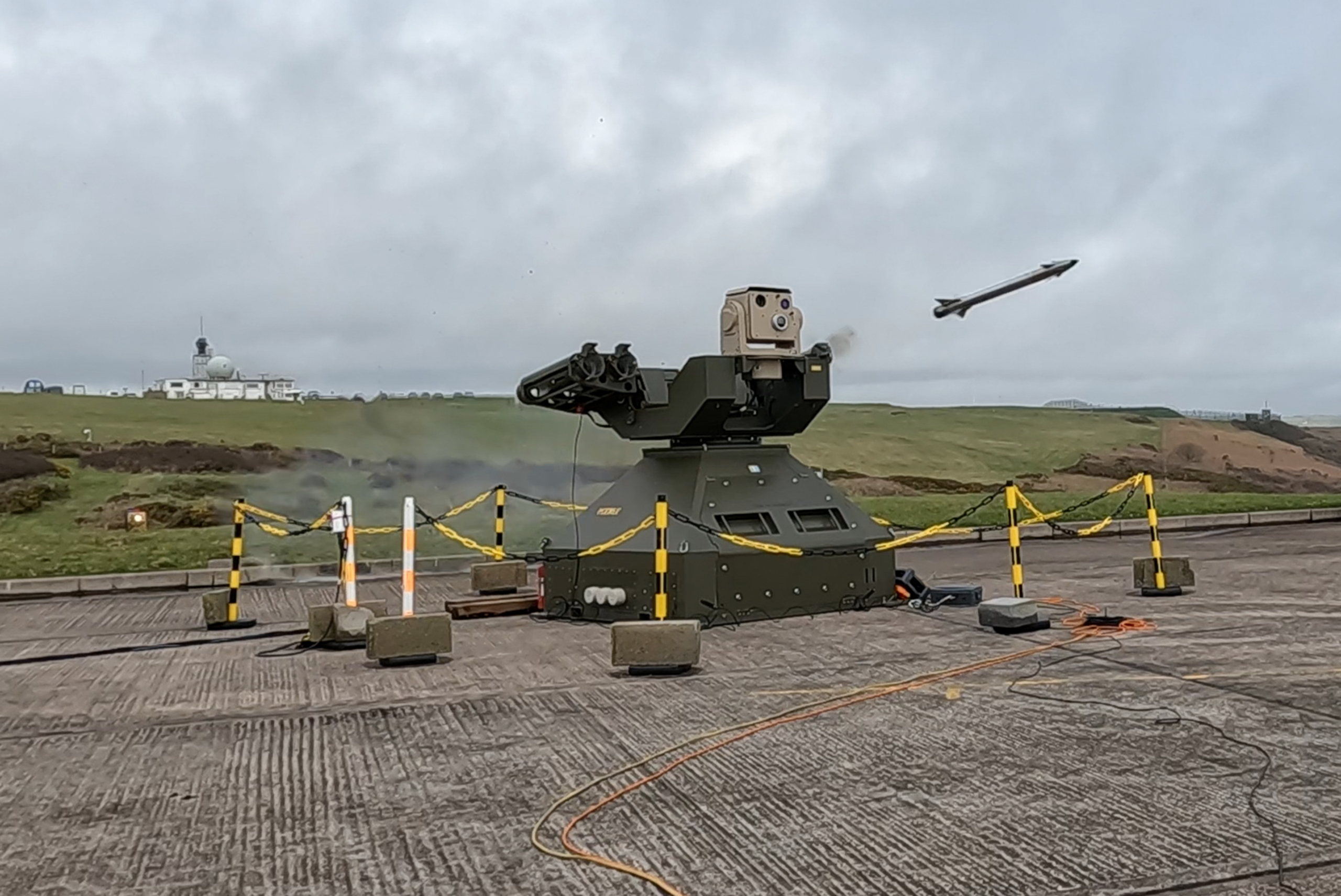
In a bid to reinforce the UK’s commitment to regional security across the Middle East, the Royal Air Force (RAF) shared on 2 April that it has deployed a sophisticated Counter-Uncrewed Aerial System (C-UAS) package, along with associated personnel, to Kuwait.
The package, which arrived in Kuwait between 25 and 29 March, is built around the UK’s little-known Rapid Sentry short-range air defence (SHORAD) system, using Thales’ Lightweight Multirole Missile (LMM) to neutralise aerial threats from Iran and its proxy militias across the Middle East.
Update on UK operations in the Middle East, 31 March 2026. pic.twitter.com/67IaOif0Ba
— Ministry of Defence 🇬🇧 (@DefenceHQ) March 31, 2026
Along with Rapid Sentry, the UK has also confirmed its ORCUS+ C-UAS capability, which detects, tracks, identifies and defeats enemy drones, has also been deployed to Kuwait as part of this package.
Operated by the RAF Regiment – an infantry component of the RAF that specialises in force protection operations and defending air bases – the Rapid Sentry system has been specifically designed and optimised for countering drone threats.
Iran and its proxies in the Middle East have launched countless one-way attack (or ‘kamikaze’) drones against various targets across the region as it lashed out against its neighbours following the start of the US-led Operation Epic Fury on 28 February.
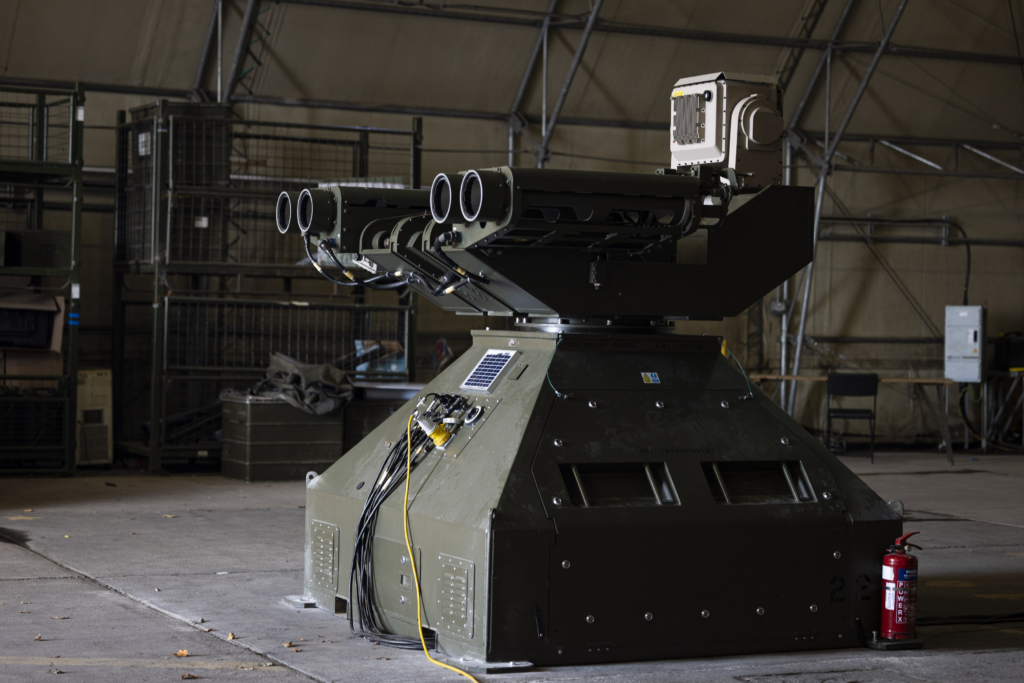
Rapid Sentry was thrust into the spotlight when the UK Defence Secretary John Healey announced that the UK would send its Sky Sabre ground-based air defence (GBAD) system to Saudi Arabia, as well as other air defence teams and systems (including Rapid Sentry) to Bahrain and Kuwait.
He also confirmed that the RAF’s ongoing Typhoon FGR4 deployment in Qatar would be extended.
In its April 2 statement, the RAF said,
“This defensive deployment aligns with the UK government’s policy to protect British personnel, interests, and partners in the Middle East, while avoiding escalation into a wider conflict [with Iran].”
The Rapid Sentry C-UAS system deployed to Kuwait is being operated by the RAF Regiment’s No 34 Squadron, who also have personnel supporting defensive efforts at RAF Akrotiri in Cyprus and at unspecified locations in Iraq.
Commenting on this, the officer commanding No 34 Squadron – who was not named for operational security reasons – said,
“Our deployment to Kuwait is focused on delivering a credible and effective air defence capability at pace. Rapid Sentry provides a proven counter to emerging aerial threats, and my personnel are fully prepared to support our partners while protecting UK forces and interests in the region.”
Rapid Sentry arrives following drone strike at Kuwait airport
The deployment of the UK’s Rapid Sentry C-UAS system to Kuwait comes as Iran continues to launch one-way attack drone strikes on its neighbouring Gulf states. More specifically, this deployment comes after Kuwait International Airport in Kuwait City was targeted and struck in an Iranian drone attack on 1 April.
While the one-way attack drones struck key fuel storage tanks at the airport, triggering a major fire, no casualties were reported from the incident.
🚨 BREAKING: Kuwait International Airport hit by multiple drone strikes that severely damaged its radar system, authorities say. No casualties reported as tensions escalate in the Iran‑linked conflict. pic.twitter.com/tBzps6OtRB
— GCO (@GCO_Global) March 28, 2026
In condemning the attack, Abdullah Al Rajhi, the official spokesman for Kuwait’s Civil Aviation Authority (CAA), described it as a “blatant assault” on the civil-use airport, which has been repeatedly targeted since the US and Israel launched combat operations against Iran on 28 February.
He confirmed that the drones targeted fuel tanks belonging to the Kuwait Aviation Fuelling Company (KAFCO). The subsequent fire was quickly extinguished by airport firefighters.
Civil infrastructure, like airports, and even commercial aircraft, have often been caught in the crossfire of Operation Epic Fury. Scheduled flights continue to face disruption across the region, with some airlines shifting operations to other airports or cutting capacity.
Iranian drones and ballistic/cruise missiles have also been used to target oil tankers attempting to transit the Strait of Hormuz, which has effectively closed the critical chokepoint and placed a stranglehold on the free and safe trade flow of global energy.
Rapid Sentry: A game-changing new UK-built SHORAD system?
The continued escalation of this conflict has thrust the UK’s little-known Rapid Sentry counter-drone capability into the spotlight. This SHORAD system is specifically optimised for detecting, tracking, identifying and defeating small, fast-moving targets, such as Iran’s fleet of one-way attack drones, which includes the Shahed-136 (among other systems).

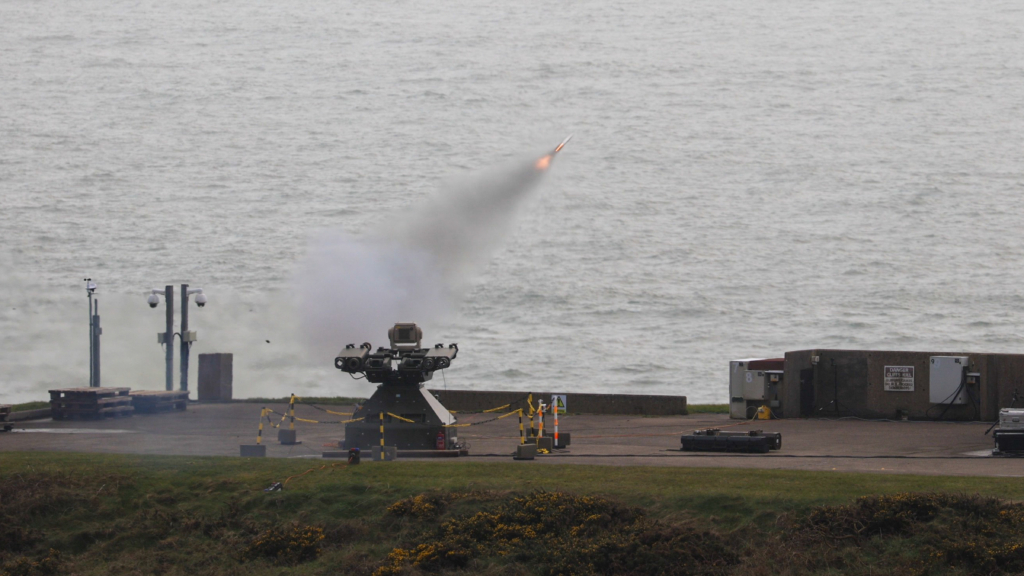
Rapid Sentry serves as a ‘hard-kill’ system, launching the Thales-developed LMM to intercept and destroy incoming targets at short range. This munition – which has also been integrated into the arsenal of the Royal Navy Fleet Air Arm’s fleet of Wildcat HMA2 utility helicopters under the ‘Martlet’ moniker – reportedly has an effective combat range of up to 8km and can reach speeds of Mach 1.5.
On 18 March, the UK Ministry of Defence (MOD) confirmed plans to procure additional LMMs to increase British stockpiles of the munition and enhance force protection operations in support of regional allies in the Middle East. According to the RAF, this includes “the provision of training [activities] in the UK, where required.”
While it remains unconfirmed, Rapid Sentry might leverage the capabilities of Saab’s Giraffe 1X three-dimensional (3D) multi-mission radar, which is specifically designed to detect drone threats. The UK purchased 11 of these systems from the Swedish defence firm in 2023.

Regardless of whether the Giraffe 1X radar has been incorporated into the Rapid Sentry package or not, recent reports do indicate that the UK currently operates a number of these systems, though concrete figures have yet to be confirmed.
Featured Image: An RAF-operated Rapid Sentry SHORAD system launches an LMM during a live-fire training drill at the Air Defence Range at Manorbier, Pembrokeshire Coast National Park, in Wales on 18 March 2024. Image: MOD Crown Copyright/AS1 Jessica Eglon