Aerodata and Dynauton partner on AeroForce X UAV for India ISR missions

4 min read
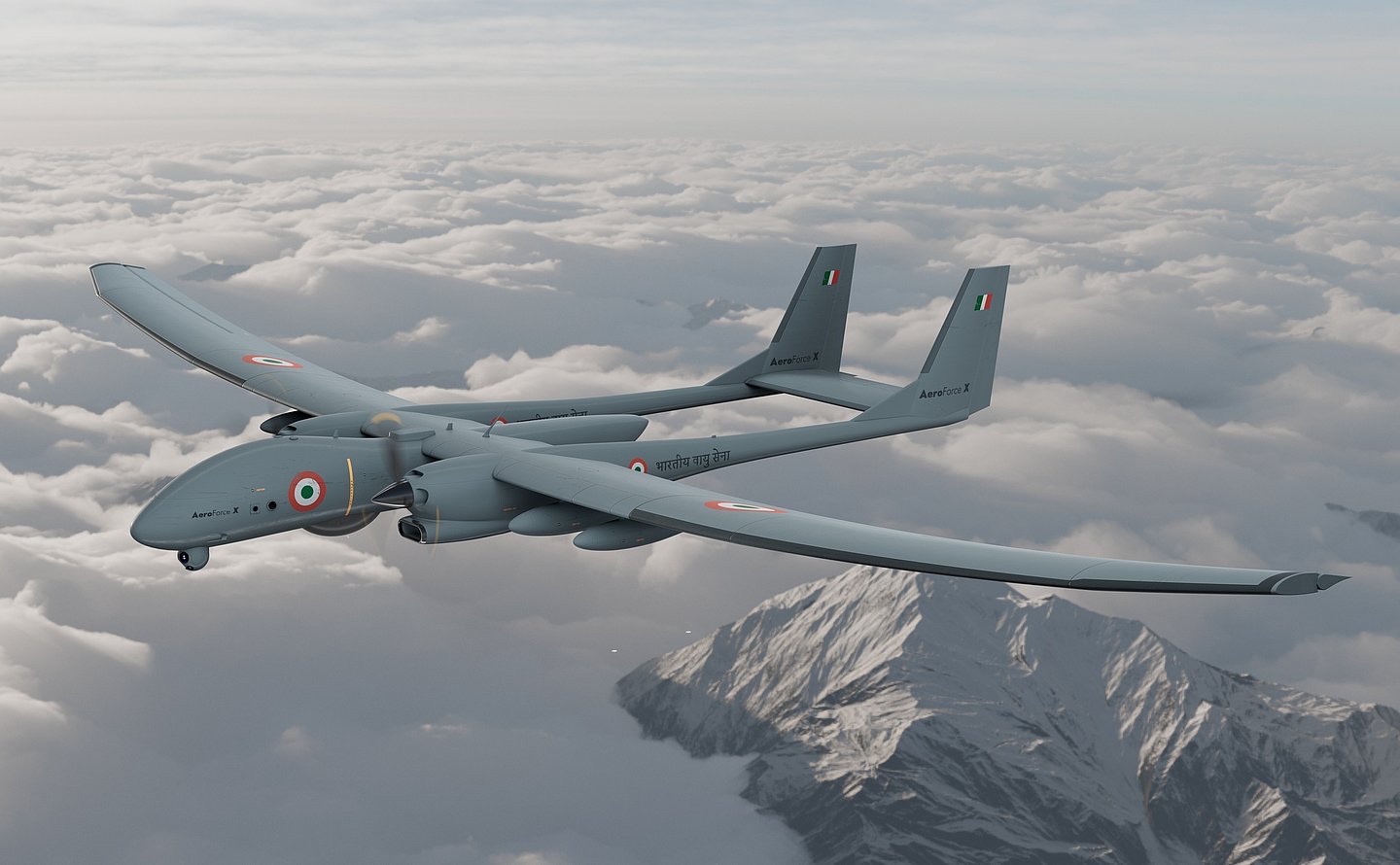
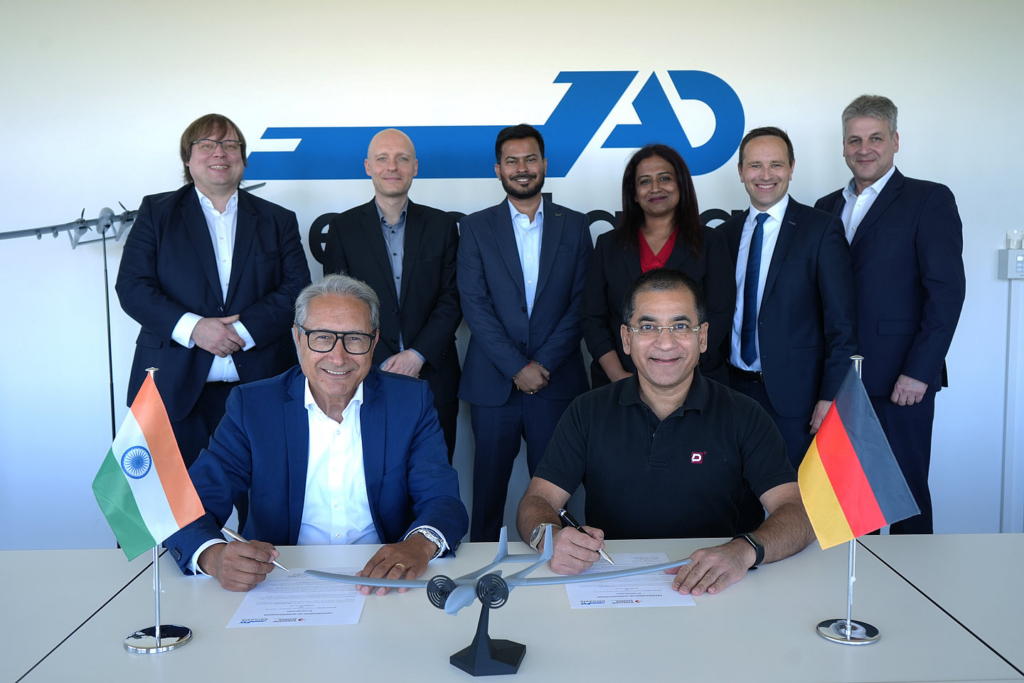
A German–Indian industrial partnership is taking shape around a new long-endurance surveillance drone, with Aerodata AG and Dynauton Systems signing an agreement to jointly develop an uncrewed reconnaissance platform tailored for India’s operational environment.
The collaboration centres on Aerodata’s AeroForce X, a medium-altitude long-endurance (MALE) unmanned aircraft, which both companies will now evaluate and adapt for missions spanning the Himalayas and the Indian Ocean Region, two theatres where endurance, payload and persistence are critical.
Aerodata and Dynauton partner to develop AeroForce X UAV for ISR missions in India
The Memorandum of Understanding sets out a framework for cooperation rather than a final programme, but it signals intent to move towards a region-specific unmanned ISR solution.
Aerodata brings experience in integrating airborne surveillance systems, while Dynauton, part of Dynamatic Technologies, adds manufacturing capability and engineering support in the unmanned systems space.
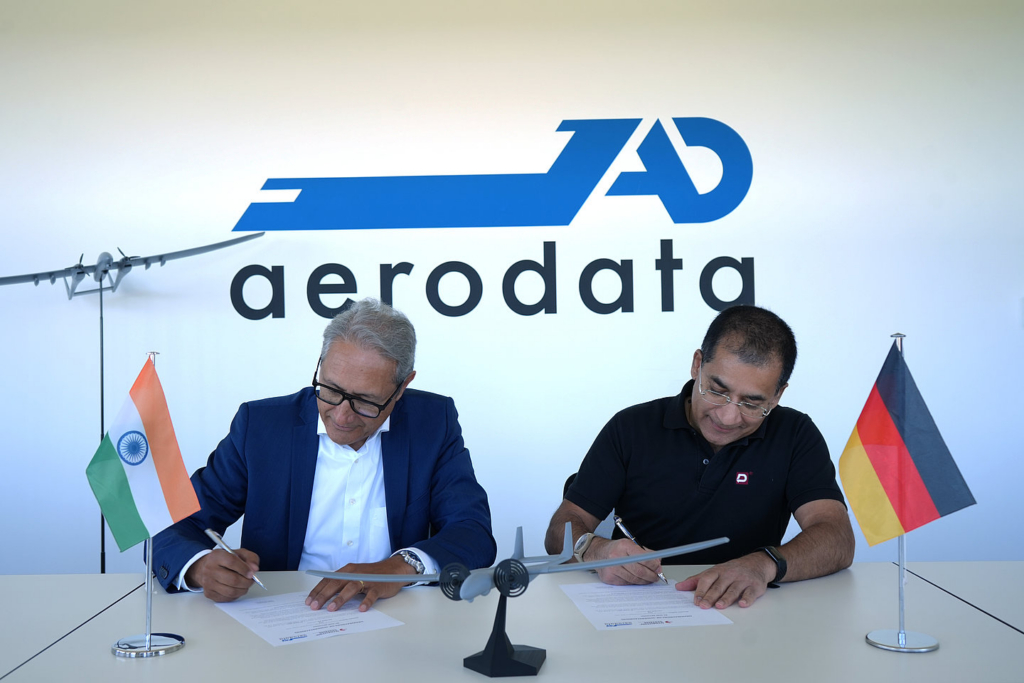
“The Memorandum of Understanding is a meaningful step towards further developing AeroForce X in collaboration with Dynauton specifically for ISR missions in the Himalayas and Indian Ocean Region,” said Neset Tükenmez, CEO of Aerodata AG.
“By combining the core strengths of both companies, this partnership creates a solid foundation for the comprehensive development and implementation of high-performance, unmanned reconnaissance solutions.”
From the Indian side, the emphasis is on building on an existing platform rather than starting from scratch.
“The collaboration with Aerodata enables us to build on a high-performance platform and jointly develop a future-oriented solution for demanding surveillance and reconnaissance tasks,” said Udayant Malhoutra, CEO of Dynamatic Technologies Limited.
AeroForce X MALE UAV targets 40-hour endurance and 1.3 tonne payload capacity
At the centre of the effort is the AeroForce X itself, a platform Aerodata introduced as a new-generation MALE system aimed at long-duration ISR missions.
According to details from the company’s earlier disclosure, the aircraft is designed to support a broad range of roles, including intelligence, surveillance and reconnaissance, electronic reconnaissance and missions requiring heavy payloads.
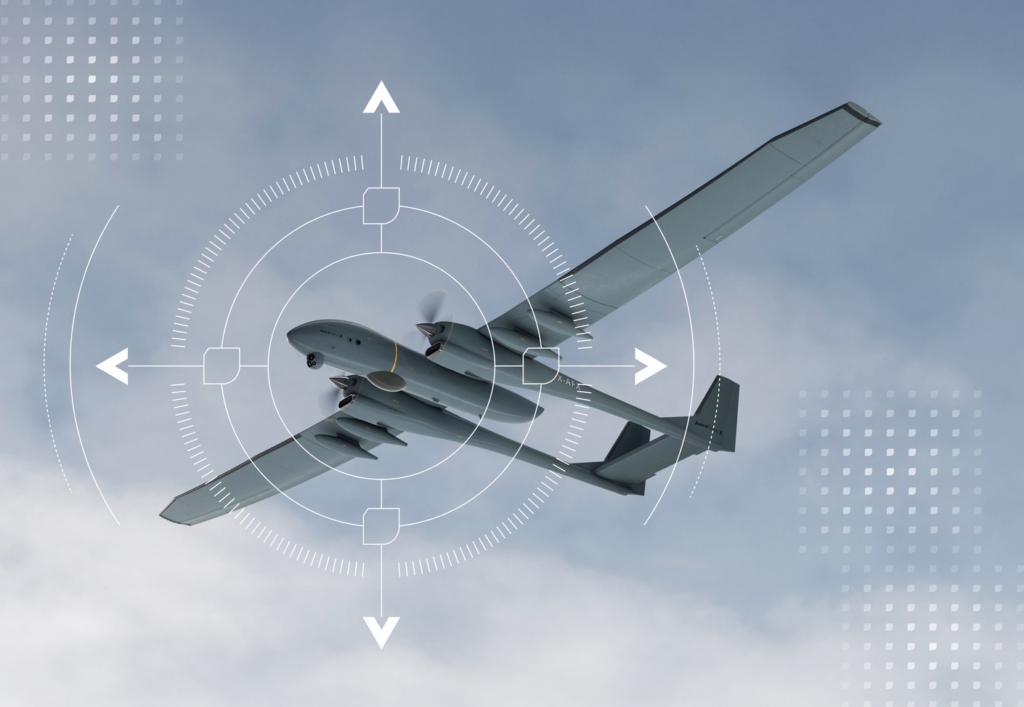
The system combines endurance with payload capacity, with a projected flight time of up to 40 hours and the ability to carry payloads of around 1.3 tonnes, while maintaining a take-off weight under five tonnes.
That combination is significant. It places the AeroForce X in a category where it can remain on station for extended periods while carrying multiple sensor packages, an essential requirement for wide-area maritime surveillance or persistent border monitoring.
The platform is also built around a modular architecture, allowing different mission systems to be integrated depending on operational requirements.
AeroForce X is designed for ISR operations across Himalayas and Indian Ocean
The reference to the Himalayas and the Indian Ocean is not incidental.
Operations in these regions place very different demands on unmanned systems.
High-altitude environments such as the Himalayas require performance in thin air, extended endurance and reliable sensor operation across mountainous terrain. Maritime missions, by contrast, demand long-range persistence, wide-area coverage and the ability to integrate with naval or coast guard networks.
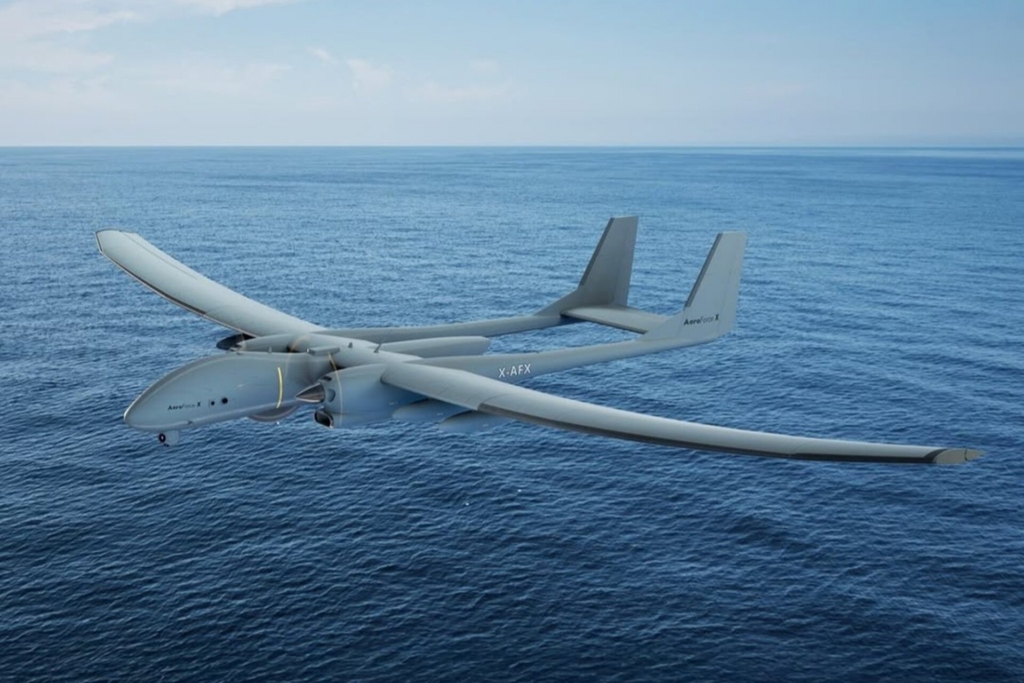
The AeroForce X is being positioned as a platform capable of bridging both domains, operating over land and sea without major configuration changes.
Its ability to network with other systems, including manned aircraft, is also seen as a force multiplier, allowing data collected by the UAV to be integrated into wider surveillance architectures.
ITAR-free AeroForce X UAV offers export flexibility for India and global markets
One aspect that could shape the programme’s trajectory is the platform’s ITAR-free status.
Because the AeroForce X is developed and manufactured in Germany without reliance on US export-controlled components, it can be offered to international customers without the constraints typically associated with US-origin systems.
For India, which has sought to diversify its defence procurement and reduce dependence on any single supplier, this could be a significant factor.
The modular design further supports this flexibility, allowing operators to integrate locally sourced payloads or mission systems as needed.
AeroForce X development enters evaluation phase ahead of flight tests in 2026
Despite the announcement, the programme remains in its early stages.
The MoU outlines a process of joint evaluation and development rather than immediate production or procurement. Both companies are expected to assess how the existing AeroForce X design can be adapted to meet India-specific requirements.
This could include modifications for environmental conditions, mission systems integration and operational concepts tailored to regional needs.
Aerodata has indicated that ground tests and flight trials for the platform are scheduled to begin in the latter half of 2026, suggesting that the system itself is still progressing through its development cycle.
Growing demand for MALE UAVs drives Aerodata Dynauton collaboration
The partnership reflects a broader trend in the unmanned systems market.
Demand for MALE-class UAVs has grown steadily as armed forces and security agencies look for platforms capable of persistent surveillance over large areas.
Such systems are increasingly expected to perform multiple roles, ranging from border monitoring and maritime patrol to electronic intelligence gathering, while operating for extended periods without interruption.
Rather than developing entirely new systems domestically, many countries are turning to collaborative models that combine existing platforms with local industrial participation. The Aerodata-Dynauton agreement fits squarely within that pattern.
The announcement marks the beginning of a collaboration rather than the delivery of a finished system. The success of the effort will depend on how effectively the AeroForce X can be adapted to meet operational requirements specific to India’s geography and mission profile.
Featured image: Aerodata