Boeing is building more planes, but still not making money

3 min read

Boeing reported a stronger start to 2026, with rising aircraft deliveries and a record backlog highlighting robust demand, but the company remains loss-making as production inefficiencies and investment costs continue to weigh on profitability.
In its first-quarter results, Boeing posted revenue of $22.2 billion, up 14% year-on-year, driven primarily by higher commercial aircraft deliveries, which rose to 143 units.
Despite the improved top line, the company recorded a net loss of $7 million and negative free cash flow of $1.5 billion, a product of the ongoing gap between production recovery and financial performance.
Boeing’s total backlog reached a record $695 billion, the largest in its history, including more than 6,100 commercial aircraft, proving strong long-term demand as it rebuilds production.
Boeing earnings improve, but aircraft margins remain under pressure
Boeing’s financial performance reflects a company in transition, with operational metrics improving while profitability remains constrained.
Key financial results
| Metric | Q1 2026 | Q1 2025 | Change |
|---|---|---|---|
| Revenue | $22.2bn | $19.5bn | +14% |
| Net loss | ($7m) | ($31m) | Improved |
| Operating margin | 2.0% | 2.4% | –0.4 pts |
| Free cash flow | ($1.5bn) | ($2.3bn) | Improved |
| Deliveries | 143 | 130 | +10% |
While losses narrowed significantly, the commercial aircraft division remains the primary drag on profitability. The unit reported an operating margin of –6.1%, indicating Boeing is still losing money on its core aircraft production despite higher output.
Cash flow also remains a concern. The company’s cash and marketable securities fell to $20.9 billion from $29.4 billion at the end of 2025, reflecting continued investment in production and debt repayments.
At the same time, Boeing continues to carry a substantial debt burden of $47.2 billion, with interest expenses further weighing on earnings.
Boeing 737 MAX 7 and MAX 10 certification progresses as 777X advances
Boeing reaffirmed that certification of the Boeing 737 MAX 7 and Boeing 737 MAX 10 remains on track for 2026, with entry into service expected in 2027.
| Boeing Commercial Airplanes results (Q1 2026) | |||
|---|---|---|---|
| Metric | Q1 2026 | Q1 2025 | Change |
| Deliveries | 143 | 130 | +10% |
| Revenue | $9,203m | $8,147m | +13% |
| Operating loss | ($563m) | ($537m) | — |
| Operating margin | -6.1% | -6.6% | +0.5 pts |
During the quarter, the 737-10 programme entered the Type Inspection Authorisation (TIA) 2 phase, marking progress towards the final stages of certification flight testing.
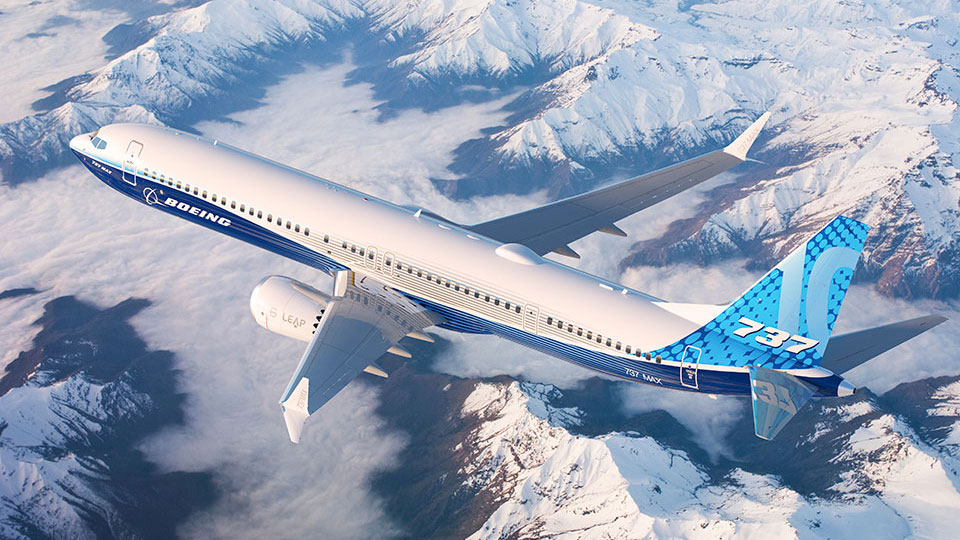
The 737 programme continues to produce at a rate of 42 aircraft per month, while the 787 programme is stabilising at eight per month following earlier disruptions.
Meanwhile, Boeing’s widebody flagship, the 777X, also continues to move through certification. The company confirmed progress on the 777-9 variant, including FAA approval to begin the TIA 4a phase of flight testing, with first deliveries still anticipated in 2027.
The updates suggest Boeing’s major commercial programmes are progressing, but remain closely tied to regulatory timelines and production stability.
Boeing defence and services divisions drive growth and profitability
Outside commercial aircraft, Boeing’s defence and services businesses delivered strong performance, helping to offset ongoing losses in its core manufacturing segment.
The Defence, Space & Security division reported revenue of $7.6 billion, up 21% year-on-year, with operating margins improving to 3.1%. Growth was driven by higher volumes and stabilising programme execution.
| Boeing Defence, Space & Security results (Q1 2026) | |||
|---|---|---|---|
| Metric | Q1 2026 | Q1 2025 | Change |
| Revenue | $7,599m | $6,298m | +21% |
| Operating earnings | $233m | $155m | +50% |
| Operating margin | 3.1% | 2.5% | +0.6 pts |
During the quarter, Boeing signed a seven-year framework agreement to expand PAC-3 seeker production and announced a partnership with Rheinmetall to offer the MQ-28 Ghost Bat to Germany.
Boeing Global Services remained the company’s most profitable segment, generating $5.4 billion in revenue with a strong operating margin of 18.1%. The division also secured its largest-ever Landing Gear Exchange Program agreement with Singapore Airlines Group and expanded its training capabilities for the 777-9.
| Boeing Global Services results (Q1 2026) | |||
|---|---|---|---|
| Metric | Q1 2026 | Q1 2025 | Change |
| Revenue | $5,370m | $5,063m | +6% |
| Operating earnings | $971m | $943m | +3% |
| Operating margin | 18.1% | 18.6% | -0.5 pts |
Boeing recovery gathers pace, but profitability challenges remain
Boeing’s first-quarter results show a business moving in the right direction operationally, but not yet financially.
Rising deliveries, improving programme execution, and a record backlog point to strong underlying demand. However, continued losses, negative cash flow, and weak margins in the commercial division highlight the ongoing challenge of restoring profitability.
With key certification milestones and production ramp-ups targeted for 2026 and 2027, the next two years are set to be critical in determining whether Boeing can fully convert its recovery into sustainable financial performance.
Featured image: Boeing
Sign up for our newsletter and get our latest content in your inbox.


More from

October 17, 20265 min read


October 17, 20264 min read