


Farnborough 2026 flying display line-up revealed: F-35A, Spitfire, A350 and more

7 min read
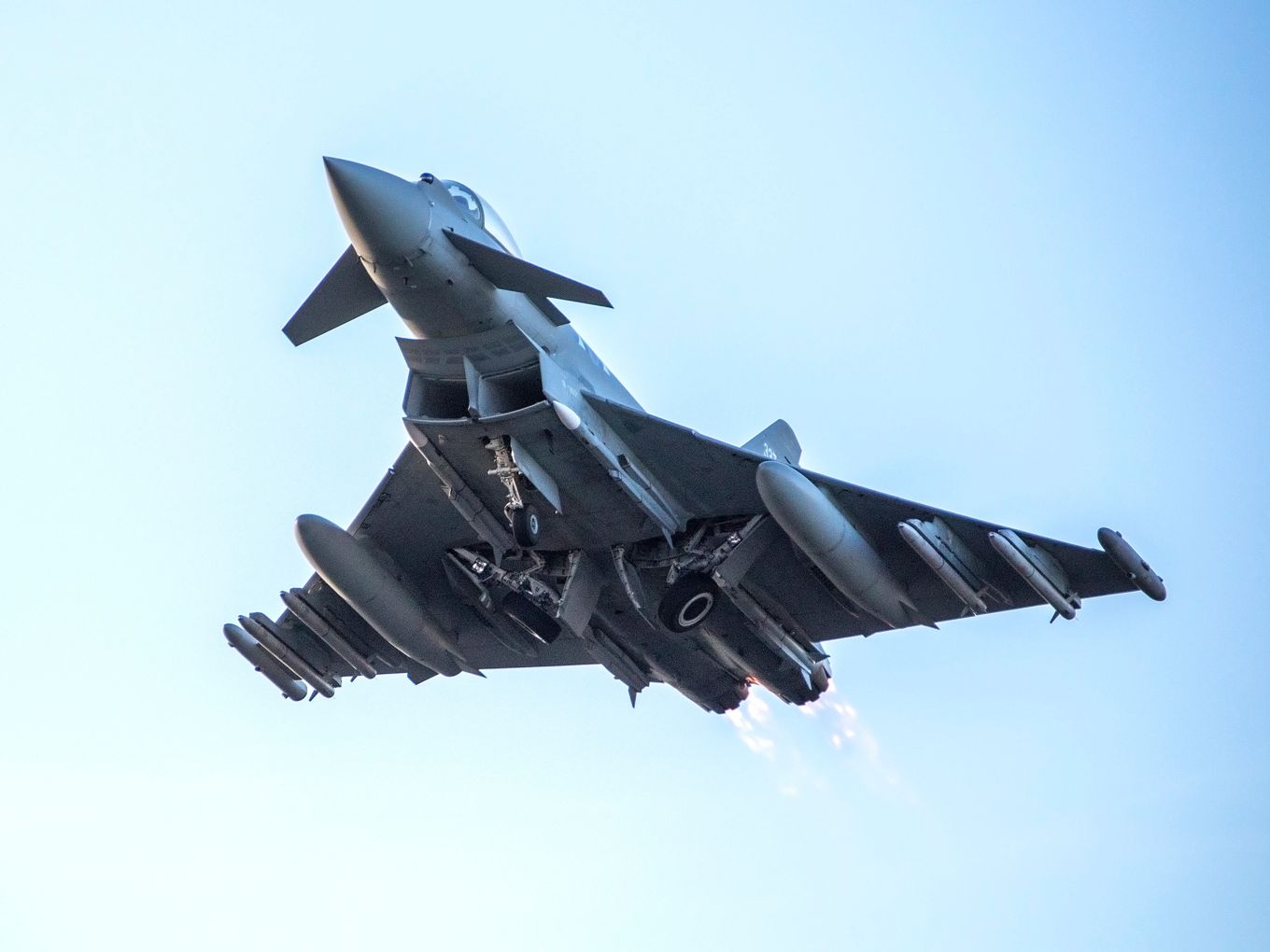
Farnborough International Airshow has revealed the first aircraft and teams taking part in its 2026 flying display, with the initial line-up pointing to one of the most varied Farnborough displays in years.
The aircraft announced so far are not the full flying display, with more participants still to be confirmed before the show takes place from 20 to 24 July 2026. But the first tranche already spans frontline military aviation, commercial aerospace, heritage aircraft, electric flight and future propulsion research.
The US Air Force’s F-35A Lightning II Demonstration Team is expected to be one of the major crowd-pullers, with organisers describing its Farnborough appearance as its only public European display of the year.
Yet the rarest aircraft announced so far may not be a fighter at all. Among the early highlights is a Supermarine Spitfire PR Mk XIX, a historically significant reconnaissance variant that traces its origins to the closing stages of the Second World War.

Alongside the F-35A and Spitfire, the first flying display announcements include an RAF Typhoon flypast, a Czech Air Force L-159 flypast, the Airbus A350-1000, Embraer’s C-390 Millennium, Bombardier’s Global 8000, BETA Technologies’ CX300, Vertical Aerospace’s VA-1X and GE Aerospace’s Saab 340B flying research platform.
All in, the initial Farnborough 2026 flying display line-up offers a snapshot of an aerospace sector looking in several directions at once, preserving its history, showcasing current capability and testing the technologies that could define the next generation of flight.
Farnborough International Airshow 2026 flying display line-up so far
| Sector | Aircraft / team | Operator / manufacturer | Display role |
|---|---|---|---|
| Military | F-35A Lightning II Demonstration Team | US Air Force | Flying display |
| Heritage | Vickers Supermarine Spitfire PR Mk XIX | Rolls-Royce | Flying display |
| Military | Eurofighter Typhoon FGR4 | Royal Air Force | Flypast |
| Military | Aero L-159 | Czech Air Force | Flypast |
| Commercial aviation | Airbus A350-1000 | Airbus | Flying display |
| Electric aviation | CX300 | BETA Technologies | Flying display |
| Business aviation | Global 8000 | Bombardier | Flying display |
| Military / airlift | C-390 Millennium | Embraer | Flying display |
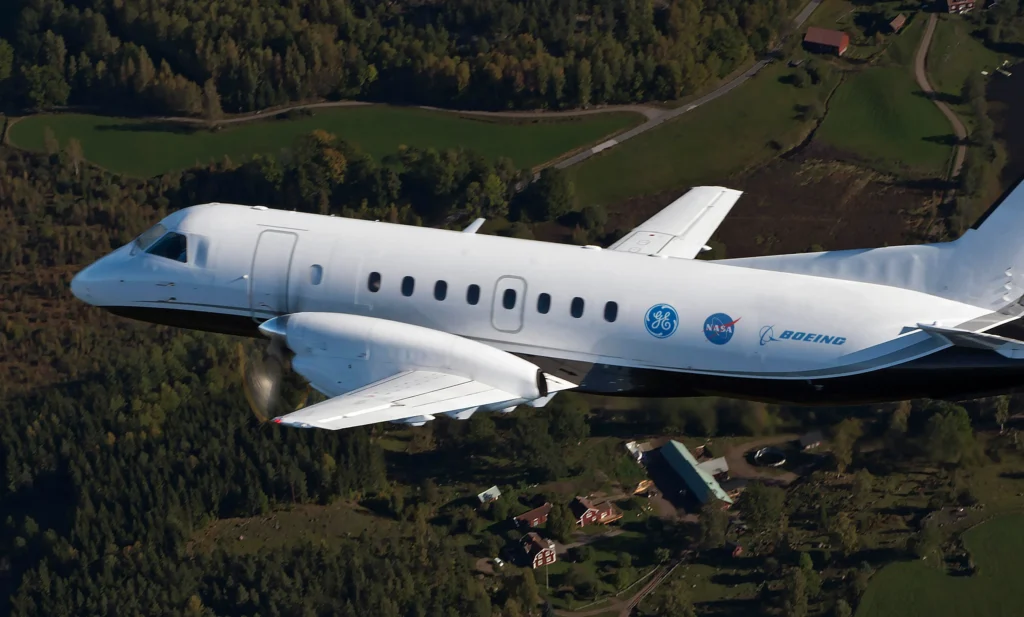
| Future propulsion | Saab 340B | GE Aerospace | Flying research platform |
| Advanced air mobility | VA-1X | Vertical Aerospace | Flying display |
| Heritage | P-51D Mustang | Ultimate Warbird Flights | Flying display |
| Aerobatic display | The Starlings Aerobatic Team | The Starlings | Flying display team |
| Parachute display | The Falcons | RAF Parachute Display Team | Parachute display |
Rare Spitfire PR Mk XIX brings wartime history to Farnborough 2026
For aviation enthusiasts, the Rolls-Royce Vickers Supermarine Spitfire PR Mk XIX is likely to be one of the highlights of the display.
Unlike the better-known fighter variants that helped defend Britain during the Second World War, the PR Mk XIX was a dedicated photographic reconnaissance aircraft. It carried cameras instead of guns and relied on speed, altitude and range rather than firepower to complete its missions.
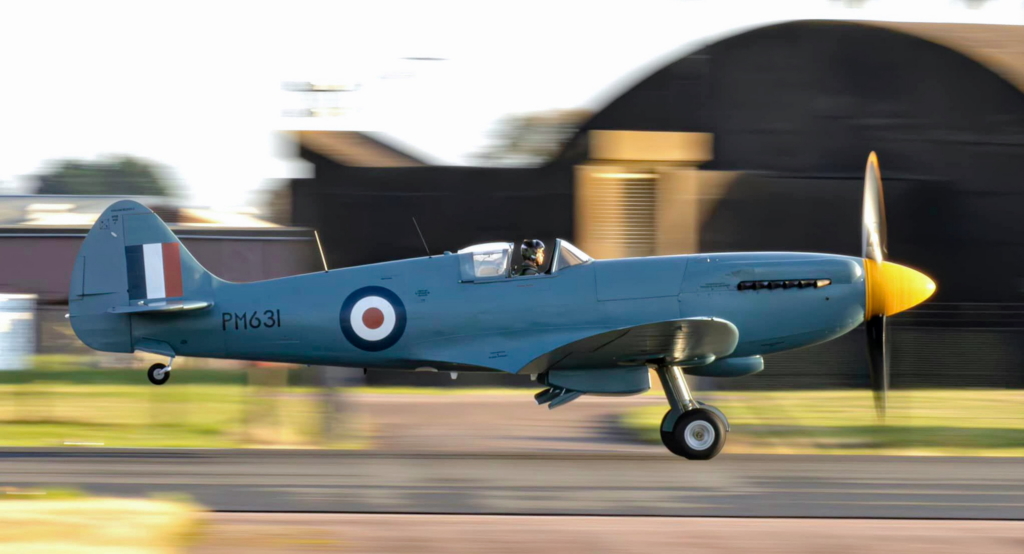
Powered by the Rolls-Royce Griffon engine rather than the Merlin engine associated with most wartime Spitfires, the PR Mk XIX represented the ultimate evolution of Britain’s most famous piston-engined combat aircraft. The type entered service in the latter stages of the war but continued operating long after the conflict ended.
Indeed, the PR Mk XIX remained in Royal Air Force service until 1954, making it the last Spitfire variant to serve in frontline operations.
Only a small number remain airworthy today. Unlike the more familiar Mk IX and Mk V variants that regularly appear on the airshow circuit, the reconnaissance version is a comparatively rare sight.
Its inclusion offers a reminder that Farnborough has long been more than a showcase for the newest aircraft. The event has traditionally provided a stage where aerospace heritage can be viewed alongside the technologies that may define future generations of flight.
BETA CX300 and Vertical VA-1X show two paths for electric aviation
If the Spitfire represents aviation’s past, several of the aircraft announced for Farnborough point towards a very different future.
Among them is BETA Technologies’ CX300, one of the most advanced electric aircraft currently flying.
The Vermont-based company has emerged as a leading player in the race to bring electric aviation into commercial service. Unlike many advanced air mobility projects that remain at the concept stage, the CX300 has been conducting extensive flight testing while moving through the certification process.
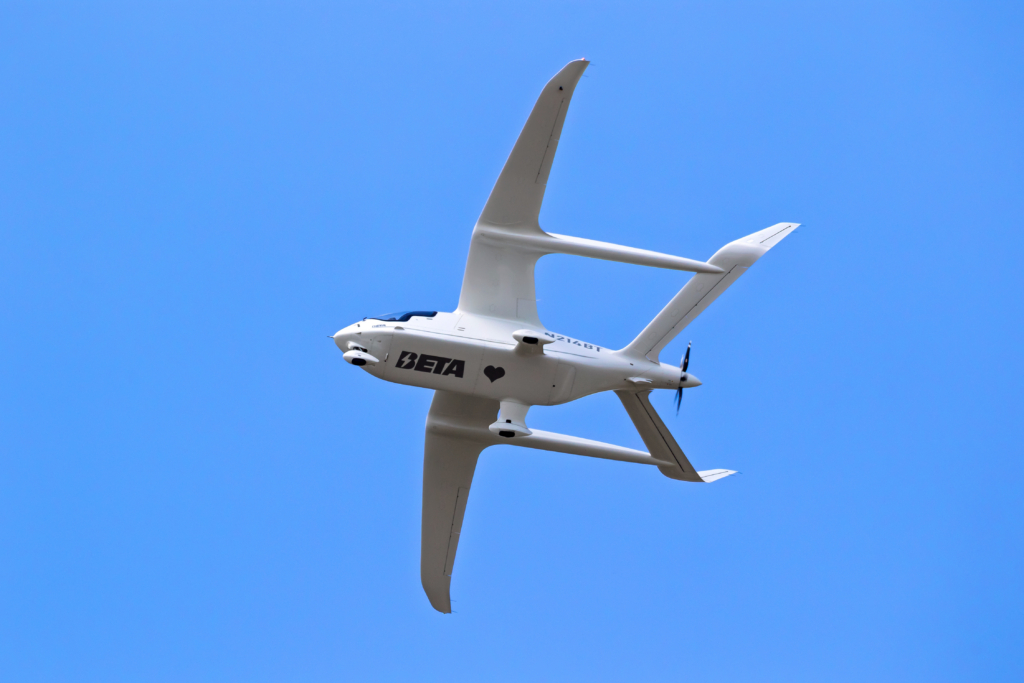
Designed as a conventional take-off and landing aircraft, the CX300 can carry up to five passengers and a pilot or approximately 1,250 pounds of cargo. During flight testing, the aircraft has demonstrated a range of more than 300 nautical miles, making it one of the most capable electric aircraft in development today.
For Farnborough visitors, the significance of the CX300 lies in its practicality. Rather than targeting urban air taxi operations, the aircraft is aimed at regional transport, cargo logistics and shorter commercial routes where electric propulsion could provide genuine operational benefits.
Sharing the spotlight will be Vertical Aerospace’s VA-1X. Developed by the Bristol-based company, the aircraft reflects another branch of the electric aviation movement.
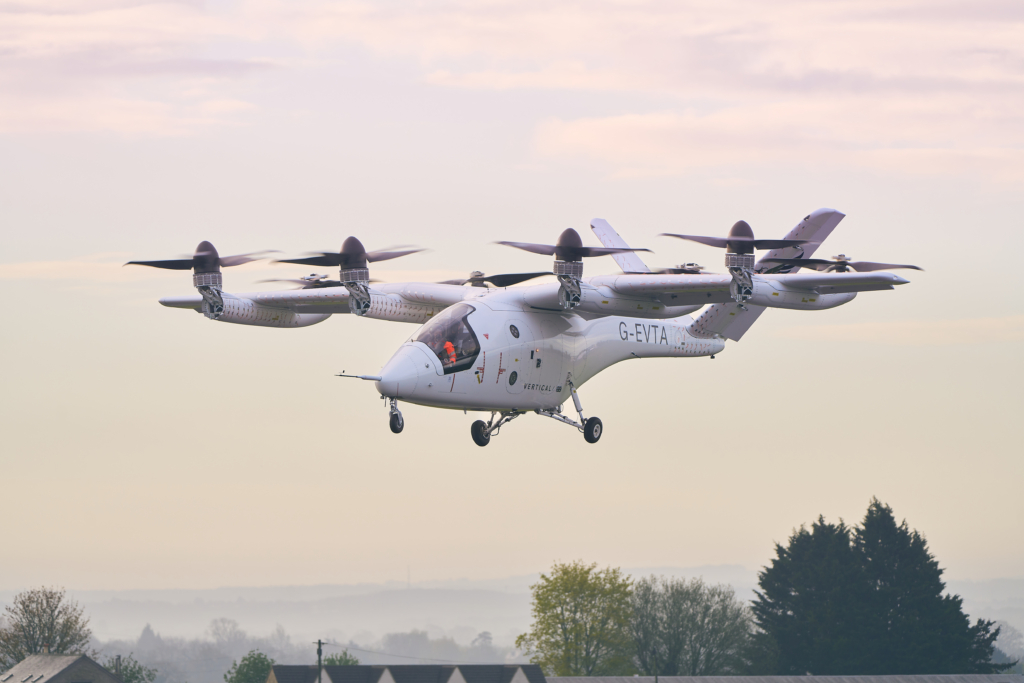
While conventional electric aircraft such as the CX300 focus on replacing existing regional transport missions, Vertical Aerospace has pursued electric vertical take-off and landing technology aimed at transforming short-distance mobility.
The VA-1X was conceived as an all-electric aircraft capable of carrying four passengers and a pilot, combining vertical take-off capability with wing-borne cruise flight. Vertical is now moving towards a somewhat different final concept known as Valo, which has been making waves in the USA recently.
Although the advanced air mobility sector has faced technical, regulatory and financial challenges in recent years, the presence of the VA-1X at Farnborough demonstrates that interest in new forms of electric flight remains strong.
GE’s Saab 340B hybrid-electric testbed could be Farnborough’s sleeper star
Among the aircraft announced, few are likely to attract less attention from casual visitors than GE Aerospace’s Saab 340B. Yet for engineers and propulsion specialists, it may be one of the most significant aircraft on display.
The twin-turboprop regional airliner has become part of GE Aerospace’s work on hybrid-electric propulsion technologies. While battery-electric aircraft dominate many discussions about aviation sustainability, a growing number of manufacturers believe hybrid-electric systems may provide a more realistic pathway for larger aircraft.
Hybrid-electric propulsion combines conventional gas turbines with electric power systems, allowing aircraft to reduce fuel consumption while retaining the range and flexibility of traditional propulsion.
GE has been working closely with NASA on a series of electrified propulsion programmes aimed at understanding how such technologies could eventually be applied to commercial aircraft.
The Saab 340B has emerged as an important platform within that research effort, helping engineers evaluate systems that could influence the next generation of regional and narrowbody airliners.
It may not possess the visual drama of a fighter aircraft, but its presence reflects one of the most important technological debates currently taking place within aerospace.
F-35A, Typhoon and L-159 bring frontline airpower to Farnborough
Future technologies and heritage aircraft may provide some of the most compelling stories, but Farnborough remains first and foremost an international aerospace showcase.
Leading the military contingent is the US Air Force F-35A Lightning II Demonstration Team.

As the most widely operated fifth-generation fighter in the Western world, the aircraft has become central to airpower planning across Europe, North America and parts of Asia. Its appearance will provide visitors with an opportunity to see the aircraft’s performance capabilities demonstrated in a flying display environment.
Military aviation representation will also include an RAF Eurofighter Typhoon flypast and a flypast by the Czech Air Force’s L-159 light combat aircraft, a relatively uncommon participant at UK airshows.
Airbus A350, Embraer C-390 and Global 8000 anchor commercial display
Airbus will bring its A350-1000 flagship widebody, while Embraer’s C-390 Millennium continues to attract international attention as military operators seek alternatives in the tactical airlift market.
Bombardier’s Global 8000 will showcase developments at the upper end of business aviation, where demand for longer-range and higher-speed aircraft continues to grow.

The static display will add further depth through aircraft including the Czech Air Force’s JAS-39 Gripen, DHL Air UK’s Boeing 777-200LR freighter conversion, Embraer’s E195-E2 and General Atomics AeroTec Systems’ Do228 NXT, reflecting the breadth of today’s aerospace industry.
Farnborough 2026 flying display spans 90 years of aircraft design
The first aircraft announced for Farnborough International Airshow 2026 reveals an event that remains difficult to categorise.
In most places, a reconnaissance Spitfire, a fifth-generation stealth fighter, an electric regional aircraft and a hybrid-electric propulsion testbed would belong to entirely different conversations. At Farnborough, they will share the same airfield.
Over 90 years separate the origins of the Spitfire from the electric aircraft now seeking certification and commercial service. Yet both represent moments when aviation confronted major technological change.
That contrast may prove to be one of the defining features of the airshow.
Featured image: RAF


