European Cargo collapse grounds rare Airbus A340 freighter fleet

5 min read
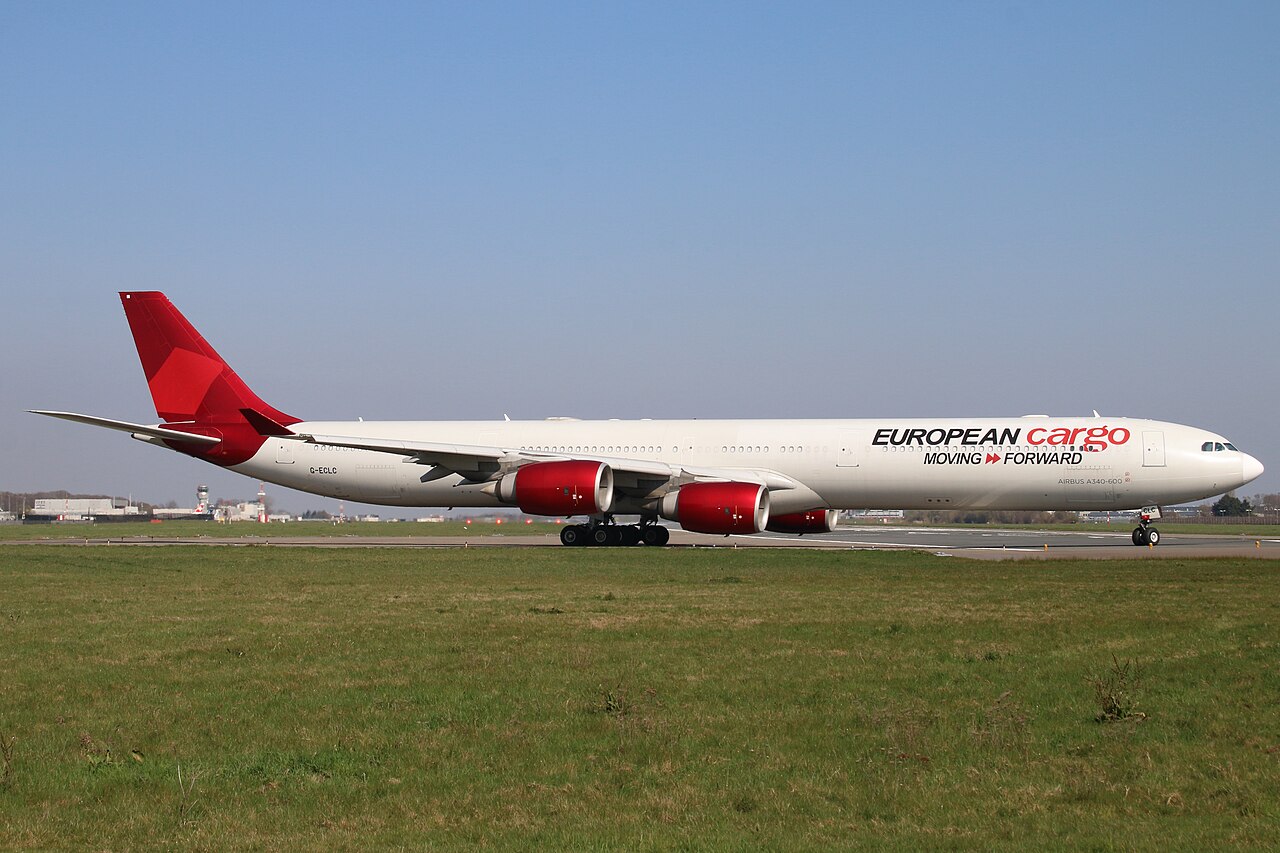
European Cargo, one of the world’s most unusual Airbus A340 operators, has ceased flying and entered administration, grounding a rare fleet of four-engine A340-600s that had been repurposed for e-commerce cargo flights between China and the UK.
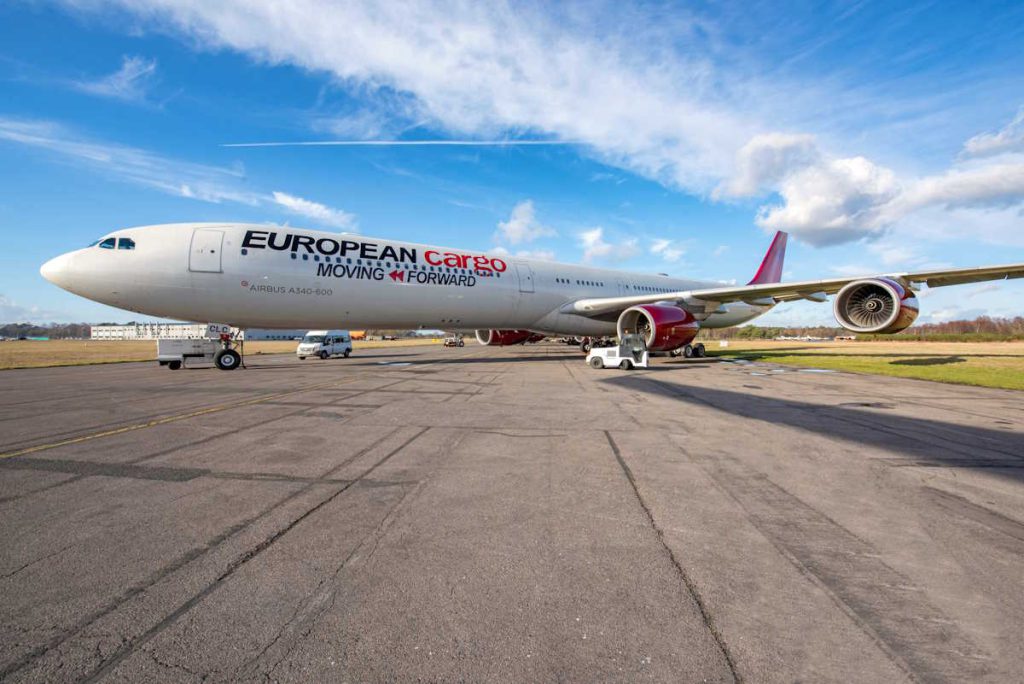
The Bournemouth-based airline built its business around second-hand Airbus A340-600s, an aircraft better known for long-haul passenger service with airlines such as Virgin Atlantic than for freight operations. In European Cargo’s hands, the type found an unlikely second life carrying small e-commerce parcels from China to the UK, using a modified cabin and bespoke cargo pod system rather than a conventional main deck freight door.
But the same aircraft that made European Cargo distinctive also left it exposed. The A340-600 is rare, popular among aviation enthusiasts and increasingly scarce in commercial service, but its four engines made it expensive to operate at a time of rising fuel prices and intense competition from more efficient Boeing 777Fs and Airbus A330Fs.
European Cargo stops all Airbus A340 cargo flights and enters administration
European Cargo confirmed on 3 June that it had appointed administrators from Teneo Financial Advisory after facing “significant financial pressures, reduced flying activities, and rising fuel costs”. The company said it had ceased operations with immediate effect.
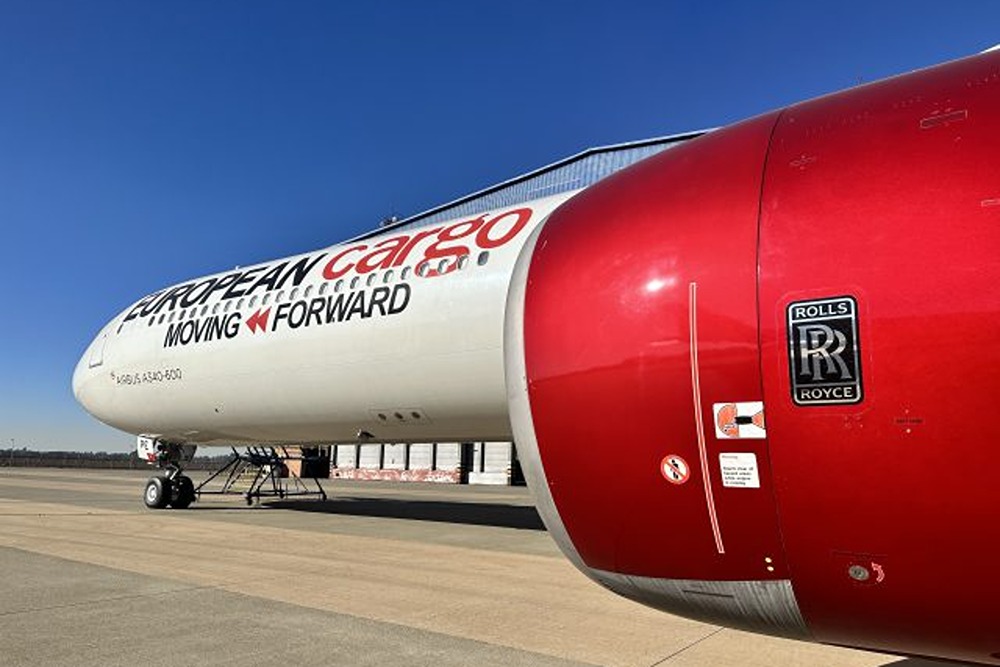
Stuart Morris, Robert Fishman and David Soden of Teneo were appointed as joint administrators, with the affairs, business and property of the company now being managed by them.
Staff were reportedly informed of the airline’s collapse during a Microsoft Teams call on the afternoon of 3 June, while redundancy notices are understood to have been issued. The airline’s last operational flights were conducted on 19 May, and its active fleet is now grounded.
European Cargo and its unusual Airbus A340 fleet
European Cargo was unusual not simply because it operated the Airbus A340-600, but because it tried to turn the aircraft into a niche e-commerce freighter.
The airline had 15 A340-600s on its books at the time of its collapse, although several were stored and not thought to be in regular commercial use. Its first three aircraft had previously flown for Virgin Atlantic, giving the fleet a direct link to one of the A340-600’s best-known passenger operators.
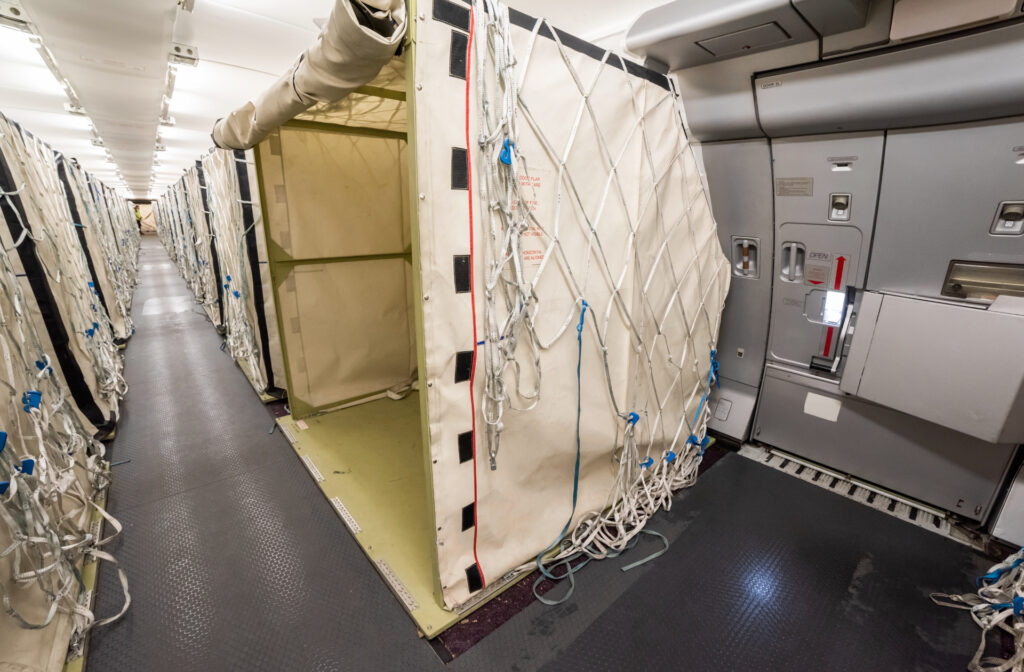
Unlike factory-built freighters, European Cargo’s A340s were not fitted with large main deck cargo doors. Instead, the airline stripped out passenger seats, galleys, bulkheads and cabin fixtures, then installed a freight pod handling system that allowed custom-built containers to be loaded through the passenger doors.
That made the aircraft less versatile than a 777F or A330F, but well suited to lightweight, high-volume e-commerce packages, a market that had surged during and after the COVID-19 pandemic.
A niche China e-commerce carrier with Bournemouth at its centre
European Cargo began operating in April 2020, initially benefiting from pandemic-era demand for PPE flights from China and the Far East to the UK.
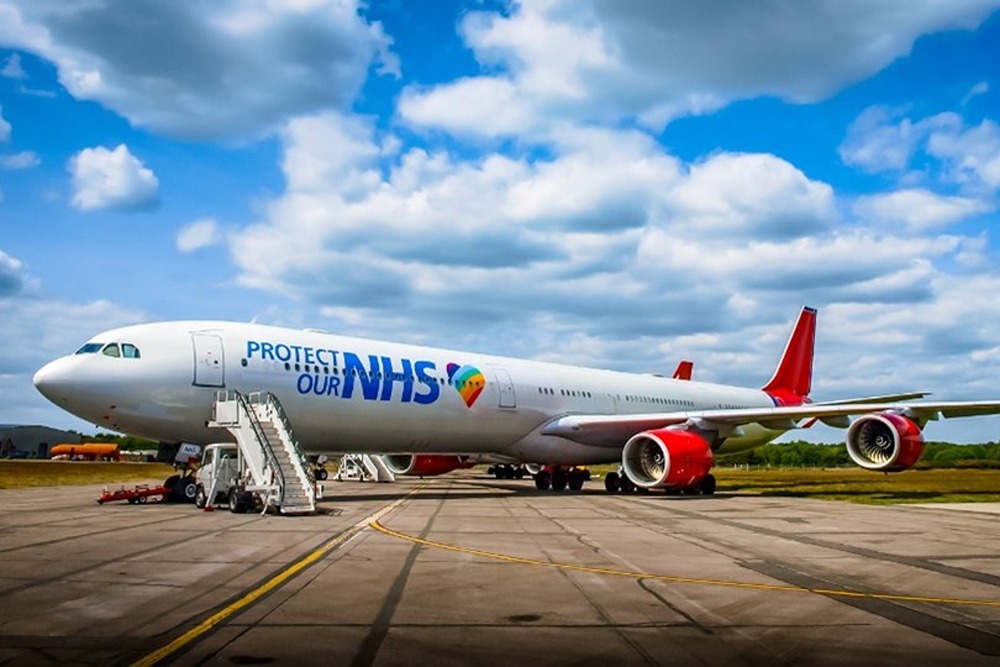
The company’s first contracts were secured by its then-owner, European Aviation Limited, which transported personal protective equipment from China and other points in the Far East to the NHS at the height of the pandemic.
From there, European Cargo developed scheduled and charter cargo operations from Bournemouth Airport before opening a second base at Teesside Airport in March 2026.
The Teesside operation was intended to support five weekly China flights, underlining European Cargo’s ambition to become a specialist UK gateway for e-commerce freight. It was also envisaged that passenger charters might be operated by the airline at some point, although those flights never materialised.
When the Airbus A340 advantage became a burden
As reported by Air Cargo News, the most recent filed accounts for European showed that the company made a full-year net loss of $26 million in 2024 on revenues of $136 million, representing a slight improvement on its net loss of $30.6m in 2023.
Upon the publication of those accounts, the company acknowledged the losses and stated that it had carried out a full “going concern” review of its business and operations.
European Cargo had hoped that adding further aircraft, routes and staff would allow it to reach critical mass and increase profitability in 2025 and beyond.
However, with other carriers entering the e-commerce market from China, rising fuel charges and the inefficiency of operating older four-engine aircraft, the odds were stacked against the carrier.
The aircraft also offered limited versatility compared with dedicated freighters serving similar routes, leaving European Cargo hamstrung in its ability to diversify into other cargo markets away from e-commerce.
Given the company’s historic financial performance, European Aviation, originally owned by aviation and motor racing entrepreneur Paul Stoddart, sold its 50.01% majority shareholding in European Cargo to Priority 1 Logistics in November 2024 to focus on its aviation leasing and MRO services.
What happens to European Cargo’s Airbus A340s now?
With the closure of the company, the future of European Cargo’s A340-600 fleet is uncertain.
According to data obtained from Flightradar24, the carrier’s seven active Airbus A340-600s remain parked. Aircraft registered G-ECLB, G-ECLC, G-ECLD, G-ECLE, G-ECLJ and G-ECLM are listed as parked at Bournemouth, while G-ECLN remains stored at Teesside.
For aviation enthusiasts, the collapse removes one of the few remaining high-profile commercial roles for the Airbus A340-600. For the cargo market, it is a reminder that aircraft rarity and ingenuity are not always enough to overcome fuel burn, competition and the economics of modern freight.
Featured image: Colin Cooke Photo / Wikimedia Commons