NASA’s ‘new’ Boeing 777 returns to Langley after completing key upgrades

6 min read
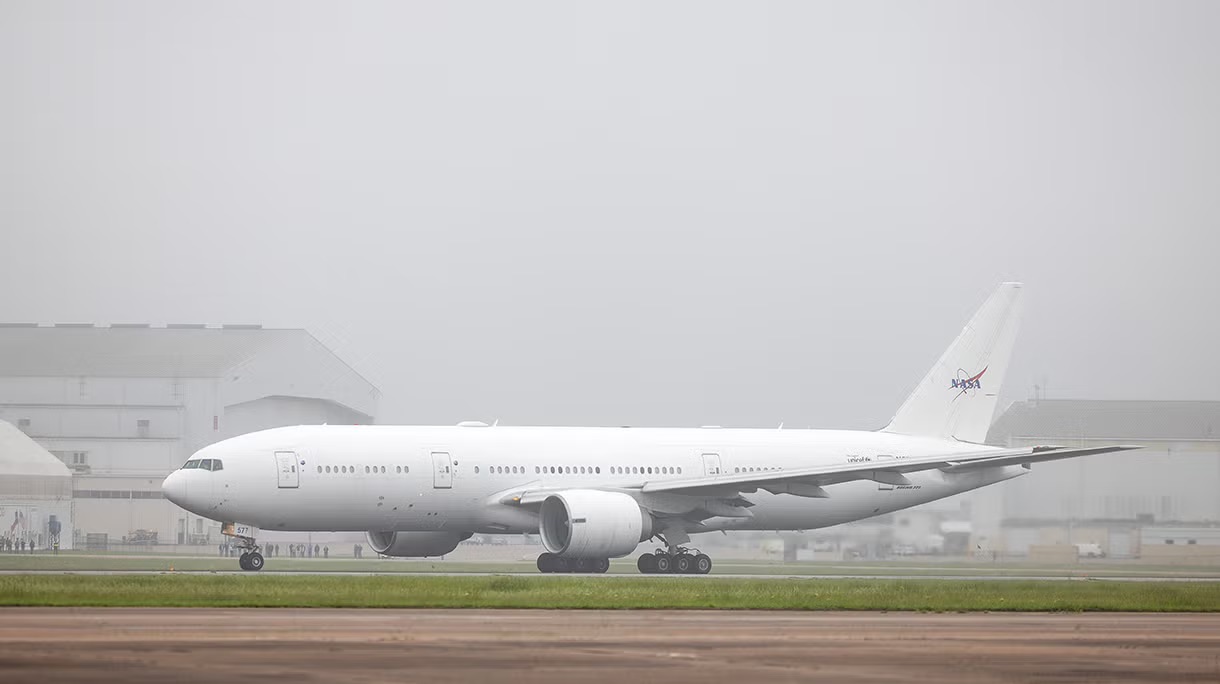
NASA’s ‘new’ Boeing 777-200ER aircraft has returned to the administration’s Langley Research Center in Hampton, Virginia, after undergoing the heavy structural modifications and hardware upgrades required to transform the former commercial airliner into the agency’s next-generation airborne science laboratory.
After completing a post-upgrade functional check flight, NASA’s newly modified 777-200ER (registration N577NA) completed a three-hour transit from L3Harris Technologies’ facility in Waco, Texas, to the Langley Research Center on 22 April.
Airborne now! The new NASA B777-200ER “Flying Laboratory” (N577NA) is flying to NASA Langley Research Center now.
— FL360aero (@fl360aero) April 22, 2026
The NASA B777-200ER, previously operated by Japan Airlines, or JAL as JA704J, was acquired to replace and extend the capabilities of the NASA DC-8, that flew Earth… pic.twitter.com/U1pUnZHRAG
The aircraft has been at L3Harris’ Waco plant since January 2025, where work to prepare the former airliner for its future use in support of airborne scientific operations.
This particular 777-200ER rolled off the production line in 2003 and was initially employed by Japan Airlines (or JAL). During this period, the aircraft was operated under the JA704J registration.
In May 2020, however, the former airliner arrived at the Southern California Logistics Airport in Victorville, California, where it remained in long-term storage until it was acquired by NASA in December 2022 for less than $30m. That same month, the aircraft was flown to Langley to undergo an initial series of modifications.
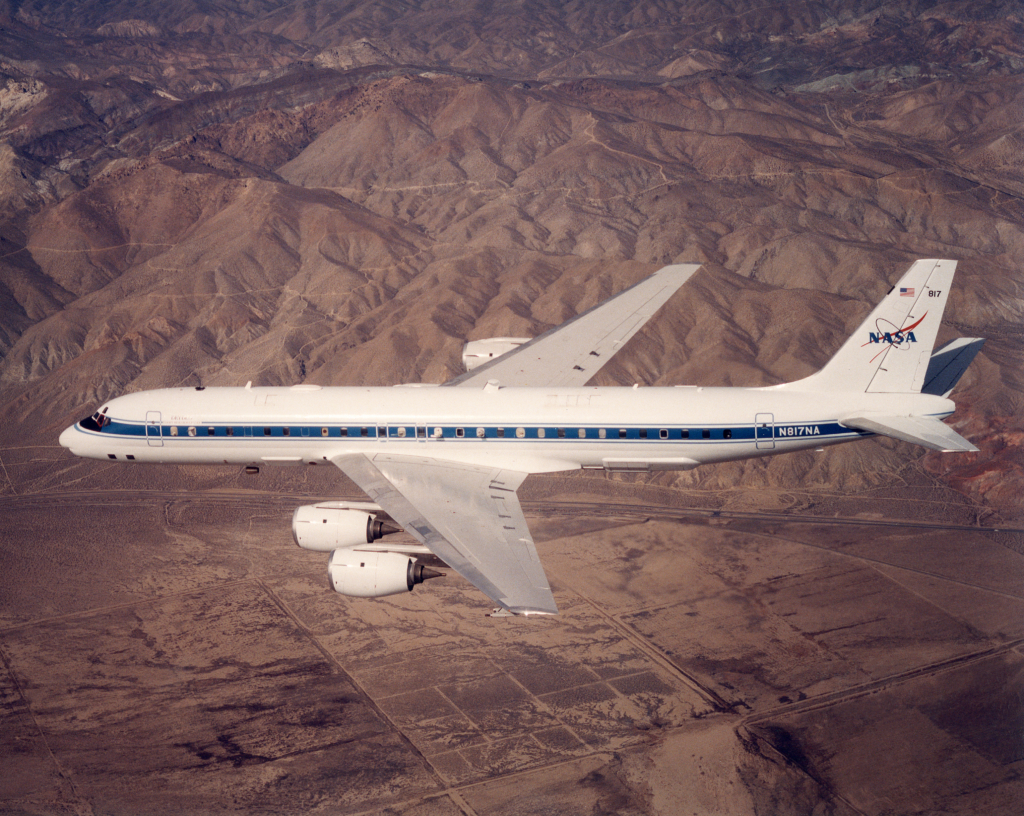
Having now completed further structural and hardware upgrades with L3Harris, the new 777-200ER has stepped closer to beginning its new life as an airborne science laboratory, finally replacing NASA’s ex-commercial Douglas DC-8 aircraft (registration N817NA) in this role following its retirement in April 2024.
What upgrades has NASA’s new 777-200ER received?
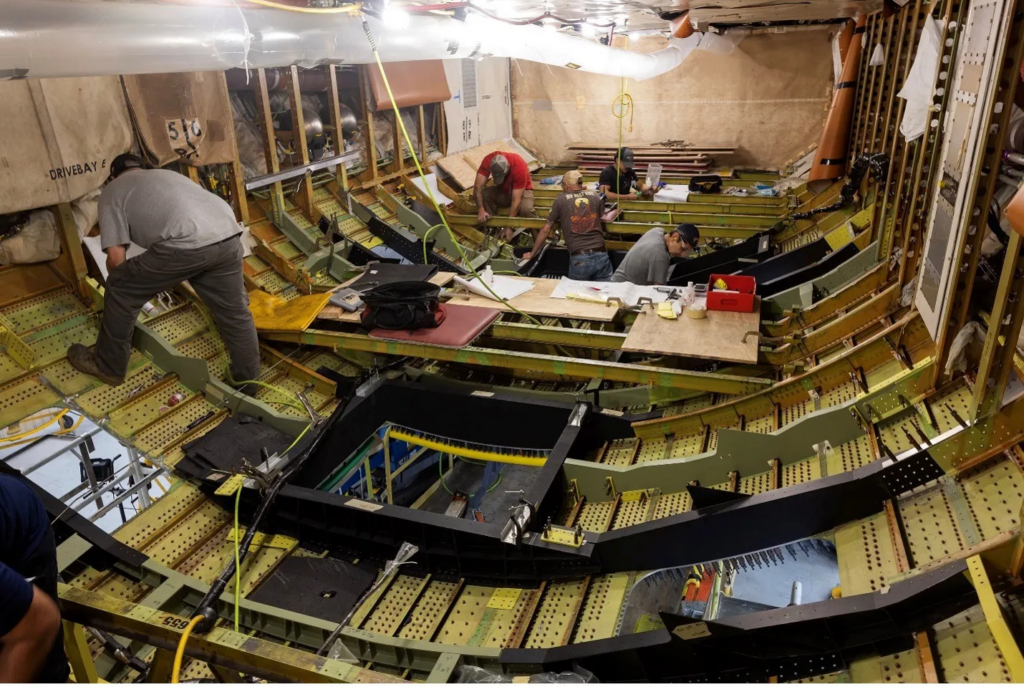
Since January 2025, NASA’s new 777-200ER has been undergoing extensive hardware and structural upgrades at L3Harris’ facility in Waco to transform the former airliner into a fully functioning airborne science laboratory.
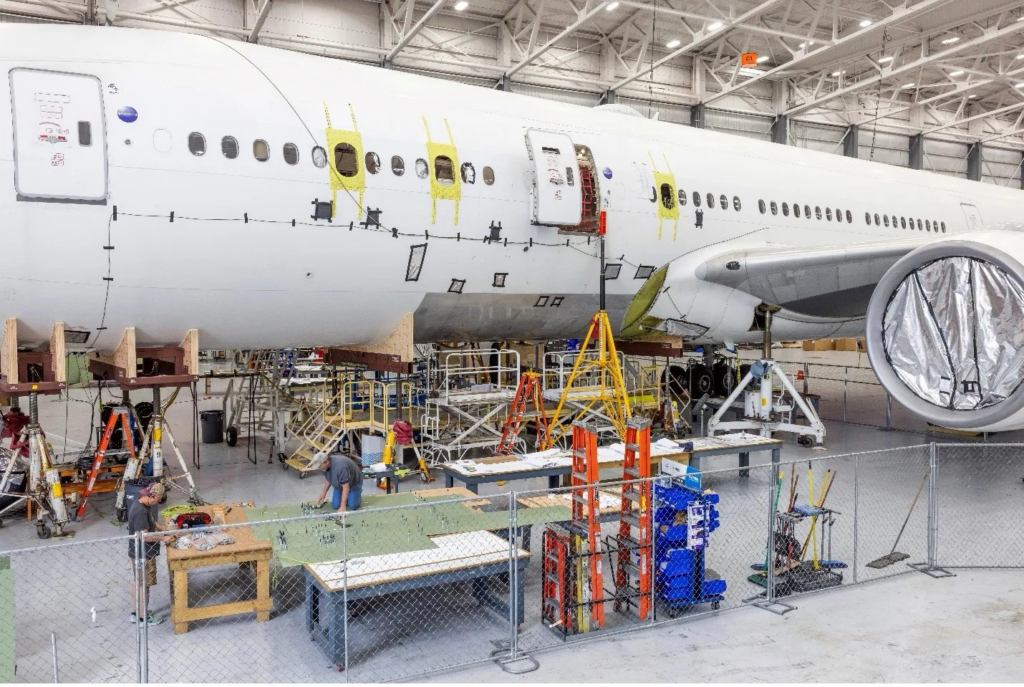
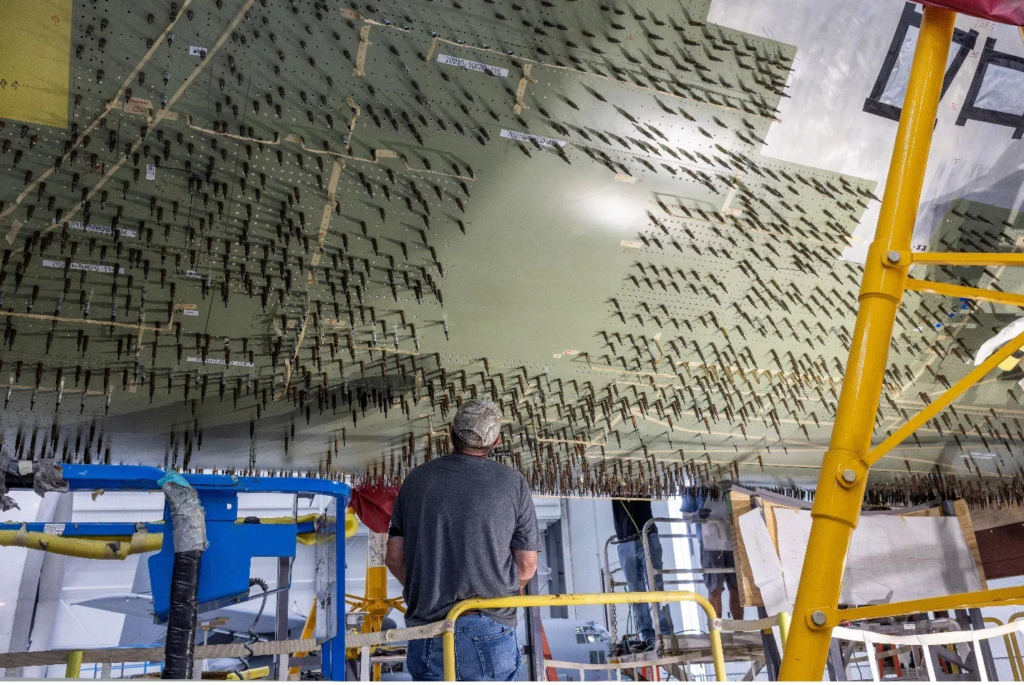
According to NASA, this process included the installation of dedicated research stations and extensive wiring work to allow “payload systems to communicate with sensors such as LiDAR [(Light Detection and Ranging)] and infrared imaging spectrometers during flights.”
In addition, NASA confirmed that the aircraft’s cabin windows have been enlarged and open portals have been integrated at the bottom of its fuselage to allow for remote-sensing instruments to be added for missions.
Derek Rutovic, program manager for NASA’s Airborne Science Program at the agency’s headquarters in Washington, said: “Airborne missions at NASA use cutting-edge instruments to explore and understand our home planet.
The 777 will be the largest airborne research laboratory in our fleet, collecting data to improve life on our home planet and extend our knowledge of the Earth system as a whole.”
Add a button.
NASA’s 777-200ER marks a major upgrade from the DC-8
The size and flexibility offered by the new 777-200ER represents a marked upgrade for NASA’s airborne science laboratory missions. While NASA’s former DC-8 only managed to accommodate up to 45 researchers and flight crew personnel during standard research missions, the 777-200ER’s greater size increases this capacity to between 50 and 100 onboard personnel.
In addition, the newly acquired 777-200ER offers a greater useful payload of 75,000lb (34,019kg) when compared with the 30,000lb (13,607kg) afforded by the DC-8.
This means that the 777-200ER will be able to carry more than double the amount of test equipment and scientific instruments than its predecessor could, providing NASA with greater mission flexibility going forward. The 777-200ER also offers an improved 18-hour mission endurance.
While the 777-200ER represents a key step-change in capability and capacity for NASA’s airborne science laboratory mission, the multi-decade legacy of the DC-8 still lives on in the hearts of those who worked on and with the platform since it joined NASA’s fleet in 1987.
Following its retirement, the DC-8 was donated to Idaho State University in Pocatello to serve as an educational tool for their Aircraft Maintenance Technology Program.
Commenting on this, Kristen Boogaard – NASA’s 777 program manager at the agency’s Langley Research Center and former deputy program manager of NASA’s DC-8 – said: “NASA’s DC-8 was an incredible workhorse for Earth science for nearly 40 years. Being part of that team, I got to see the impact up close…
“I’m excited for what the 777 will bring. It gives us the ability to bring together more partners, more educational opportunities, and more instruments. That will make a real difference in the data we collect moving forward,” she added.
NUTURE: NASA gears up for its first 777-200ER mission
With the bulk of the modification work now completed aboard NASA’s new 777-200ER airborne science laboratory, the administration is now focusing on the platform’s inaugural mission, which is slated to begin in January 2027.
According to NASA, the 777-200ER’s first scientific mission will investigate high-impact winter weather events, such as severe cold air outbreaks, wind, snow and ice storms, as well as hazardous seas.
“Known as the North American Upstream Feature-Resolving and Tropopause Uncertainty Reconnaissance Experiment (NURTURE), the mission will collect detailed atmospheric observations across a vast region spanning North America, Europe, Greenland, and the Arctic and North Atlantic Oceans,” the agency explained.
Commenting on its upcoming inaugural mission, Rutovic said: “We’ve been completing the engineering design and analysis to install the NURTURE payload into the aircraft in parallel with the [777’s] portal modification. We’re excited to get the aeroplane back home to NASA and on the road to its first mission.”
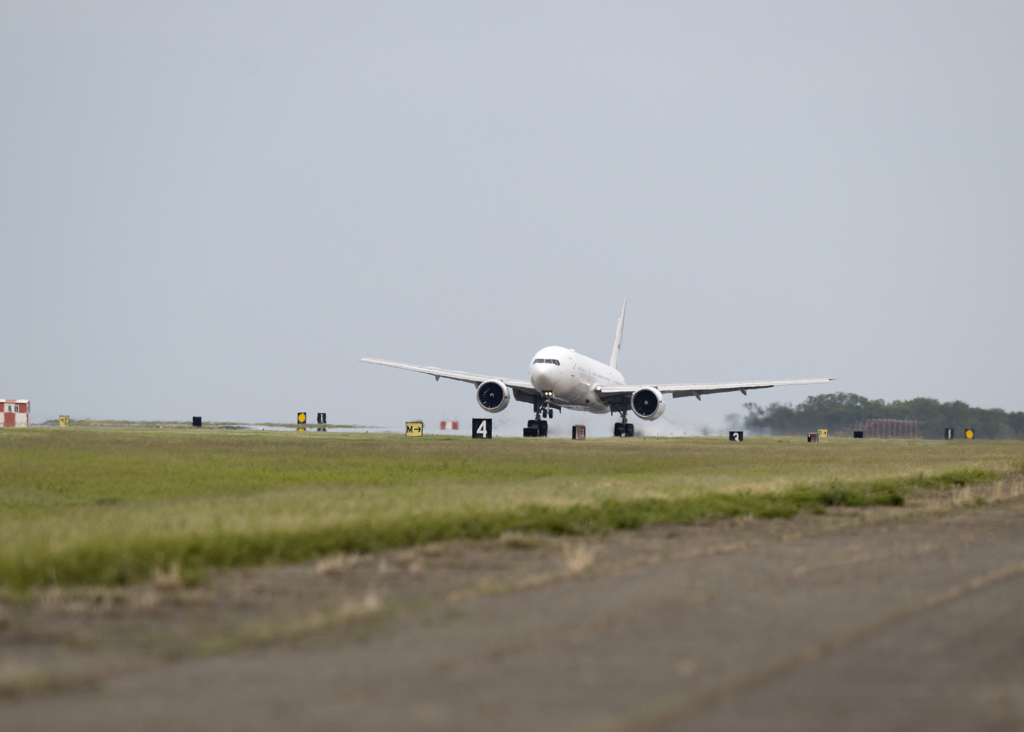
Featured Image: NASA’s newly upgraded Boeing 777-200ER departs L3Harris’ facility in Waco, Texas, on its ferry flight back to the Langley Research Center on 22 April. The aircraft will start its first mission as an airborne science laboratory in January 2027. Image: L3Harris