


Finland’s Arctic drone test range gives Europe a rare edge in long-range UAV testing

5 min read
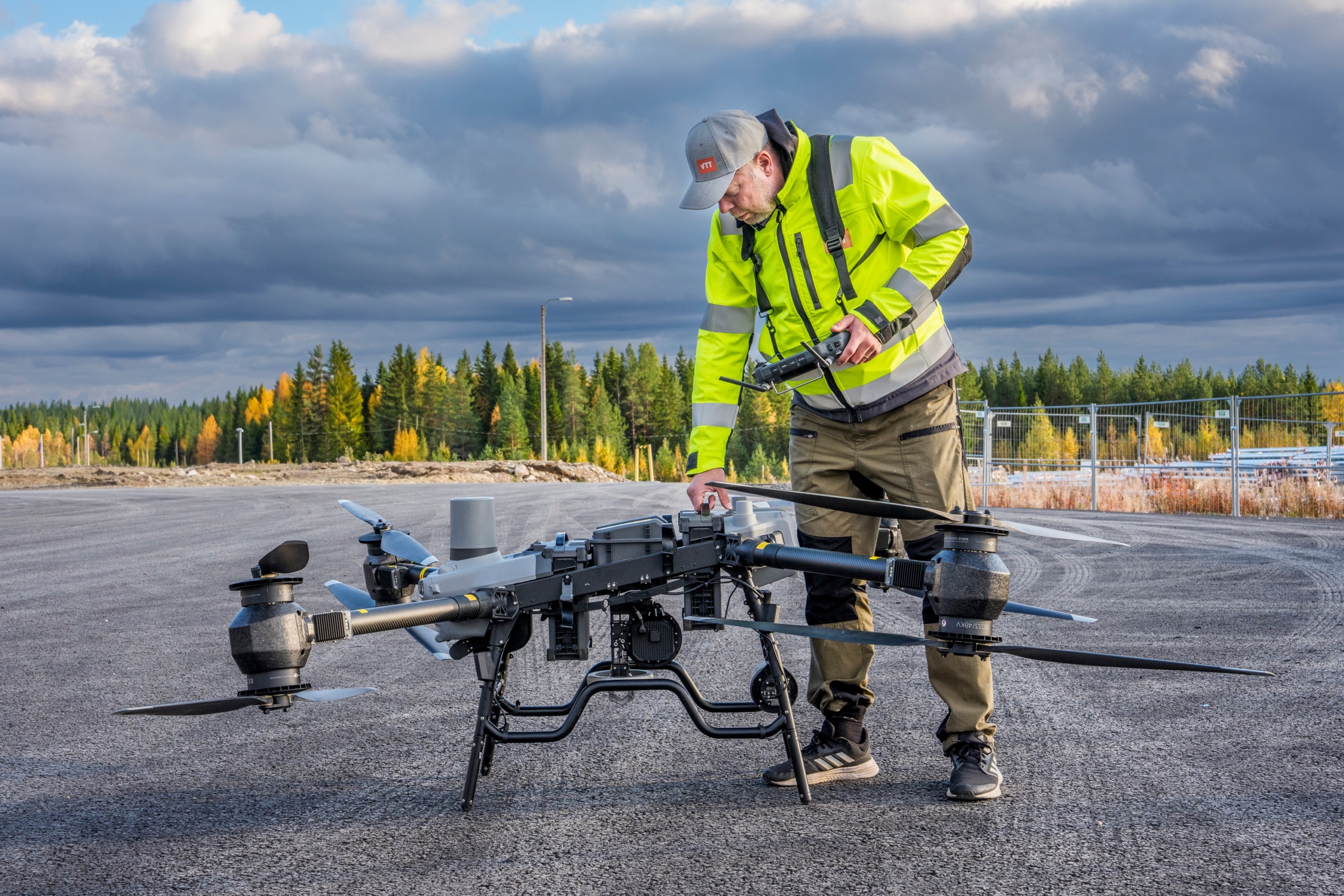
Finland is expanding one of Europe’s most capable real-world drone testing environments at a time when autonomous aircraft are moving rapidly from niche tools to critical infrastructure, logistics and defence assets.
In northern Finland, VTT Technical Research Centre’s Arctic drone range is emerging as a rare place where companies can test aircraft at scale, in extreme weather, over long distances and in the kind of remote terrain that increasingly reflects real operational demand.
Located near Oulu, the site now covers more than 3,500 sq km of designated airspace, over twice the size of Greater London, across forests, lakes, wetlands and open ground, with a new 150km-long, 20km-wide flight corridor significantly expanding its long-range testing capability.
The site supports beyond visual line of sight (BVLOS) flights, swarm operations and multi-domain autonomous systems involving air, land and water platforms.
From this month, its permitted flight ceiling also rises to 9,000ft, opening the door to more demanding trials involving larger and higher-endurance aircraft.
That expansion comes as Europe faces a growing shortage of places where advanced drones can be properly tested outside tightly controlled demonstration environments. Its remote location and controlled airspace designation allow for testing that would be difficult or impossible in more congested parts of Europe.
Technical capabilities of Finland’s Arctic UAV test range
| Category | Capability |
|---|---|
| Designated airspace | Over 3,500 km² |
| Maximum flight altitude | 2,200 ft (increasing to 9,000 ft from April 2026) |
| BVLOS operations | Permitted |
| Maximum take-off weight (MTOW) | Up to 150 kg |
| Payload drop capability | Permitted |
| Swarm flight operations | Supported |
| Control systems (C2) | Fiber-optic control supported |
| Airspace classification | Permanent danger zone |
| Coordination structure | Multi-operator coordination in place |
| Connectivity | 5G coverage via Elisa, Telia and DNA |
Europe’s drone industry is outgrowing its UAV testing infrastructure
Across Europe, demand for drones is rising across industries that now need aircraft capable of flying longer, farther and in more difficult environments.
That includes logistics firms looking at urgent deliveries to remote areas, utilities inspecting power lines and pipelines, emergency services using drones for search and rescue, and defence operators testing surveillance and autonomous support systems.
But the infrastructure needed to prove these systems in realistic conditions has not always kept pace. Only a handful of countries in Europe can offer testing areas of this scale, giving Finland a growing strategic advantage as demand for long-range drone operations increases.
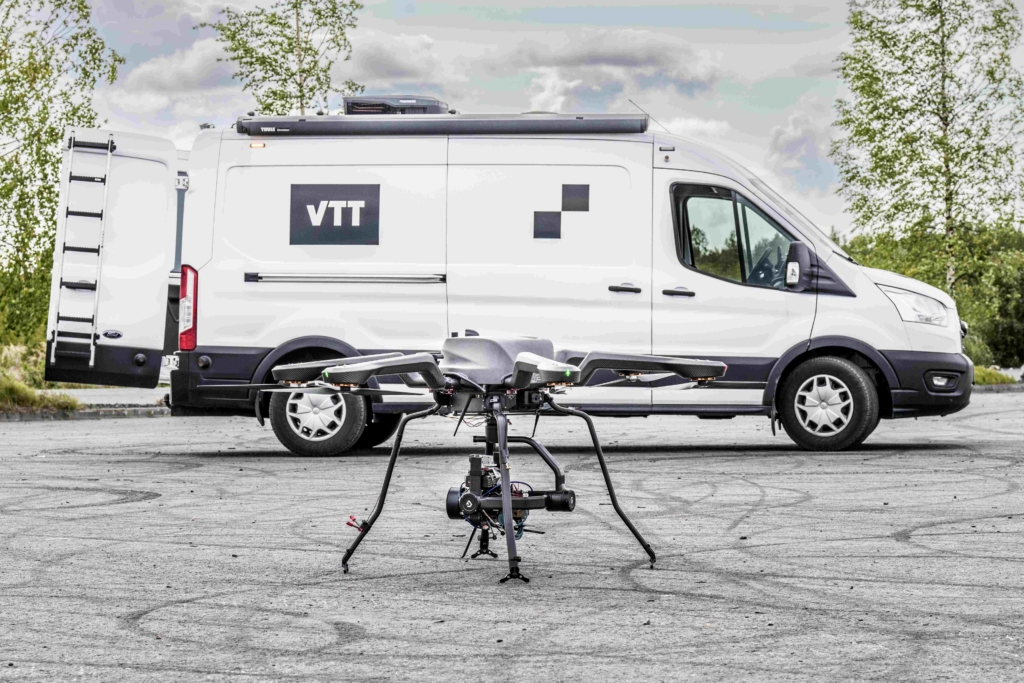
“Drone services are on the rise as unmanned aircraft are ideal for improving the efficiency of logistics, surveying and monitoring operations,” said Timo Lind, VTT’s Principal Scientist and Chief Drone Pilot. “The industry is developing quickly, intensifying the need for diverse test sites where drone functionality, sensors, safety and airspace management solutions can be tested in real-world conditions.”
This is not a new direction for Finland. VTT has been developing long-range drone capability for several years and, in 2023, carried out Finland’s first demanding BVLOS corridor flights in controlled U-Space airspace around Oulu with air traffic management company Fintraffic.
Those trials included flights between Oulu Airport and Hailuoto, demonstrating how drones could eventually support time-critical logistics, healthcare deliveries and infrastructure services.
Why Arctic conditions matter for cold-weather drone reliability
One reason the Finnish site stands out is its environment. The site operates across all four seasons, exposing aircraft to snow, ice, sub-zero temperatures, humidity, fog, and rapidly changing weather.
For drone developers, that matters because some of the biggest reliability problems only appear in harsh conditions.
Cold affects battery endurance, icing can degrade sensors and propellers, and moisture can affect electronics and communications systems. These are exactly the kinds of issues that can undermine drones once they move into operational use.
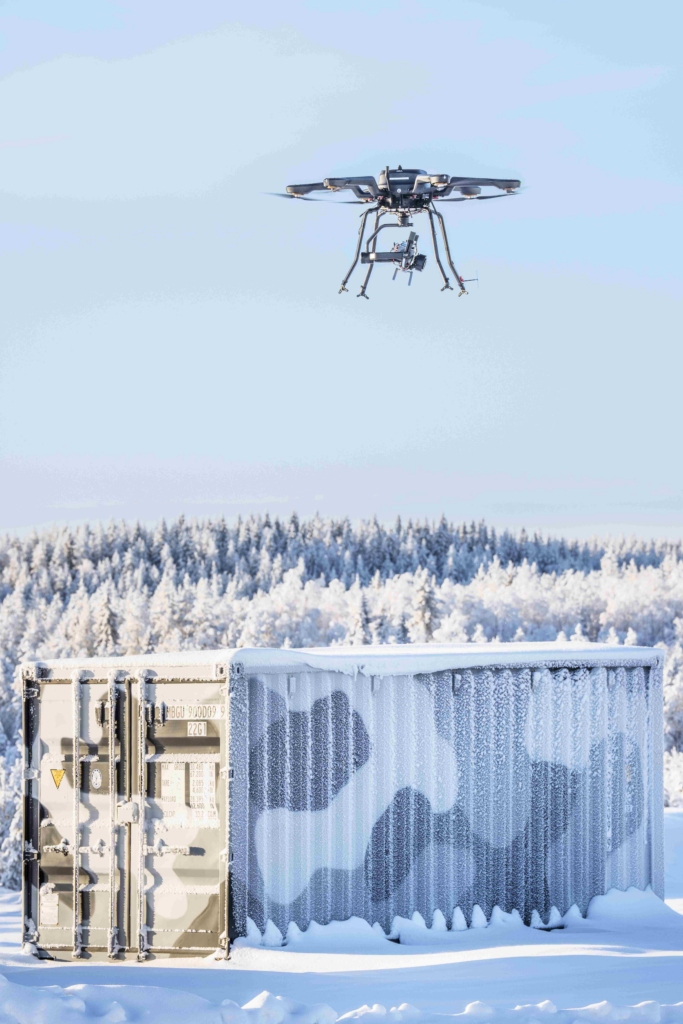
“Winter in particular offers conditions that cannot be fully simulated in a lab,” Lind said. “The cold, humidity and ice that accumulate on the surfaces of devices reveal the weaknesses in systems, such as the performance of batteries and electronics.”
That Arctic relevance is becoming more important beyond civilian use. Recent NATO discussions have highlighted how difficult cold-weather drone operations remain, even as unmanned systems become more important in northern defence planning.
Alliance officials and defence experts see drones as increasingly important for Arctic surveillance because they can cover vast distances more cheaply than crewed assets. But extreme cold, poor infrastructure and icing remain major challenges.
That makes sites like VTT’s particularly valuable because they allow manufacturers to find weaknesses before aircraft are deployed in safety-critical or military settings.
Finland’s drone test range enables real-world UAV testing at scale
What makes VTT’s range strategically useful is not just size, but realism.
The new long-range corridor allows developers to assess endurance, connectivity, navigation and sensor performance over extended routes rather than in short, staged test windows.
That is increasingly important as the market shifts towards heavier drones, longer-range cargo aircraft and more capable ISR systems.
The site can also support dozens of drones operating simultaneously, giving manufacturers a rare environment to test swarm coordination and autonomous task-sharing in live conditions.
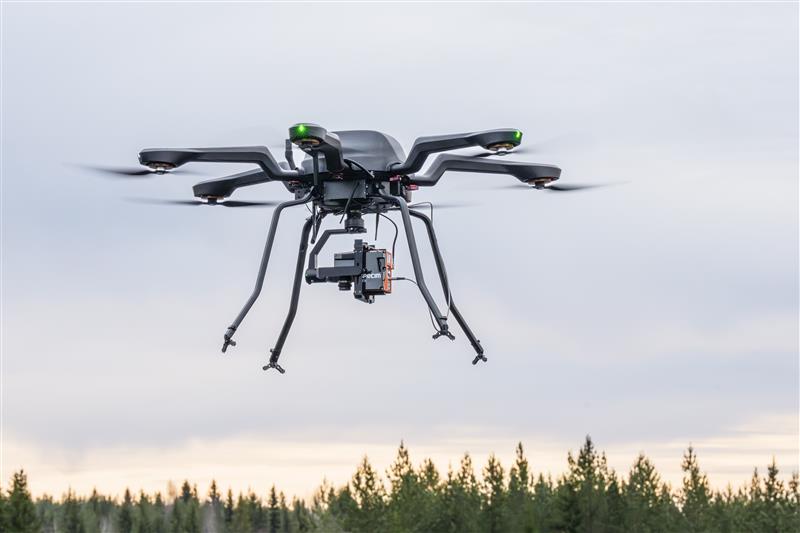
VTT is also expanding its support for multi-platform autonomous systems, where drones operate alongside unmanned ground and maritime systems. This is especially relevant for coastal surveillance, emergency response and remote infrastructure monitoring.
To support more advanced trials, VTT has also installed a primary radar system to improve tracking and situational awareness, strengthening both safety oversight and security testing capability.
Jussi Kangasoja, VTT’s UAS Specialist and Senior Scientist, said the next phase of development would focus on even more demanding operations.
“In the future, technologies will be tested in the area in even more demanding conditions to ensure the functionality of devices and systems in critical conditions,” he said. “Test operations are also expanding to heavier aircraft, long-range drones and high-altitude systems.”
Featured image: VTT


