


B-52J modernisation moves forward as Rolls-Royce completes F130 engine testing

5 min read
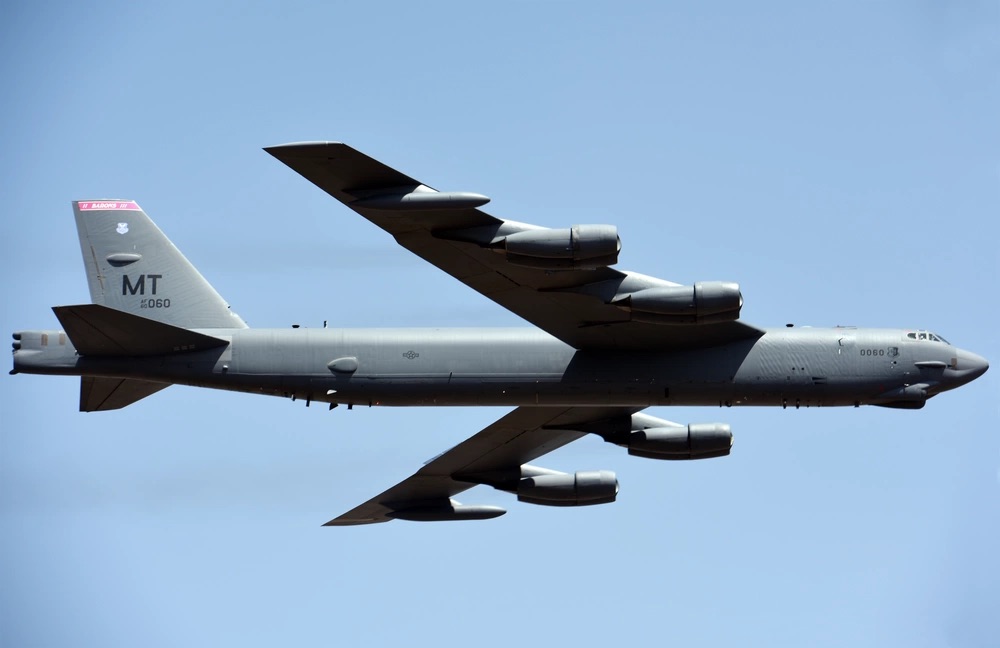
Rolls-Royce has completed a critical series of altitude and operability tests for its F130 engine, marking another decisive step in the US Air Force’s effort to re-engine the B-52 fleet and transition the bomber into the B-52J configuration.
The testing campaign, conducted at the US Air Force’s Arnold Engineering Development Complex (AEDC) in Tullahoma, Tennessee, on February 24, validated engine performance across high-altitude mission profiles and stressed airflow conditions representative of real-world operations.
The milestone moves the Commercial Engine Replacement Program (CERP) closer to aircraft modification and eventual flight testing.
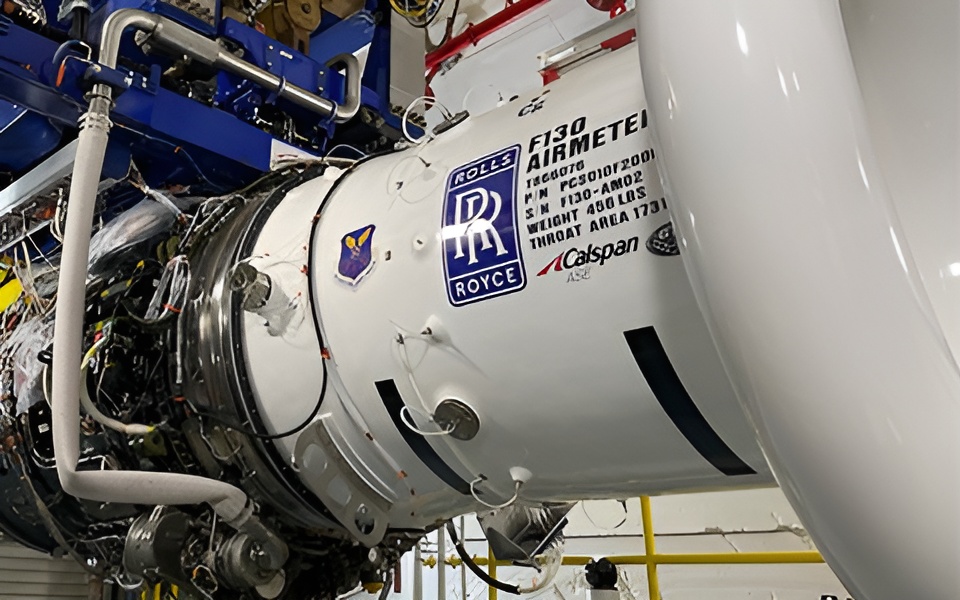
Rolls-Royce engineering teams worked alongside Air Force personnel at AEDC to confirm the F130’s sustained high-altitude performance, stability under airflow distortion, and electrical integration with aircraft systems.
Rolls-Royce F130 altitude and operability testing at AEDC advances B-52J re-engining
At AEDC, Rolls-Royce executed a series of altitude tests designed to simulate long-duration, high-altitude strategic missions, a core operating envelope for the B-52’s global strike role.
The engine was subjected to operability trials using distortion screens to replicate turbulent airflow and validate stability margins under stress.
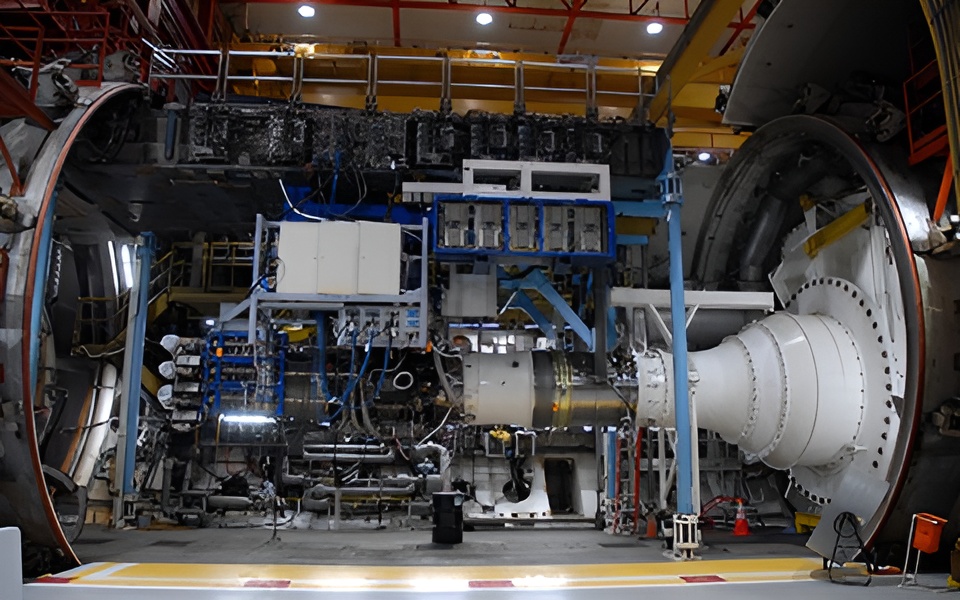
The company also conducted Integrated Drive Generator (IDG) testing in partnership with Boeing to ensure the engine provides stable and reliable electrical power across mission scenarios.
Jennifer Schwerin, Director, Early Life Cycle & Naval Programs – Defence at Rolls-Royce, said the milestone was delivered “on-time and on-budget.”
“Working closely with our partners at Boeing and the Air Force, our team has demonstrated the F130’s ability to meet mission requirements and further strengthened confidence that this engine is the right choice for the B-52J,” Schwerin said.
Lt. Col. Timothy Cleaver, USAF Program Manager for the B-52 Commercial Engine Replacement Program, underscored the significance of the test data gathered during the campaign.
“Throughout this F130 engine test campaign, we gathered essential data about how this engine operates across the full spectrum of flight conditions,” Cleaver said. “Completing the series of tests at AEDC’s world-class facility gives us confidence in the engine and associated systems as we proceed into test aircraft modification and flight testing.”
From critical design review to dual-pod testing in the B-52J Commercial Engine Replacement Program
The AEDC milestone follows the programme’s Critical Design Review (CDR), completed in late 2024, which cleared the way for construction of the first flight-test engines.
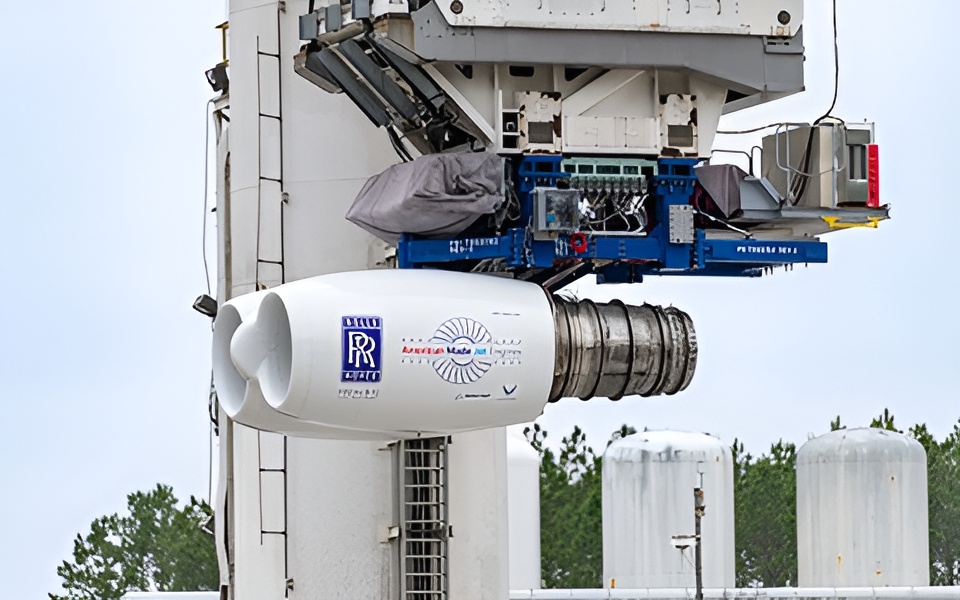
Earlier phases of testing have included Rapid Twin Pod Tests at NASA’s Stennis Space Center, where Rolls-Royce evaluated the F130 in the B-52’s distinctive dual-pod configuration. Those tests were central to validating analytical modelling and reducing integration risk.
Initial sea-level testing was also completed at Rolls-Royce’s upgraded test cell facility in Indianapolis. That phase focused on validating the first software release and collecting performance data necessary for progression to subsequent integration stages.
The programme now moves into further system integration work and additional dual-pod testing at Stennis, another key waypoint before flight trials.
Throughout the campaign, engineering teams have used the data gathered to refine modelling and confirm the F130’s suitability for the Stratofortress fleet.
Why the Rolls-Royce F130 engine is central to the USAF B-52J modernisation
The F130 will replace the ageing Pratt & Whitney TF33 engines that have powered the B-52H for decades. Those legacy engines, dating back to the early 1960s, have become increasingly maintenance-intensive and inefficient.
Built on Rolls-Royce’s BR725 commercial engine architecture, the F130 benefits from a mature design with more than 30 million flight hours across the broader BR engine family. The BR725 itself has been in production for 13 years, with more than 1,000 engines currently in service.
The Air Force expects the F130 to deliver improved fuel efficiency, reliability, and reduced sustainment costs. A key operational shift is the move to fully interchangeable engines in the dual-pod configuration, replacing the existing left-engine/right-engine arrangement. That change is intended to simplify logistics, ease maintenance planning and improve fleet readiness.
Production engines will be manufactured, assembled and tested in Indianapolis, Rolls-Royce’s largest US production facility. The company says it has invested more than $1.5 billion in the United States over the past decade, including the modernisation of its Indianapolis operations.
B-52H to B-52J redesignation and USAF service life extension to 2050
Under the Air Force’s fiscal 2024 budget documents, any B-52H modified with the new commercial engines and associated subsystems will be redesignated as the B-52J.
The redesignation settles years of internal debate over how to classify the extensively upgraded bomber. In addition to new engines, the aircraft is set to receive a new radar, upgraded communications and navigation systems, and broader avionics modernisation.
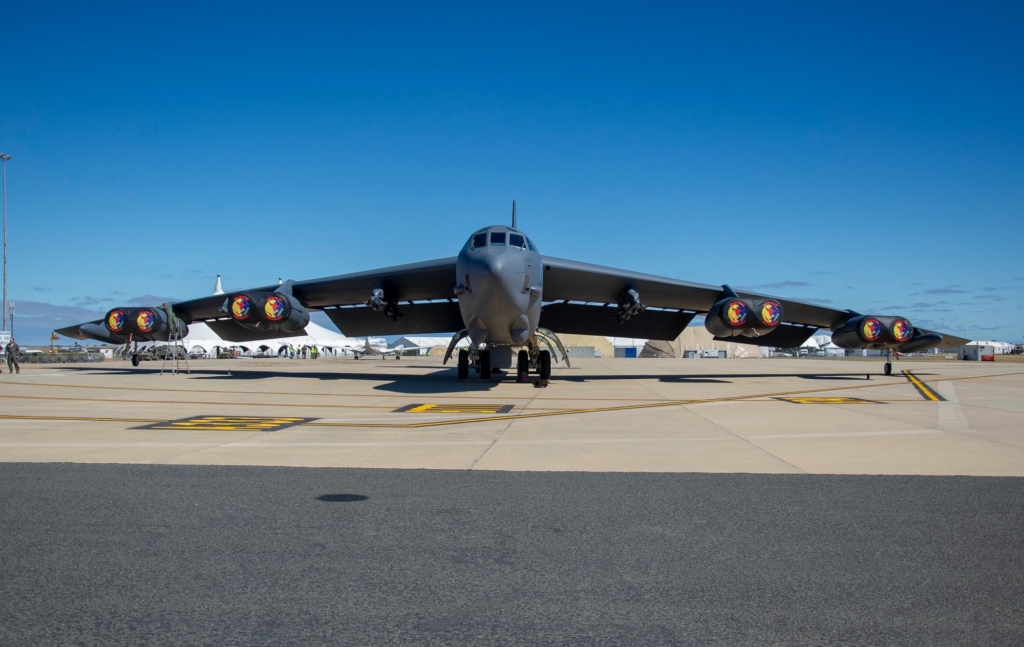
Given the scale of changes, Air Force Global Strike Command had previously examined interim designations before settling on the “J” model. The improvements represent some of the most significant modifications in the H model’s six-decade service life.
Once complete, the B-52J is expected to remain operational until at least 2050, at which point the youngest airframes, originally built in 1962, will approach 90 years in service. If the schedule holds, full operational capability is projected around 2033.
The Stratofortress has long served as a cornerstone of the US nuclear triad and a mainstay of conventional long-range strike operations, with combat service spanning Vietnam, Iraq and Afghanistan.
Extending a Cold War icon in a hypersonic era: strategic prudence or institutional caution?
While the F130 re-engining programme addresses clear sustainment challenges, the broader decision to extend the B-52’s service life well into the mid-21st century has prompted debate.
The Air Force had planned to equip the bomber with the AGM-183 Air-Launched Rapid Response Weapon (ARRW), but the 2024 budget signalled a move to close out that programme after additional tests and shift focus toward the Hypersonic Attack Cruise Missile (HACM).
The B-52J will therefore operate in a force structure increasingly defined by next-generation platforms, including the B-21 Raider, and emerging hypersonic capabilities.
The re-engining effort ensures the aircraft remains viable for standoff strike and strategic deterrence roles. Yet it also underscores a pragmatic, if cautious, approach to force modernisation, balancing investment in new platforms with life extension of proven assets.
Featured image: Rolls-Royce
Sign up for our newsletter and get our latest content in your inbox.


More from

October 25, 20265 min read


