What are the Artemis Accords and why have 76 countries signed them?

6 min read
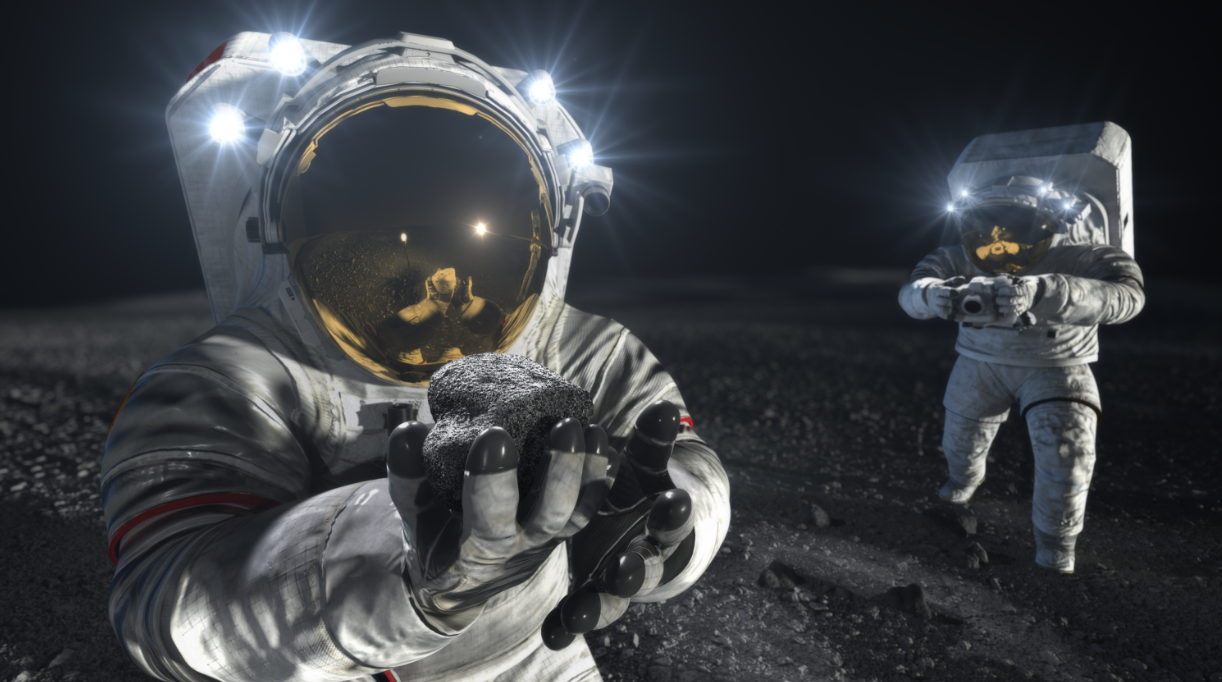
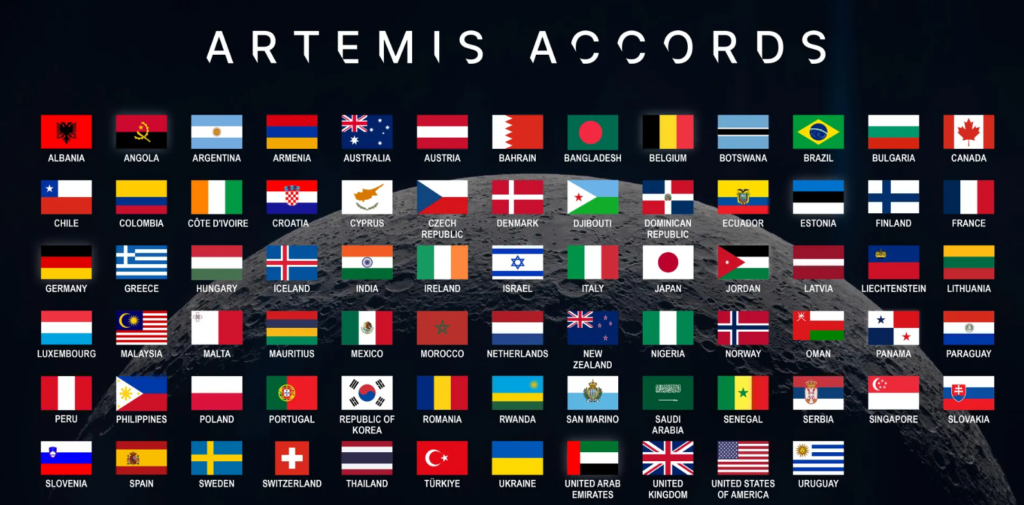
Nearly 40% of the world’s nations have now signed the Artemis Accords, NASA’s framework for peaceful cooperation in space.
NASA says the agreement has expanded to 76 countries following its latest round of signatories, after Albania, Croatia, Cote d’Ivoire and San Marino joined the accord
But what exactly are countries signing up to, and why do the accords matter when international space law already exists?
Who were the initial signatories?
The accords started relatively modestly in October 2020. Australia, Canada, Italy, Japan, Luxembourg, the United Arab Emirates, the United Kingdom and the United States were the original eight signatories.
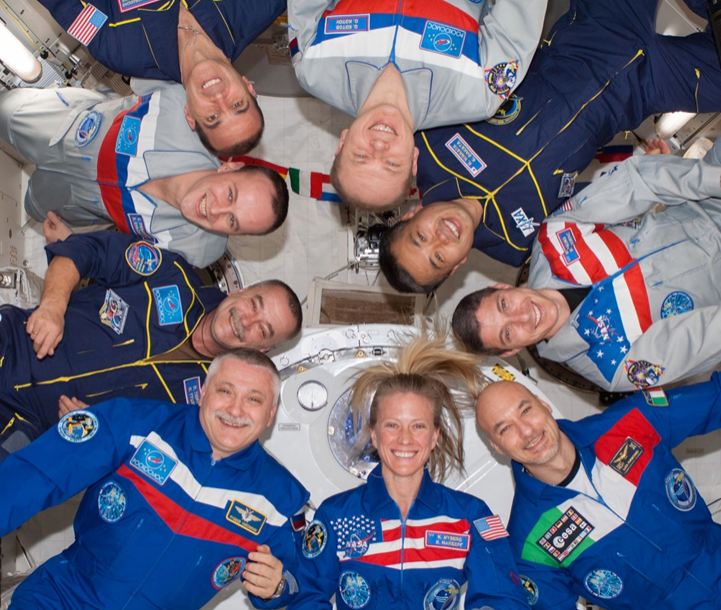
What difference does signing the Artemis Accords make when international space law already exists?
The simplest answer is that the accords are an attempt to agree on how countries should behave as more of them begin operating on and around the Moon.
They are not a new space treaty. Instead, they set out practical principles covering issues that countries and companies are increasingly likely to encounter as lunar activity grows such as who is operating where, how spacecraft from different countries work together, what happens when astronauts need help, how scientific information is shared and how one mission avoids interfering with another.
And although their name comes from NASA’s Artemis programme, their scope stretches beyond the Moon to Mars, comets and asteroids.
Why were the Artemis Accords created?
The basic international rules governing space are much older than Artemis.
The Outer Space Treaty was opened for signature in 1967, when humans had not yet landed on the Moon. It remains the foundation of international space law and establishes principles governing the exploration and use of outer space.
The Artemis Accords do not replace it. They explicitly reaffirm the Outer Space Treaty and other existing agreements, including the Rescue and Return Agreement and Registration Convention. What has changed is the nature of space exploration.
The Apollo era involved only a handful of countries with the resources to send spacecraft towards the Moon. Today, established space powers are being joined by smaller national agencies and commercial companies. That creates some very practical questions.
What happens if two missions want to operate in the same part of the Moon? How does one country know where another country is operating? What if a spacecraft is in distress? Can equipment built by different countries work together? What happens to scientific information collected during a mission?
The United States, led by NASA and the State Department, developed the accords with seven other founding countries in 2020 to establish a common approach to some of those questions.
What does a country actually agree to?
At their heart, the Artemis Accords are a list of principles rather than a detailed rulebook for every mission.
The first is straightforward that exploration should be peaceful. Countries also agree to be transparent about their space policies and exploration plans. That is intended to reduce uncertainty about what other countries are doing and lower the risk of misunderstanding.
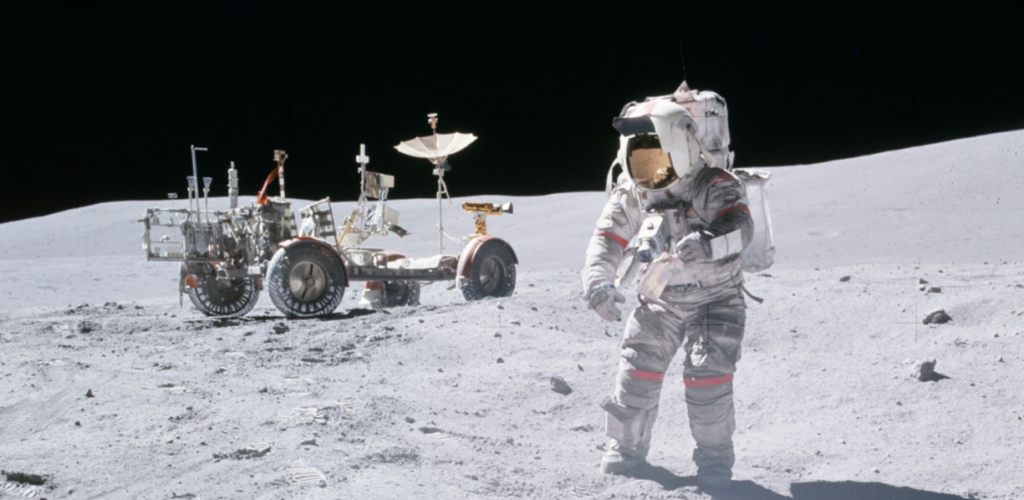
Another principle is interoperability. In simple terms, countries should try to make their systems capable of working together. That could cover communications, power systems, landing infrastructure and even systems for storing and transferring fuel.
Signatories also commit to making reasonable efforts to help astronauts in distress and to coordinate the registration of spacecraft.
Scientific data is another part of the agreement. Countries commit to the open sharing of scientific results from cooperative activities, although the accords make clear that this does not automatically extend to private-sector operations unless a company is acting on behalf of a signatory.
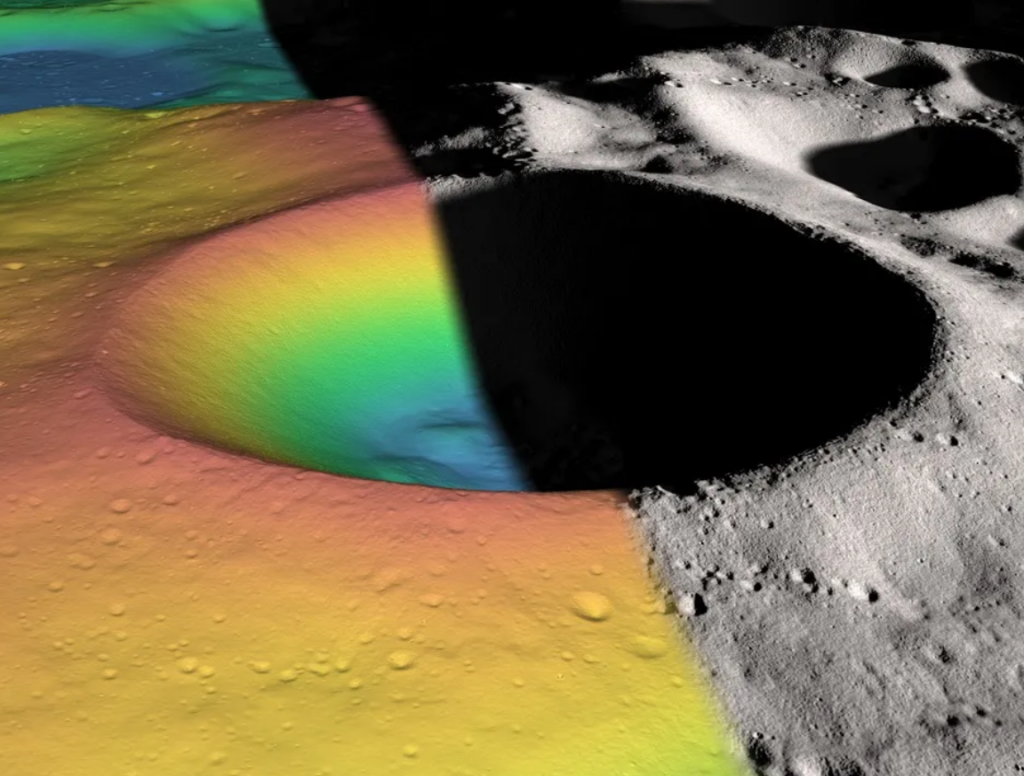
There is also protection for historic sites. As humans return to the Moon, that could mean preserving places such as the Apollo landing sites and other important evidence of earlier exploration.
What are “safety zones” on the Moon?
One of the most important parts of the accords concerns what NASA calls the “deconfliction” of space activities. The idea sounds complicated, but the problem is easy to understand.
Imagine one spacecraft has landed on the Moon and is carrying out scientific work. Another spacecraft arrives nearby. Its landing plume, equipment or other activity could potentially interfere with the first mission.
The accords say countries should share information and coordinate their activities to avoid harmful interference. They introduce the idea of a “safety zone” around an activity where notification and coordination may be necessary.
These are not intended to be permanent territorial claims. The accords state that the size and scope of a safety zone should reflect the operation being carried out and that such zones are temporary, ending when the relevant operation ends.
That distinction matters because the Outer Space Treaty prohibits national appropriation of celestial bodies.
Can countries use resources from the Moon?
The accords also address another issue of using space resources which is likely to become increasingly important in the coming years.
Future missions could seek to use material found on the Moon rather than carrying everything from Earth. Water ice, for example, could potentially support long-duration exploration if technologies are developed to extract and use it.
The accords state that extracting and using space resources should comply with the Outer Space Treaty. They also say such extraction does not inherently amount to national appropriation. Signatories are expected to inform the United Nations, the public and the scientific community about their resource-extraction activities. The accords therefore draw a distinction between using resources and claiming ownership of territory.
Does signing mean joining NASA’s Artemis programme?
Not quite.
The Artemis Accords provide principles for cooperation, rather than automatically making every signatory a partner in every NASA lunar mission.
Specific cooperation can still require separate agreements setting out what each participant will do, as well as matters such as liability, intellectual property and the transfer of technology or data.
But joining can open the door to closer cooperation. NASA says it has invited all Artemis Accords signatories to participate in its return to the Moon through scientific payloads, technology demonstrations, CubeSats and other capabilities.
That makes the accords particularly relevant to countries that may not have the money or technology to send astronauts to the Moon but can contribute instruments, satellites, research or other expertise.
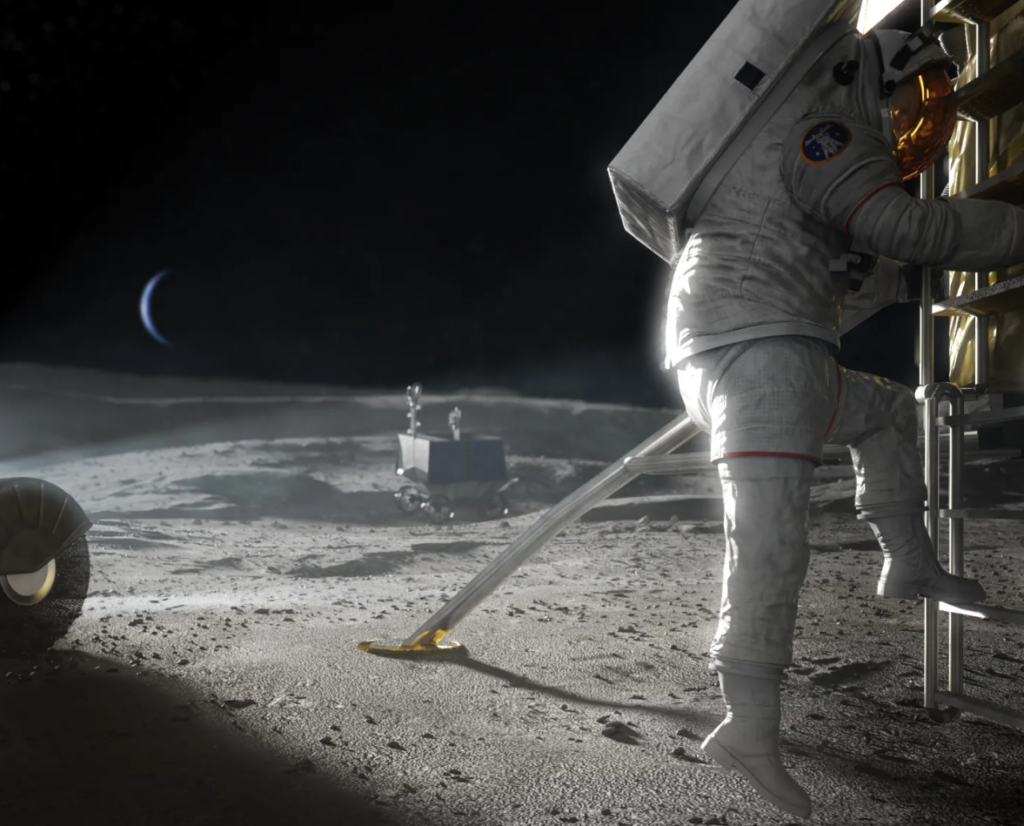
Cote d’Ivoire offers a recent example. It became the 75th signatory on 24 September, and on September 25, San Marino became the 76th nation to join the group. The former established its space agency only in 2025, after earlier cooperation with NASA in areas including Earth observation and geodesy.
From eight countries to 76
The growth of the accords is now changing how the group itself operates. What began as a relatively small coalition has developed a more formal structure. Signatories adopted a Method of Operations in 2024 and now meet twice a year, with additional virtual sessions.
The countries have been working on practical issues including avoiding interference between missions, making equipment interoperable, sharing scientific data and registering spacecraft. Workshops this year also examined planned lunar landings and orbital missions and ways of making lunar science data easier to find and share.
NASA Administrator Jared Isaacman said the expansion showed a growing commitment to “peaceful, responsible exploration”, noting that nearly one-third of the signatories had joined since the beginning of President Donald Trump’s second term.
The next meeting of the signatories is scheduled during the International Astronautical Congress in Antalya, Turkiye, beginning on 5 October. Among the subjects on the agenda are support for emerging space nations and recommendations for dealing with lunar debris.
Sign up for our newsletter and get our latest content in your inbox.



More from


October 17, 20264 min read