What infrastructure does a permanent lunar presence require?

10 min read
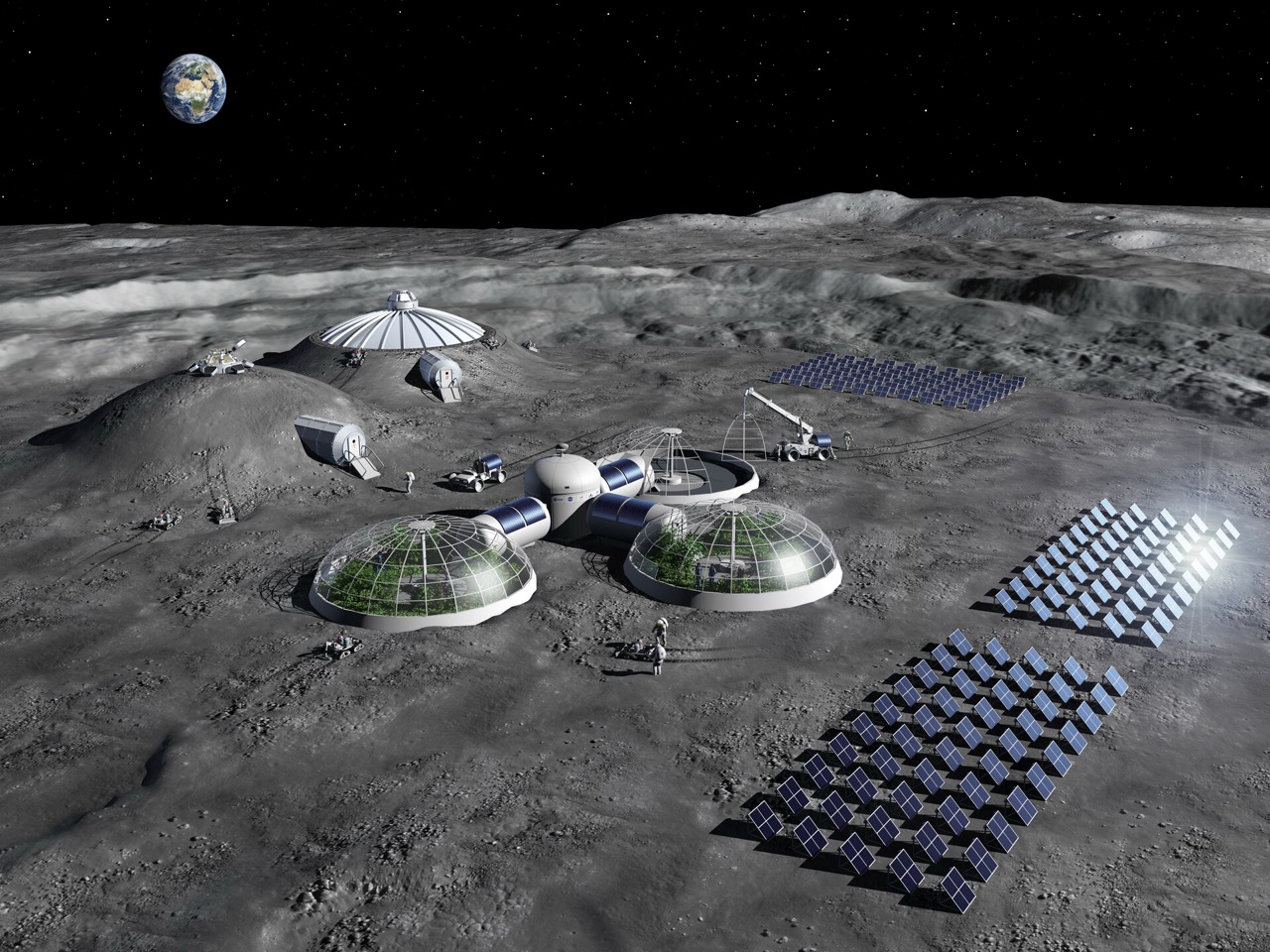
Getting astronauts back on the Moon is only one step required for a permanent human settlement. Crewed landings are headline-grabbing events, but a sustainable lunar outpost needs infrastructure.
How NASA and ESA are preparing for long-term human presence on the Moon
According to NASA and ESA, establishing a long-term human presence on the Moon will require:
- a network of communications satellites
- navigation services
- power generation
- prepared landing areas
- cargo systems
- surface vehicles
- construction equipment
Much of this infrastructure will need to operate robotically before crews arrive. It must also keep working on its own during the long periods between human missions.
NASA describes lunar development as a phased process in which each mission adds new capability. Its Moon-to-Mars Architecture includes logistics, robotic mobility, power distribution, and construction, as well as crew transportation and habitation.
The Moon needs its own communications network
Most lunar missions have communicated directly with ground stations on Earth. That approach becomes less practical as the number of spacecraft, landers, rovers, and surface installations grows.
Direct-to-Earth communications also depend on line of sight. Terrain, craters, and the Moon’s curvature can block signals, particularly around the lunar South Pole and on the far side.
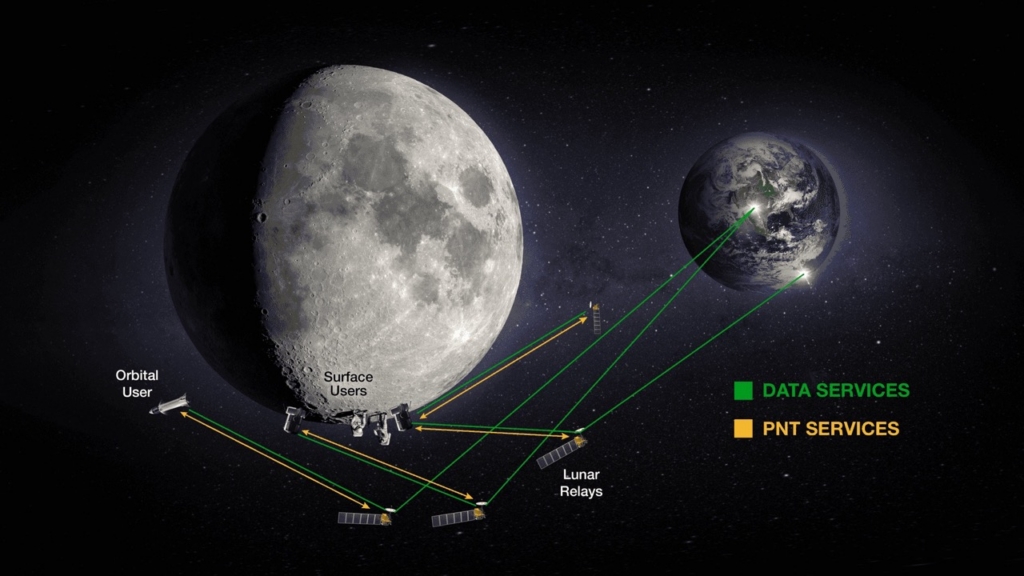
NASA’s Lunar Communications Relay and Navigation Systems project would introduce commercial relay satellites around the Moon. These spacecraft would connect astronauts, robotic vehicles, landers, and scientific equipment with Earth—even assets operating on the side of the Moon where Earth is not visible.
NASA says the system would provide continuous communications, increase landing-site flexibility, and reduce demand on existing terrestrial tracking networks. It would become part of the agency’s Near Space Network.
ESA is pursuing a complementary system through its Moonlight programme. The planned initial constellation consists of five satellites: four providing navigation services and one mainly supporting communications. Three dedicated ground stations would connect the lunar network with Earth.
Common standards will be essential. NASA, ESA, and other agencies are developing the LunaNet framework so that spacecraft and surface systems supplied by different countries and companies can exchange data rather than operating through incompatible proprietary networks.
For a permanent settlement, communications would also need a local layer. Surface antennas, wireless networks, and relay towers would connect habitats, rovers, power stations, landing sites, and remote scientific instruments before data is transmitted back to Earth
Lunar navigation must move beyond Earth-based tracking
Reliable navigation requires communications, but it is a separate infrastructure challenge.
There is no current lunar equivalent of GPS. Spacecraft determine their positions using combinations of inertial navigation, terrain imagery, ranging signals and tracking from Earth. These methods can support individual missions but become less efficient as traffic increases.
A lunar positioning, navigation and timing service would allow landers to approach smaller targets, rovers to travel beyond familiar routes and autonomous machines to work without constant direction from Earth.
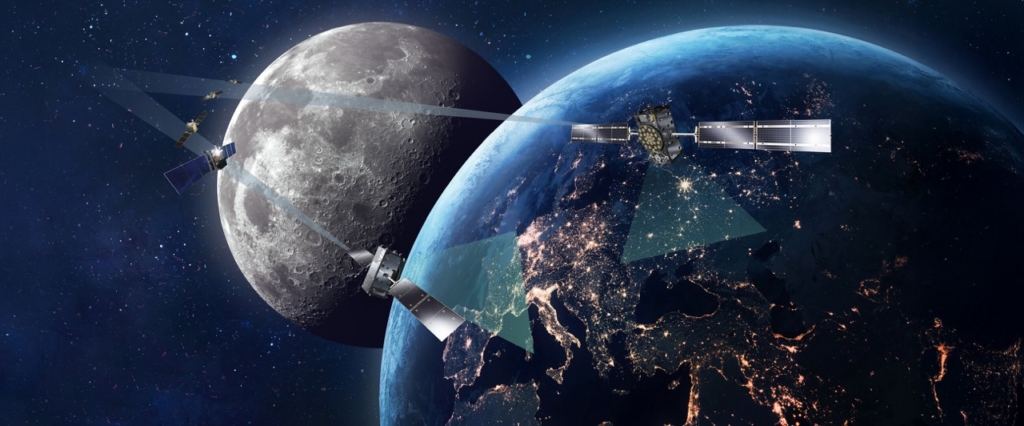
ESA says Moonlight would enable precise autonomous landings and surface mobility while providing position and timing services around the Moon.
Navigation infrastructure will become more important as missions begin landing near deployed equipment. Early lunar missions could accept landing errors measured in kilometres. A functioning base would need cargo landers to touch down within tens or hundreds of metres of a designated unloading area; far enough away to protect habitats and power systems from engine exhaust.
Surface reference stations could further improve this accuracy. ESA’s NovaMoon initiative is examining a positioning, navigation and timing reference station near the lunar South Pole. It could improve local positioning and help establish a more precise lunar reference frame.
Continuous operations need a lunar power grid
Activity on the Moon will be limited by power generation.
Lunar days last roughly 29.5 Earth days. Many locations have two weeks of sunlight followed by two weeks of darkness. Because the Sun remains low on the horizon, conditions near the South Pole are more complicated. Mountain and crater walls can cast long shadows, while some elevated areas remain illuminated for extended periods.
Solar arrays will be important, particularly at favourable polar sites. However, a permanent human presence on the Moon cannot rely on sunlight alone. Habitats, communications equipment, thermal control systems, life support, scientific instruments and autonomous vehicles will need alternative power sources during extended periods of darkness.
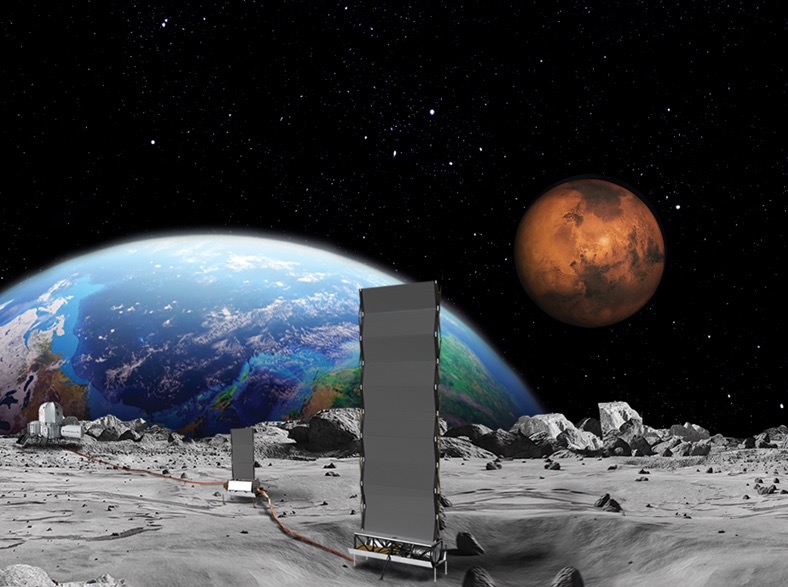
The power system will need several layers:
- Solar generation where lighting permits.
- Batteries or regenerative fuel cells for shorter interruptions.
- Long-distance cables or wireless power transfer.
- Standardised connections allowing equipment from different providers to share electricity.
- Independent emergency and backup supplies.
- Continuous generation for lunar-night operations.
NASA has been developing fission surface power as a potential source of continuous electricity. Earlier project requirements examined a reactor producing approximately 40 kilowatts of electrical power, weighing less than six tonnes and operating for about ten years without human intervention. Such a system could support habitats, rovers, science equipment or a backup grid regardless of local sunlight.
A mature lunar settlement would require an expandable power network capable of adding new sources and loads as the base grows. Dust-resistant connectors, cable-laying systems, power-management software and repair capability will be as important as the generators themselves. NASA’s Moon Base architecture work identifies dust-tolerant connections and surface cable deployment as essential enablers.
Landing sites must become managed infrastructure
The first landings at a new site can use largely untouched terrain. Frequent operations cannot.
Rocket exhaust can erode the surface, excavate craters and spread dust, stones and other particles across great distances. This plume-surface interaction could damage nearby habitats, solar arrays, radiators, vehicles and scientific equipment.
A NASA camera system called SCALPSS studies how lander exhaust interacts with lunar terrain by measuring erosion and dust movement during touchdown. To understand the effects of future landing systems on the surface, the agency has also developed models and conducted material tests.
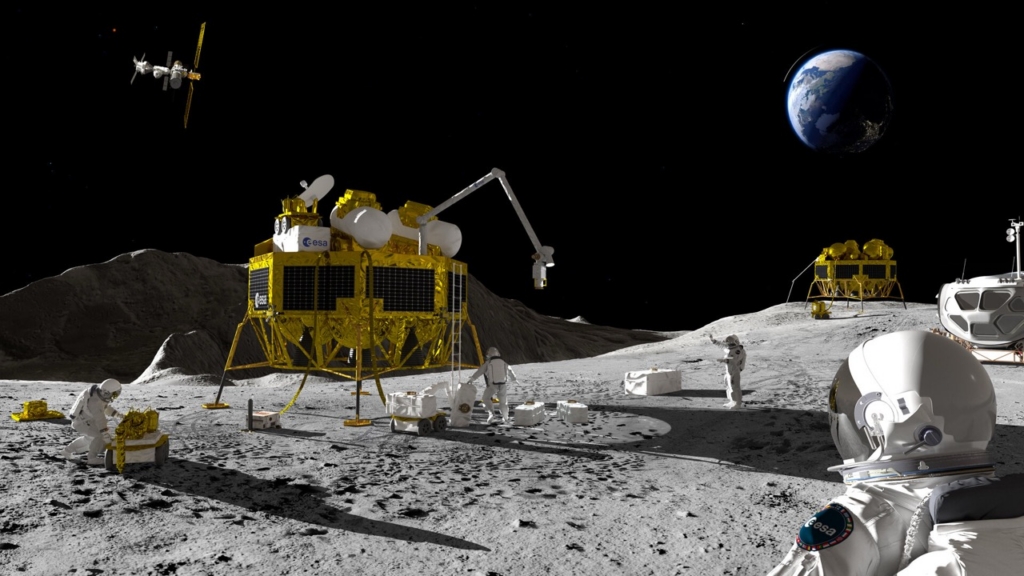
Landing zones will need to be separate from living and working areas for permanent operations.
Among them are:
- Prepared or compacted surfaces.
- Landing pads made from processed regolith.
- Berms or blast walls to intercept debris.
- Marked approach and departure corridors.
- Navigation beacons and lighting aids.
- Safe zones around habitats and power installations.
- Roads connecting landing areas with cargo storage.
NASA has tested materials, including sintered basalt-like pavers and regolith-filled blankets for possible landing-pad construction. It has also developed interlocking paver concepts that could be produced from local material and installed robotically.
Landing-site selection must consider far more than scientific interest. Lighting, surface slopes, boulders, communications coverage, thermal conditions, access to resources, and the effect of one landing on nearby operations will all influence the location of key infrastructure.
Cargo delivery is not enough without unloading and distribution
Every permanent settlement depends on logistics. Early lunar cargo will include food, water, gases, replacement parts, scientific instruments, communications equipment, power systems and construction machinery. Later deliveries could include large habitat sections, reactors, storage tanks and industrial equipment.
ESA’s Argonaut lander will provide Europe with independent cargo access to the Moon. The agency says each mission can deliver up to 1.5 tonnes of cargo, including rovers, scientific instruments, consumables and communications or power equipment.
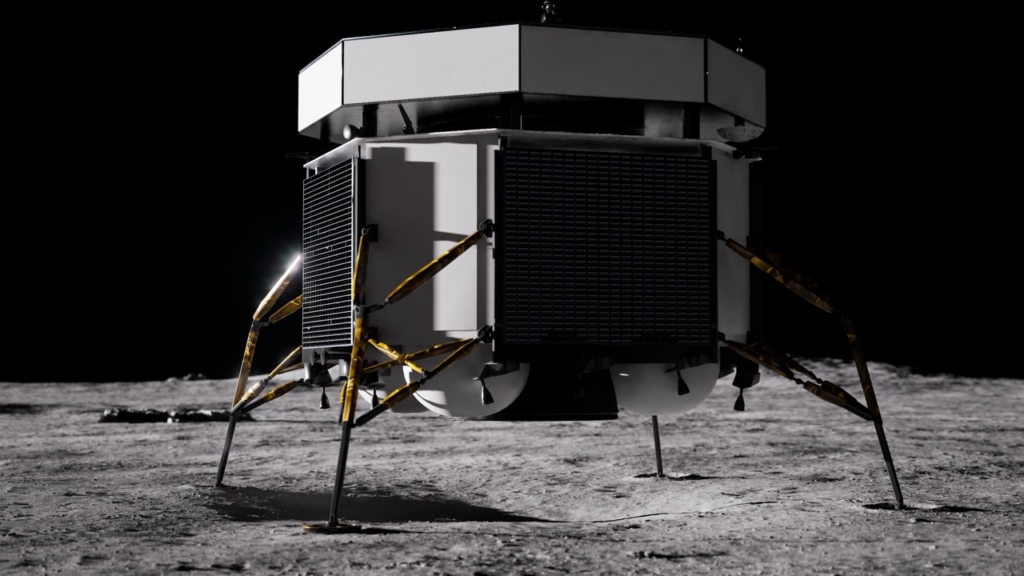
But landing cargo is only part of the problem. A large payload may arrive several metres above the surface on a lander deck. It must then be unloaded, stabilised, connected to power and communications, and transported to its operating location.
In its lunar architecture, NASA identified gaps in integrated logistics and uncrewed cargo mobility. The purpose of existing crew rovers is to carry astronauts, but small robots may not be capable of moving heavy infrastructure.
Future cargo systems may include robotic cranes, ramps, winches, autonomous hauliers and standardised pallets. Common mechanical, electrical and data interfaces would allow equipment delivered by one lander to be handled by vehicles supplied by another organisation.
Storage will also become an infrastructure function. Consumables and spare parts must be protected from temperature extremes, radiation, dust and accidental contamination. Some cargo may need to remain powered or thermally controlled for months before a crew arrives.
Mobility must support crews, robots and heavy equipment
Apollo’s rovers extended astronaut travel to several kilometres from the landing site. A permanent lunar presence will need mobility on a different scale.
NASA’s planned Lunar Terrain Vehicle is an unpressurised rover that could carry astronauts and equipment across the surface. It is also expected to support remote or autonomous operations when crews are absent.
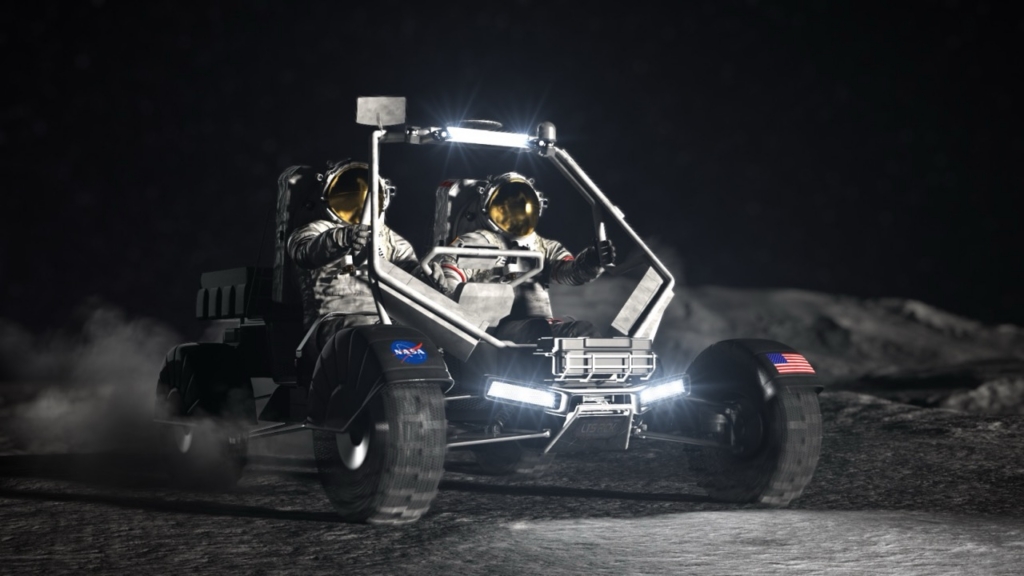
Pressurised rovers would allow astronauts to travel farther and remain away from a fixed habitat for days or weeks. They would function as mobile laboratories and temporary living quarters rather than simply vehicles.
A broader mobility network must also include uncrewed systems. Robotic vehicles will be needed to survey routes, prepare landing areas, deploy communications equipment, lay cables, transport cargo and excavate regolith.
The Moon’s South Pole is difficult terrain. Steep crater slopes, rocks and deep shadows complicate navigation. Permanently shadowed regions may contain volatile resources but experience temperatures below minus 200ºC.
Road construction could reduce dust, wheel wear, energy consumption and the risk of vehicles becoming trapped. Routes would also allow heavy cargo to move reliably between landing zones, habitats, power stations and resource-processing sites.
Dust mitigation must be designed into every system
Lunar dust is much harsher than terrestrial dust. The particles are sharp, abrasive, and electrostatically charged because they have not been rounded by wind or water.
During the Apollo missions, astronauts found that regolith stuck to their spacesuits, equipment, and surfaces. With sustained operations, it could damage seals, bearings, radiators, solar panels, optical sensors and electrical connectors. Dust brought inside habitats could also pose risks to machinery and crew health.
Clearing moon dust cannot rely on a single cleaning system. It requires resistant materials, protected joints, filtration, airlocks, suitports, operational zoning, and surfaces that reduce the amount of loose material disturbed.
NASA’s Electrodynamic Dust Shield uses electric fields to lift and remove particles from surfaces. Potential applications include solar panels, camera lenses, radiators, spacesuits, and other equipment that cannot tolerate dust accumulation.
Infrastructure planning can also reduce the problem’s source. Separating landing zones from habitats, paving busy areas, controlling vehicle routes, and covering frequently used surfaces would limit the amount of regolith cast into the environment.
Surface construction will use lunar material
Transporting finished infrastructure from Earth is extremely expensive. Every kilogram of steel, concrete substitute, or radiation shielding transported competes for room with food, scientific equipment and other payloads.
Long-term lunar development will depend partly on using local materials to produce useful products.
Interestingly, Lunar dust could be as much of a solution as it is a problem. Regolith could be compacted, sintered or melted to create roads, landing pads, foundations, protective berms and radiation shielding. It may also provide feedstock for extracting oxygen, metals or other materials.
NASA’s Moon-to-Mars Planetary Autonomous Construction Technology project examines the use of lunar materials for large-scale infrastructure. ESA has investigated laser melting and other methods of converting regolith into paved surfaces and interlocking structures.
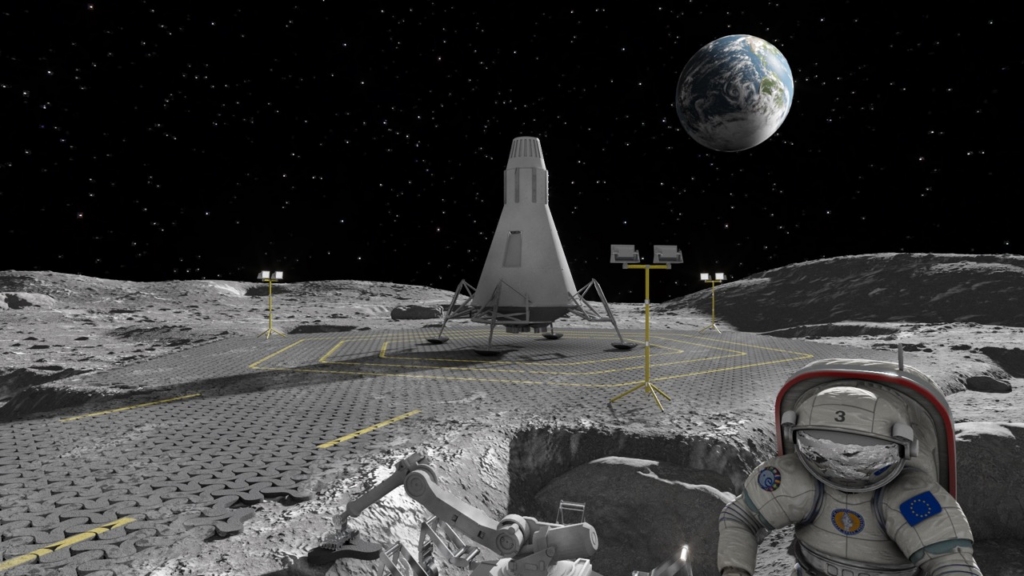
In ESA’s PAVER project, solar or laser energy was used to melt simulated lunar dust into solid surfaces suitable for roads or landing areas. The purpose of the project is to create stable paths on the moon and dust-resistant operational zones.
Much of this work will need to be autonomous. Construction robots may arrive years before a continuously occupied base. They will have to grade terrain, remove rocks, compact soil, lay pavers and inspect their own work with limited human intervention.
A lunar base will be a system of systems
Just as it takes a complex network of infrastructure to sustain us on Earth, no single technology can establish human permanence on the Moon.
Crews cannot live in a habitat without continuous power. If a cargo lander does not have unloading equipment, it cannot deploy a reactor. A rover without navigation and communications cannot safely operate beyond the landing site. A solar array without dust protection will steadily degrade and ultimately be lost. Repeated landings without prepared landing pads could threaten every nearby asset.
The main challenge is integration.
Equipment built by different agencies and companies will need common standards for power, communications, navigation, mechanical handling and software. Infrastructure must be repairable, expandable and capable of operating autonomously between crew visits.
The first permanent lunar presence will not be a single base assembled in one campaign. It will grow from a distributed network of landing zones, power plants, communications relays, storage sites, rovers, scientific stations and habitats.
Crewed landings will remain important milestones. Permanence, though, will be determined by what continues working quietly on the Moon after the astronauts leave.