NASA names Artemis III astronauts for mission that will pave the way for future Moon landings

9 min read
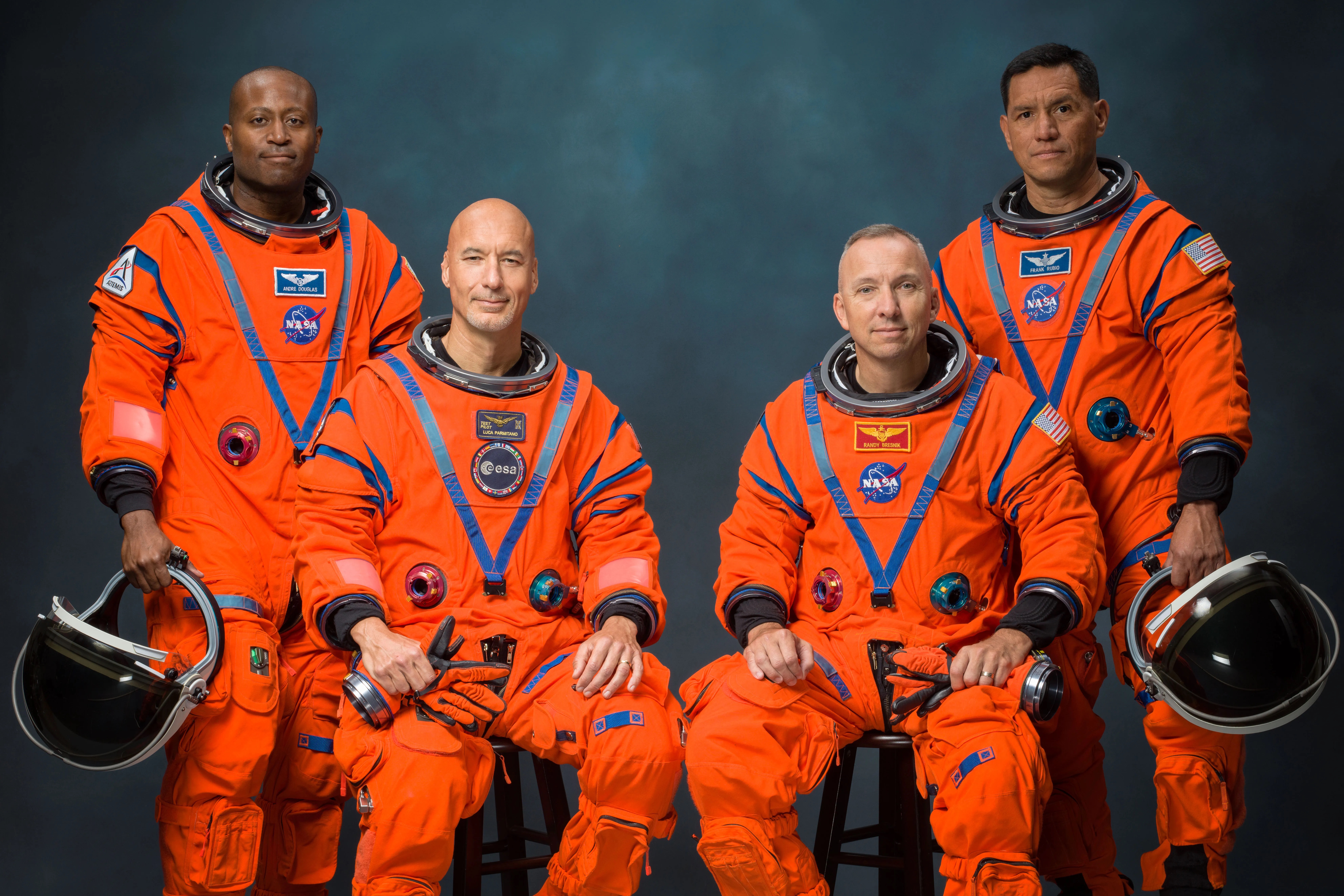
Four astronauts from four very different backgrounds have been entrusted with one of the most important human spaceflight missions attempted since the Apollo era.
On 9 June, NASA named the crew for Artemis III, selecting veteran astronaut Randy Bresnik to command the mission alongside European Space Agency astronaut Luca Parmitano and NASA astronauts Frank Rubio and Andre Douglas. NASA astronaut Bob Hines will serve as the backup crew member.
The announcement may surprise those expecting another mission around the Moon, or even the first Artemis landing on the lunar surface. Artemis III will do neither.
Instead, the 2027 mission will carry astronauts into Earth orbit for a complex series of tests designed to prove that the hardware, procedures and commercial lander systems needed for future Moon landings can work safely together.
NASA names Artemis III crew for 2027 mission
The stakes are high. Before astronauts can establish a sustained presence near the Moon’s South Pole, NASA must demonstrate that the Orion spacecraft can safely rendezvous and dock with the lunar landing systems being developed by Blue Origin and SpaceX.
The mission will involve multiple launches, spacecraft transfers, software integration and communications testing, all of which must function together before Artemis IV attempts to land astronauts on the Moon in 2028.
“Today we take another bold step in humanity’s return to the Moon,” said NASA Administrator Jared Isaacman, adding that Artemis III would test “complex rendezvous and docking operations” needed for future exploration.
The mission is expected to require one of the most tightly choreographed sequences of heavy-lift launches ever attempted, drawing together NASA, ESA, the US Navy, Blue Origin, SpaceX and a vast industrial supply chain.
That helps explain the crew NASA has chosen. Between them, the four astronauts bring experience ranging from combat aviation and test flying to medicine, robotics, engineering and long-duration spaceflight.
Randy Bresnik to command Artemis III
At the centre of the crew is Randy “Komrade” Bresnik, a retired US Marine Corps colonel whose career has taken him from fighter cockpits and combat operations to the commander’s seat aboard the International Space Station.
Bresnik brings one of the most extensive aviation backgrounds in the crew.
After graduating from The Citadel, he became a Marine aviator, attended both TOPGUN and the Marine Corps Weapons and Tactics Instructors Course, and later graduated from the US Naval Test Pilot School.
He flew F/A-18 Hornets in operational squadrons, carried out flight-test duties and flew combat missions over Iraq.
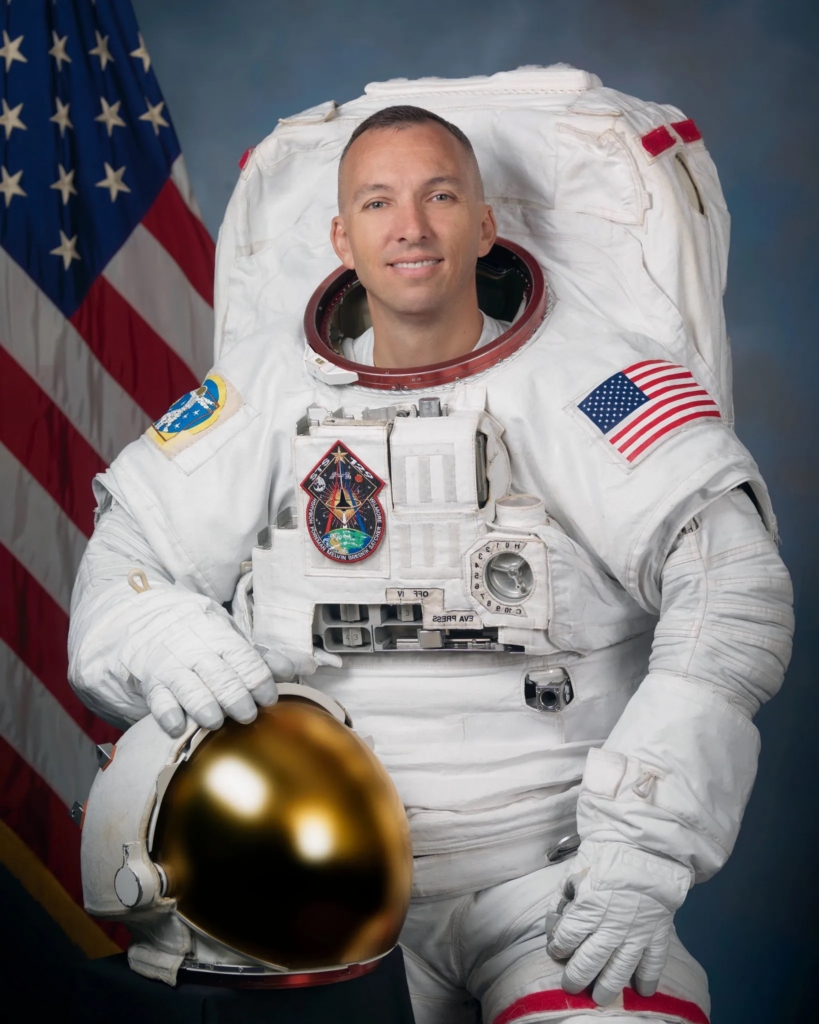
By the time NASA selected him as an astronaut in 2004, he had already built a reputation as one of the Marine Corps’ most accomplished aviators. His spaceflight career has been equally significant.
Bresnik first flew aboard Space Shuttle Atlantis in 2009 and later spent nearly five months aboard the International Space Station, serving as commander of Expedition 53. Across two missions, he accumulated more than 32 hours of spacewalking experience and logged thousands of hours in space.
Yet it is perhaps his work on the ground that made him an obvious choice for Artemis III.
Since 2018, Bresnik has served as Assistant to the Chief of the Astronaut Office for Exploration, overseeing astronaut involvement in the development and testing of major Artemis elements, from Orion and the Space Launch System to lunar landers, rovers and spacesuits.
Few astronauts understand the programme more intimately.
Luca Parmitano becomes first ESA astronaut assigned to Artemis
If Bresnik represents continuity, Luca Parmitano symbolises how different Artemis is from Apollo.
The Italian astronaut becomes the first member of the European Space Agency to receive an Artemis assignment. His selection reflects Europe’s growing contribution to the programme.
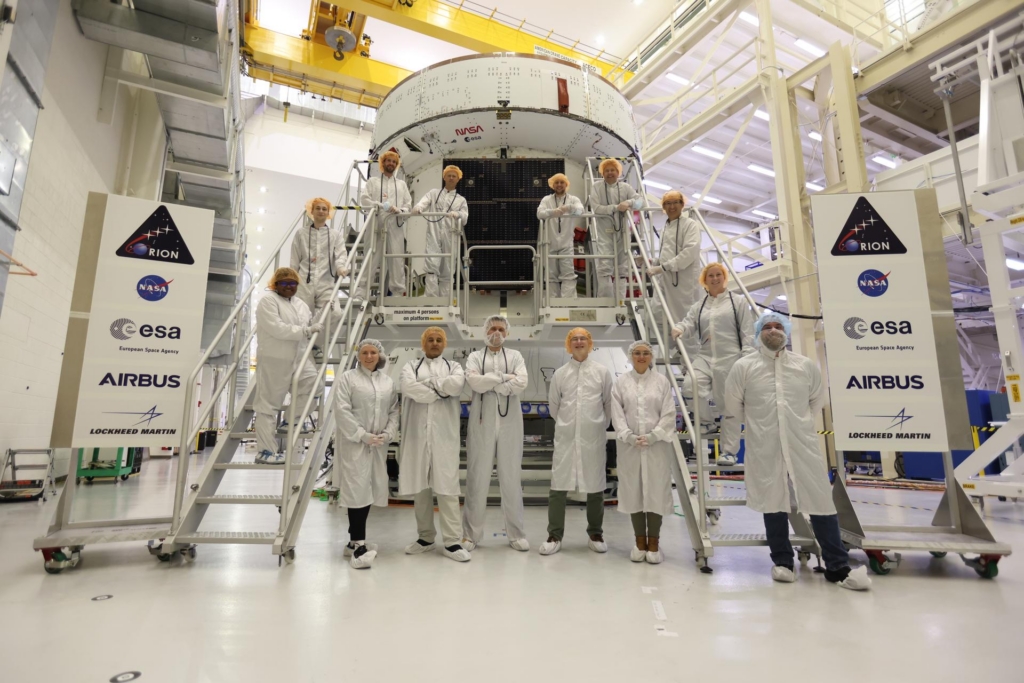
ESA provides Orion’s European Service Module, the component responsible for power, propulsion and life-support functions during the spacecraft’s missions. Parmitano’s assignment underlines that Europe is no longer simply participating in human spaceflight programmes led by others – it is helping enable them.
Parmitano brings extensive operational experience.
A graduate of the Italian Air Force Academy and a former test pilot, he has accumulated more than 2,000 flying hours across more than 40 aircraft types.
He first travelled to space in May 2013, launching on a Soyuz rocket from Baikonur, Kazakhstan. During his ‘Volare’ mission, he spent 166 days in space, conducted more than 20 experiments, took part in two spacewalks and supported the docking of four spacecraft.
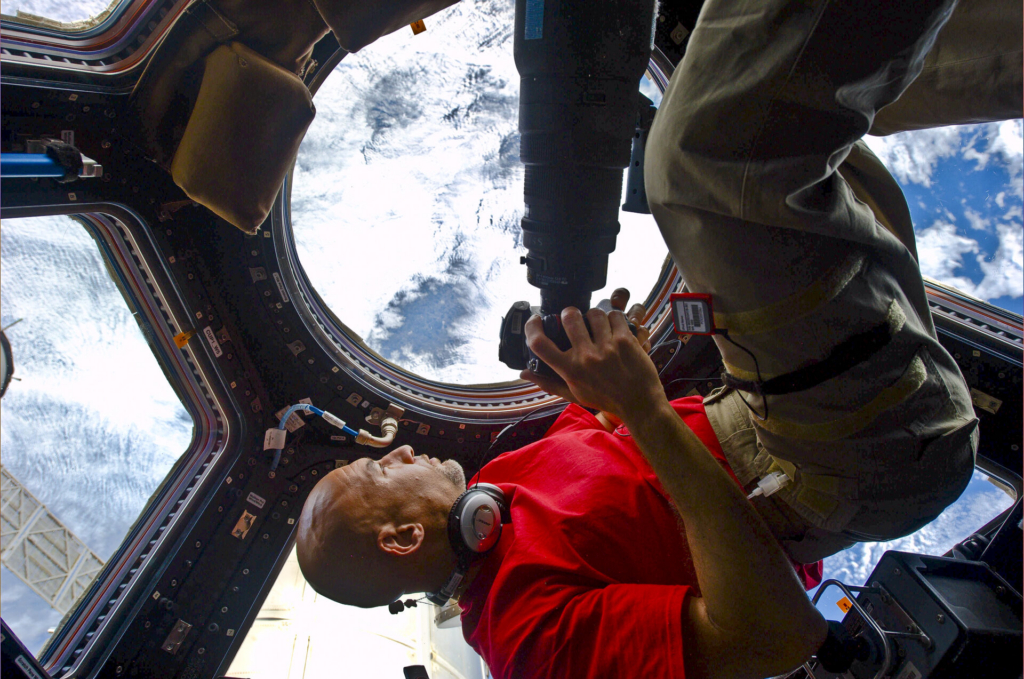
Parmitano returned to the International Space Station for his second mission in July 2019, launching aboard Soyuz MS-13 on the 50th anniversary of the first human lunar landing. He returned to Earth in February 2020 after becoming the first Italian, and only the third European astronaut, to command the ISS.
Interestingly, despite being one of the most experienced aviators in the crew, Parmitano will serve as pilot rather than commander. That decision says much about Artemis III itself.
This mission is less about flying a spacecraft in the traditional sense than it is about integrating multiple vehicles, systems and organisations into a single operation.
“Artemis III will push the boundaries of spacecraft operations in orbit,” said ESA Director General Josef Aschbacher, who added that Parmitano’s assignment reflected Europe’s growing role in human spaceflight.
Frank Rubio brings record-breaking ISS experience to Artemis III
Frank Rubio’s contribution to the crew is equally significant. The former US Army helicopter pilot and physician holds a record that few astronauts are likely to challenge soon.
In September 2023, Rubio returned to Earth after spending 371 consecutive days aboard the ISS, setting a new record for the longest single-duration mission by an American astronaut.
The mission transformed him from a relatively new astronaut into one of NASA’s most experienced operational spacefarers.
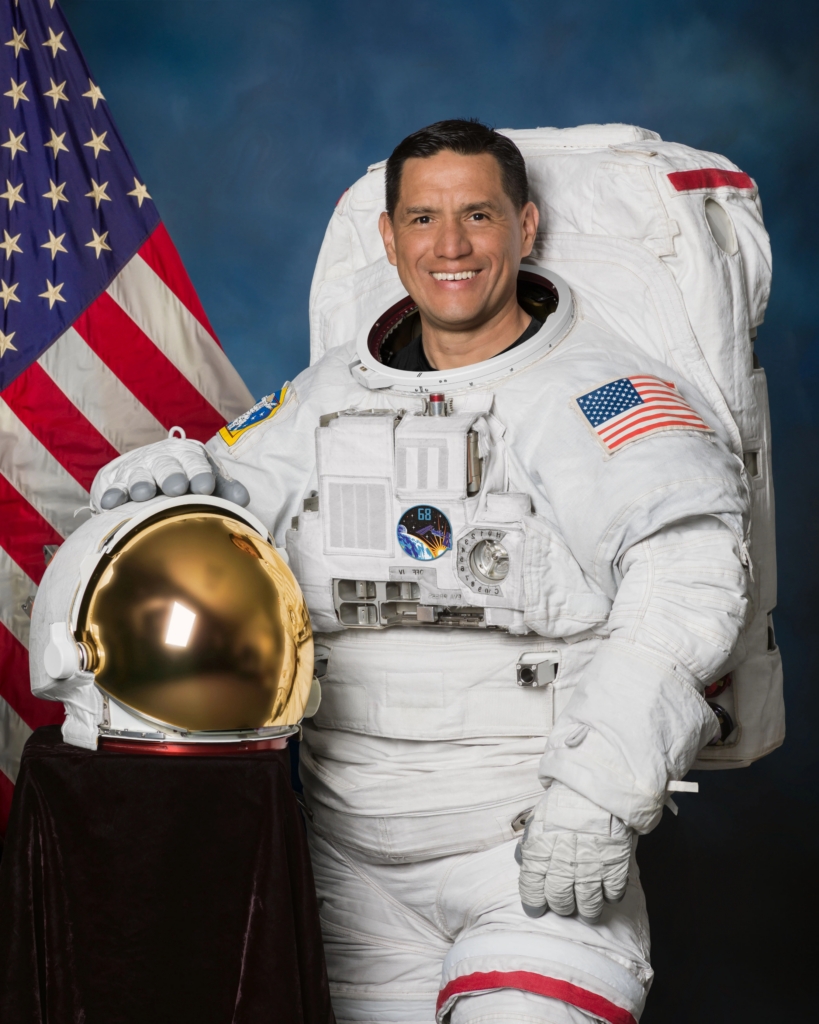
Before joining NASA, Rubio served as a military doctor, flight surgeon and Black Hawk pilot. He deployed to Afghanistan and accumulated extensive experience working at the intersection of aviation, medicine and human performance.
His presence on Artemis III highlights another reality facing NASA. Returning to the Moon is only part of the agency’s ambition.
The experience gained through Artemis is intended to support future missions lasting months on the lunar surface and, eventually, years-long expeditions to Mars.
Understanding how humans function during extended periods away from Earth remains one of the programme’s most important challenges.
Few astronauts have more recent experience in that area than Rubio.
Andre Douglas brings robotics and systems expertise to NASA Moon plans
Artemis III also gives NASA a first-time spaceflyer. For Artemis III, that distinction belongs to Andre Douglas.
Unlike his crewmates, Douglas has never flown in space. Yet his selection may offer the clearest indication of where NASA believes exploration is heading.
A graduate of the US Coast Guard Academy, Douglas later earned multiple advanced degrees, including a doctorate in systems engineering.
Before joining NASA, he worked at Johns Hopkins University’s Applied Physics Laboratory, where his projects included autonomous systems, planetary defence technologies and advanced engineering programmes.
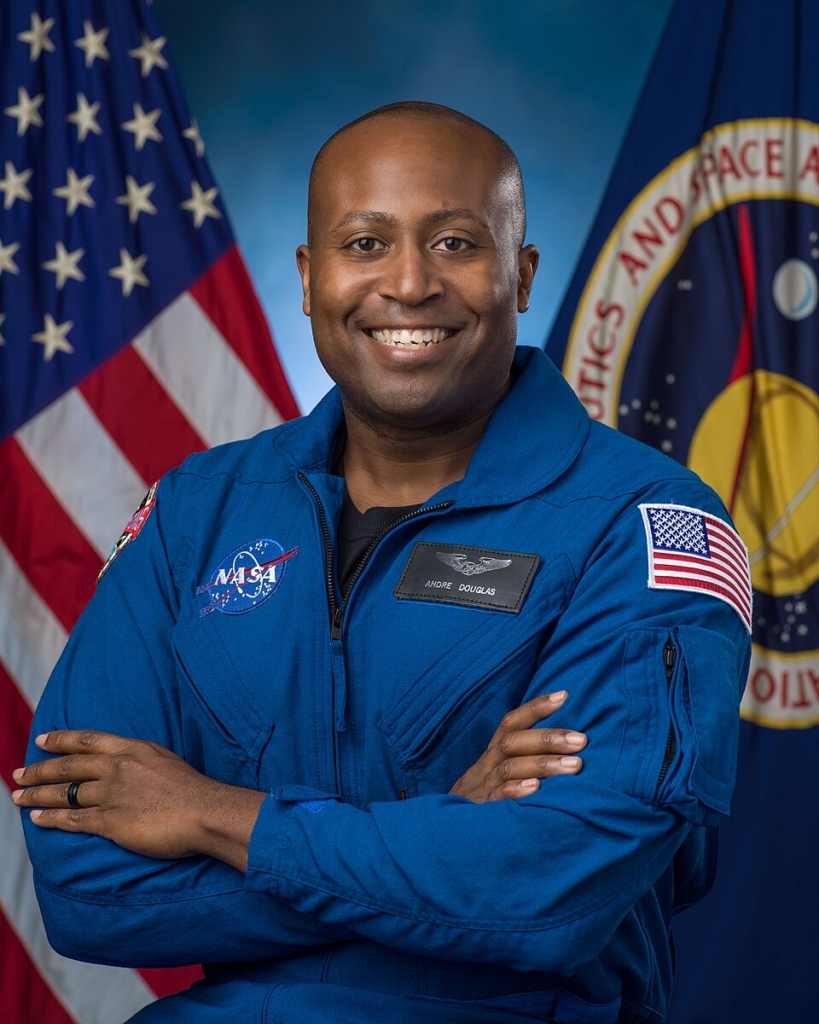
His background differs markedly from the traditional test-pilot pathway that once dominated astronaut selection.
Douglas represents a generation of engineers increasingly focused on robotics, automation and complex systems integration.
Those skills will become increasingly important as NASA develops lunar infrastructure and prepares for missions deeper into the solar system.
His assignment also reflects confidence in a younger astronaut who has already contributed to Artemis as a backup and closeout crew member for Artemis II.
Why Artemis III will not land on the Moon
One aspect of the announcement attracted attention: the prime crew is entirely male. That contrasts with Artemis II, which included Christina Koch, who became the first woman to travel beyond low Earth orbit.
NASA has not framed Artemis III around symbolic milestones. Instead, the agency appears to have prioritised the specific operational demands of a mission focused on spacecraft integration, rendezvous procedures and systems testing. The result is a crew built around experience.
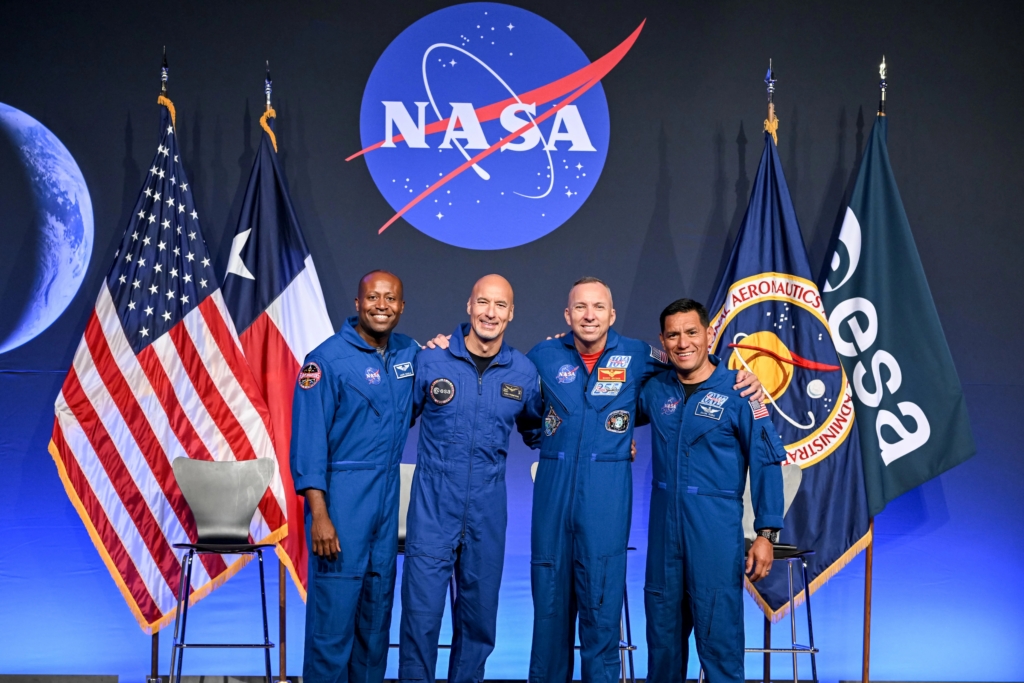
Between them, Bresnik, Parmitano and Rubio have commanded International Space Station expeditions, accumulated multiple spaceflights and operated in some of the most demanding environments imaginable. Douglas adds a new-generation engineering perspective shaped by autonomous systems and exploration technologies.
Together, they will spend roughly two weeks in orbit testing spacecraft and procedures that future lunar crews will depend upon.
None of them are expected to walk on the Moon, yet their mission may prove every bit as important to the first landing attempt that follows.
How Blue Origin and SpaceX fit into Artemis III
NASA and its commercial partners are now preparing for one of the most complex rehearsals in the Artemis campaign.
Engineers are expected to connect the Orion crew module and service module this summer, before integrating the spacecraft’s docking system, which will fly for the first time on Artemis III.
Heat shield work is also continuing, with individual blocks undergoing ultrasonic inspections before installation onto the heat shield structure.
Processing of the Space Launch System rocket is also underway. Technicians are integrating the engine section with the rest of the core stage ahead of installing the four RS-25 engines this summer. All solid rocket booster segments are now at NASA’s Kennedy Space Center, while refurbishment work on the mobile launcher remains on track.
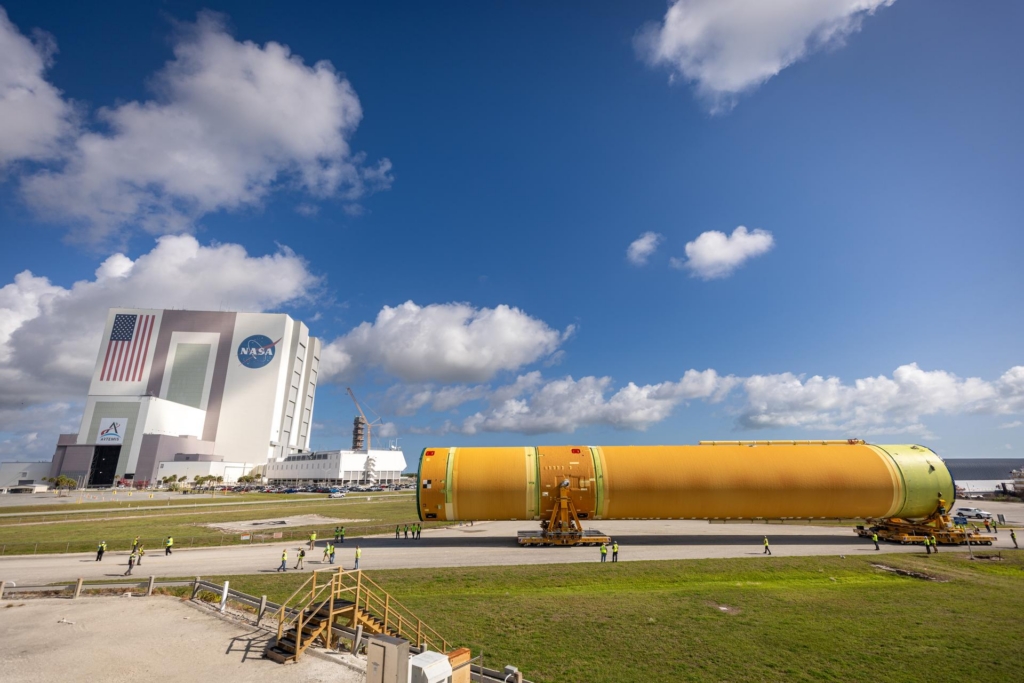
NASA has also said rocket stacking is scheduled to begin this summer.
For Artemis III, Blue Origin is developing a crewed lunar version of its Blue Moon lander, while SpaceX is developing a crewed lunar lander version of Starship. Both companies are building test articles for the mission, with NASA supporting design, development, testing and evaluation work.
That commercial architecture is central to why Artemis III matters.
Rather than relying solely on a government-developed lunar lander, NASA is attempting to integrate Orion with separate commercial landing systems, each with its own design, launch plan and operational profile.
Artemis III sets up NASA’s next Moon landing attempt
The mission sequence will be unusually demanding.
Blue Origin’s lander pathfinder, which is designed to remain in orbit for multiple weeks, will launch first and wait for the crew.
NASA will then send the Artemis III astronauts into Earth orbit aboard Orion, launched by SLS. Once in orbit, Orion will rendezvous with Blue Origin’s lander test article and remain docked for about two days.
During that time, the astronauts are expected to carry out tests and technology demonstrations, including entering the lander.
After completing docked operations with Blue Origin, Orion will detach and await SpaceX’s Starship pathfinder.
Starship will then launch and meet Orion in orbit, with the two vehicles spending about a day connected for checkouts and testing.
Only after those demonstrations are complete will Orion and its crew undock and return to Earth, splashing down in the Pacific Ocean, where a joint recovery team from the US Navy and NASA will retrieve the astronauts.
For the crew, Artemis III will not provide the headline moment of stepping onto the lunar surface.
For NASA, however, it may answer the more important question: Can Orion, SLS, Blue Origin, SpaceX and the wider Artemis architecture work together safely enough to send astronauts back to the Moon?
Until that is proven, humanity’s return to the lunar surface remains a promise. Artemis III is the mission designed to turn it into a flight plan.
Featured image: NASA