


Gulf Air CEO Gauss: We need more Boeing 787s to pursue growth

3 min read

Gulf Air needs more Boeing 787s to expand its network, with European routes that are currently flown by Airbus A321s among the first candidates for the wide-body aircraft, chief executive Martin Gauss said.
“We fly to Frankfurt every day, to Munich every day, to Rome and Milan every day, and we fly on A321s, and that’s definitely not what we want to do in the future,” Gauss said, during a panel session at the Routes World 2026 event in Frankfurt. “We need to bring the 787s to Europe.”
Widebody fleet not sufficient to meet future demand
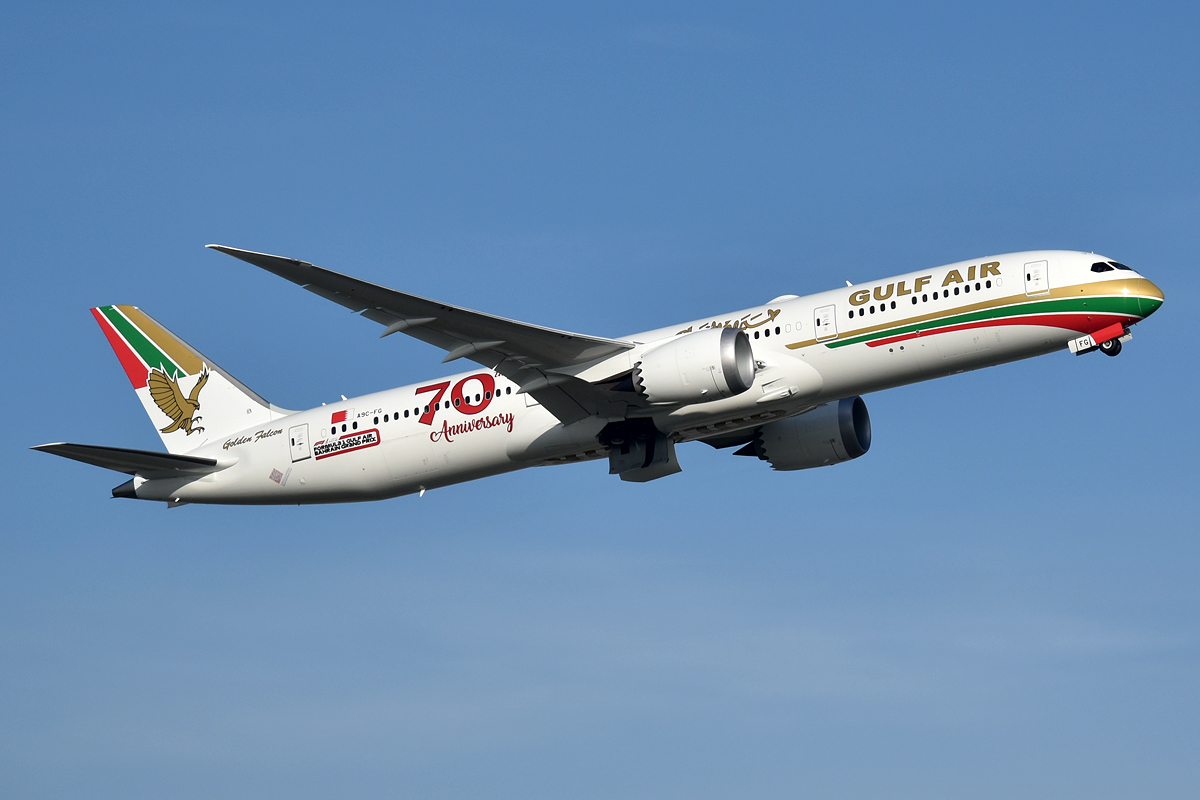
The airline has 12 B787-9s in service, with two more due in the spring, according to Gauss.
But he said Gulf Air’s current fleet may not be enough to serve future demand. The airline is finalising a 10-year fleet plan that is expected to include more wide-body and narrow-body aircraft, as well as a different mix from today.
“Maybe we have not ordered enough 787s in the past to fulfil our needs for today,” he said, noting that Gulf Air’s load factors were in the mid-80s.
He warned that if demand surged after the current crisis, the airline might not have the capacity to carry all the passengers that were likely to book with the airline.
Aircraft delivery timelines are a major constraint for Gulf Air. “If I order today additional 787 to the ones we have, they tell me I will get them in 2034,” Gauss said.

Gulf Air proves resilient in face of Middle East disruption
Gulf Air’s expansion plans come after a period of significant disruption in the region.
During a 40-day airspace closure that prevented the airline from operating from its Bahrain base, it moved its fleet to Saudi Arabia and recreated its network there.
It then returned the fleet in stages and rebuilt its network out of Manama within six weeks.
The airline has since been flying more of its network than a year earlier, Gauss said, with revenue slightly above the previous year.
He described the response as evidence of the industry’s resilience, while acknowledging that airlines must adjust their operations to changing conditions.
Carrier aims to be Bahrain – and Gulf – connector
Gulf Air is positioning itself as a connector for Bahrain rather than trying to match the size of larger regional competitors, such as Emirates and Etihad.
About 70% of its passengers are connecting travellers, Gauss said, and the airline aims to build on Bahrain’s relatively small airport and short transfer times. In as little as 10 minutes, passengers can either be onboard their connecting flight or have disembarked and be landside.
“We’re going to focus on the Kingdom of Bahrain’s connectivity,” he said, while Gulf Air’s strategy is to become “a premium connector in the Gulf region”.

Beyond Europe, Gauss sees opportunities in Asia. The airline recently launched a Kuala Lumpur route, which he said could connect Gulf Air passengers to Malaysia’s domestic network.
He also pointed to the potential for additional services to China, subject to bilateral flying rights.
Gulf Air is also assessing ways to expand regional frequencies and the aircraft best suited to those routes.
Gauss said the airline’s fleet plans would need to support growth across both its regional network and longer-haul services.


