Gulf Air becomes JetZero’s first Middle East airline customer for blended-wing-body Z4 aircraft

5 min read
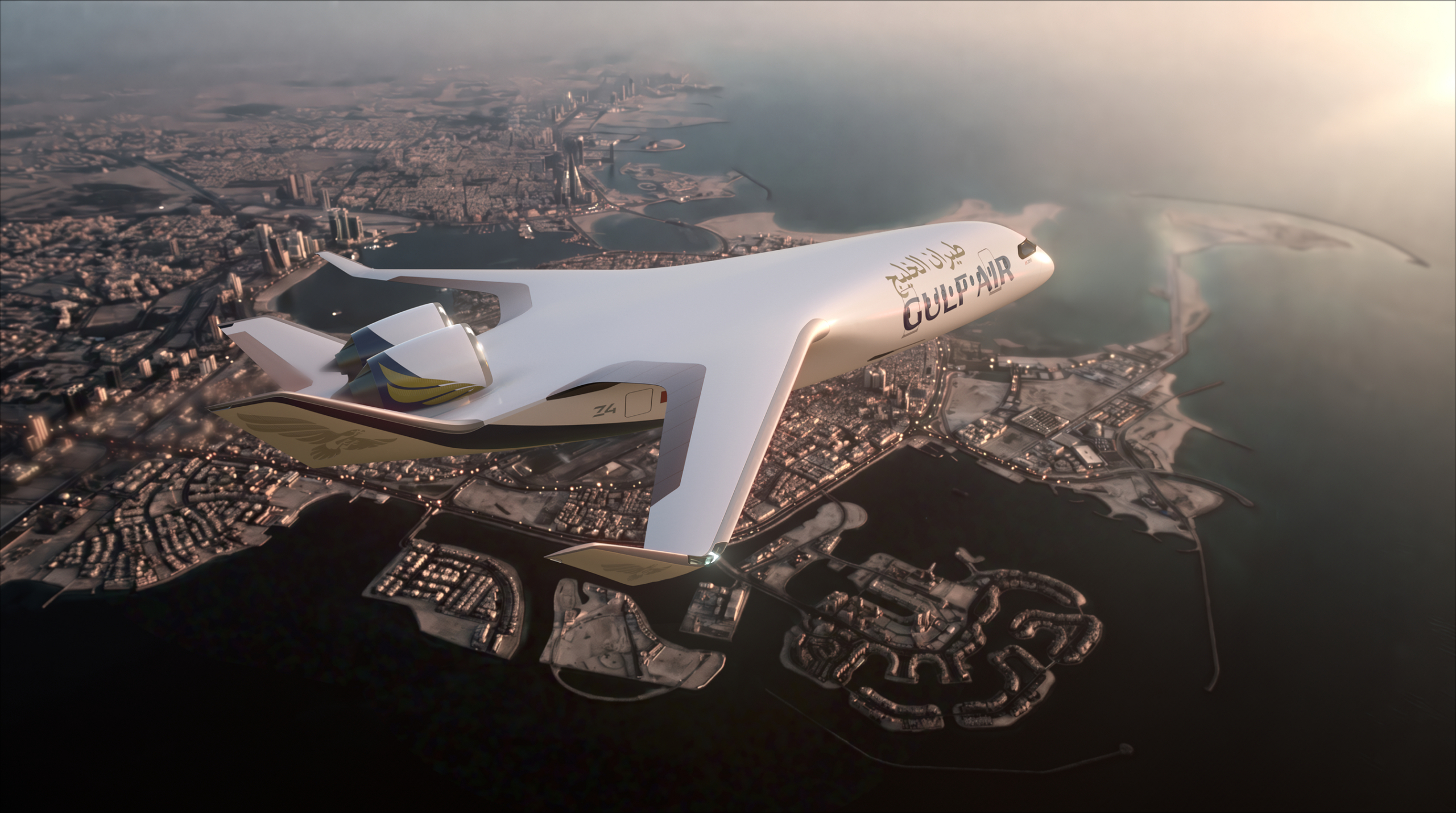
Gulf Air has become the first airline in the Middle East to back JetZero’s blended-wing-body passenger aircraft, signing a letter of intent for an undisclosed number of Z4 aircraft in a move that strengthens the US start-up’s growing international customer base as it works towards commercial service in the early 2030s.
Announced at the Farnborough International Airshow, the agreement gives Bahrain’s national carrier preferential delivery positions for the next-generation aircraft and marks another milestone for a programme that has steadily gathered support from airlines, investors and US government agencies over the past three years.
While the companies did not disclose the number of aircraft covered by the agreement, the announcement follows a series of partnerships with Alaska Airlines, Delta Air Lines, United Airlines and Japan Airlines, reflecting growing airline interest in the unconventional aircraft design as carriers look for more fuel-efficient options without waiting for entirely new propulsion technologies.
Gulf Air sees the Z4 as part of its long-term fleet and network strategy across Europe and Asia
For Gulf Air, the agreement fits into a broader fleet modernisation strategy as the airline continues expanding its long-haul network from Bahrain.
JetZero’s Z4 has been designed to carry around 250 passengers over routes of up to 5,000 nautical miles, placing much of Europe, Asia and parts of Africa within nonstop reach from the Kingdom of Bahrain.
Unlike conventional tube-and-wing airliners, the aircraft uses a blended-wing-body configuration that generates lift across almost the entire airframe, reducing aerodynamic drag while improving fuel efficiency.
JetZero says the aircraft is expected to reduce fuel burn by up to 50% compared with similarly sized aircraft in service today, while remaining compatible with existing airport infrastructure and current engine technology.
The wider airframe also allows for larger boarding doors, direct access to six cabin zones and dedicated overhead bin space for every passenger.

Martin Gauss, Chief Executive Officer of Gulf Air, said the airline viewed the aircraft as an opportunity to combine greater operating efficiency with an improved passenger experience.
“At Gulf Air, we are always looking for ways to innovate and shape the future of air travel for our passengers and our airline. The Z4 represents a significant step change in aircraft efficiency, combining up to 50% lower fuel burn with a completely new passenger experience,” he said.
Gauss added that Gulf Air shared JetZero’s vision for “a more sustainable and more efficient future for aviation” as it continued expanding its network across Europe and Asia.
JetZero Chief Executive Officer and co-founder Tom O’Leary said the aircraft was well suited to Gulf Air’s role as a regional hub carrier.
“Gulf Air is building for its future as a premium key connector, and we believe the Z4 will help power that future,” O’Leary said. “The Z4 provides expanded network options for the airline at a reduced cost per seat mile while also offering an elevated passenger experience.”
Airline support continues to grow as JetZero moves from development to industrial production
The Gulf Air agreement comes during a period of rapid momentum for JetZero as the company moves beyond aircraft development into manufacturing and certification.
Last month, JetZero broke ground on its first manufacturing and final assembly campus in Greensboro, North Carolina. The planned eight-million-square-foot facility is expected to become the production centre for the Z4 programme and create approximately 14,500 jobs over the next decade.

The company is also seeking to strengthen the programme’s financial foundations. At the ongoing show at Farnborough, JetZero signed a Letter of Interest with the Export-Import Bank of the United States (EXIM) to explore up to $3 billion in potential financing support for the Greensboro manufacturing campus under EXIM’s Make More in America Initiative.
The agreement establishes a framework to evaluate potential financing but does not constitute a funding commitment.
A concept backed by airlines, NASA and the US Air Force
Although blended-wing-body aircraft have been studied for decades, the concept has gained renewed momentum as airlines seek significant reductions in fuel consumption without relying solely on future propulsion technologies.
JetZero’s development programme has benefited from support across both the commercial and government sectors.
In 2023, the US Air Force awarded the company a $235 million contract to help accelerate development of a full-scale demonstrator aircraft, with first flight targeted for 2027.
NASA has also supported blended-wing-body research for many years, while major airlines have begun contributing operational expertise to help shape the aircraft’s design and commercial viability.
Delta Air Lines is working with JetZero through its Sustainable Skies Lab, providing operational expertise and contributing to cabin design and airline operations.
United Airlines has invested in the programme through United Airlines Ventures with a pathway to acquire up to 200 aircraft, while Japan Airlines announced this week that it will collaborate with JetZero on operational, maintenance and design aspects of the Z4.
Alaska Airlines was the first carrier to invest in the company in 2024 through its Alaska Star Ventures investment arm.

For JetZero, Gulf Air’s decision extends that support into the Middle East at a time when the company is preparing for the next phase of development.
If certification proceeds as planned, the Z4 is expected to enter commercial service in the early 2030s, offering airlines an alternative to conventional aircraft in the 250-seat market while attempting to deliver substantially lower fuel burn through a radically different airframe rather than a new generation of engines.