


C-17s and C-130s could soon launch large numbers of cheap cruise missiles

3 min read
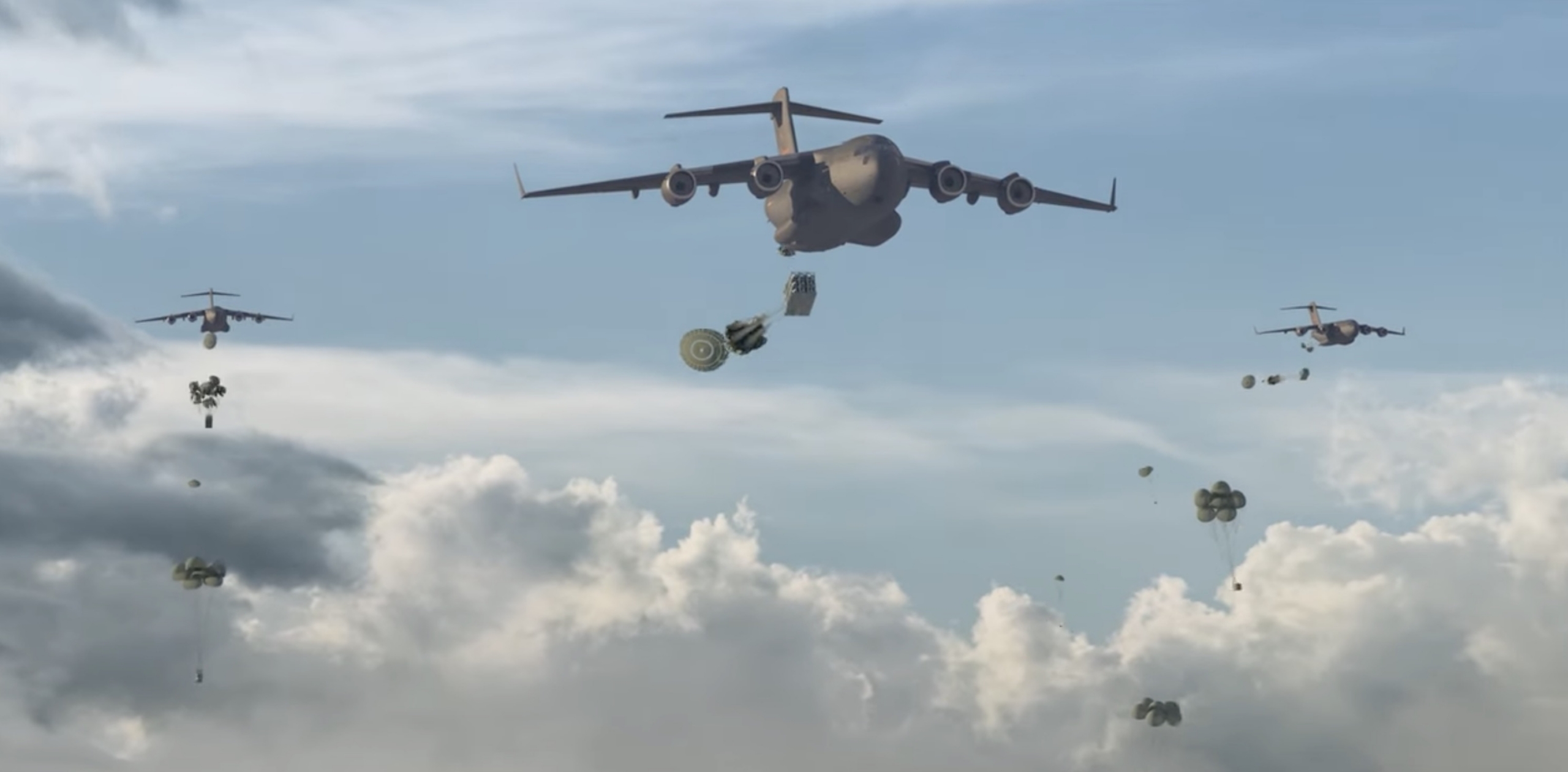
The US Air Force has outlined more of its plans to employ its C-17 Globemaster III and C-130 transport aircraft as cruise missile platforms, with service leaders saying the capability could arrive in the “very near future.”
These aircraft have the potential to deploy large numbers of long-range cruise missiles, significantly increasing the number of platforms available to launch strikes.
C-17s and C-130s move toward affordable cruise missile role
At the recent Airlift/Tanker Association’s annual symposium in Kissimmee, Florida, the Air Force outlined its plans to launch cruise missiles from its cargo airlifters.
Lt. Gen. Dan Tulley, commander of Air Mobility Command (AMC), underscored the warfighting imperative to defend airmen, aircraft, networks and bases, while making every mobility aircraft a potential threat.

This is being explored through experimentation with palletised payloads designed for use across different aircraft, including the Family of Affordable Mass Missiles-Palletized.
The approach could allow C-130 Hercules and C-17 Globemaster III aircraft to deliver massed missile strikes against enemy threats, supplementing their traditional transport missions.
Builds on earlier reporting on giving transports strike capability
The comments build on May 2026 AGN reporting that the Air Force was working to turn cargo aircraft into strike platforms, with anticipated fielding in 2027.
Aviation Week now reports that airlifters will be able to start deploying cruise missiles in the “very near future.” The development will require a mindset change among aircrews, although that description does not establish a firm operational date. aviationweek.com
The Family of Affordable Mass Missiles (FAMM) is the broader Air Force effort to develop low-cost, mass-producible cruise missiles.
A midyear request for information outlined separate palletised and lug-mounted requirements under its Beyond Adversary’s Reach effort.
The lug-mounted FAMM-L version is intended for carriage by fighters and bombers, while the palletised FAMM-P version is intended for deployment from cargo aircraft.
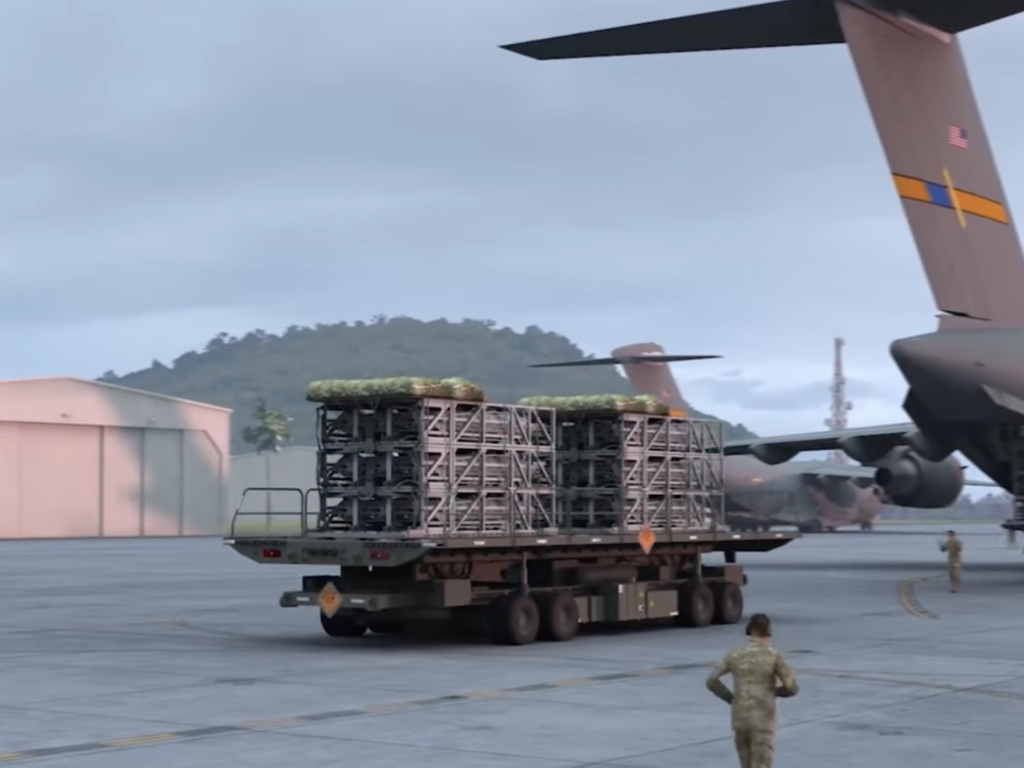
In July 2026, Anduril, CoAspire and Zone 5 secured framework agreements with the Pentagon to advance FAMM development.
However, a September acquisition notice confirmed that the FAMM-P BAR risk-reduction effort had been cancelled. That notice concerned a specific acquisition effort and should not be read as cancellation of the Air Force’s wider ambition to deploy palletised missiles.
Zone 5 Technologies’ AGM-188A Rusty Dagger is among the low-cost missile designs feeding into the Air Force’s wider affordable weapons plans, alongside designs from Anduril and CoAspire.
Rusty Dagger is being developed for multiple service branches and for launch from land, sea and air.
Zone 5’s president, Kyle Maxhimer, told The War Zone that the team had taken less than three months to progress from design to demonstration of its surface-launch configuration, expanding beyond aircraft pylons and pallets to ground launchers and shipping containers.
Rapid Dragon testing dates back to 2019
The effort to transform cargo aircraft into weapon delivery systems has been ongoing since 2019 under the Rapid Dragon program.
In December 2021, an Air Force Special Operations Command MC-130J Commando II conducted a live-fire demonstration using a four-cell deployment system containing one live cruise missile and three mass simulants.
After leaving the aircraft, the deployment system stabilised under parachutes before releasing its payloads sequentially. The live missile then transitioned to powered flight and struck its target. The test did not involve launching nine live missiles.
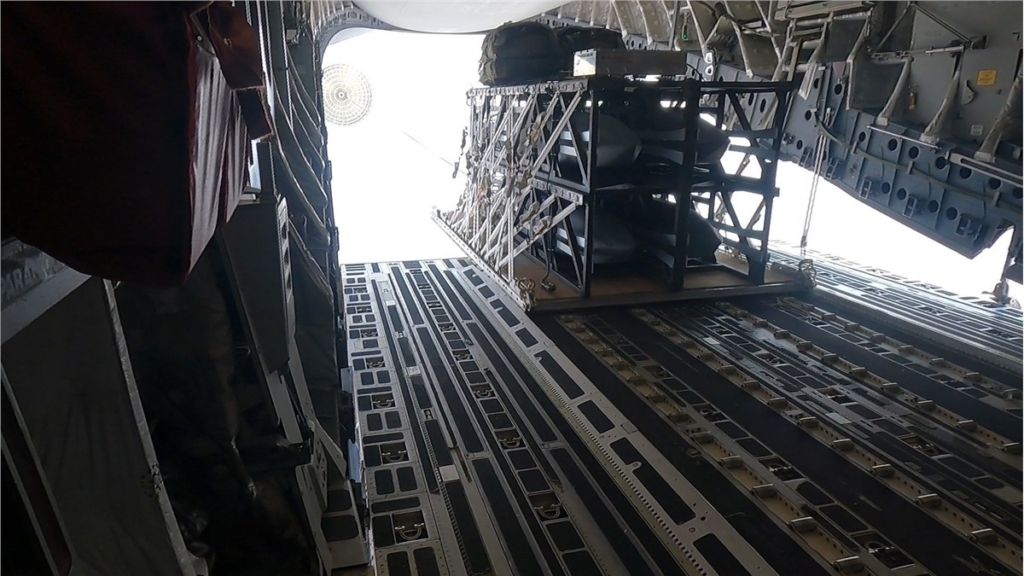
While earlier Rapid Dragon demonstrations involved JASSM-ER cruise missiles, the newer affordable weapons effort aims to provide lower-cost options that can be produced in much larger quantities.
The Air Force has outlined a five-year plan to spend approximately $12.6 billion procuring almost 28,000 missiles under FAMM. The planned purchases cover both lug-mounted and palletised weapons, rather than missiles exclusively for cargo aircraft.
Those figures imply an average of roughly $450,000 per weapon across the proposed spending plan, but that calculation should not be treated as the production price of an individual missile design. Actual costs will depend on the weapons purchased and what the funding includes.


