


India’s leading airport operators chart smarter growth in world’s third-largest aviation market

6 min read
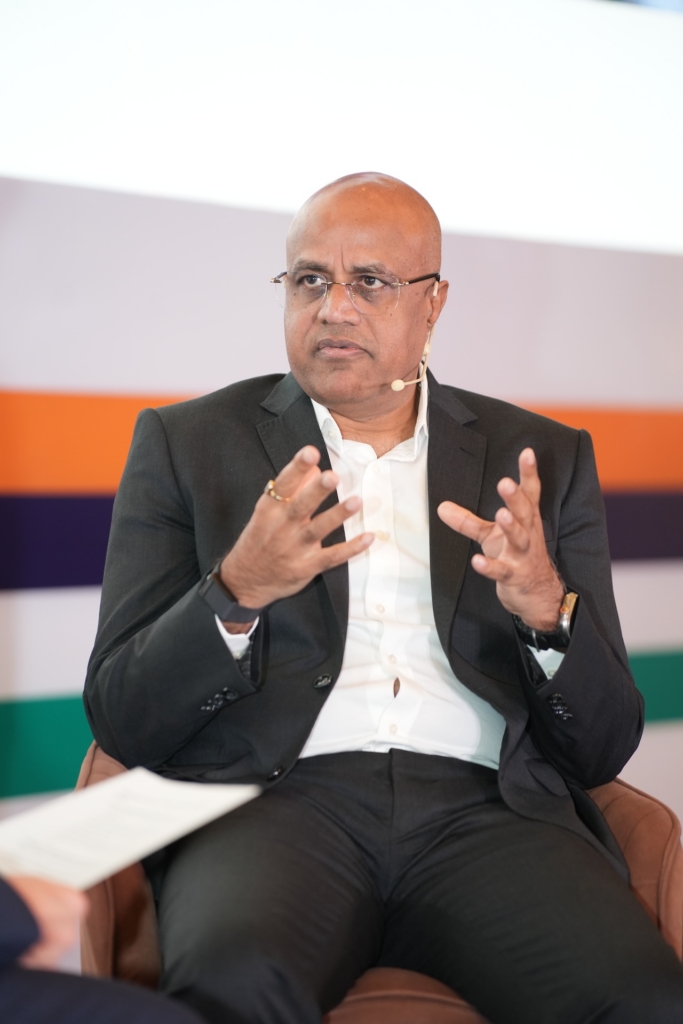
Adani’s Arun Bansal and GMR Airports’ SGK Kishore say India’s aviation boom demands more cost-efficient, smarter and bigger infrastructure.
India’s two dominant airport operators agree on the scale of the opportunity in the country’s airport infrastructure. Speaking at this year’s Aviation India summit held from 3-4 November in Delhi, they set out routes to capture it: through automation, a centralised network, Delhi as a global transfer hub and a greater focus on non-aeronautical revenue streams as well as airport cities.
Adani Airports prepares for next wave of growth on the ground
Adani Airports CEO Arun Bansal said airports have been slow to innovate in India, but that is changing. “The pace of innovation in airports in India has been extremely slow,” he said, describing a push to automate operations.
His argument is driven by cost. India’s next wave of growth will come from passengers moving from low and middle incomes to higher ones. Airports, he said, must do their part to meet that demand while keeping costs down, even though they control neither fuel prices nor airline costs.
Adani, which operates eight airports in India, including the new Navi Mumbai airport, aims to keep aeronautical charges as low as possible while still recovering its investment. Bansal said Mumbai’s charges are already among the world’s lowest, and that the group’s long-term goal is to push non-aeronautical revenue, from hotels and commercial property, as close as possible to covering airport charges.
Adani is building a single digital platform, Bansal said, in which every stakeholder shares a common data lake. An AI tool can predict peak hours six months ahead with almost 95% accuracy, helping all partners plan.
The group is consolidating operations control for its eight airports into one location, and with processes digitised, Bansal says it could onboard a newly won airport within two months. “The main driver is not cost, but digitisation and automation,” he said, though efficiency follows.
Navi Mumbai heralds a new generation of airports
Bansal said Mumbai’s existing airport, Chhatrapati Shivaji Maharaj International (CSMIA), has a capacity of about 55 million passengers across two terminals. Terminal 1, more than 60 years old and with significant safety issues, will be demolished and rebuilt, and should be back in service by mid-2030. When it returns, combined capacity should rise to nearly 65 million.
Airside capacity must grow in step, he added. Mumbai handles about 44 air traffic movements an hour, and Adani is working with consultants and AI tools to lift that by around 20%.
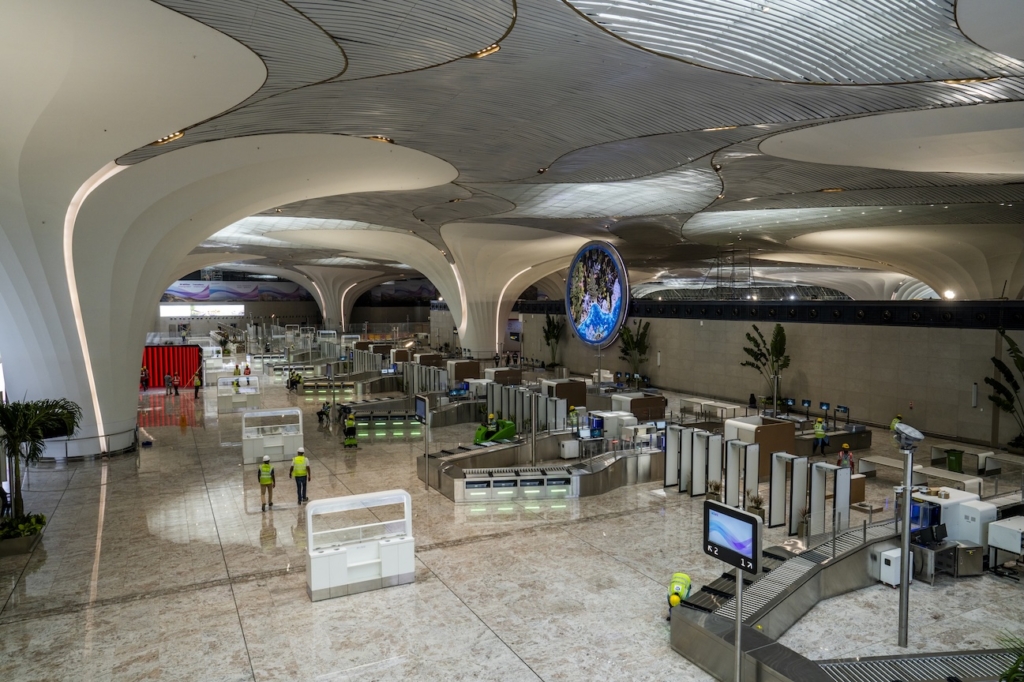
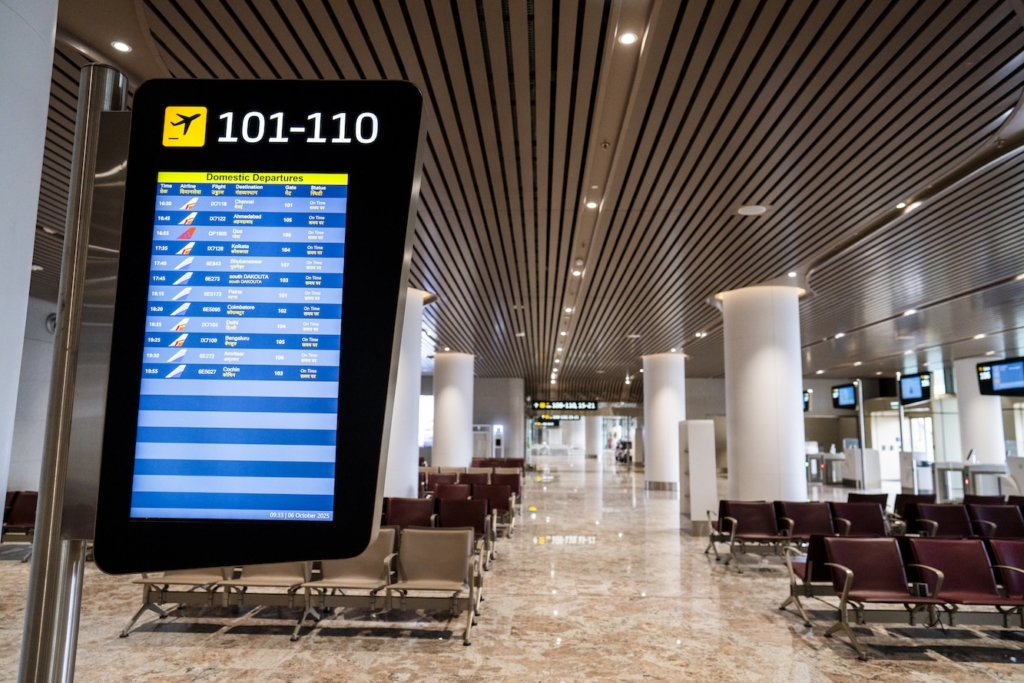
Adani opened the new Navi Mumbai in 2025. It is now accelerating a second terminal, with some airlines moving there voluntarily while Terminal 1 at CSMIA is rebuilt. Bansal said about 1,500 additional aircraft are expected in the next decade, and that Mumbai will be central to India’s hub ambitions alongside other airports. Adani is also planning a new airport at Ahmedabad before it hosts the 2030 Commonwealth Games.
Adani expects to spend roughly $10-11 billion over the next decade as it focuses on developing India’s airport infrastructure.
Delhi Airport’s ambition to become a global transfer hub
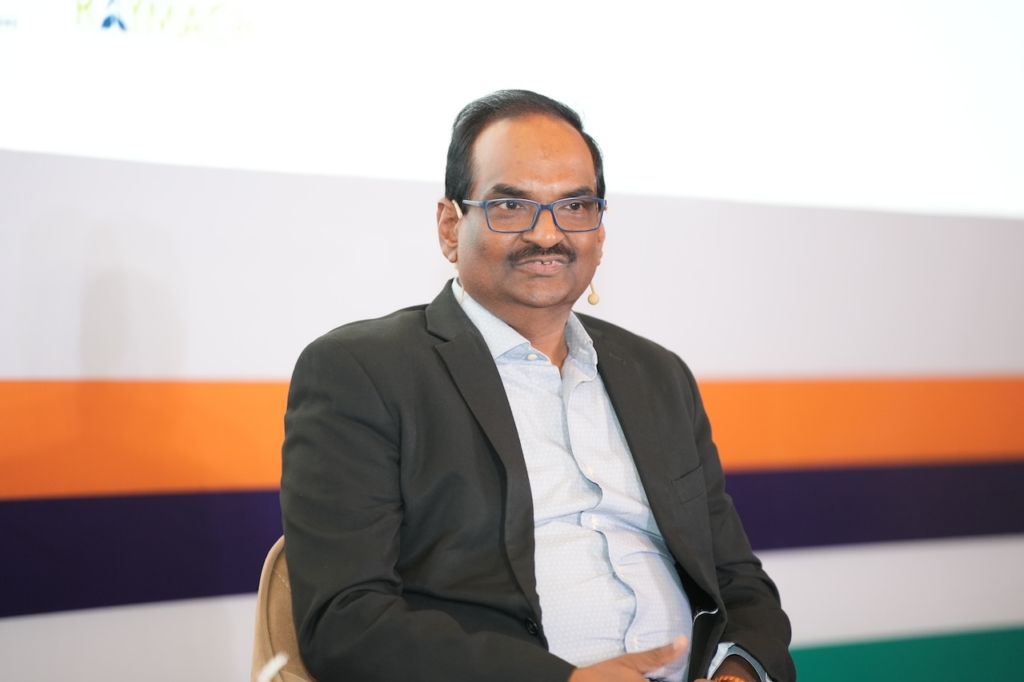
For GMR, India’s largest private operator by traffic, with 138 million passengers in 2025 and six Indian airports including Delhi, Hyderabad and Goa, SGK Kishore focused on Delhi’s push to rival Dubai, Istanbul and Singapore.
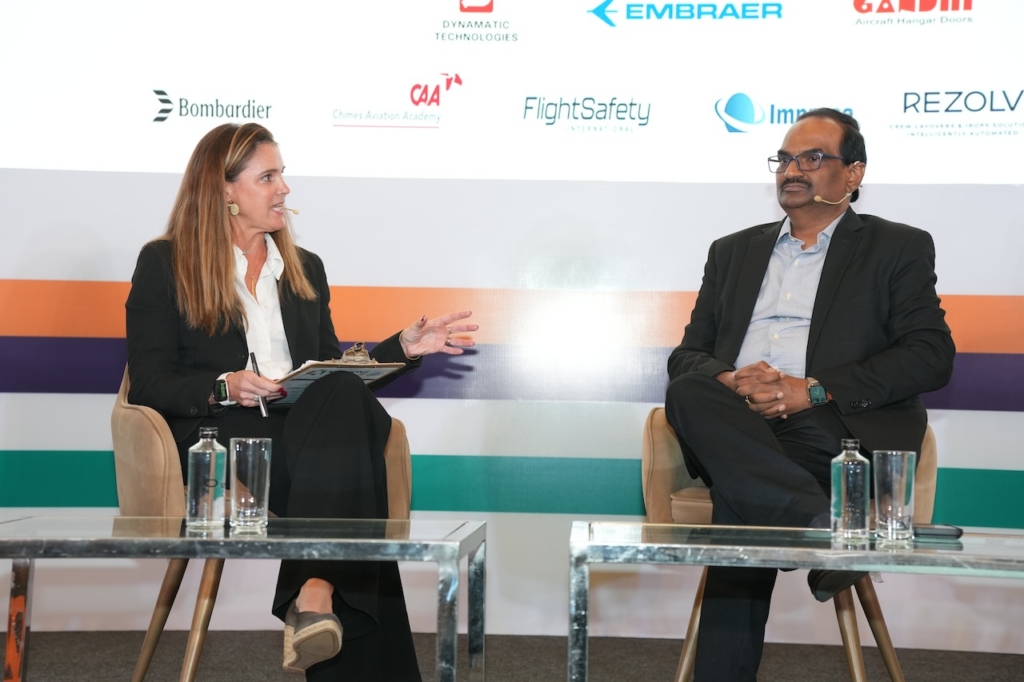
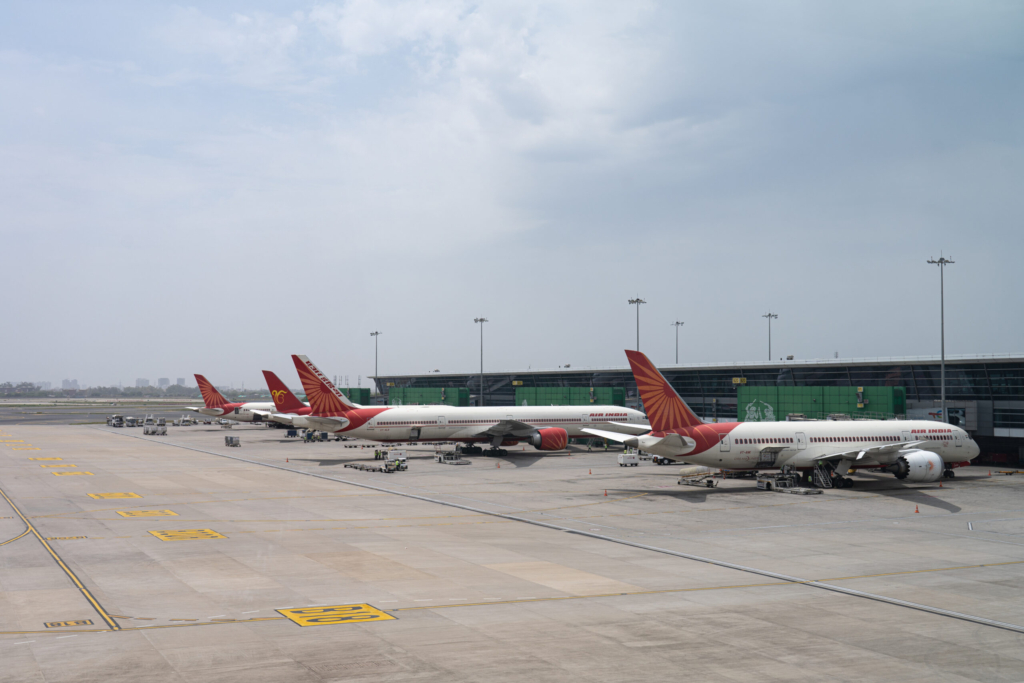
India has posted consistent double-digit growth for a decade, he said, and with only a small share of the population flying there is “huge headroom”. Delhi handled 78 million passengers in 2025, around 35% of whom were transfer passengers.
GMR Airports revealed in August that it plans to invest close to US$2 billion to expand its New Delhi and Hyderabad facilities. The invesment is aimed at boosting capacity and modernising infrastrucutre to keep pace with the projected growth in passenger volumes.
Building a transfer product takes more than an airport, Kishore said: “It’s not just the airport, it’s not just the regulator, it’s not just the airline.” GMR is easing ground connections between Delhi’s three terminals and working with security regulators to streamline passenger connections.
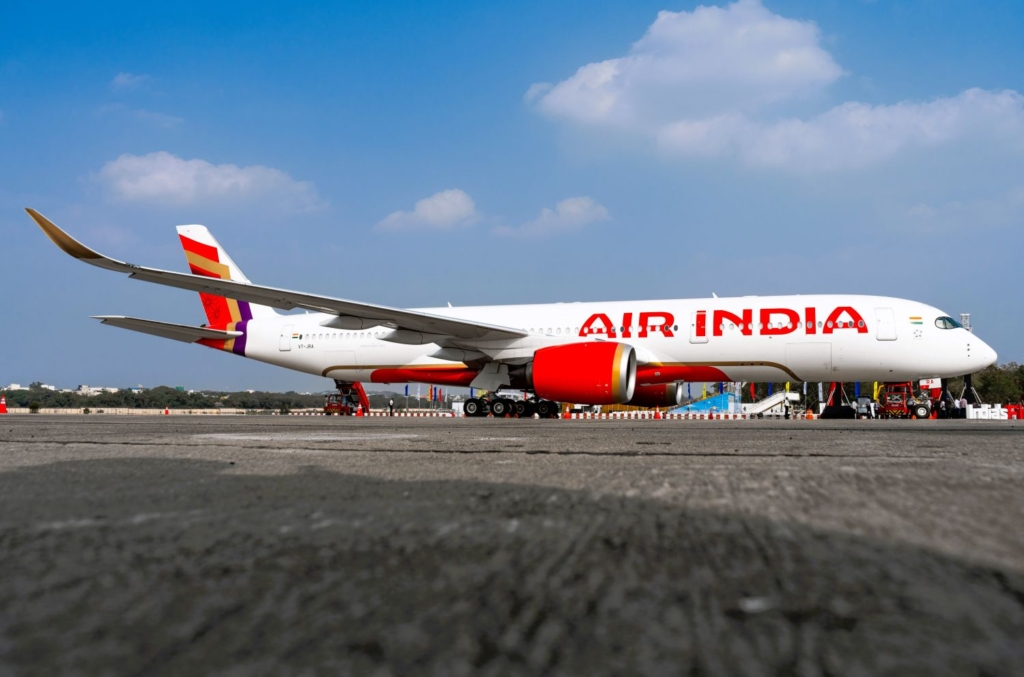
He added that DigiYatra biometric processing, now national, has been extended to international passengers. He expects India’s growth to draw foreign travellers to connect through its hubs, and singled out Air India and IndiGo for ambitious network expansion programmes.
He said Air India’s Easy Connect scheme, which lets passengers from smaller cities such as Varanasi, Ahmedabad and Amritsar clear immigration and customs at origin, before transferring to international flights in Delhi, is working, with plans to widen it.
Who pays for growth?
On airport charges, Kishore said the economic regulator sets them by formula, and rising capital spending means rising charges. “If the airport charges are growing in a regulatory framework, that means good things are happening for the industry,” he said.
GMR tries to limit costs by delivering projects early, citing Visakhapatnam International Airport – a greenfield project built in 30 months, and by squeezing more throughput from existing assets. At Hyderabad, the operator has trialed baggage check-in in car parks to ease terminal congestion and ensure a more seamless passenger experience.
Kishore said smaller airports need a better economic framework, as infrastructure costs are similar at six or 15 million passengers but traffic is far lower. GMR is developing more cost-effective and automated designs and an AI model to capture its institutional knowledge.
The airport city model
Both Kishore and Bansal agreed airports are more than terminals. Bansal said Adani saw potential in hotels and commercial property because airports built decades ago on city outskirts now sit in the middle of urban areas. Kishore said GMR pioneered the airport city.
Land around Delhi that was once vacant now hosts a commercial district, and at Hyderabad, GMR has built an aerospace cluster, including Safran’s engine maintenance facility, after years of lobbying. “Gone are the days when airports are only transportation places,” he said.
Facing headwinds and planning ahead to 2040
Both Bansal and Kishore acknowledged that the outlook is not without risk. Bansal pointed to two headwinds – high oil prices and geopolitical tension as current pain points squeezing airlines and the wider industry. Even so, he said Adani sees opportunity in the government’s next wave of airport privatisation, which covers 11 airports, though he said the bigger prize lies in greenfield projects.
He also said rather than thinking like a big established organisation which would potentially “slow growth and increase costs”, he runs Adani with a startup mindset: “nimble, fast decision-making.”
Like Adani, Kishore also sees the next round of airport privatisation as an opportunity to expand, with GMR concentrating its efforts in India and working on new designs and economic frameworks to ensure smaller airports are viable. Looking to 2040, he wants GMR to be “the most sought-after brand in Asia”.
Innovation will lead that push through GMR Innovates, which works with start-ups and academic institutions to address the industry’s challenges and future demand. The group is also exploring green hydrogen and fully automated airside systems to reduce human movement on the apron, where safety risks remain a concern.


