All wrapped up: Adani fuels India’s airport expansion with opening of Navi Mumbai

4 min read

India’s airport infrastructure drive gained momentum on Christmas Day with Navi Mumbai International Airport (NMIA) starting commercial operations. The announcement followed the opening of a new terminal at Guwahati’s Lokapriya Gopinath Bordoloi International Airport in Assam.
Navi Mumbai’s launch of commercial operations on 25 December 2025 marks a major milestone in India’s aviation journey. The country is gearing up to meet rapid growth in air traffic demand.
India’s aviation sector has recorded double-digit growth over the past four years. Local carriers have ordered around 1,900 new aircraft, with 1,000 expected to enter service within the next five years.
Three new domestic carriers are expected to enter service in 2026, following government approval for Shankh Air, alhindair and FlyExpress.
Relieving pressure on Mumbai’s existing gateway
NMIA has been developed to alleviate congestion at the city’s existing Chhatrapati Shivaji Maharaj International Airport (CSMIA). It is located in Ulwe, around 37 km from South Mumbai. With NMIA’s opening, Mumbai joins global aviation hubs such as London, New York, Dubai and Tokyo in operating multiple airports to meet surging passenger demand.
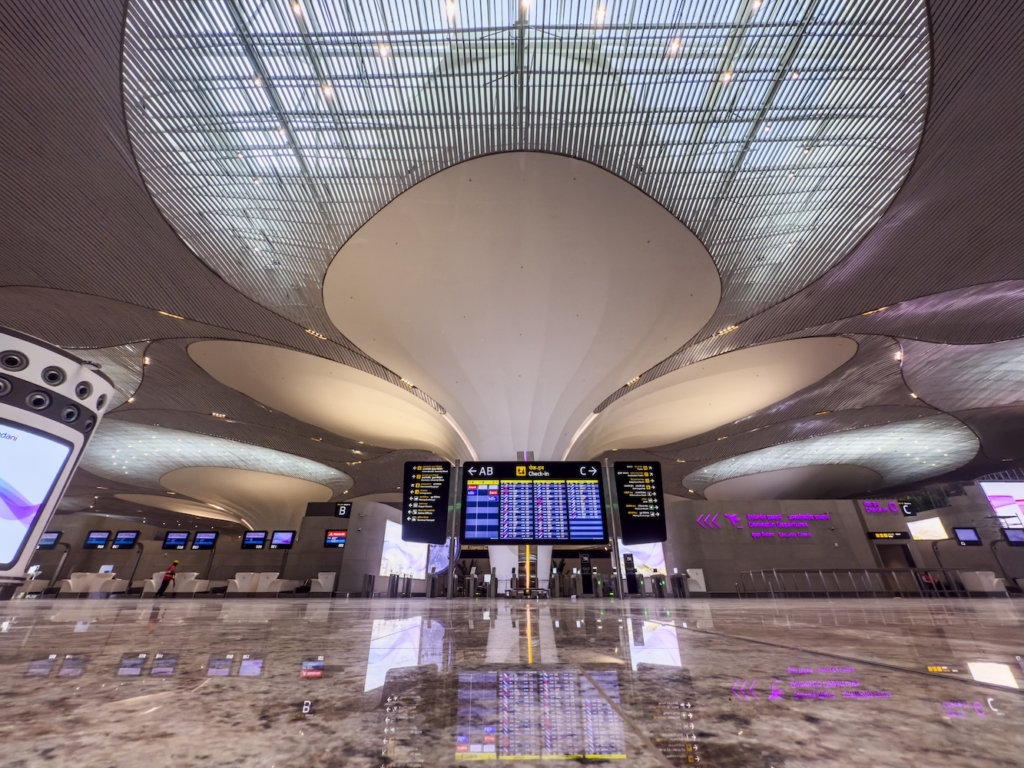
Spanning 2,866 acres, the airport is strategically positioned to serve the Mumbai Metropolitan Region (MMR) and western India. NMIA has an ultimate capacity of 90 million passengers per annum. In its first phase, the airport has the capacity to handle 20 million passengers annually.
Adani Airports Holding Limited (AAHL) CEO Arun Bansal previously stated that the airport would “significantly ease congestion”. However, some critics have expressed concerns about its distance from certain Mumbai suburbs.
Journey times to and from the airport reportedly stretch two or three hours from parts of the city, and there is currently no direct metro or railway link serving the airport. Nonetheless, after decades of constraint, the city’s multi-airport system is also drawing strong enthusiasm, as it will boost capacity and enhance passenger travel.
Adani’s expanding Indian airport footprint
NMIA is operated and majority owned (74%) by AAHL under a public-private partnership. The City and Industrial Development Corporation of Maharashtra holds the remaining 26%.
Adani currently operates eight airports across India, collectively serving around 90 million passengers a year. As one of the country’s largest greenfield airport developments, NMIA underscores Adani’s ability to deliver complex, nation-building infrastructure at speed.
Although plans for a second airport in Mumbai date back to 1986, driven by constraints on expanding the existing CMSIA, the project faced prolonged delays between 2011 and 2017. These challenges included large-scale resettlement, environmental clearances and significant engineering complexities.
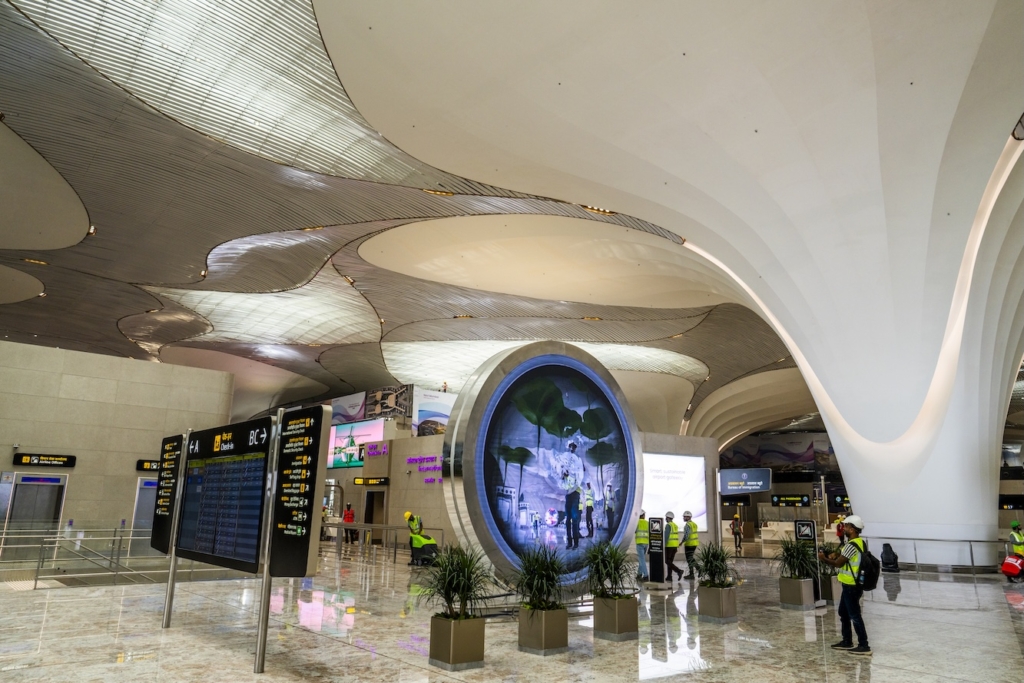
A decisive shift in the new airport’s development came in 2021 when the Adani Group took over the project. Construction began in earnest in 2022. The world-renowned architecture firm Zaha Hadid was tasked with designing the new terminal. The building draws its inspiration from the lotus flower, a timeless symbol in Indian culture.
Navi Mumbai: A future-focused logistics and cargo hub
Beyond passenger operations, Navi Mumbai has been developed as a major logistics hub with a focus on cargo. In the airport’s first phase, NMIA will handle up to 0.5 million tonnes of cargo annually. The airport features a fully automated terminal with AI-enabled monitoring systems designed to cut aircraft turnaround times by up to 40%.
It also has a Pharma Excellence Centre with GDP-compliant cold zones and a dedicated perishable cargo village. Its proximity to Jawaharlal Nehru Port Trust further strengthens its role as an integrated sea-air shipment hub.
A “proud day” for Mumbai and India
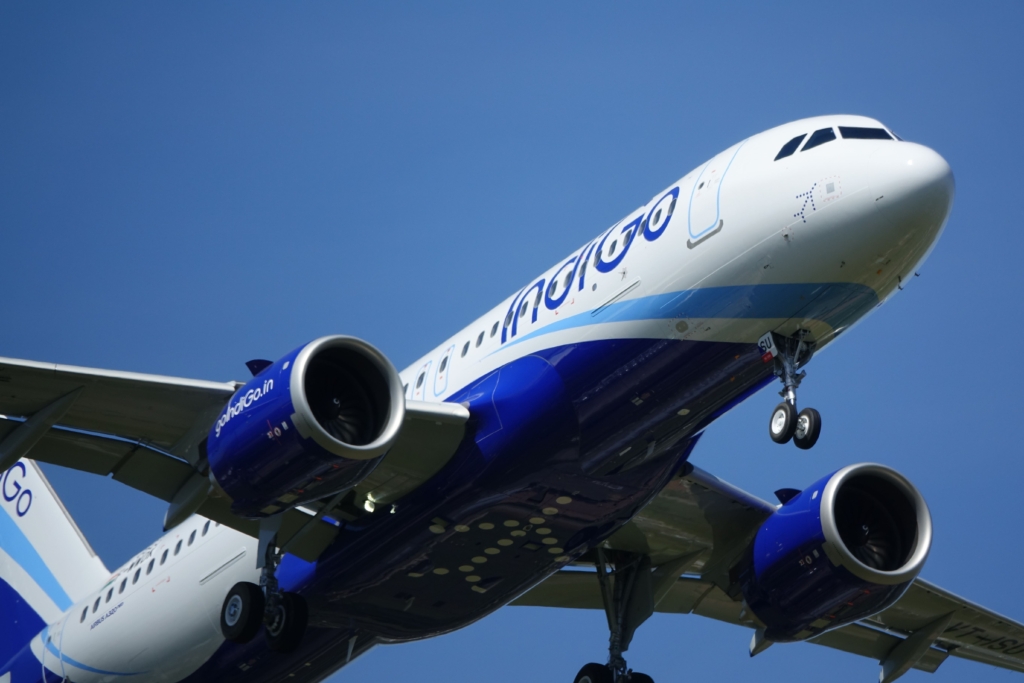
Prime Minister Narendra Modi inaugurated the airport on 8 October, while the first commercial arrival, IndiGo flight 6E460, touched down on 25 December, signalling the beginning of a new era for Mumbai’s aviation landscape.
On its first day of operations, NMIA handled 48 flights to nine domestic destinations, serving more than 4,000 passengers. Peak traffic between 5am and 7am highlighted strong early demand and operational readiness.
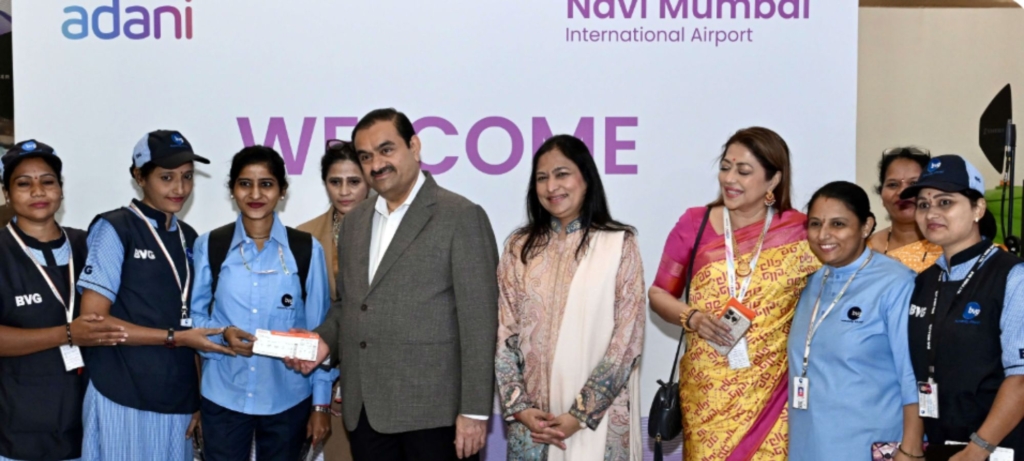
Adani Group chairman Gautam Adani was present to welcome passengers on the inaugural flight, describing the occasion as a “proud day for Mumbai and India”. Adani added, Mumbai’s new airport represents “what the country can achieve when ambition is guided by purpose and delivered with speed and execution”.
In addition to IndiGo, Akasa Air, Air India Express, Star Air and in due course Air India will all serve the dual-runway airport. Ultimately, multiple international services to and from Mumbai are likely to arrive and depart from the new airport.
Adani is expanding capacity across India
NMIA’s opening followed closely on the inauguration of the new terminal at Guwahati’s Lokapriya Gopinath Bordoloi International Airport on 20 December. At the same time, terminals at Thiruvananthapuram, Ahmedabad and Jaipur are either under construction or undergoing major redesigns.
With much of India’s airport infrastructure under strain from rapid passenger growth, Adani is accelerating efforts to expand capacity, modernise terminals and deliver a more seamless, technology-enabled passenger experience across its airport portfolio.

Officials plan to begin commercial operations at the Guwahati terminal, conceptualised just a year ago, by the end of February 2026. The terminal’s design draws inspiration from Assam’s iconic kopou phool (foxtail orchid) and indigenous bamboo varieties, with around 140 metric tonnes of locally sourced bamboo used throughout the terminal.
Prime Minister Modi noted that the bamboo-rich terminal symbolises strength, sustainability and Assam’s growing role in powering Viksit Bharat as India advances towards becoming the world’s third-largest economy.
Featured image: NMIAL