


Lockheed quits US Navy trainer contest weeks after RFP release

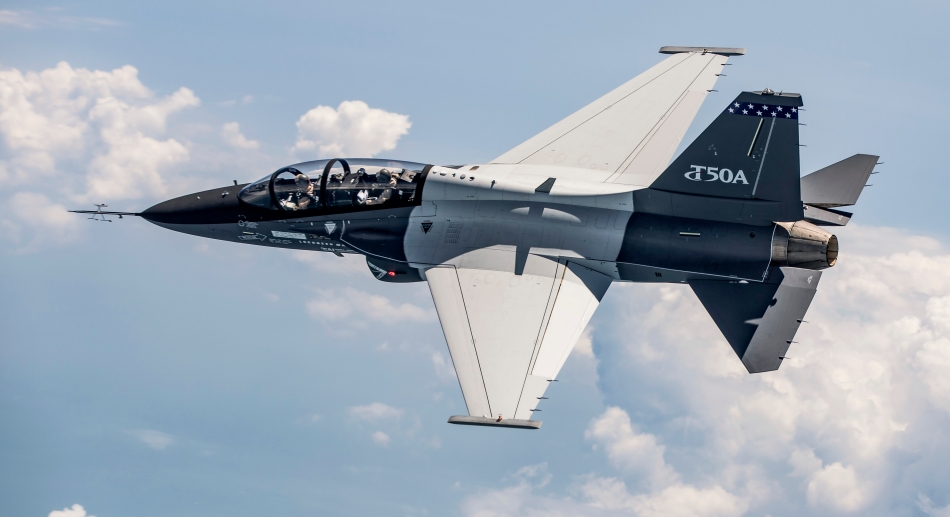
Lockheed Martin has withdrawn from the US Navy’s competition to replace its ageing trainer fleet, narrowing the field in one of the most closely watched aviation programmes and reshaping the contest just weeks after the final request for proposals (RFP) was issued.
The development, first reported by Breaking Defense, sees the world’s largest defence contractor step back from a bid it had been expected to pursue with Korea Aerospace Industries’ TF-50N, leaving Sierra Nevada Corporation (SNC), Boeing, and Textron Aviation Defense partnered with Leonardo as the remaining contenders.
“Following formal notification to the US Navy, Lockheed Martin has decided not to pursue the UJTS solicitation after careful analysis,” the company said in a statement to Breaking Defense. “We will continue to focus on delivering innovative training solutions… [and] remain confident the T-50 platform is a leading-edge fighter trainer with strong capabilities and future potential.”
Lockheed Martin exits US Navy UJTS trainer programme after RFP release
The Undergraduate Jet Training System (UJTS) programme is intended to replace the Navy’s T-45 Goshawk fleet, which has been in service since the early 1990s and is based on the British Hawk.
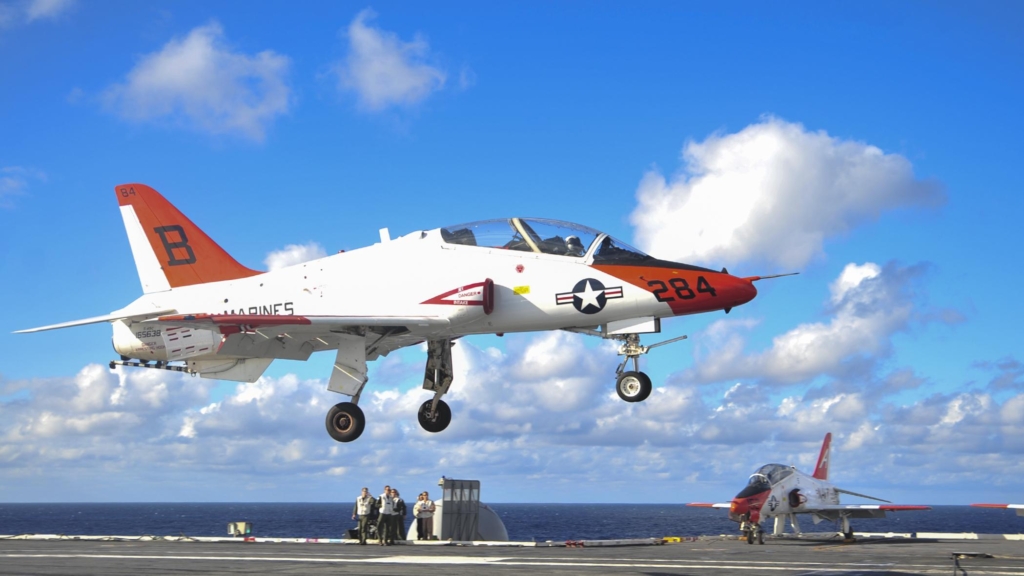
The programme is not just about aircraft procurement. It covers a full training ecosystem, including simulators, ground systems and logistics support, and is expected to result in the acquisition of up to 216 aircraft.
According to the RFP, engineering and manufacturing development is capped at around $1.8 billion, with additional limits placed on early programme spending, constraints that have already drawn concern from industry participants.
Lockheed exit highlights UJTS requirements on US content and cost limits
While Lockheed did not provide detailed reasoning, the company indicated that the decision followed a detailed internal review of the requirements.
A spokesperson said the offering “would not be the best solution for this program due to the required level of US content and other reasons,” suggesting that industrial or sourcing constraints may have played a role.
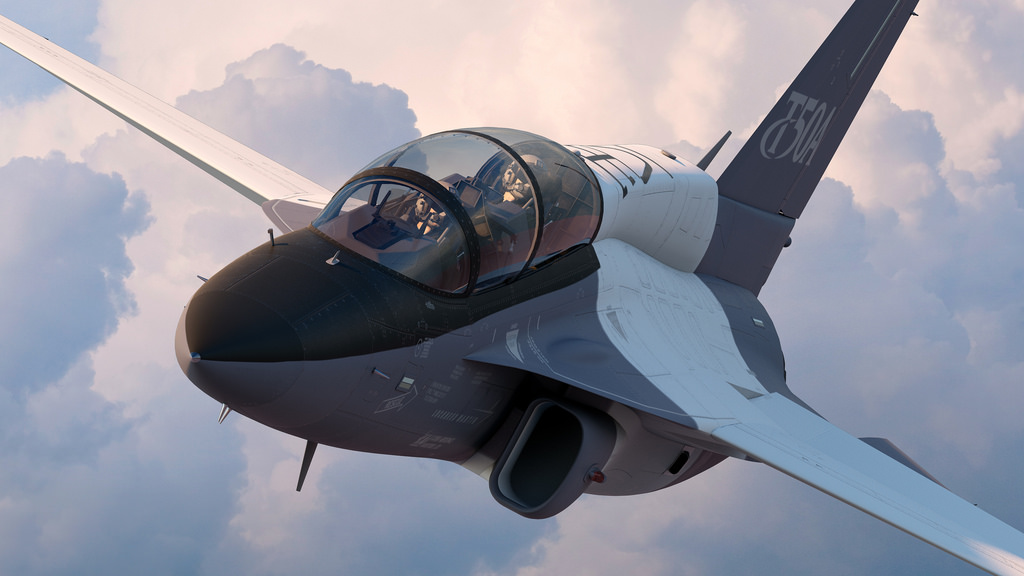
The move is notable given the TF-50’s pedigree. Derived from the T-50 family developed with Korea Aerospace Industries, the platform has been marketed as a capable supersonic trainer with light combat potential.
Its absence now reshapes the competitive landscape.
UJTS competition narrows to SNC, Boeing and Textron-Leonardo bids
With Lockheed’s exit, the UJTS contest now effectively becomes a three-way race, each offering a different philosophy.
Sierra Nevada Corporation is proposing its clean-sheet Freedom Trainer, designed specifically around Navy requirements.
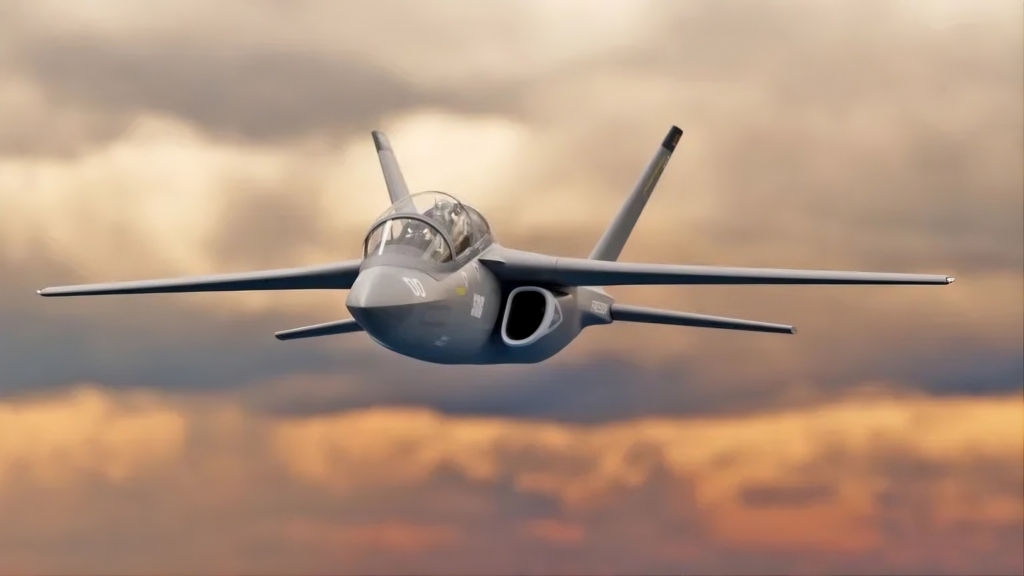
The company has emphasised a purpose-built approach, including the ability to support more demanding landing profiles and lifecycle cost considerations.
“We have a very solid design we put together in support of pursuing this,” said Jon Piatt, SNC’s executive vice president for ISR, aviation and security.
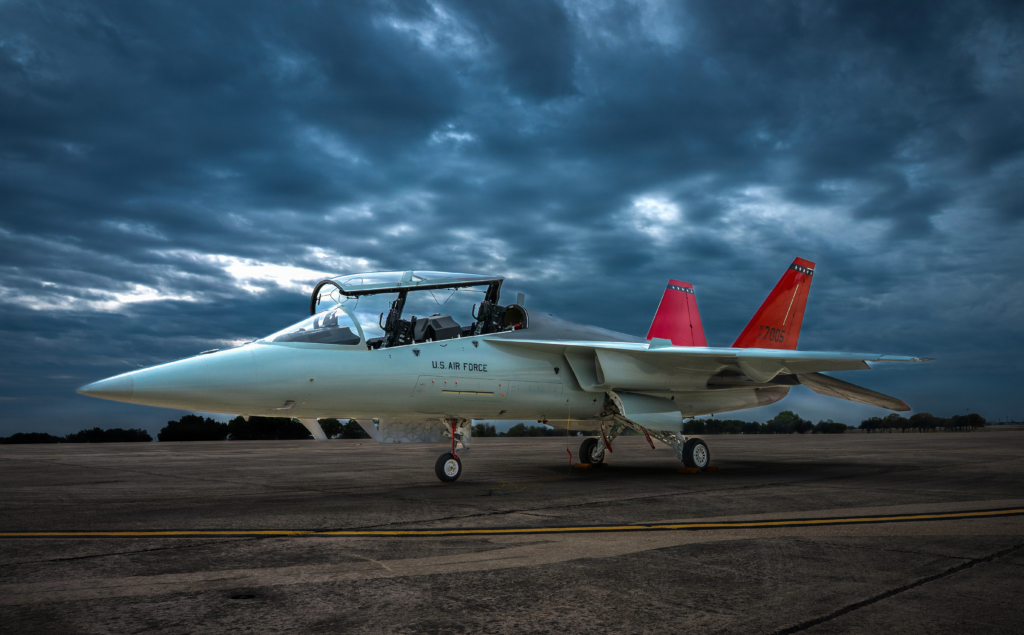
Boeing, meanwhile, is expected to offer a derivative of its T-7 Red Hawk, leveraging an existing platform already in production for the US Air Force.
Textron Aviation Defense, partnered with Leonardo, is putting forward the M-346N, a navalised version of the Italian trainer aircraft, which company executives describe as a mature and proven system.
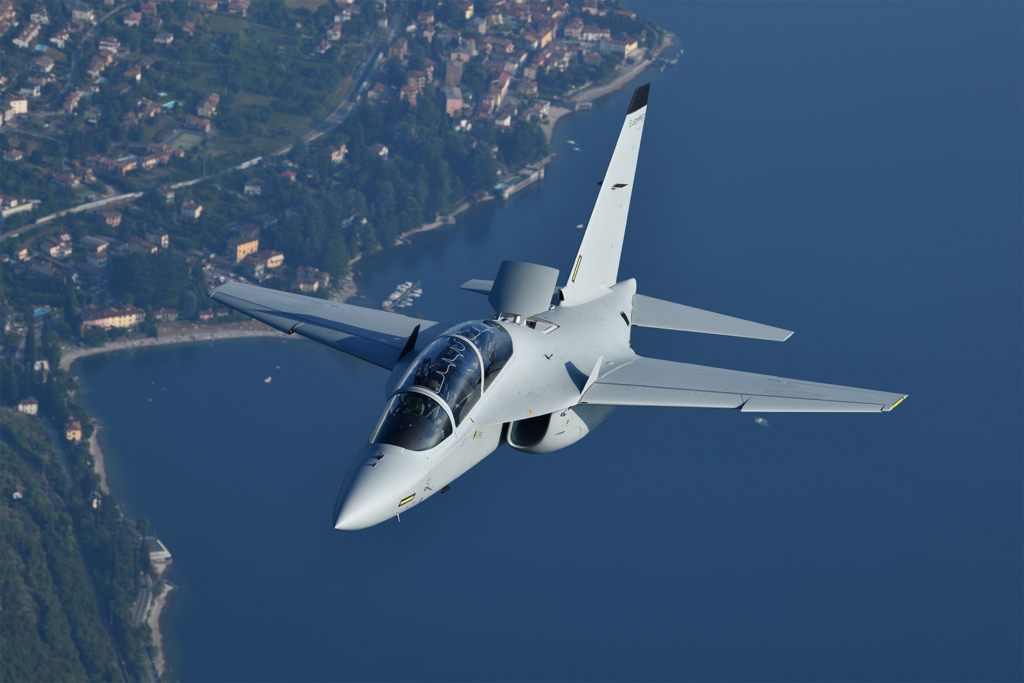
“We think it’s the right fit for the Navy to continue to train before they ultimately go on to the fighters,” said Textron CEO Travis Tyler.
US Navy training shift reduces carrier landing requirements in UJTS
One of the defining features of the UJTS programme is a shift in training philosophy.
Unlike the T-45, the new aircraft will not be required to land on aircraft carriers.
The requirement for full field carrier landing practice (FCLP) to touchdown has also been removed, with the focus shifting to wave-off profiles supported by advanced simulation.
This has opened the door to a wider range of aircraft designs, including those not originally conceived for carrier-style operations.
However, it has also sparked debate within industry over whether reducing live training requirements could shift complexity and cost further down the training pipeline.
Budget caps and programme structure raise concerns even as competition narrows
Even before Lockheed’s exit, concerns had been raised about the programme’s budget structure.
SNC’s Piatt described the development cap as a potential constraint, warning that funding limits could become “a big obstacle” in delivering a next-generation trainer system.
The Navy’s approach reflects a broader effort to control costs while accelerating delivery timelines-an increasingly common tension in major defence acquisition programmes.
US Navy UJTS programme enters decisive phase after Lockheed withdrawal
Lockheed Martin’s withdrawal simplifies the competitive field but also raises the stakes for the remaining bidders.
The UJTS programme will shape how US Navy and Marine Corps pilots are trained for decades, influencing not just aircraft design but the balance between live flying and simulation.
With proposals now moving forward under a finalised RFP, the contest is entering a decisive phase.
Lockheed’s absence removes one major contender, but sharpens the focus on how the next generation of naval aviators will be prepared for increasingly complex air combat environments.
Featured image:


