Peru’s cabinet ministers resign as US responds over stalled F-16C/D Block 70 deal

8 min read
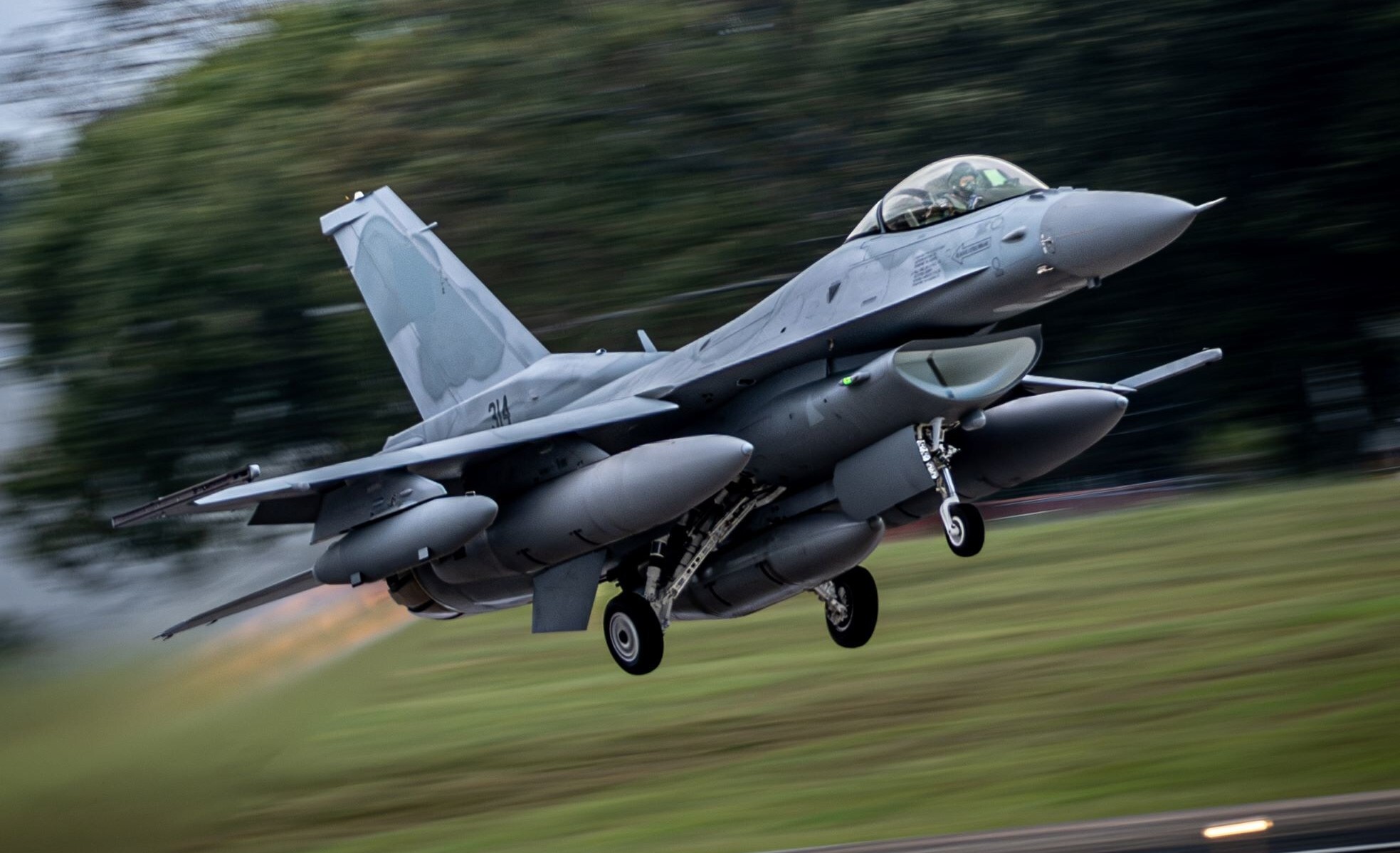
Peru’s quest to modernise its ageing fighter fleet stalled on 17 April, when the nation’s interim president decided to defer the decision to ink a $3.5bn deal to purchase 24 F-16C/D Block 70s from Lockheed Martin until the country formally elects its new leader in July.
The move has since sparked a major fallout, with two of the nation’s cabinet-level ministers resigning in protest over the decision, which has also irked the US.
After highlighting the need to replace and modernise the Fuerza Aérea del Perú’s (FAP; Peruvian Air Force) current fighter inventory more than a decade ago, Lima launched a competitive bidding process for the acquisition of new frontline combat aircraft in 2024.
Following a lengthy process, Peru confirmed that Lockheed Martin’s F-16C/D Block 70 had pipped Saab’s JAS 39E/F Gripen and Dassault’s Rafale F4 offerings in the race for the highly sought after contract on 14 April 2026.
Having been informed of the F-16C/D Block 70’s victory in the contest in writing that same day, representatives from Lockheed Martin and the US government travelled to Peru to finalise the deal, with both a technical and ceremonial signing of the acquisition contract originally scheduled to take place on 17 April.
However, this was abruptly cancelled at the last minute by Peru’s interim President Jose Maria Balcazar, who has only been in office since February. Citing his reasons behind the abrupt move, Balcazar explained that he was not pulling Peru out of the planned deal, but instead felt that the next elected presidential administration should be involved in making such a large financial commitment.
“For us to commit such a large sum of money to the incoming government would be poor practice for a transitional government,” he said at the time. “We remain firm in respecting all agreements that may have been reached at the level of the armed forces, or in this case, with the relevant ministry of the air force, to carry out the corresponding negotiations.”
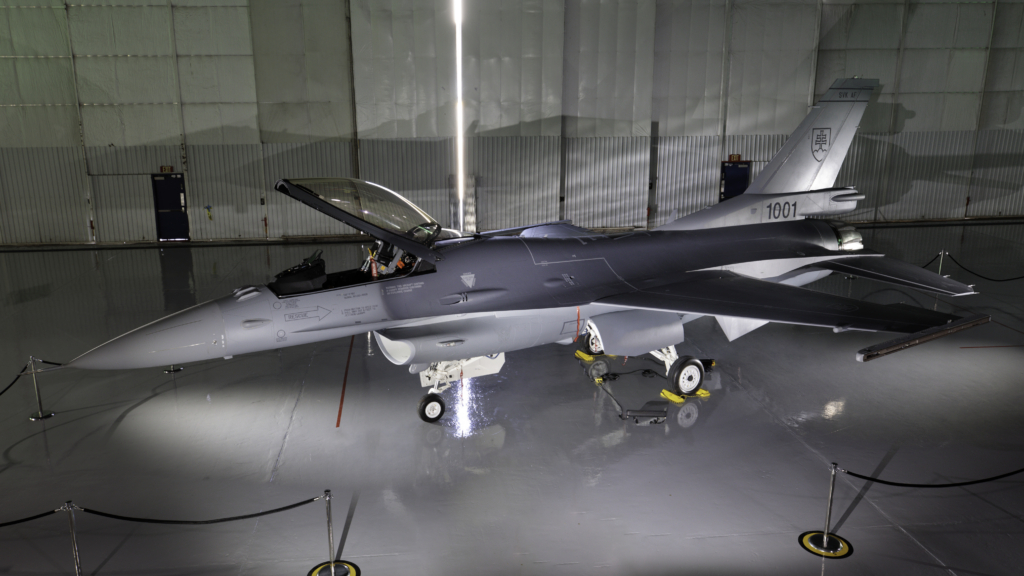
While the deal for 24 new-build F-16C/D Block 70 jets – the most advanced variant of the venerable Fighting Falcon family developed to date – looked set in stone last week, Balcazar’s decision to defer the formal inking of the acquisition contract until the nation’s next elected leader takes office in July has been met with pushback, both domestically and from Washington.
Inside the political firestorm caused by Peru’s deferment of the F-16C/D Block 70 deal
On 22 April, two of Peru’s cabinet ministers – namely Defence Minister Carlos Diaz and Foreign Minister Hugo de Zela – resigned from office, citing their opposition to Balcazar’s decision to defer the country’s planned F-16C/D Block 70 acquisition until July in their resignation letters.
“A strategic decision has been taken in the area of national security with which I have a fundamental disagreement,” Diaz said in his resignation letter, adding that the purchase of the F-16C/D Block 70 was not political but “for the security and defence of the nation.”
Meanwhile, de Zela highlighted that the decision “endangers our country and undermines its credibility” in his resignation. He claimed that the relevant contracts for the F-16C/D Block 70 acquisition were inked on 21 April, after the deal was approved by the National Defence Council. An initial payment was due to be made in relation to this deal on 22 April, de Zela added.
That same day, Peru’s Ministry of Economy revealed that it had transferred $462m as part of the nation’s initial payment for the deal with Lockheed Martin. Combined with these two abrupt resignations, this added further confusion over the deal as growing instability tightens its grip on the South American nation.
Balcazar’s decision to defer the deal has also seemingly struck a nerve with Washington, as the US Ambassador to Peru, Bernardo Navarro, issued an apparent warning to the nation’s incumbent government in relation to the planned F-16C/D Block 70 acquisition.
If you deal with the U.S. in bad faith and undermine U.S. interests, rest assured, I, on behalf of @POTUS Trump and his administration, will use every available tool to protect and promote the prosperity and security of the United States and our region.
— Embajador Navarro (@USAmbPeru) April 17, 2026
“If you deal with the US in bad faith and undermine US interests, rest assured, I – on behalf of [President] Trump and his administration – will use every available tool to protect and promote the prosperity and security of the United States and our region,” Navarro said on X (formerly Twitter) on 17 April.
In a follow-up statement (published on 22 April), Navarro denied that Washington’s F-16C/D Block 70 offering had been outcompeted, despite critics of the deal having argued that Peru had received more competitive offers from the French– and Swedish-backed offers, respectively.
Addressing this, Navarro said that the Lockheed Martin “bid was made at a high level of competitiveness,” while calling the F-16C/D Block 70 “the most technically advanced and complex fighter aircraft ever built.”
Trust is fundamental in business and between countries. Peru fulfilled its commitment, showing reliability as an economic and security partner. Today marks a milestone in our 200 years history: the F-16 Block 70, among the most advanced fighter aircraft, will arrive in Peru.
— Embajador Navarro (@USAmbPeru) April 23, 2026
He also confirmed that Peru’s planned acquisition of 24 F-16C/D Block 70s also includes “two weapons systems that have never been placed on an F-16 to meet Peru’s specific requirements.” However, he did not elaborate on what these specific systems were.
Navarro also highlighted that the US followed every step of the process as dictated by the Peruvian government: “The US team, both government officials and high-level Lockheed Martin executives, were ready to report to Las Palmas Air Base and the Presidential Palace as requested.
“The [US] learned the signing was postponed via national radio. There is a correct way to do serious, credible business.” He went on to confirm that a “technical signing between authorised parties took place on 20 April 2026, with full awareness from the highest levels of the Peruvian government.”
While the deal has only been deferred until late-July at the earliest, Navarro denounced the move and highlighted the costs associated with delaying such a decision. “Regarding arguments about postponing such a decision: when a manufacturer plans for the delivery of a product of this calibre, there is no such thing as a small and inconsequential delay.
“There are hundreds of stakeholders, supply chain considerations, and detailed work that is put in motion to make this possible for Peru. Supplier contracts maintain cost for a finite period, then costs go up. Currently, each delay results in significant additional costs for industry partners.
“The same package will not be available in a couple months, or even a couple of weeks, due to increased supplier costs and interest from other countries given the dynamic context of the global world we all live in,” he explained.
To address this controversy, Balcazar went on state TV to assure Peruvians that he was “not seeking confrontation with the US” over the deferment of this deal. The incumbent interim president explained he halted the deal to ensure public funds were being “used appropriately, reasonably [and] in accordance with the significant social gaps we have to address in [Peru].”
Regardless, Balcazar’s decision to defer this deal has sparked a major domestic political controversy in Peru. The nation’s Congress President Fernando Rospigliosi has urged the incumbent president to honour the deal with the US to avoid a “political, legal and geopolitical problem,” while Peruvian Congressman Jorge Montoya suggested that Balcazar should be impeached over the decision.
Why is Peru seeking to buy F-16C/D Block 70s from the US?
Lima has long sought to recapitalise the FAP’s ageing fighter fleet. The air arm currently operates roughly 11 French-made Mirage 2000P/DP fighters, as well as Russian-built MiG-29S/SE/SMP/UBP Fulcrums and Su-25K/UB Frogfoot ground attack jets.
In October 2024, Peru formally announced it would renew its ageing fighter fleet with the purchase of 24 new, more modern jets. The US initially approved the possible sale of 24 F-16C/D Block 70s and associated equipment, training and maintenance assistance, in September 2025.
This polarising contract signing – which has erupted into a political fallout on the domestic and international stage – initially focused on the procurement of the first 12 F-16C/D Block 70s for the FAP, with an option to acquire another dozen aircraft to complete the planned 24-strong fleet in the future.
If the deal goes ahead at a later date, this initial tranche will comprise ten single-seat F-16C Block 70s and two dual-seat F-16D Block 70s.
As per current plans, the FAP’s first F-16C/D Block 70s are scheduled to arrive at Base Aérea Coronel FAP Víctor Maldonado Begazo – otherwise known as La Joya Air Base – in 2029, where they are believed to be destined to replace the Mirage 2000P/DPs operated by Grupo Aéreo No 4 (Air Group No 4). It remains unclear how the deferment of this deal will affect this delivery timeline.
It has also been reported that the now-deferred F-16C/D Block 70 acquistion from the US also included the delivery of a single used KC-135R Stratotanker to the FAP at no additional cost. While the KC-135R would have been donated to the FAP from USAF stocks, it remains unclear if this deferment will lead to any changes in the original acquisition plan.
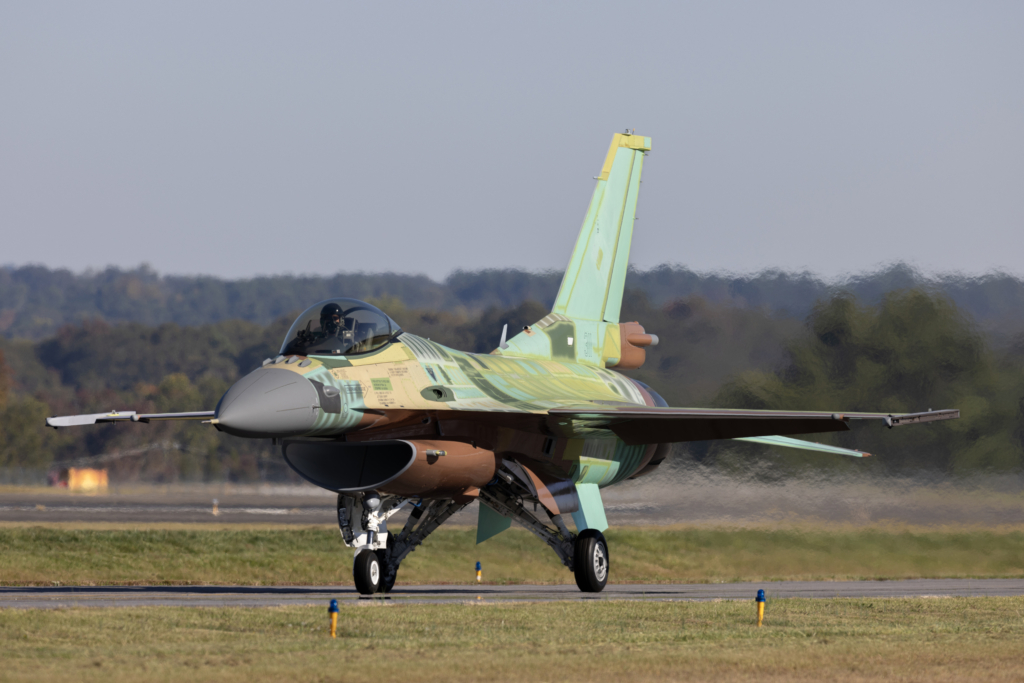
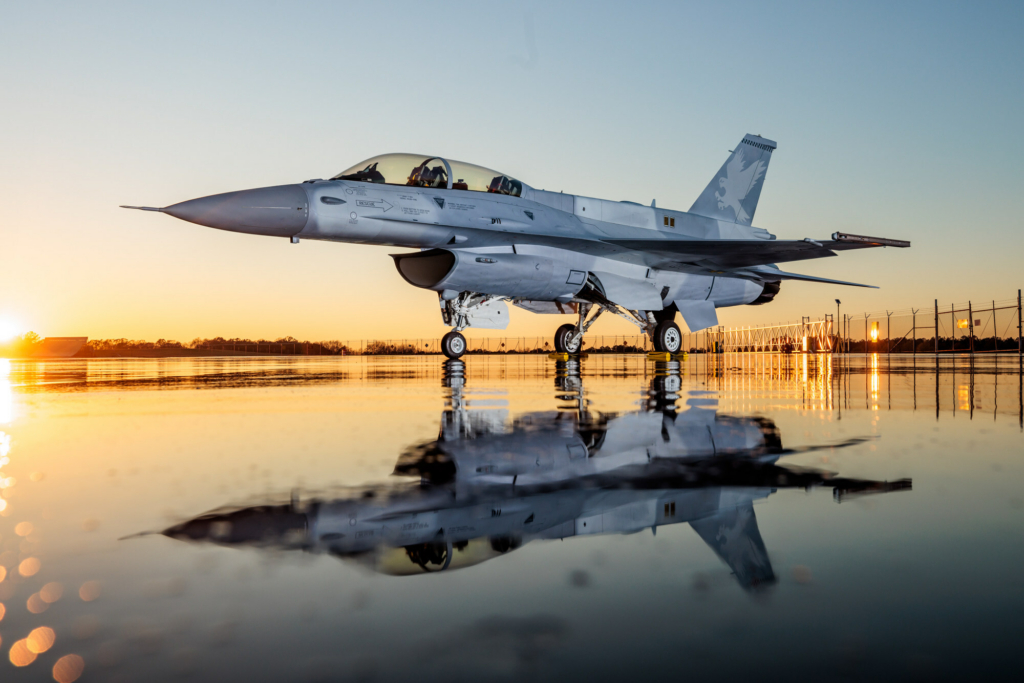
Featured Image: An F-16C Block 70 destined to join the ranks of the Bulgarian Air Force departs Lockheed Martin’s production facility in Greenville, South Carolina, on its ferry flight to Bulgaria on an undisclosed date. Peru intends to acquire up to 24 F-16C/D Block 70s from the US. Image: Lockheed Martin
Sign up for our newsletter and get our latest content in your inbox.


More from


October 17, 20264 min read