US Navy UJTS contest heats up as SNC’s Freedom Trainer challenges T-45 replacement rivals

6 min read
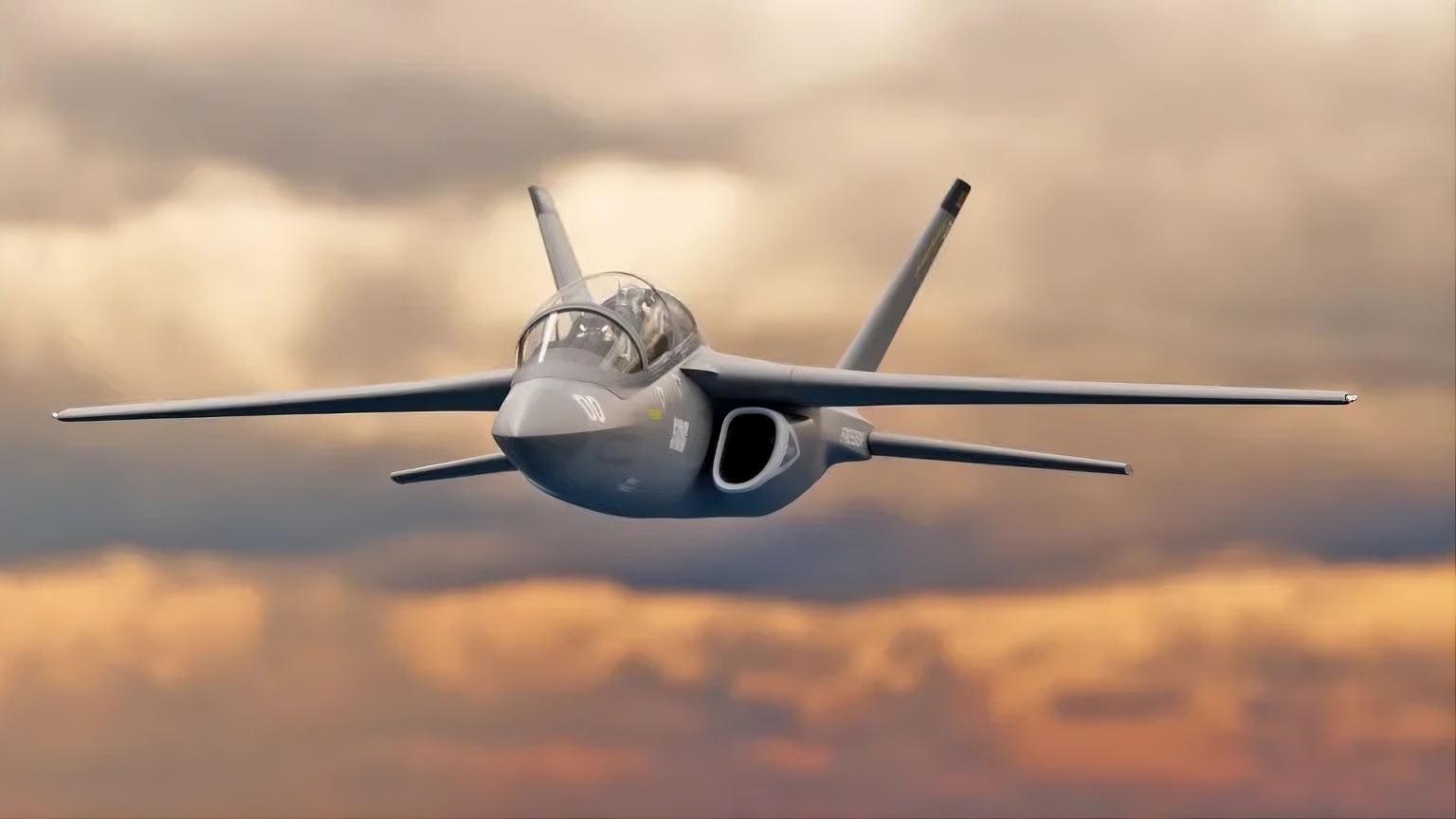
The US Navy’s long-running effort to replace its ageing T-45 Goshawk trainer has entered a decisive phase, with the release of the final Request for Proposals (RFP) drawing competing aircraft designs into sharper focus.
At the centre of that contest is a fundamental question: how should the next generation of naval aviators be trained and how much of that training still needs to happen in the air rather than in simulators?
Against that backdrop, Sierra Nevada Corporation’s (SNC) “Freedom Trainer” has emerged as one of the more closely watched entries, not least because it is the only clean-sheet design in a field otherwise dominated by adapted, land-based jets.
Details of the aircraft and its broader training system were outlined in a recent branded content piece carried by The War Zone (TWZ), offering a clearer picture of how SNC is positioning its proposal.
US Navy UJTS programme enters critical phase with 200+ aircraft T-45 replacement requirement
The Undergraduate Jet Training System (UJTS) programme is intended to replace the Navy’s fleet of T-45 aircraft, which have been in service since the early 1990s and are based on the British Hawk trainer.

According to the RFP issued through Naval Air Systems Command (NAVAIR), the programme covers not just aircraft, but a complete training ecosystem. This includes engineering and manufacturing development, low-rate initial production aircraft, ground-based training systems and contractor logistics support.
The competition is being run as a full and open process, with proposals due by late June 2026. The Navy intends to select the “best value” solution, although it retains the option to fund two competitors before making a final down-select.
At stake is a requirement expected to deliver more than 200 aircraft and define how US Navy and Marine Corps pilots are trained for decades.
Changing training philosophy reshapes requirements and opens the door to new designs
The UJTS competition is unfolding alongside a significant shift in how the Navy views pilot training.
Historically, student aviators conducted Field Carrier Landing Practice (FCLP) ashore, including demanding “touchdown” landings designed to replicate the stresses of carrier operations. This was followed by carrier qualifications at sea. However, the Navy has progressively removed or relaxed some of these requirements.
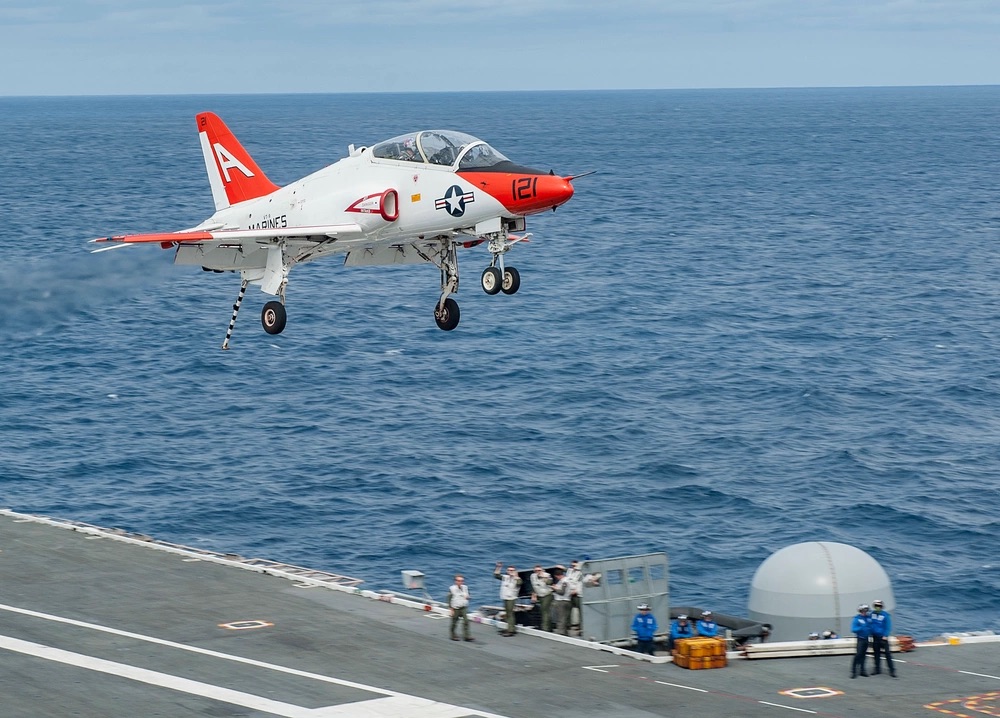
Carrier landings are no longer part of the core syllabus for the new trainer, and more recently, the requirement for FCLP-to-touchdown has also been scaled back in favour of wave-off profiles.
These changes reflect advances in simulation, automated landing systems and a broader effort to reduce costs and complexity in the training pipeline. But they have also opened the competition to aircraft that were never designed for carrier-style operations.
SNC Freedom Trainer pitched as purpose-built alternative to T-7 and M-346 naval variants
SNC’s Freedom Trainer is being positioned as a counterpoint to that trend.
Unlike competitors such as the Boeing T-7 derivative, Korea Aerospace Industries’ TF-50N or the Leonardo M-346N, the Freedom design is built from the outset for naval training requirements rather than adapted from an existing platform.
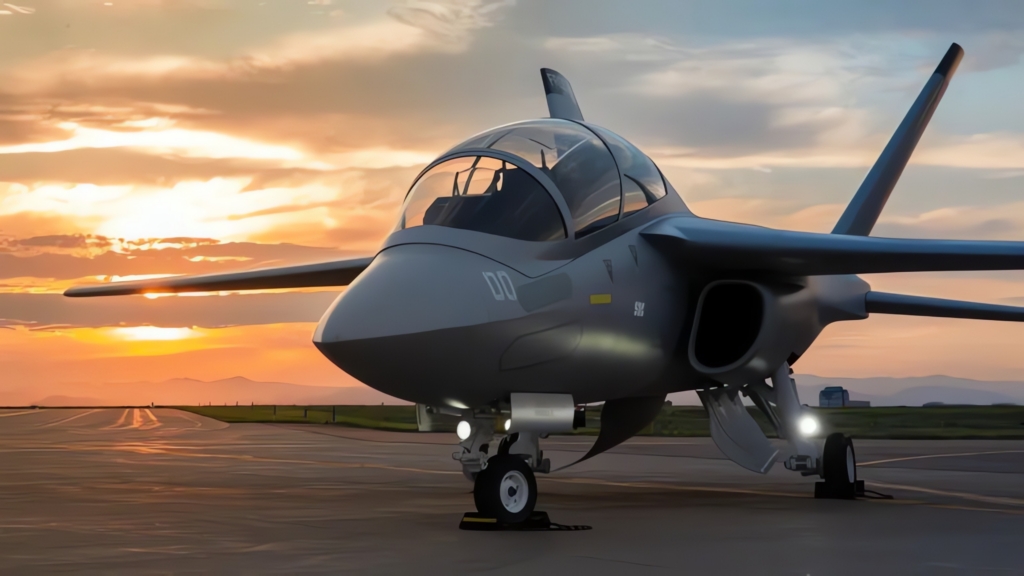
The company argues that this approach avoids compromises associated with modifying land-based aircraft for naval use, particularly when it comes to structural durability and handling characteristics.
At its core, the aircraft is designed around a 16,000-hour airframe capable of withstanding up to 35,000 carrier-style landings, including the demanding FCLP-to-touchdown manoeuvres.
This is a central part of SNC’s pitch: even if the Navy no longer requires touchdown landings in the syllabus, the ability to perform them remains important for training fidelity.
FCLP debate highlights US Navy trade-off between training realism and cost savings
The question of FCLP has become one of the defining issues in the UJTS competition.
Touchdown landings impose significant structural stress on aircraft, particularly on landing gear and airframe components. Removing this requirement allows for lighter, less complex and potentially cheaper designs.
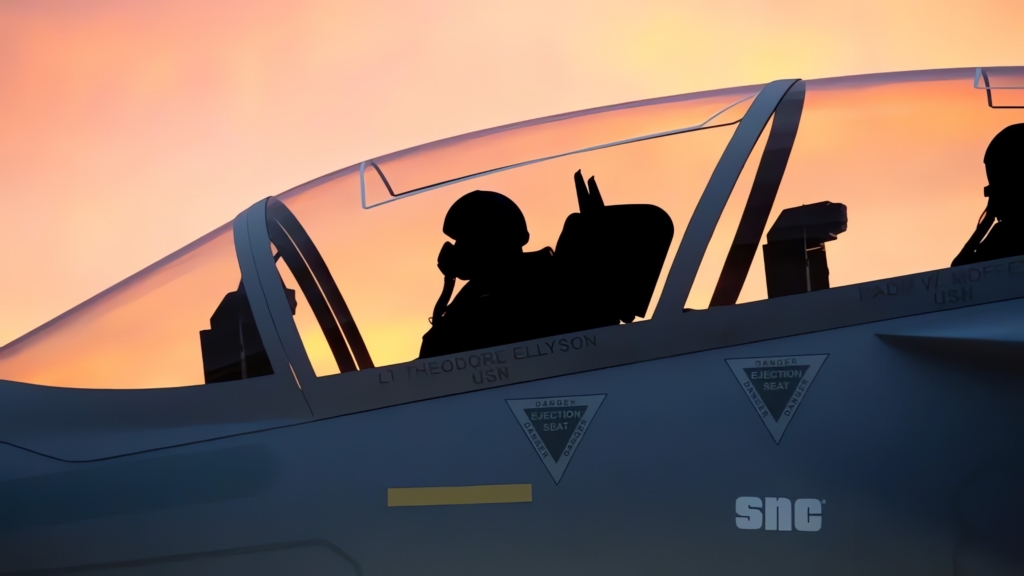
But it also raises concerns about whether pilots will receive sufficient exposure to the demands of carrier operations before moving to frontline aircraft. SNC has been explicit in its view that removing such training could shift the burden downstream.
As noted in the TWZ report, the company argues that deferring these skills to fleet replacement squadrons would mean using high-end operational aircraft for basic training tasks, an approach that could drive up costs and reduce availability. In effect, the debate is not just about aircraft design, but about where and how risk is managed in the training pipeline.
Freedom Trainer lifecycle cost model challenges lower upfront price of rival trainer aircraft
While much of the competition will hinge on acquisition cost, SNC is placing equal emphasis on lifecycle economics.
Company data indicates that around 60% of the total lifecycle cost for a training aircraft lies in operations and sustainment, compared with roughly 10% for development and 30 per cent for procurement. This framing underpins the argument for a purpose-built design: higher upfront investment could be offset by lower long-term operating costs.
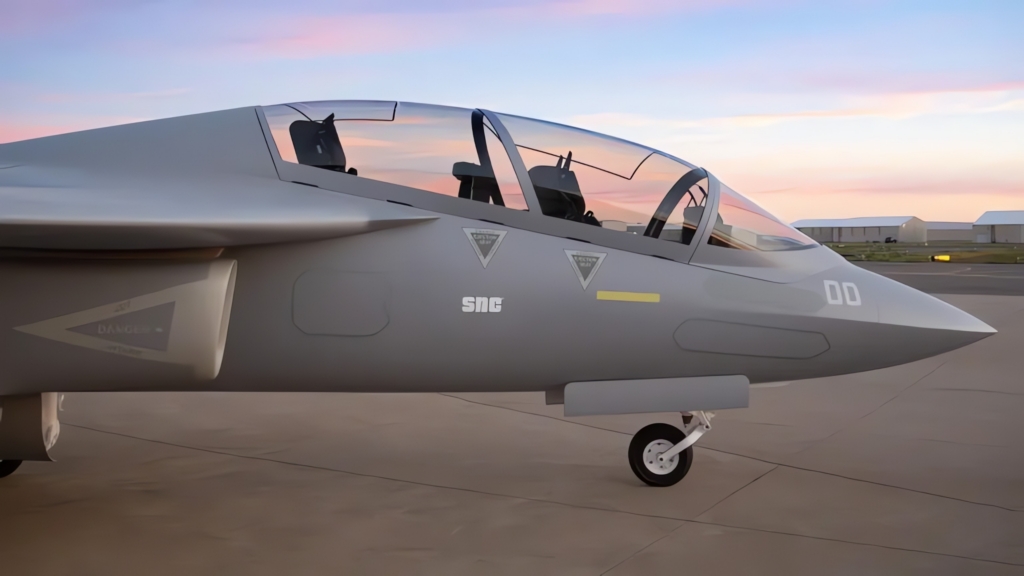
SNC claims the Freedom Trainer offers engine-related lifecycle costs around 40 per cent lower than the current T-45 fleet, along with longer sortie durations that increase training efficiency. Whether those claims hold up under evaluation will be a key factor in the Navy’s decision.
Another pillar of the Freedom proposal is its use of digital engineering and open systems architecture.
The aircraft and its associated training system are designed using model-based systems engineering, with a full digital technical data package intended to give the Navy long-term control over upgrades and modifications.
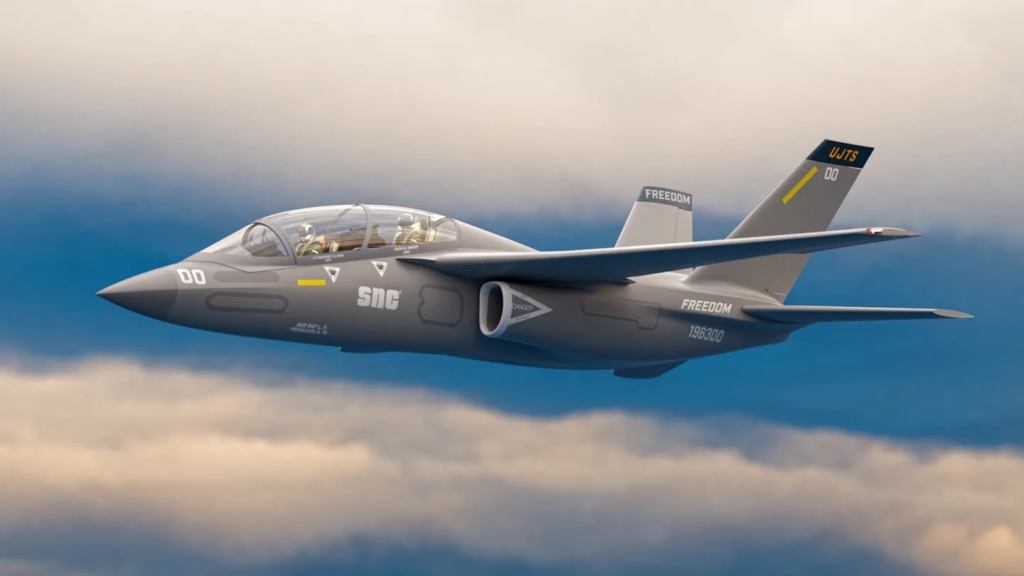
This approach aligns with broader US defence trends aimed at reducing dependence on proprietary systems and enabling faster integration of new technologies.
The Freedom concept also extends beyond the aircraft itself, encompassing a wider “family of training systems” that integrates simulators, live flying and logistics into a single, networked environment.
SNC teams with Northrop Grumman and General Atomics
SNC is not pursuing the programme alone, having assembled an industry team that includes Northrop Grumman, General Atomics Aeronautical Systems and CAE, bringing together expertise in manufacturing, systems integration and simulation.
The breadth of that partnership reflects the scale of the UJTS requirement, which is as much about delivering a fully integrated training ecosystem as it is about supplying aircraft, and competitors are expected to field similarly comprehensive industrial teams.
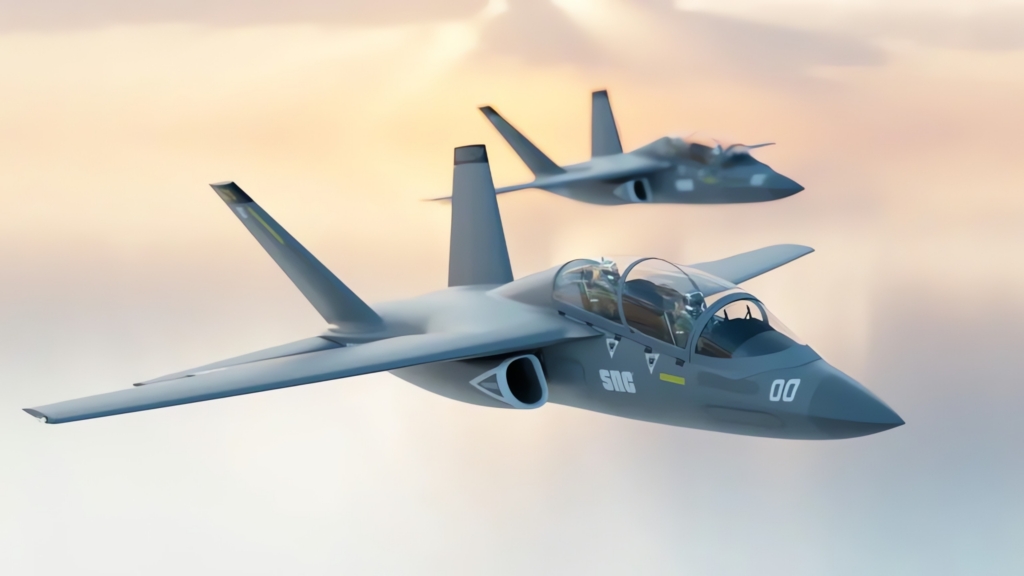
With the RFP now issued, the Undergraduate Jet Training System competition is entering its most critical phase, as the US Navy balances a complex mix of priorities including cost reduction, training quality, increased reliance on advanced simulation and the need to prepare aviators for increasingly demanding operational environments.
Within that context, SNC’s Freedom Trainer represents one end of the spectrum, emphasising fidelity, durability and long-term cost efficiency through a purpose-built design, while rival offerings tend to prioritise lower upfront costs and reduced development risk.
The outcome will shape naval aviation training for decades, with implications extending far beyond the aircraft itself. The UJTS decision will determine how future US Navy pilots are trained and how costs are distributed across the training pipeline. It will also influence the balance between live flying and simulation, as well as the global trainer aircraft market and potential export opportunities.
Featured image: SNC