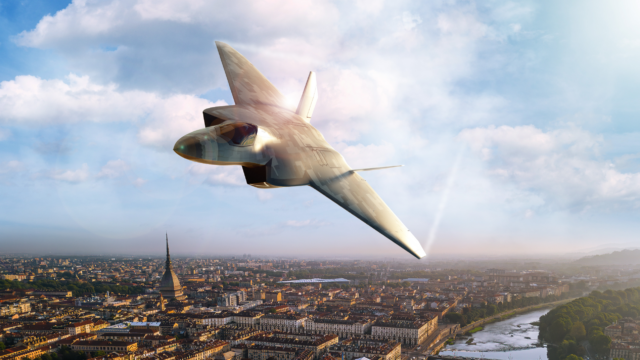
The Harrier bows out: US Marine Corps ends 55 years of jump jet operations

7 min read
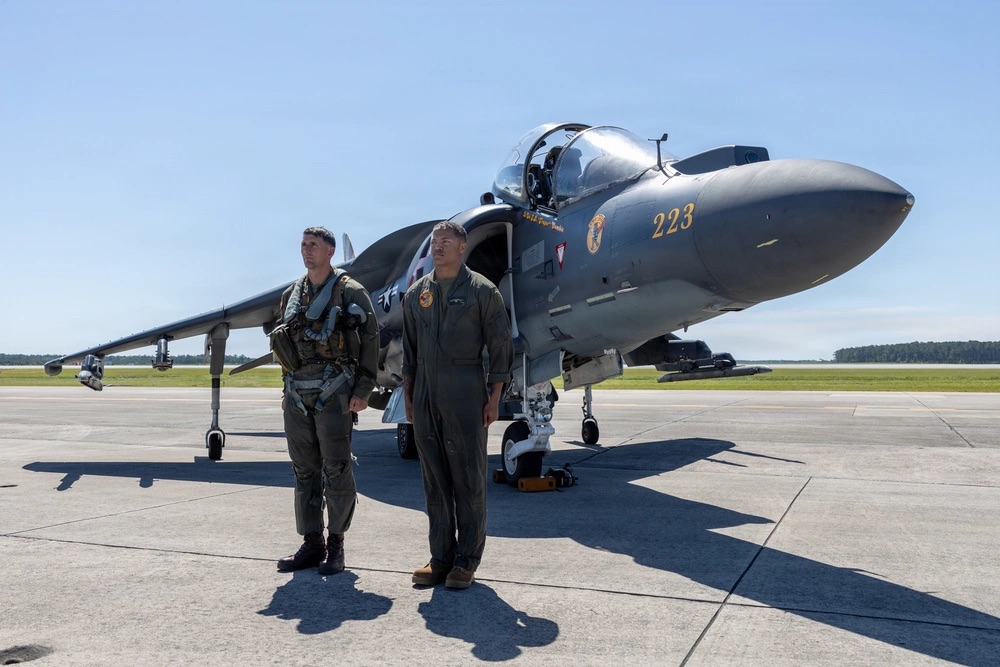
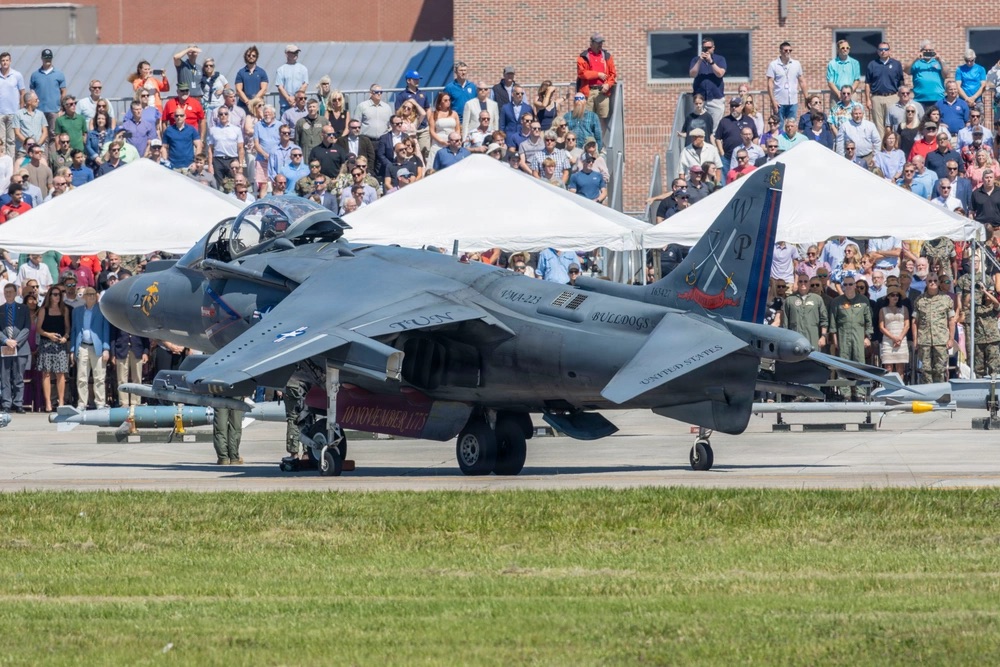
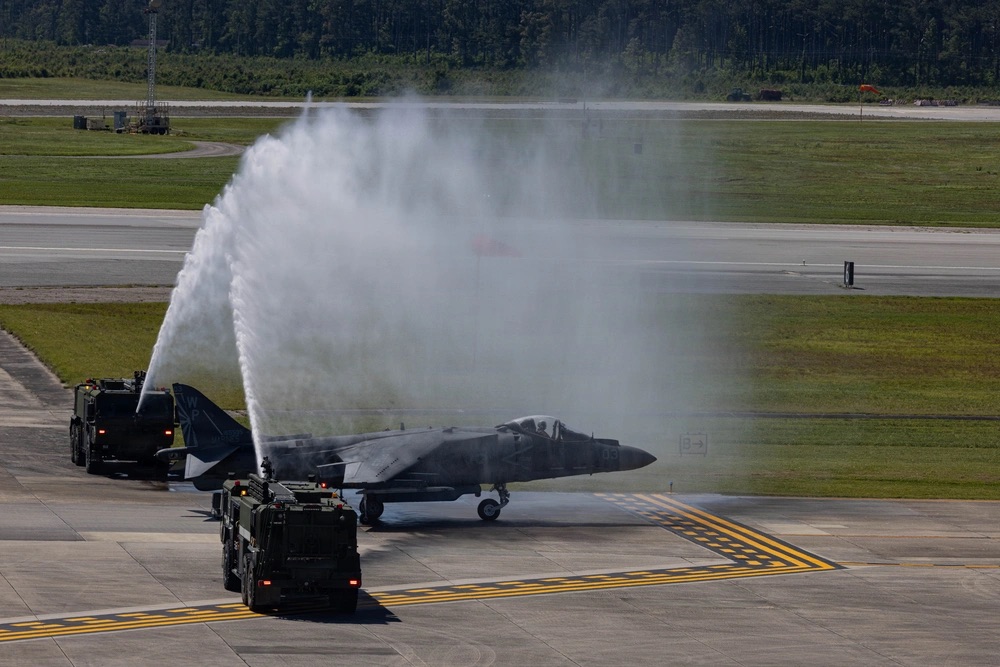
Marine Attack Squadron (VMA) 223 sundowned their aircraft on 3 June, marking the end of AV-8B Harrier II operational use by the US Marine Corps and bringing to a close more than five decades of Harrier operations in American military service.
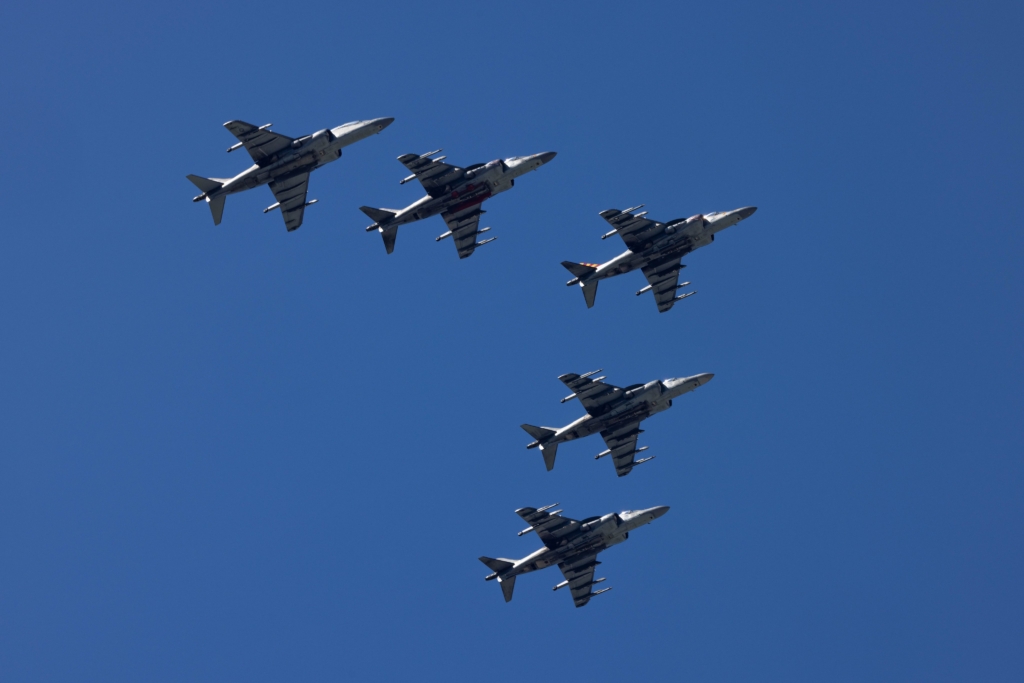
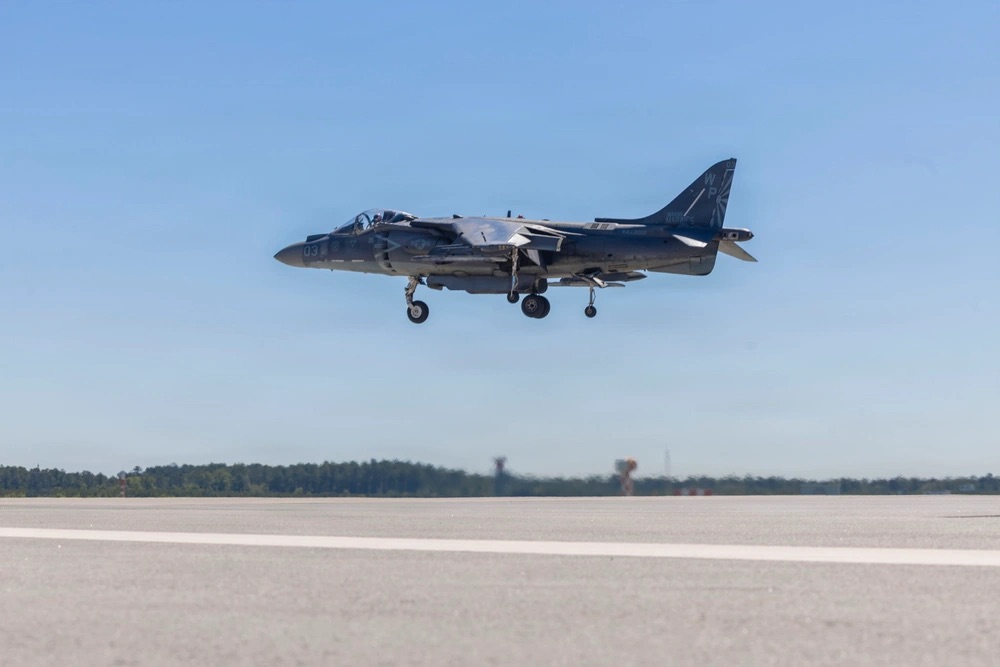
Five AV-8B Harriers flew in formation over Marine Corps Air Station Cherry Point in North Carolina before returning for one final landing in front of thousands of current and former Marines, family members and aviation enthusiasts gathered to witness the retirement of one of military aviation’s most distinctive aircraft.
VMA-223, known as the Bulldogs, was the final operational Harrier squadron in the Marine Corps.
The ceremony marked more than the retirement of an aircraft type. It signalled the end of a unique way of operating combat aircraft that had shaped Marine Corps aviation since the early 1970s.
“The Bulldogs are extremely proud to conduct the final Harrier operations for the US Marine Corps,” said Lt Col John B. Cumbie, commanding officer of VMA-223. “As a platform that has continuously forward deployed across the globe, the Harrier will be remembered for its distinguished combat legacy, legendary Vertical/Short Take Off and Landing capability, and the Marines and Sailors that made the community special.”
Over the coming months, the squadron’s remaining aircraft will be distributed to museums and storage facilities before VMA-223 formally deactivates in September.
The unit is scheduled to return in fiscal year 2028 as Marine Fighter Attack Squadron (VMFA) 223, equipped with the Lockheed Martin F-35B Lightning II.
From a British experiment to a Marine Corps mainstay
The Harrier’s story began in Britain during the Cold War, when Hawker Siddeley developed an aircraft capable of taking off and landing vertically or from extremely short runways.
Powered by the revolutionary Rolls-Royce Pegasus engine, the aircraft’s vectored-thrust design allowed pilots to redirect engine exhaust through four rotating nozzles.
The result was an aircraft capable of operating from locations inaccessible to conventional fast jets.
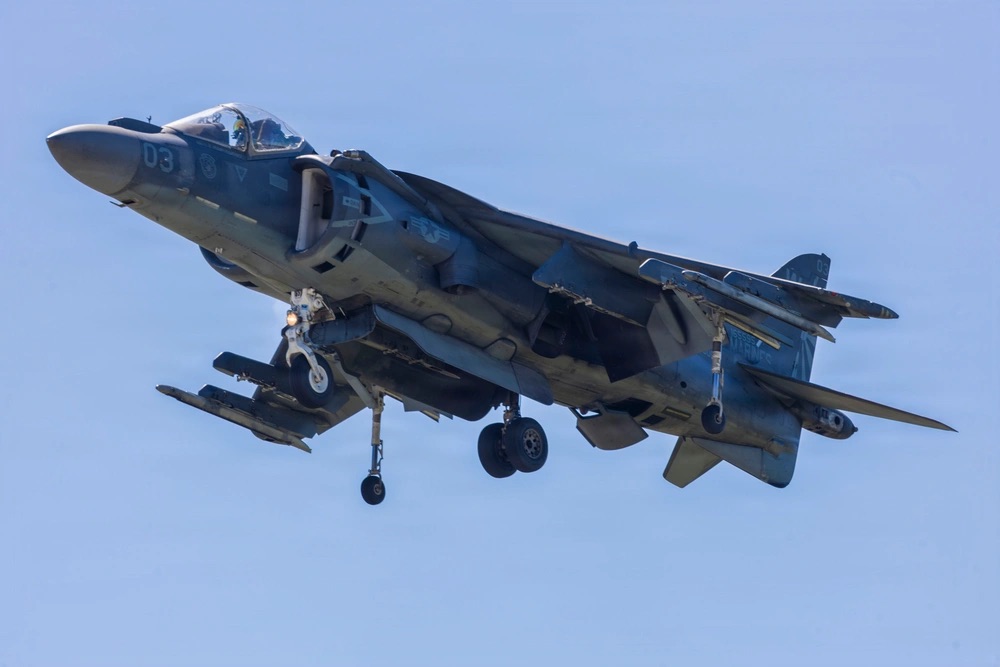
The US Marine Corps quickly recognised the potential. In 1971, it accepted its first AV-8A Harrier, becoming the first American service to operate a vertical or short take-off and landing combat aircraft.
The Marines saw the aircraft as a natural fit for expeditionary operations. Unlike conventional fighters that required large air bases, Harriers could operate from austere forward locations, damaged runways and amphibious assault ships close to the battlefield.
The concept aligned perfectly with Marine Corps doctrine, which emphasised supporting ground forces from dispersed locations.
During the 1980s, the original aircraft evolved into the AV-8B Harrier II through a joint programme involving McDonnell Douglas and British Aerospace.
The redesign introduced a larger composite wing, improved avionics, greater payload capacity and significantly enhanced performance. VMA-331 became the first operational Marine Corps AV-8B squadron in 1985, while VMA-223 transitioned to the aircraft two years later.
STOVL made the Harrier vital to Marine Corps operations
What made the Harrier unique was not simply its vertical landing capability. Its real value lay in the way it could support troops at the front.
Retired Marine Lt Col Mike “Gravy” Rountree, who flew Harriers between 2003 and 2011, recalled how little infrastructure was required to keep the aircraft operating during combat deployments in Iraq.
“They were a gunny and a tank of gas and a couple of ordnance Marines,” Rountree was quoted by Task and Purpose. “And they were able to land the jet, turn the jet, launch the jet with minimum ground support, be back on station in a heartbeat, and it did not depend on any tankers.”
According to Rountree, the aircraft’s significance was less about technology and more about how it enabled Marine operations.
“The Harrier didn’t need an airfield,” he said. “All it needed was a Marine flying it.”
That ability allowed Marine commanders to deploy air power much closer to the battlefield than would otherwise have been possible.
The aircraft could operate from expeditionary airfields, remote tactical landing sites, amphibious assault ships and other improvised locations while conducting close air support, armed reconnaissance, escort and strike missions.
Harrier combat record stretched from Desert Storm to the Red Sea
The Harrier’s operational history spanned nearly every major conflict involving the Marine Corps over the past five decades. It played a particularly prominent role during Operation Desert Storm in 1991.
According to Naval Air Systems Command, AV-8Bs were the first Marine tactical strike aircraft to arrive in theatre and operated from forward positions as close as 35 nautical miles from the Kuwaiti border.
During the conflict, Harriers flew 3,380 sorties and accumulated more than 4,000 flight hours while maintaining mission-capable rates exceeding 90%.
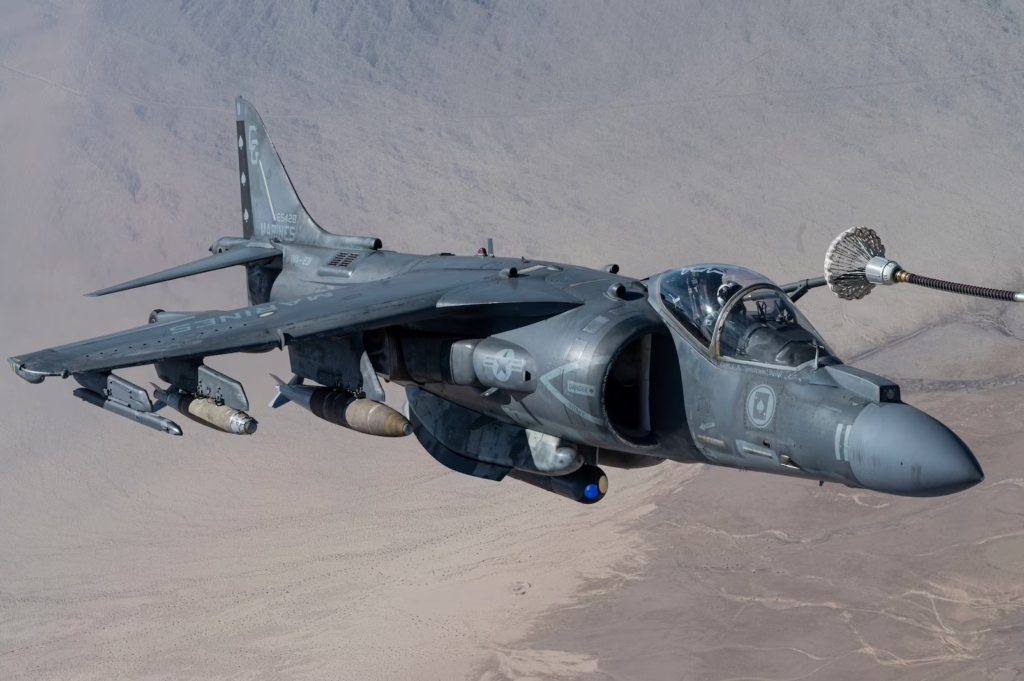
The aircraft later saw extensive service in Kosovo, Afghanistan, Iraq, Libya and the campaign against Islamic State.
Marine Harriers also participated in Operation Inherent Resolve and, more recently, supported operations linked to the Red Sea security crisis.
Throughout those deployments, the aircraft remained valued for its ability to operate from amphibious ships and temporary forward bases.
Retired Marine Maj Michael Decker noted that Harriers were often among the first tactical aircraft available to support ground operations because of their forward basing flexibility. During Desert Storm, some aircraft operated closer to the front line than any other tactical strike aircraft in theatre.
For Marines deployed ashore, that responsiveness often proved more important than carrying the largest payload or possessing the highest speed.
Sea Harrier earned its combat reputation in the Falklands War
Long before it became synonymous with Marine expeditionary warfare, the Harrier had already secured its place in military aviation history during the 1982 Falklands War.
Royal Navy Sea Harriers played a decisive role in Britain’s campaign to retake the islands after Argentina’s invasion. Operating from the aircraft carriers HMS Hermes and HMS Invincible, the Sea Harrier became one of the conflict’s most successful combat aircraft.
Argentine pilots reportedly nicknamed the aircraft “La Muerte Negra” – the Black Death – reflecting the threat it posed during the air campaign.
The Falklands conflict demonstrated that vertical take-off and landing aircraft could operate effectively in high-intensity combat, helping cement the Harrier’s reputation worldwide.
Britain’s Harrier force disappeared long before America’s
The retirement of the Marine Corps Harrier also closes the final chapter of a transatlantic story.
Britain, the aircraft’s birthplace, retired its Harrier force in 2010 as part of the Strategic Defence and Security Review.
The decision ended 41 years of British Harrier operations and came eight years before the planned withdrawal date. The final operational formation flight took place from RAF Cottesmore on 15 December 2010.
Many of the retired British aircraft subsequently found their way to the United States.
In 2011 the UK sold dozens of Harrier GR9and T12 aircraft to the US Marine Corps for use as spare parts donors, helping sustain the American AV-8B fleet for another decade and a half.
That decision would ultimately help keep the Marine Corps Harrier force operational long enough to bridge the gap until sufficient numbers of F-35Bs entered service.
F-35B transition brings the US Marine Corps Harrier era to an end
The Harrier’s retirement has been years in the making.
The Marine Corps has gradually replaced Harrier squadrons with the F-35B Lightning II, the short take-off and vertical landing variant of the Joint Strike Fighter. Like the Harrier, the F-35B can operate from amphibious assault ships and austere locations, but it adds stealth, advanced sensors, data fusion and significantly greater survivability.
The transition also ensures that the Marine Corps retains the specialised expertise associated with operating STOVL aircraft.
Many former Harrier pilots and maintainers have already moved into F-35B units, carrying decades of experience into the next generation of aviation operations.
Yet even among pilots now flying the Lightning II, the affection for the Harrier remains strong.
That sentiment was evident last year when Air Test and Evaluation Squadron VX-31conducted its own final Harrier flight at China Lake. Reflecting on the aircraft, VX-31 commanding officer Lt Col Timothy Burchett described it as “the most fun airplane I’ve ever flown”.
“There are no computers,” Burchett said. “It’’s cables, pulleys and skill that keep that thing in the air.”
As the five Harriers settled onto the runway at Cherry Point for the final time, the aircraft’s operational career came to an end exactly as it had spent most of its life, supporting Marines from places other aircraft could not reach.
The Harrier was never the fastest fighter or the most technologically advanced aircraft in American service. What it offered was flexibility, responsiveness and a capability no other combat aircraft could match for much of its career.
After 55 years of Marine Corps operations, the jump jet’s distinctive silhouette and the roar of its Pegasus engine are now passing into history. The mission, however, continues with the F-35B, the latest aircraft to inherit a role the Harrier helped define.
Featured image: US Marines
Sign up for our newsletter and get our latest content in your inbox.


More from


October 17, 20265 min read


October 17, 20264 min read