


Hi Fly Malta achieves another world-first with historic Airbus A330 landing in Antarctica

5 min read
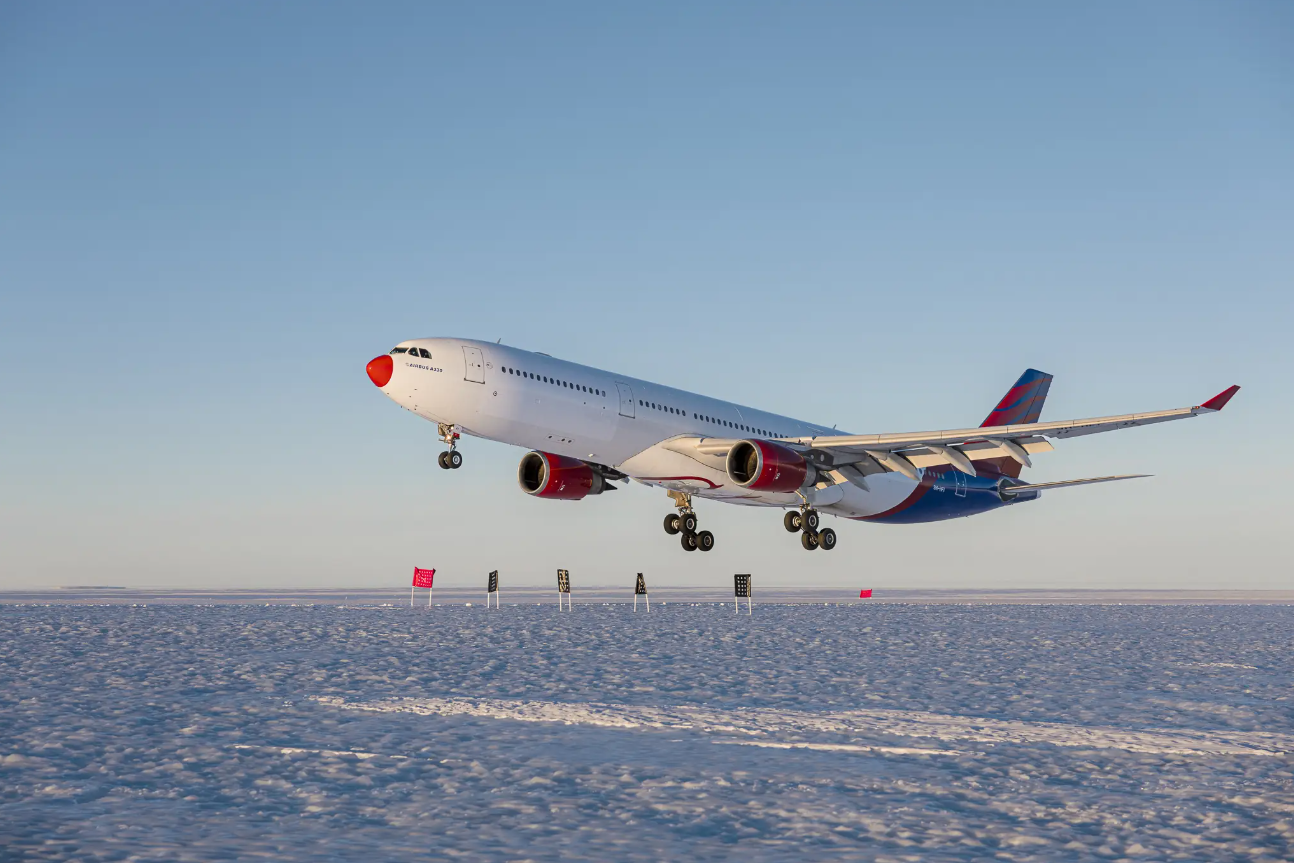
European charter airline Hi Fly Malta has achieved another world-first by successfully landing an Airbus A330 in Antarctica for the first time. The aircraft touched down on the icy runway at Wolf’s Fang airfield (WFR) on 1 December after a five-and-a-half-hour flight from Cape Town in South Africa.
This milestone flight built on the airline’s historic 2021 achievement, when Hi Fly became the first airline to land an Airbus A340 on the frozen continent.
A milestone flight for Hi Fly’s Airbus A330
This latest flight formed part of the 2025-26 series of flights being operated by the Maltese subsidiary of Portuguese charter airline Hi Fly in support of Antarctica tourism company White Desert Antarctica.
The flight came just one month after the airline celebrated five years since its first flight to the ‘White Continent’.
The aircraft involved in the historic flight, an A330-300 registered as 9H-HFI, departed from Cape Town International Airport (CPT) as flight HFM801 at 20:25 local time on 1 December.
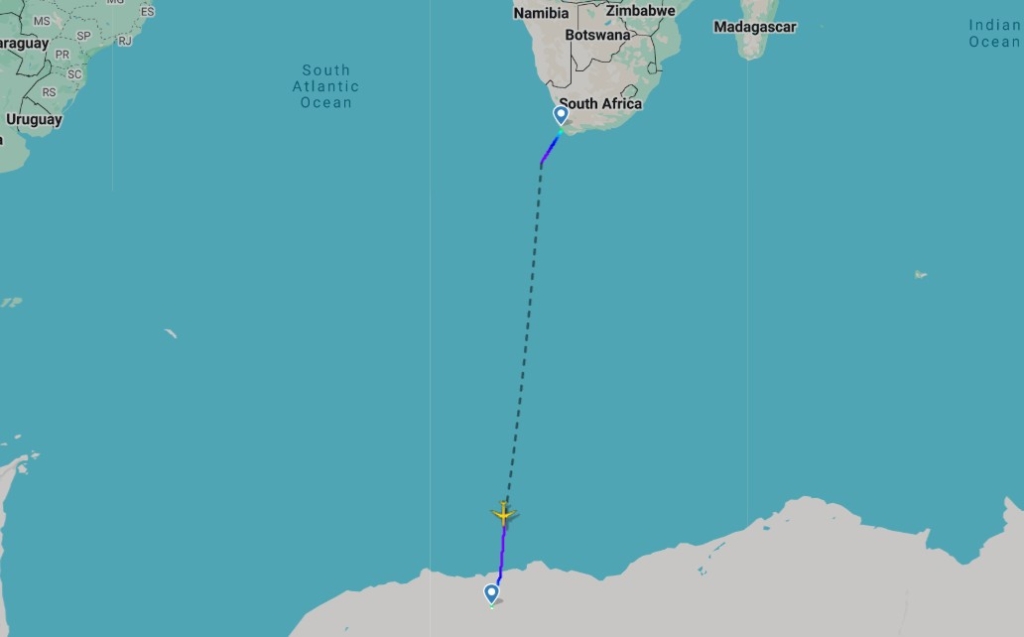
After a flight lasting five hours and 34 minutes, and covering around 2,500 nautical miles (4,630km), the aircraft touched down on the ice runway at Wolf’s Fang Runway in Antarctica’s Queen Maud Land at 23:59.
Despite the late hour, the aircraft was bathed in sunshine as it landed, given the midnight sun that Antarctica experiences during the Southern Hemisphere’s summer months.
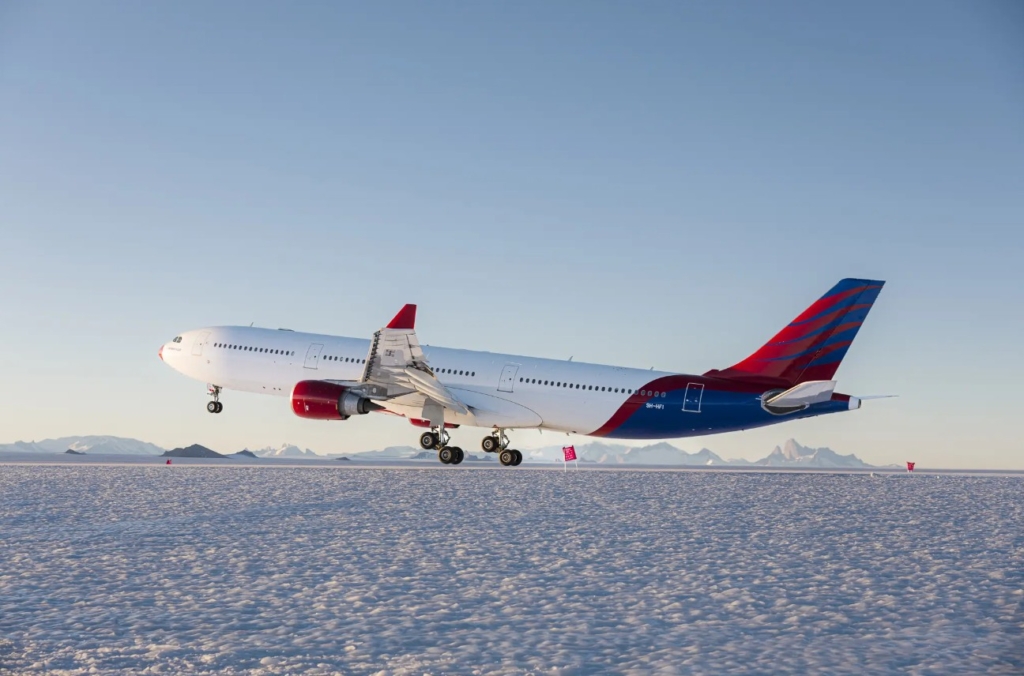
After almost four hours on the ground at Wolf’s Fang, the aircraft departed as HFM802 back to Cape Town. Having departed Antarctica at 03:58, the aircraft landed safely back in Cape Town at 11:03 on 2 December, some five hours and four minutes after taking off.
According to data from Flightradar 24, the aircraft remains on the ground in Cape Town at the time of writing.
Operated by Hi Fly’s well-experienced crew
The flights to and from Antarctica were under the command of Captain Carlos Mirpuri, the Vice-Chairman of Hi Fly, who is well-experienced in the company’s previous operations to Antarctica over the past five years, having operated the first flight in 2021.
He was joined on the flight deck of the A330 by Captain Antonios Efthymiou, Hi Fly’s CEO, who was also on board to mark the milestone event.
“Landing in Antarctica is never routine; every flight demands careful planning, exacting precision, and respect for the environment,” said Captain Mirpuri. “Introducing the A330 to this remote runway highlights our commitment to innovation, operational excellence, and the ongoing evolution of polar aviation.”
Operating the Airbus A330 to Antarctica
The A330-300 aircraft used by Hi Fly Malta for the milestone trip (9H-HFI) is an 18.9-year-old machine which began its flying career with China Airlines in 2007. The aircraft is configured to carry 313 passengers in a two-class layout featuring 36 business class seats and 277 in economy. It is powered by a pair of General Electric CF6-80E1A4 engines.
Up until this point, Hi Fly has always used a four-engined Airbus A340-300 for the trips to Antarctica. As recently as late November, the operator used A340-300 9H-SUN on a round-trip flight to Wolf’s Fang from Cape Town, also on behalf of White Desert.
However, as the company’s last remaining A340 widebody, this aircraft is due to be retired from service shortly, leaving Hi Fly with just A330s as the backbone of its long-haul fleet.

As explained by Hi Fly, “The A330 shares the same fuselage as Hi Fly’s A340 but is powered by two engines instead of four, delivering comparable performance with greater cost efficiency and an improved environmental footprint.
“Twin-engine operations at Wolf’s Fang Runway are now possible thanks to additional ground support equipment that was not in place when Hi Fly began Antarctic flights. Highly reliable, comfortable, and with an excellent safety record, the aircraft performs exceptionally well in extreme polar conditions.”
“The introduction of the A330, renowned for its efficiency, versatility, and environmental credentials, represents a new era in sustainable, flexible operations in one of the world’s most challenging environments.”
The Airbus A330’s first landing in Antarctica
The Hi Fly statement added that the ability to introduce the A330 to Antarctica flights had been facilitated by “additional ground support equipment that was not in place when Hi Fly began Antarctic flights.”
Aerospace Global News reached out to Hi Fly for further clarification on this point, to which the airline advised that, “in particular, the presence of a Ground Power Unit and an Air Starter Unit made it possible to support an aircraft of the A330’s size and specifications in such a remote and challenging environment.”
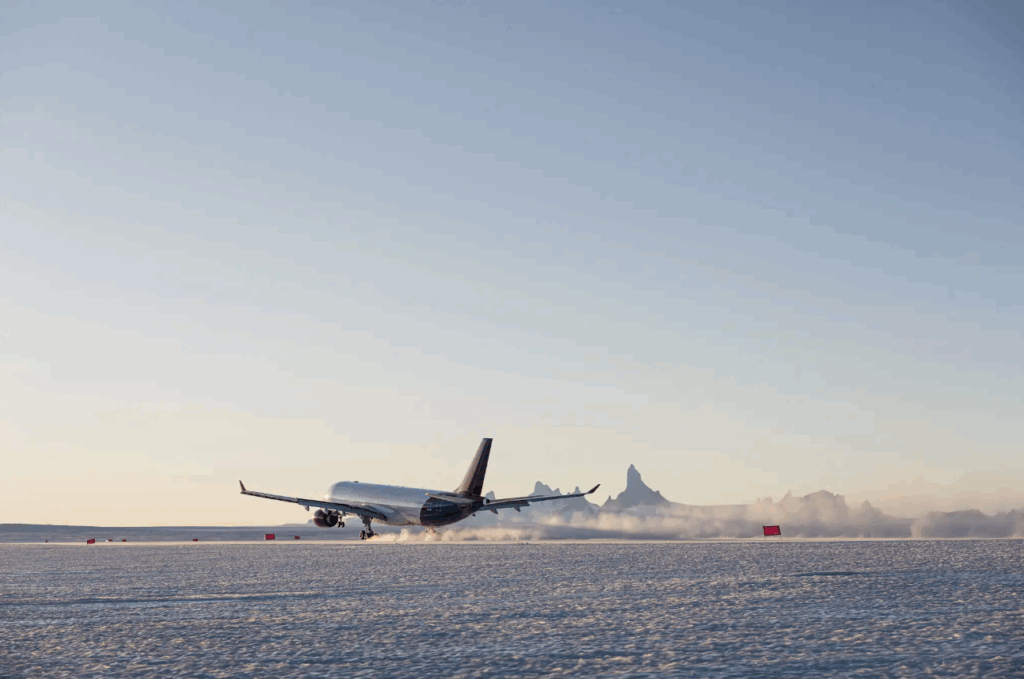
As mentioned, HI Fly is no stranger to Antarctica, having operated its first flight there in November 2021. Since then, and every year, the airline has returned to the White Continent, delivering not only passengers for tourism purposes but also vital supplies and scientists to the southern ice shelf to carry out research work.
Heavy jet operations to Wolf’s Fang Runway
Wolf’s Fang Runway, despite being formed of thick sheet ice, can easily bear the weight of a widebody airliner. As explained by Captain Mirpuri, following the company’s first A340 journey to Wolf’s Fang in 2021,
“Before each visit to WFR, a business jet flight is performed two days before our flight [to verify landing conditions]. A blue glacial ice runway is hard. It can stand a heavy aircraft on it. Its depth is 1.4km of hard air-free ice.”
“The next important thing is that the cooler it is, the better. Grooving is carved along the runway by special equipment, and after cleaning and carving, we get an adequate braking coefficient. As the runway is 3000 meters long, landing and stopping an aircraft that heavy at that airfield is not a problem.”
Featured image: Hi Fly
Sign up for our newsletter and get our latest content in your inbox.


More from

September 29, 20263 min read


September 25, 20264 min read


