Six Russian Su-34s reportedly destroyed or damaged in Ukrainian strike

4 min read
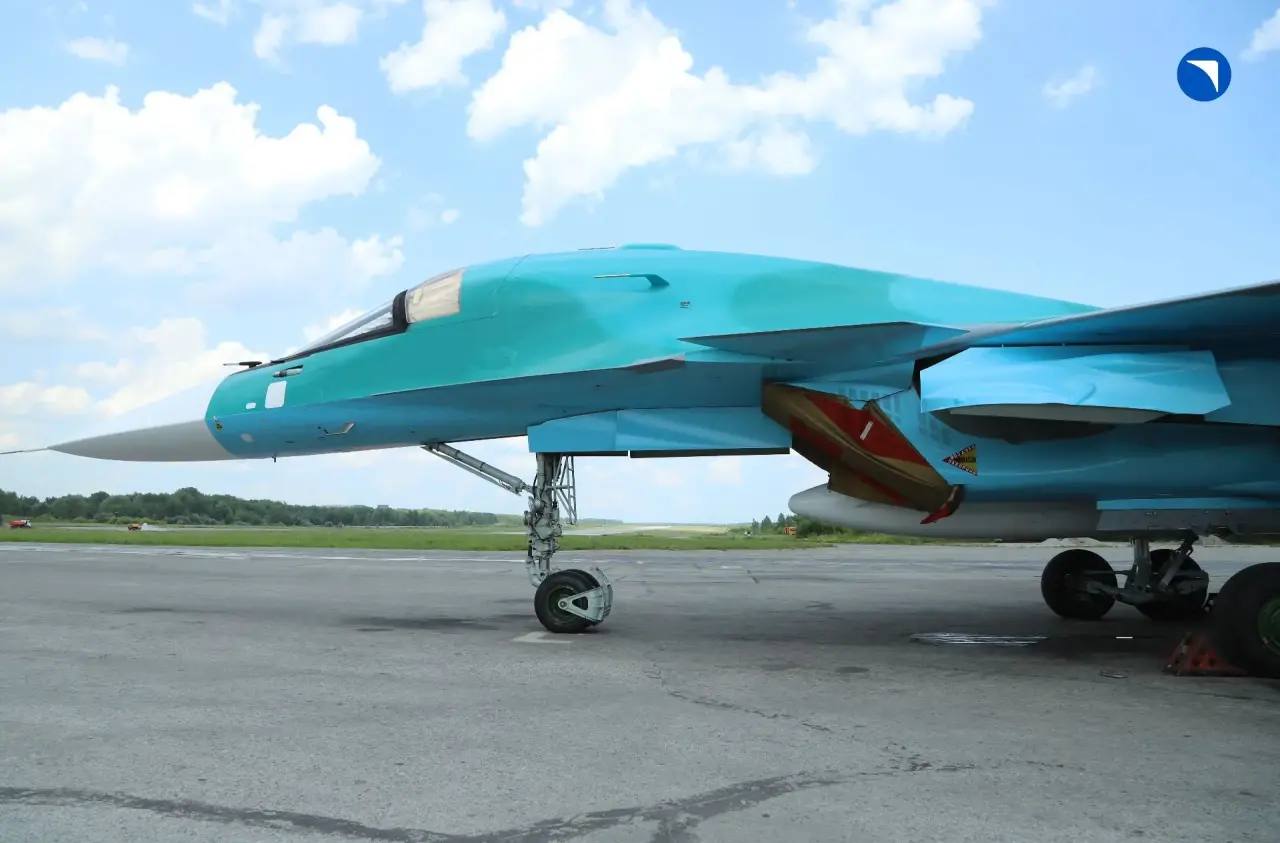
An extremely successful Ukrainian attack on Borisoglebsk air base destroyed or damaged up to six Su-34s, bringing Russia’s known losses for the type to as many as seven in the first half of October.
The Su-34 “Fullback” is the lower-cost counterpart of the Su-30 and is used as a fighter-bomber. Its role is particularly significant as a delivery truck hauling Russia’s damaging glide bomb attacks against forward Ukrainian positions.
Ukraine claims to have destroyed six Su-34 fighter-bombers
Yesterday, Ukraine claimed to have damaged or destroyed six of Russia’s Sukhoi Su-34 fighter-bombers. Released satellite imagery appears to corroborate the claim, although warrants discussion.
This has the potential to be one of the most damaging Ukrainian strikes on Russian aviation since Operation Spider Web in 2025, which destroyed a significant percentage of Russia’s operational bomber fleet.
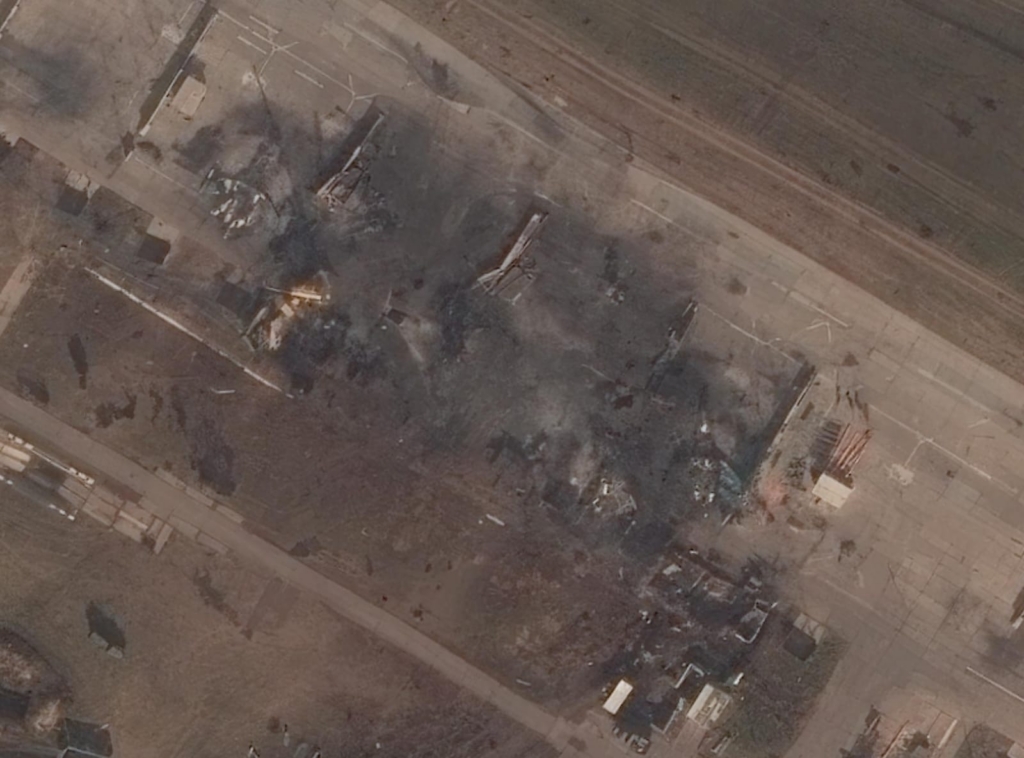
Ukrainian President Volodymyr Zelenskyy posted a satellite image of the impact site, stating, “Last night, Ukraine’s Defense Forces struck an airfield in the Voronezh region. Four Su-34 aircraft were destroyed, and two more Su-34s were hit.”
He specified that Ukraine accomplished the strike with a Long Neptune missile.
Interpreting the satellite image
Following the strike, the popular Russian Air Force-linked account Fighterbomber appeared to tacitly accept the strike took place and said Russia needs to move its aviation further to the rear, build shelters and camouflage, and clean up the wreckage before Ukraine could take a satellite image and publish it to the world.
From the published image, two destroyed wrecks are clearly visible on the edge of the focus area of the impact. It appears there were another one or two Su-34s in the central impact zone, but these can’t be made out from the damaged area.
Two Su-34 wrecks are clearly visible (red arrows), while the remains of two other, destroyed in the middle, have already been partially cleared by a crane (yellow). Apparently two sets of mangled wings (green) form the destroyed Su-34s have been moved next to protective barriers. https://t.co/nxCIs2Xp4u
— The Military Watch (@MarcinRogowsk14) October 15, 2026
It is plausible these aircraft were already armed with bombs for an attack, and the explosion essentially obliterated the aircraft. Adding to that, a crane appears to be visible, suggesting that Russia was already clearing away the wreckage when the satellite took the image.
On the outer edges are what appear to be scorch marks, suggesting that another two aircraft could have been damaged, but then quickly towed away. It is impossible to confirm this.
The successful strike builds on another strike on the 4th October, when Ukraine destroyed a Russian Su-34 and Su-35S at Khanskaya air base. Reportedly, that strike was accomplished with a Ukrainian analogue to the Shahed one-way attack drone.
The strain on core Russian combat aircraft fleets
So far in 2026, the OSINT account, The Military Watch, has counted one to two Su-30SMs (a third likely damaged), around seven Su-34s (an eighth likely damaged), four Su-35Ss, and one Su-57 destroyed. Counting tends to be conservative, and precise identification is often uncertain.
Noted OSINT account Guy Plosky posted about the strike that Russia’s “UAC typically delivers new production Su-34 series strike fighters to the VKS [Russian Air Force] in batches of 2-4 aircraft.
He explained, “In other words, four destroyed and two damaged(?) Su-34s are equivalent to 1-2 production batches. Last year, UAC delivered seven batches of Su-34s to the VKS. This year it has so far handed over two batches (and will likely deliver two more).”
| Core Russian modern Flanker series fleet | Su-34 “Fallback” | Su-30SM Flanker-C/G/H | Su-35 “Super Flanker” |
| Estimated 2026 starting inventory (per Rusi) | 125 | 140-145 | 135-140 |
| Estimated 2026 inventory (per Fronts.co) | 140+ | 110 | 135+ |
| Estimated five-year production 2020-2025 (per Rusi) | 48-50 | 5-10 | 55-60 |
| Independently confirmed losses (inc. damaged) during war (per Oryx) | 44 (+4-6 in latest strike) | 22 | 12 |
These aircraft are in production and can be replaced. But losses and relatively low replacement rates mean that Russia is unable to replace and modernise its widely cited fleet of well over 1,000 combat aircraft.
Combat aircraft like the Su-25, Su-24, Su-27, MiG-29, Tu-22M, and Tu-95MS are ageing out and attriting, with combat wear and tear whittling down their numbers. Some are approaching obsolescence.
Russia’s air force is in the process of largely contracting to a core combat fleet made up of Su-30s, Su-35s, Su-34s, MiG-31s, a few Su-57s, as well as a few prestige Tu-160 bombers in low-rate production. These types are likely useful in a high-end conflict.
Over the course of the war, Russian production has largely been able to keep up with combat losses of its core fleet, while the rest of the fleet continues to age and attrit.