Boeing adds engineers at Lossiemouth as RAF E-7 Wedgetail enters final testing

3 min read
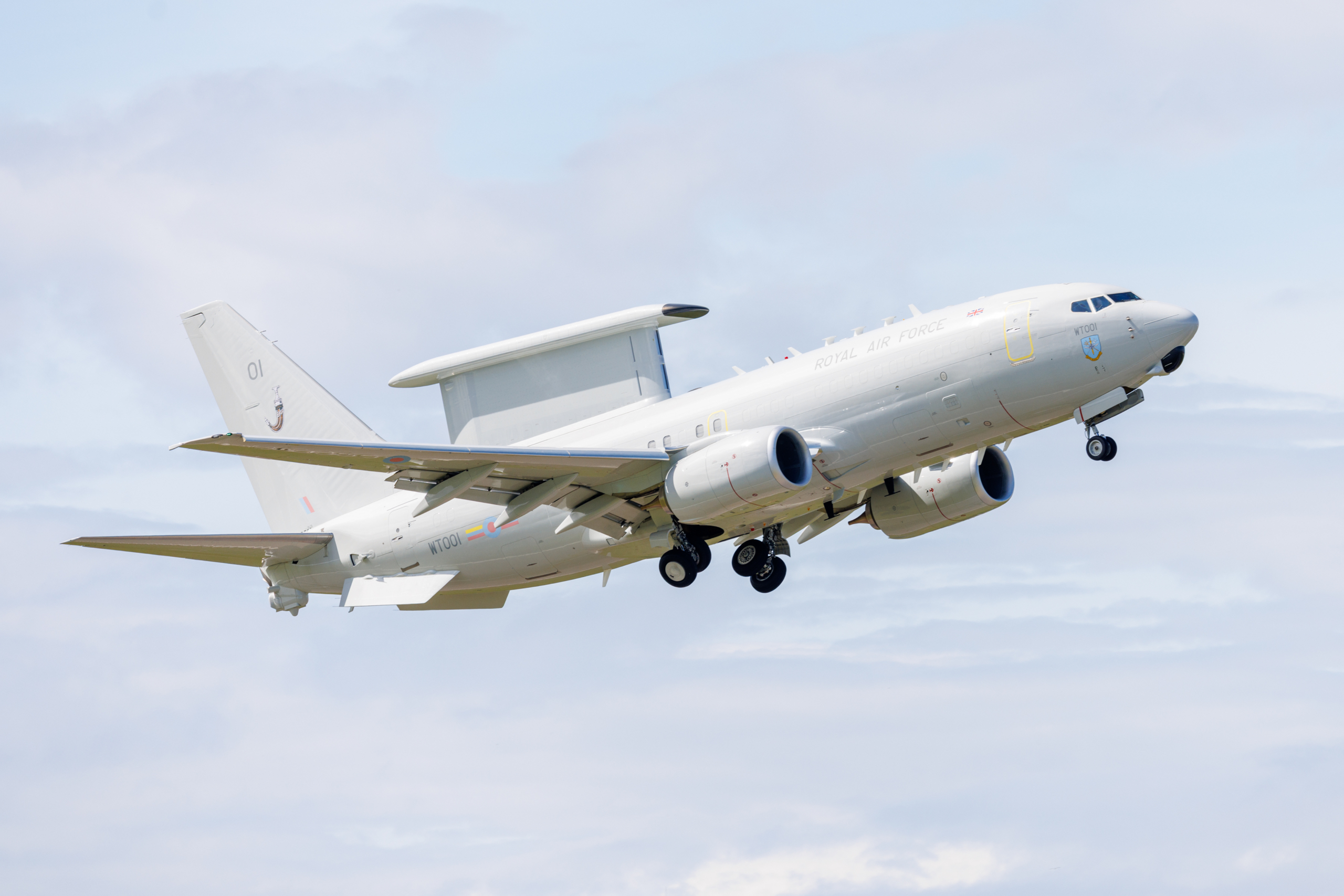
Boeing has deployed additional engineers and test personnel to RAF Lossiemouth as the first of the UK’s three E-7 Wedgetail aircraft enters the final stages of testing ahead of its handover to the Royal Air Force.
The company said the aircraft, known as WT001, is undergoing final ground and flight tests after arriving at the Scottish base on 21 May. However, Boeing declined to provide a timeline for its formal delivery or entry into operational service.
Boeing Defence UK fixed-wing director Ben Kelsey told a media briefing this week that, before transferring to Lossiemouth, the aircraft completed systems activation and elements of radar evaluation and calibration at Boscombe Down.
“The first E-7 was transited up to Lossiemouth back in May and is now undergoing the final stages of ground and flight testing,” Kelsey said.
“We’ve got some work ahead of us with the RAF as we go through that final testing stage, but we’ve got a dedicated, focused team up there now who certainly see the need to get that capability completed and handed over to the RAF and in use.”
The RAF previously said WT001 would continue test and evaluation activity following its arrival at Lossiemouth, which will serve as the main operating base for the Wedgetail fleet.
Extra Boeing personnel support E-7 testing
Boeing already has more than 200 personnel at RAF Lossiemouth supporting the UK’s nine P-8A Poseidon maritime patrol aircraft. This includes maintenance, technical services, supply chain support and training.
Kelsey said this established workforce had now been strengthened with additional personnel focused on completing the E-7 programme.
“That team’s been augmented by a good number of additional engineers and test personnel, just to make sure that we progress through that final ground and flight testing as quickly as we can,” he said.
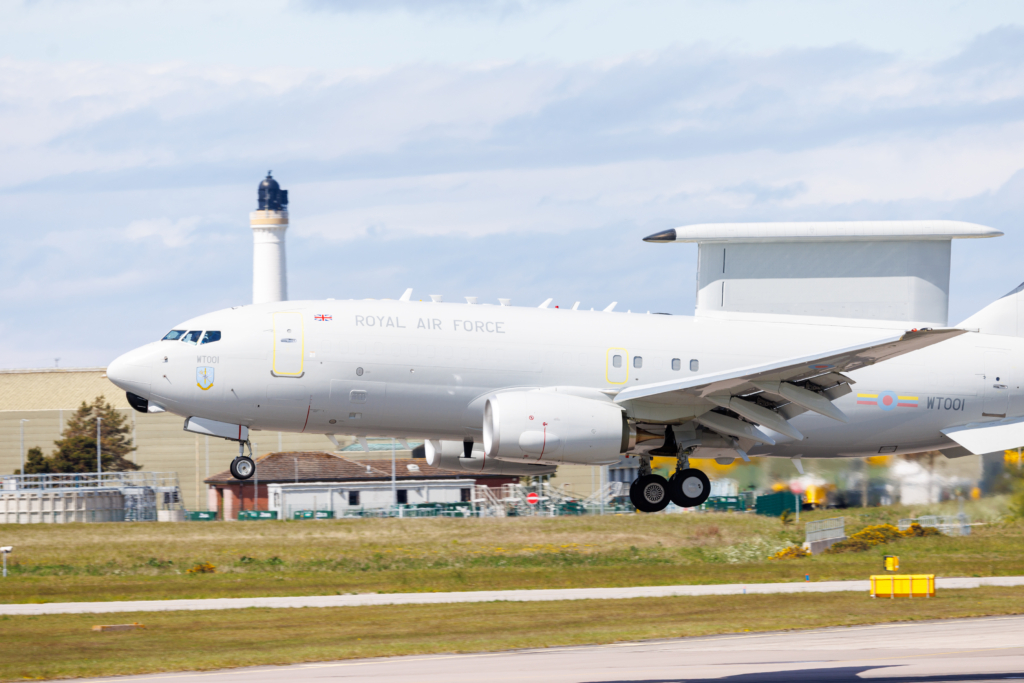
Kelsey added that Boeing was conscious of the operational need to introduce the aircraft but would not compromise safety or quality to accelerate its delivery.
“No, I’m not going to speculate on the timeline for the handover,” he said. “Obviously, it’s something we’re working very closely with the MoD on.”
The RAF is expected to operate three Wedgetails from Lossiemouth with VIII Squadron, restoring a sovereign airborne early warning and control capability following the retirement of the E-3D Sentry in 2021. The UK government has said the E-7 remains scheduled to enter RAF service during 2026.
The aircraft uses a large multi-role electronically scanned array radar mounted above a modified Boeing 737-700 airframe, allowing it to detect and track airborne and maritime targets while coordinating wider combat operations.
Boeing awaits Wedgetail sustainment contract
Boeing Defence UK expects to lead the future sustainment of the RAF’s E-7 fleet, using a model similar to its existing support operation for the P-8A.
Both aircraft are based on Boeing’s 737 Next Generation family and will operate alongside one another at Lossiemouth, creating opportunities to share infrastructure, skills and elements of the support operation.
Kelsey said Boeing had been working with the Ministry of Defence and the E-7 production team for some time to develop the sustainment arrangement.
“We have a pretty mature solution that’s now been developed in terms of how we want to approach sustaining that platform, but I won’t get ahead of any announcements that might come on contract placement,” he said.
With the first aircraft now at Lossiemouth, the remaining two continue to undergo conversion and completion work in Birmingham before beginning their own flight test programmes.
The Strategic Defence Review recommended that the UK procure additional E-7 aircraft when funding permits, potentially through a cost-sharing arrangement with NATO allies.
However, the subsequent Defence Investment Plan did not commit to expanding the three-aircraft fleet, although it allocated £550 million to the Wedgetail programme through to 2029/30.