


Southend King Air crash: One year on, investigators still working to establish cause

4 min read

Investigators are continuing to piece together the cause of the fatal Beechcraft King Air crash at London Southend Airport one year after the accident, with analysis of the evidence still under way.
In an update marking the first anniversary of the 13 July 2025 accident, the UK Air Accidents Investigation Branch (AAIB) said its inquiry remained focused on understanding the factors that led to the loss of control of the Beech B200 Super King Air shortly after take-off.
Beech B200 Super King Air crashed seconds after take off
The Dutch-registered aircraft, PH-ZAZ, crashed moments after departing Runway 05 at Southend, killing all four occupants.
The twin-turboprop medevac aircraft arrived at Southend at 13:49 UTC on the day of the crash, after flying in from Pula in Croatia. It remained on the ground for around an hour. The aircraft, operated by Zeusch Aviation, was due to land at Lelystad Airport in the Netherlands.
Those on board included a 31-year-old Chilean nurse, Maria Fernanda Rojas Ortiz, who was on her first day in the job, as well as two Dutch pilots and a German doctor.
The airport was closed for several days before it reopened to commercial flights on 16 July.
What happened in the moments before the crash?
The AAIB is still investigating, and the exact cause is yet to be determined.
But some details have been released by the organisation. According to the AAIB, the aircraft yawed slightly to the left before rotation and, once airborne, immediately diverged from the runway centreline into a climbing left turn.
It reached an altitude of around 70-80ft above runway level after turning through approximately 90 degrees, before descending and impacting the ground within the airport boundary.
What the AAIB described as an “intense post-crash fire” destroyed much of the aircraft.
The investigation has centred on the circumstances surrounding the loss of control, with investigators examining the different technical, human, environmental and other factors that may have contributed to the accident.
However, establishing the sequence of events has been complicated by the severity of the impact and fire damage, the agency acknowledged.
Intense post-crash fire complicates investigation
The AAIB said the aircraft suffered “substantial disruption during the impact and ensuing post-crash fire”, leaving “only limited physical evidence” available for examination.
The length of the probe is somewhat unusual, as investigators are often able to piece together the cause and other details more quickly, especially when there is more physical evidence intact.
Despite this, investigators said they had carried out detailed inspections of the aircraft and surviving components.
Throughout the inquiry, the AAIB has worked with the manufacturers of the airframe and its parts in the hunt for additional clues as to why the Beech B200 Super King Air crashed so soon after take-off.
Witness reports and CCTV key to crash probe
With no flight data recorder or cockpit voice recorder required to be fitted to the aircraft, investigators have been left to reconstruct the flight using witness video, CCTV footage and ADS-B surveillance data.
Flight data recorders and cockpit voice recorders are not required on aircraft of that size.
Witness John Johnson told AP at the time: “It started to bank heavily to its left, and then within a few seconds of that happening, it more or less inverted and crashed just head-first into the ground. There was a big fireball.”
🚨🇬🇧 BREAKING | HORRIFIC PLANE CRASH IN LONDON SOUTHEND AIRPORT MOMENTS AGO
— World Updates (@Updatesofwworld) July 13, 2025
Likely to be Super King Air aircraft#planecrash #london #BreakingNews pic.twitter.com/7H9BUGBe7H
The AAIB says evidence gathered so far is still being analysed, noting that the investigation remains ongoing and that a final report will be published once all the investigative work has been completed.
The agency also renewed its condolences to the families and friends of the four people who died, saying: “At this time, our thoughts remain with the families and friends of those who lost their lives in this accident and all those affected by it.”
The medevac Beechcraft King Air and what it does
The King Air B200 is commonly used for charter, medevac, and surveillance roles.
Zeusch Aviation operates a small fleet of the type, typically configured for medical flights across Europe.
The King Air involved in the accident was a 30-year-old model, configured for medevac and medical transport flights.
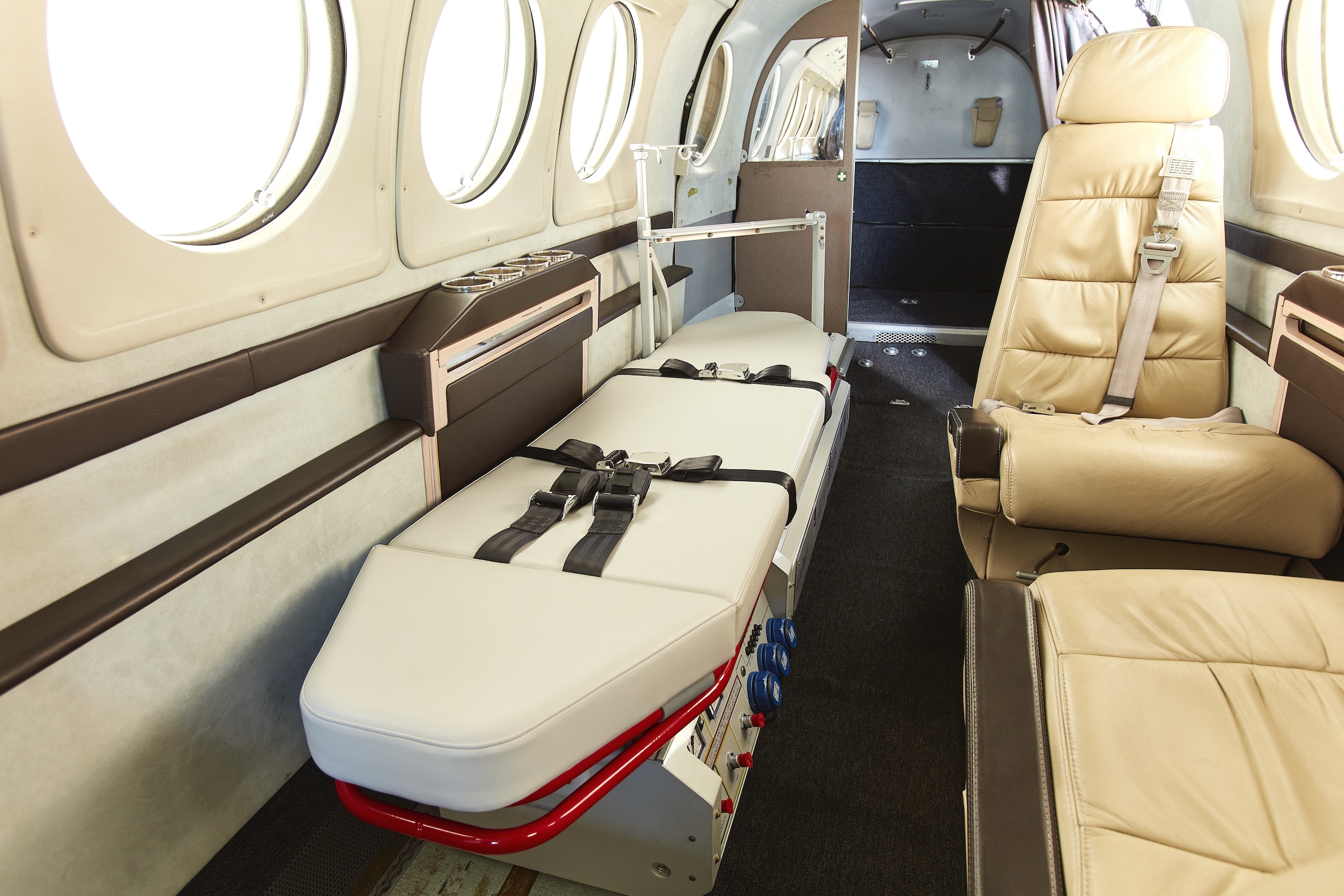
According to Zeusch Aviation, it carried a Lifeport PLUS-system, including a stretcher for a single patient.
Onboard is a suite of high-tech medical equipment, including compressed air, high-power outlets and oxygen. Up to two clinicians can be accommodated alongside a patient.
As well as medevac, the King Air is used for transplant flights, private charters and even surveillance flights.
It is not known what the aircraft was being used for at the time of the incident.
Sign up for our newsletter and get our latest content in your inbox.


More from

October 17, 20265 min read

October 17, 20264 min read





