


Pentagon reveals rare image of China’s secret Shenlong spaceplane amid growing orbital threats

6 min read
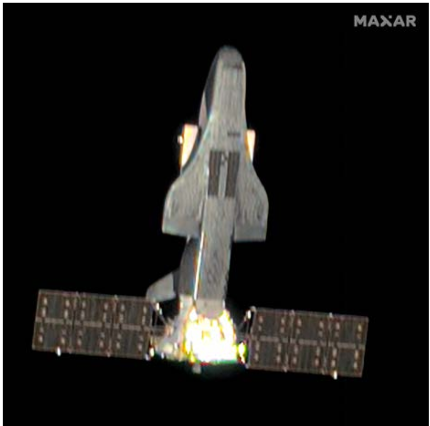
The Pentagon has released a rare, detailed image of China’s secretive Shenlong spaceplane, offering one of the clearest public views yet of a reusable spacecraft that has been conducting extended missions and releasing objects in orbit.
The image, captured in 2024 by US commercial satellite imagery company Maxar Technologies, now known as Vantor, appears in a new Defense Intelligence Agency (DIA) report examining growing military threats to American and allied satellites.
It shows a winged spacecraft with what appear to be open payload bay doors and structures extending from either side. The vehicle bears a striking resemblance to the US Space Force’s Boeing-built X-37B, another uncrewed spaceplane whose missions remain partly classified.
China has disclosed little about Shenlong’s operations. The DIA report, Challenges to Security in Space, published on October 26, provides a closer look at the programme, including occasions when the spacecraft appeared to manoeuvre near objects it had released.
The photograph is particularly notable because detailed images of Shenlong in orbit have rarely been made public. While the vehicle’s configuration suggests it can carry payloads, the DIA report does not establish that Shenlong is armed.
What the Pentagon knows about Shenlong
China’s reusable spacecraft programme has attracted growing attention because of its long missions, orbital manoeuvres and ability to release objects into space.
The first Chinese experimental reusable spacecraft launched in September 2020 and returned to Earth after two days.
A subsequent mission, launched in August 2022, remained in orbit for 276 days. During that flight, American observers tracked an unusual encounter involving the spaceplane and another object.
“In November 2022, this spaceplane appeared to manoeuvre with a companion satellite and conduct station-keeping at around 1 kilometre separation,” the DIA report states.
At one point, the two objects appeared to approach within 100 metres. The agency says they may have rendezvoused before the smaller satellite was released again.
China launched another mission in December 2023. That spacecraft remained in orbit for 268 days and also released and interacted with an object.
Such operations demonstrate technologies relevant to satellite deployment, inspection and close-range manoeuvring.
They are also difficult to interpret from the ground. A spacecraft approaching another object might be conducting a routine experiment, testing servicing equipment or demonstrating capabilities that could eventually have military applications.
The DIA identifies Shenlong and Tengyun as China’s two principal spaceplane models. It distinguishes these from Haolong-1, a proposed cargo spaceplane intended to support China’s space station.
Reusable spaceplanes offer greater flexibility than conventional satellites because they can carry equipment into orbit, conduct experiments and return to Earth.
Shenlong’s precise payloads and the full purpose of its missions remain undisclosed.
How the X-37B Is shaping the future of the US space force
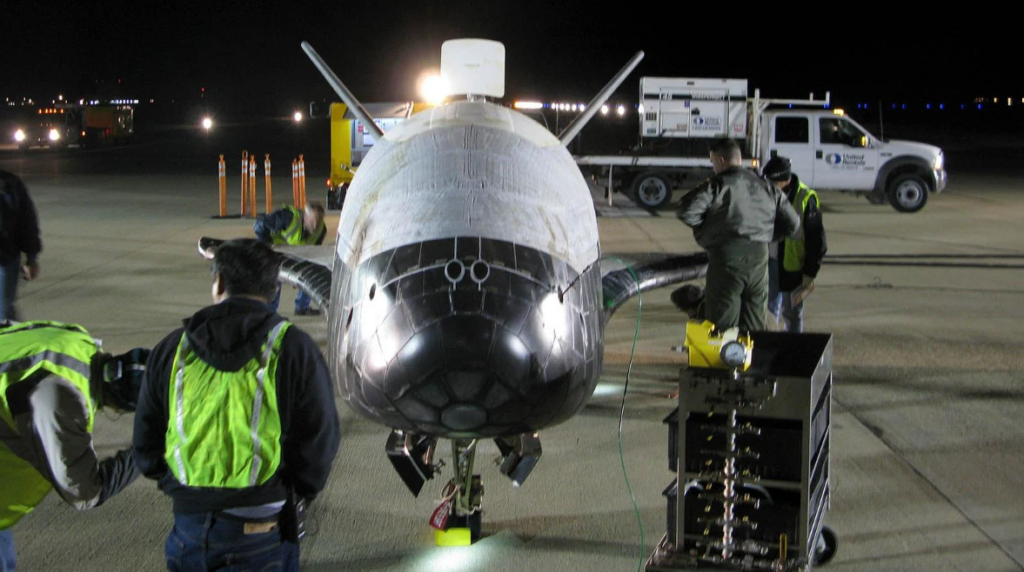
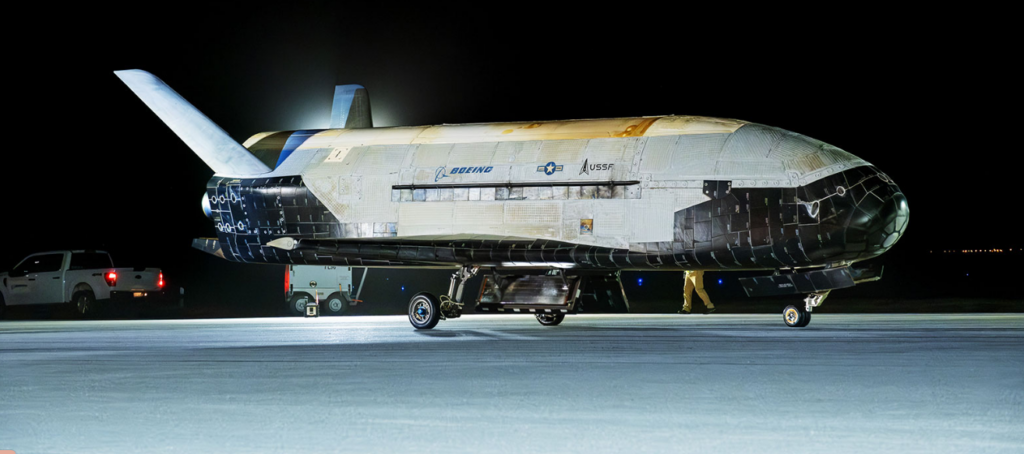
The closest American counterpart is the X-37B, a reusable orbital test vehicle developed by Boeing and operated for the US government.
Unlike China’s closely guarded Shenlong programme, the X-37B’s launch and landing history is publicly documented, although many of its experiments remain classified.
The American spacecraft first flew in April 2010 and has since completed seven missions, spending more than 4,200 cumulative days in space. Its longest flight lasted 908 days, ending in November 2022.
The seventh mission concluded on March 7, 2025, when the vehicle landed at Vandenberg Space Force Base in California after demonstrating an aerobraking manoeuvre to change its orbit while conserving propellant.
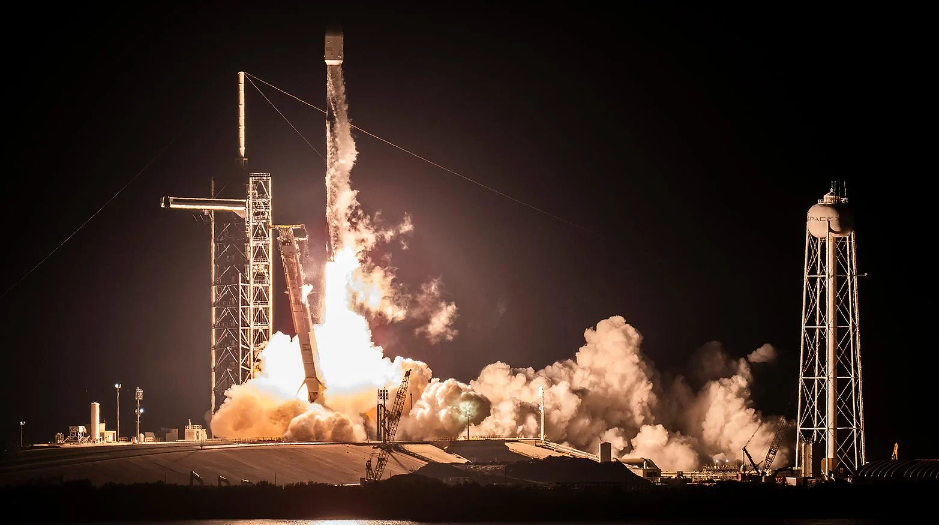
The X-37B returned to space on August 21, 2025, aboard a SpaceX Falcon 9 rocket for its eighth mission.
That flight carries experiments including laser communications technology and a quantum inertial sensor designed to support navigation when GPS signals are unavailable or disrupted.
The mission also uses a service module to expand the spacecraft’s capacity for experiments.
Boeing says the reusable design allows equipment to be recovered, examined and improved before another flight.
“Having a returnable space platform allows us to learn faster,” said Colonel Brian Chatman, then installation commander for Space Launch Delta 45, following the eighth mission’s launch.
“The data we gather from the X-37B speeds decisions, hardens our architectures, and helps Guardians stay connected and on course even in contested environments.”
For the Space Force, the vehicle provides a way to test technologies in actual orbital conditions without discarding the entire spacecraft after each mission.
The US Air Force Rapid Capabilities Office leads the programme, with the Space Force responsible for operations and Boeing providing the vehicle and associated support.
Although Shenlong and the X-37B share a reusable, winged configuration, their publicly disclosed missions differ considerably. The X-37B is described as an experimental test platform, while China has provided far fewer details about Shenlong’s activities.
China expands its satellite warfare capabilities
The DIA’s concerns extend well beyond Shenlong.
Its 2026 assessment warns that China is developing weapons and other systems capable of disrupting, damaging or destroying satellites, including ground-based lasers, anti-satellite missiles, cyber capabilities and spacecraft that can approach other objects in orbit.
“China has developed and will continue to advance weapons for use against satellites in orbit to disrupt, damage, and destroy other nations’ space capabilities,” the report states.
The agency says China’s military considers directed-energy weapons attractive because they can temporarily disable a satellite or cause permanent damage. Such weapons could interfere with optical sensors used for reconnaissance, preventing satellites from collecting images of military activity.
China has also demonstrated how spacecraft designed for legitimate servicing operations could acquire military significance.
In January 2022, its Shijian-21 satellite moved a defunct BeiDou navigation satellite into a higher graveyard orbit above geostationary orbit.
The DIA also identifies Shijian-17, equipped with a robotic arm, as an example of technology capable of grappling another satellite.
These systems have legitimate applications, including debris removal and satellite servicing. Their ability to approach and physically manipulate spacecraft, however, makes them relevant to military planners.
China’s 2007 anti-satellite missile test illustrates another danger. The destruction of an ageing weather satellite created thousands of pieces of debris, many of which remain in orbit.
Russia’s nuclear satellite threat
Russia presents a different and potentially more destructive challenge.
The DIA says Moscow is developing a satellite designed to carry a nuclear weapon, despite the 1967 Outer Space Treaty prohibiting nuclear weapons and other weapons of mass destruction in Earth orbit.
“Russia is developing a satellite designed to carry a nuclear weapon despite its obligation to comply with the 1967 Outer Space Treaty,” the report states.
The agency warns that such a capability could cause the sudden loss or degradation of thousands of satellites, disrupting communications, navigation, weather forecasting and military operations.
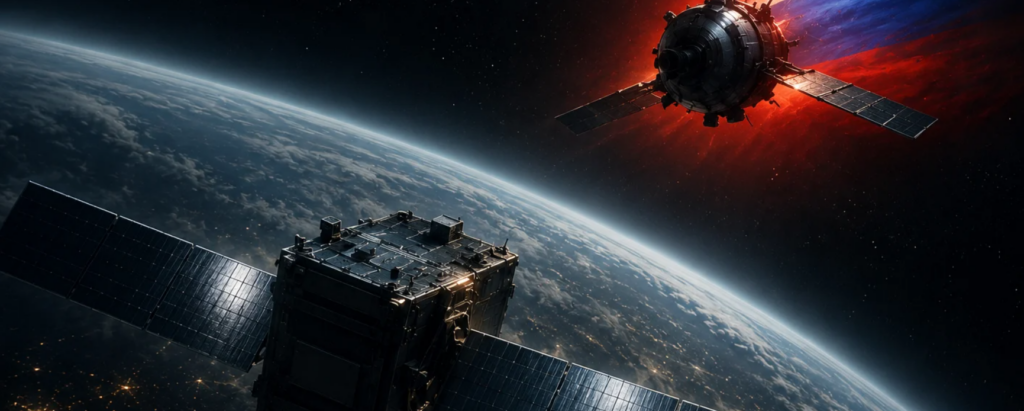
The report also identifies Russia’s Cosmos-2553, launched in February 2022 into an unusual orbit. Moscow said the spacecraft was intended to test the effects of space radiation on electronic systems.
The DIA does not establish that Cosmos-2553 itself carries a nuclear weapon.
Russia has separately demonstrated close-proximity operations involving satellites that can release smaller objects.
More recently, the Russian spacecraft Kosmos-2612 drew attention after approaching ICEYE-X36, a Finnish-operated radar imaging satellite, in October. The encounter raised concerns over uninvited manoeuvres near commercially operated spacecraft supporting military intelligence.
No hostile action against ICEYE-X36 has been publicly established.
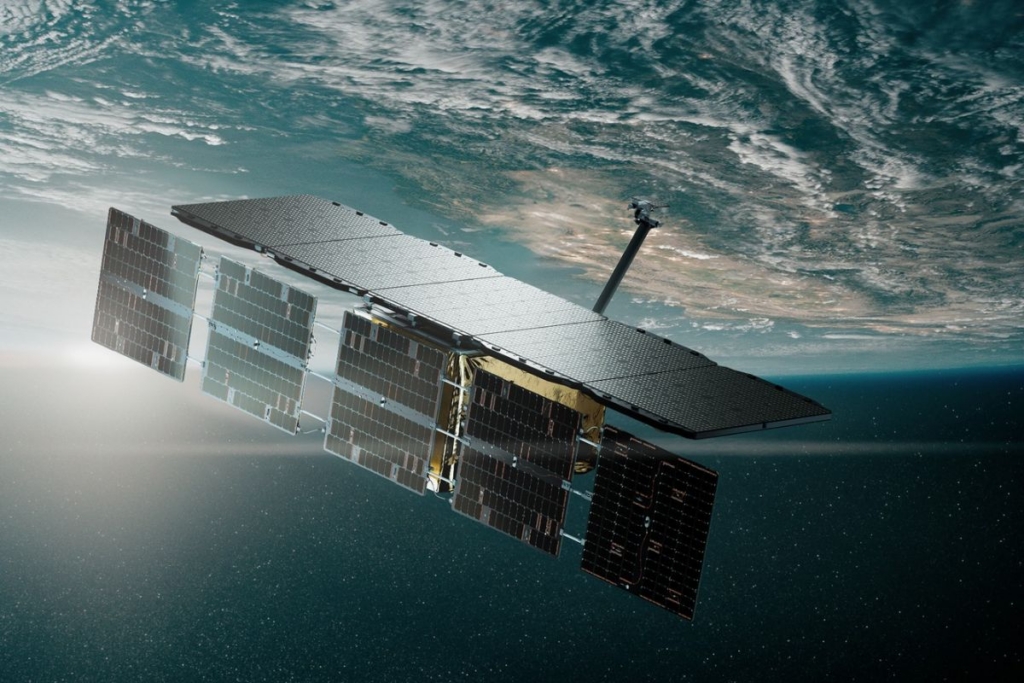
Such incidents have helped fuel interest in bodyguard satellites, designed to monitor and potentially protect valuable spacecraft against suspicious approaches.
The UK, France, Japan and other countries are pursuing technologies relevant to this emerging field. On October 28, Astroscale UK announced a £15 million ($20 million) Ministry of Defence contract for Project LEDA, aimed at improving the UK’s understanding of orbital warfare and potentially threatening proximity operations.
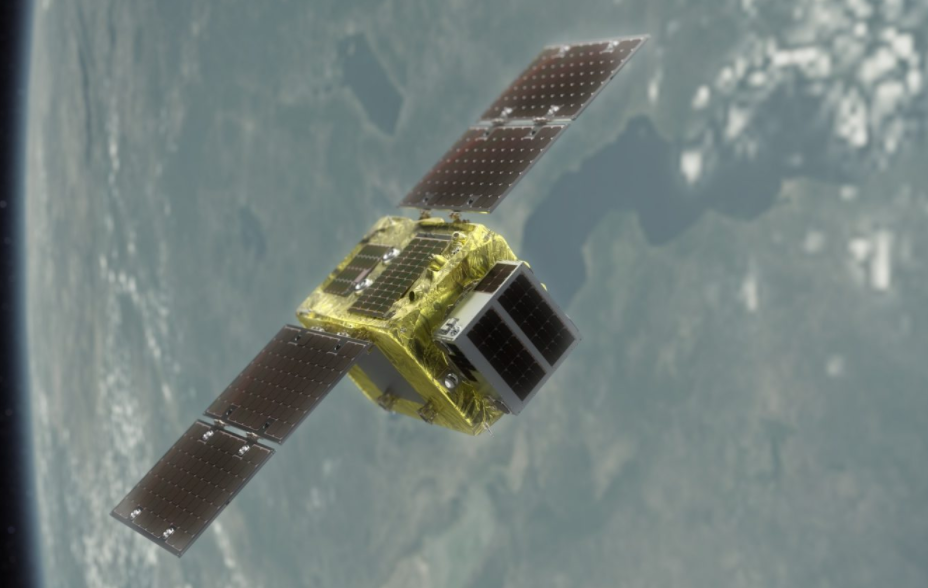
The DIA report also warns that commercial satellites are becoming increasingly important to military operations. Russia’s war in Ukraine has demonstrated their value for communications and intelligence, while exposing them to electronic interference and other threats.
Sign up for our newsletter and get our latest content in your inbox.


More from

October 30, 20264 min read


