India’s space launch ambitions shaken as ISRO’s PSLV suffers back-to-back failures

5 min read
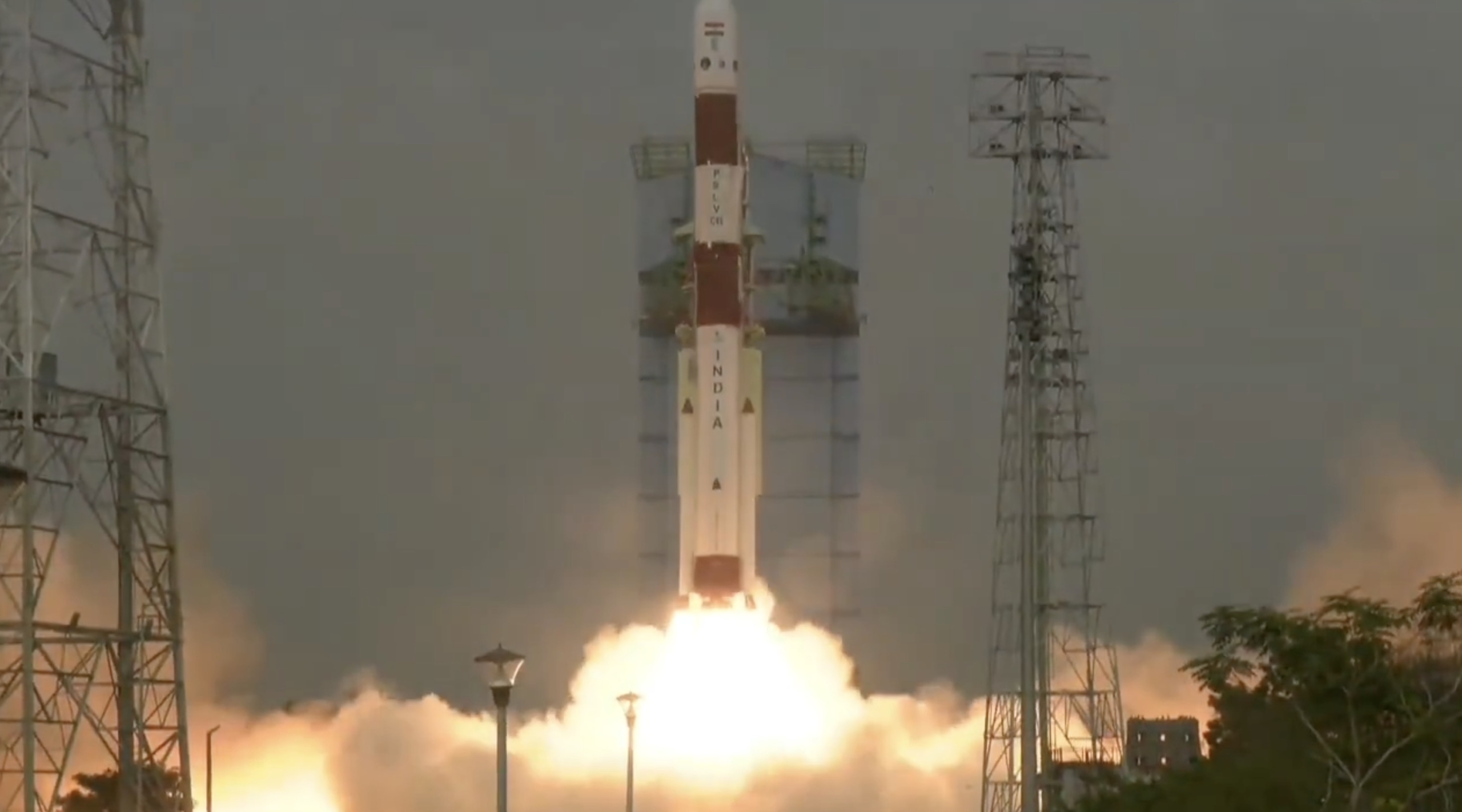
India’s ambitions to establish itself as a reliable and competitive space launch nation suffered a setback on 12 January, when the Indian Space Research Organisation’s (ISRO) Polar Satellite Launch Vehicle (PSLV) failed during the PSLV-C62 mission. It was the workhorse rocket’s second consecutive failure in eight months.
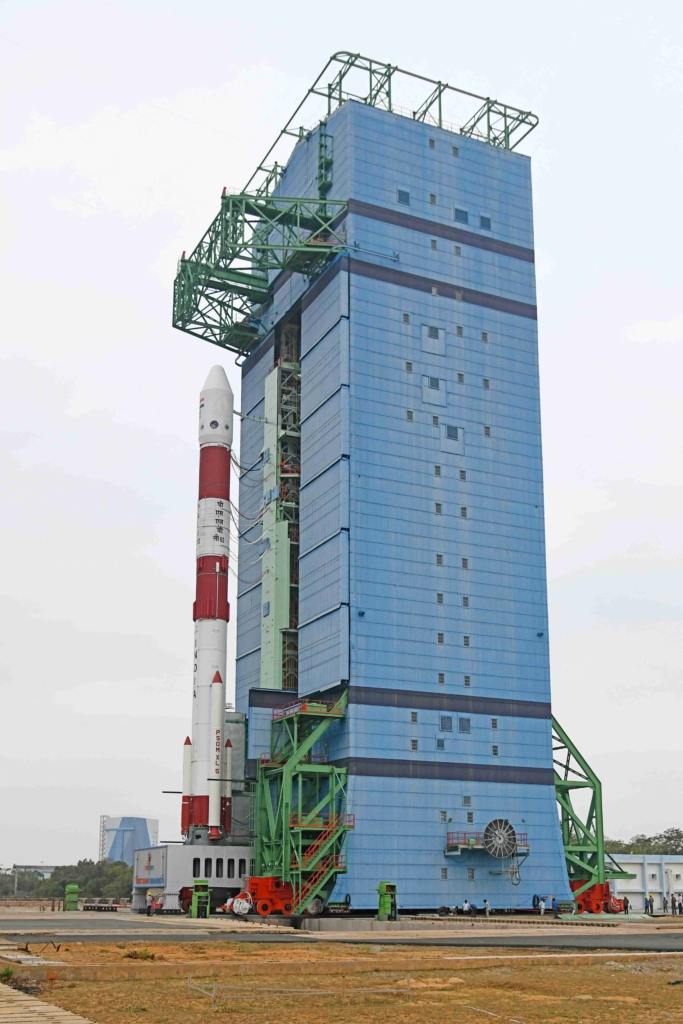
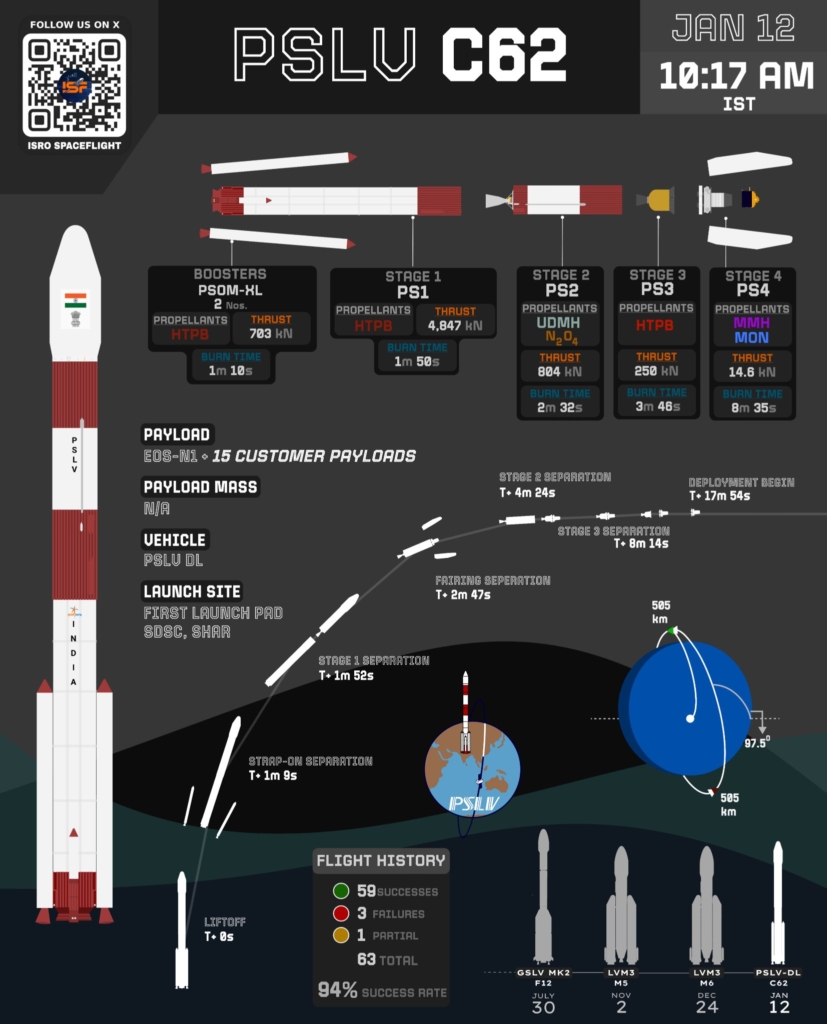
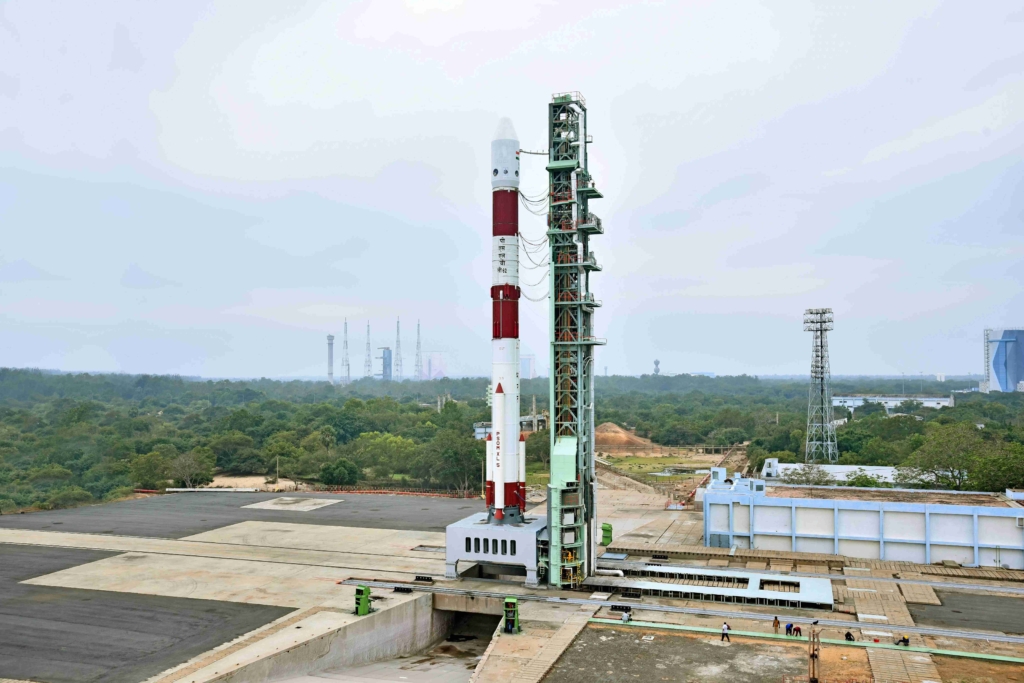
The PSLV-DL variant lifted off from the Satish Dhawan Space Centre at Sriharikota at 10:17 am local time in what initially appeared to be a textbook launch.
The 260-tonne rocket performed normally through its first and second stages, successfully clearing booster separation and maintaining the correct trajectory, drawing nationwide attention as it climbed skyward.
However, the mission unravelled during the third stage of flight. Telemetry data stopped updating shortly after third-stage ignition, and flight controllers observed deviations from the planned trajectory. All 16 satellites onboard are now believed to have been lost.
Delivering a statement from Sriharikota, ISRO chairman V. Narayanan said: “The performance of the vehicle at the end of the third stage was nominal, and then a disturbance in roll rates and a deviation in flight path was noticed. We are analysing the data, and we will come back with more updates.”
PSLV-C62 mission carried strategic and commercial weight for ISRO
PSLV-C62 was intended to deploy EOS-N1, also known as Anvesha, a hyperspectral Earth observation satellite developed by the Defence Research and Development Organisation (DRDO).
The spacecraft was designed for placement into a sun-synchronous orbit at an altitude of around 505–511 km and was expected to support both civilian and strategic applications.
Hyperspectral imaging satellites are capable of detecting materials based on their spectral signatures, enabling uses ranging from crop monitoring and environmental mapping to the identification of camouflaged military assets.
For India, EOS-N1 represented a significant enhancement to space-based surveillance and maritime domain awareness.
The failure of PSLV-C62 is the first time ISRO has lost a payload from a foreign customer.
— ISRO Spaceflight (@ISROSpaceflight) January 12, 2026
The mission carried 8 satellites from Nepal, UK, France, Spain and Brazil. 🇳🇵🇬🇧🇫🇷🇪🇸🇧🇷
It also carried LACHIT-1, the first ever satellite from India's entire Northeast region and CGUSAT-1,… pic.twitter.com/WsMvuAk2xC
In addition to EOS-N1, the mission carried 15 co-passenger satellites, including student-built payloads, technology demonstrators from Indian startups, five satellites from Brazil, spacecraft from Europe and Nepal, and Spain’s Kestrel Initial Technology Demonstrator (KID), a small re-entry vehicle intended to return to Earth after completing its mission.
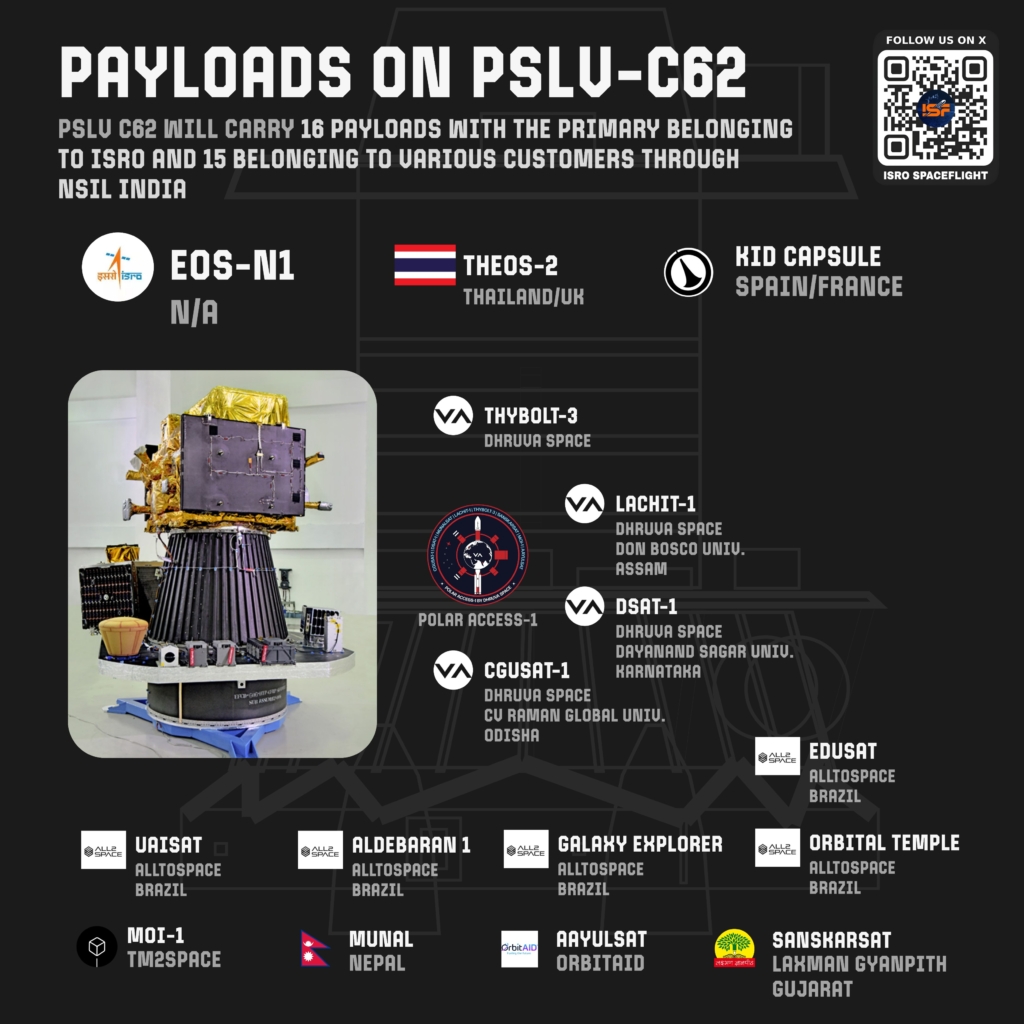
The failure has therefore impacted not only national security interests, but also India’s growing commercial and academic space ecosystem.
Troubling parallels with the PSLV-C61 launch failure
The C62 loss follows closely on the heels of the PSLV-C61 failure on May 18, 2025, when the same rocket family lost the EOS-09 radar imaging satellite during the third stage of flight.
That mission also saw nominal performance through the first two stages before suffering a malfunction in the PS3 solid motor.
Following the May 2025 failure, Narayanan said, “Up to the second stage, performance was normal. Third stage ignited, but we made an observation regarding its functioning. Mission could not be accomplished. The third stage of the PSLV uses a solid-fuel motor system. There was a fall in the chamber pressure in the motor case.”
The repetition of a third-stage anomaly has raised concerns within the space community, particularly because the PS3 solid motor is considered a mature and well-understood subsystem.
The PSLV has long enjoyed a reputation as ISRO’s most dependable launcher, having completed 63 prior missions with a success rate of around 94 per cent.
Why the PSLV third stage is critical to mission success
The PSLV is a four-stage rocket, with each stage playing a distinct role.
While the first two stages provide lift and initial acceleration, the third stage is critical for rapidly accelerating the vehicle towards orbital velocity. It uses solid propellant to push the spacecraft onto a precisely controlled trajectory, without which the vehicle will fall back into the atmosphere.
Any sudden loss of pressure in the third-stage motor can prevent the rocket from achieving the velocity needed to sustain orbit. In the case of PSLV-C62, ISRO has indicated that a disturbance in roll rates led to a deviation from the planned flight path.
An unintended roll can be catastrophic. Excessive rotation around the rocket’s longitudinal axis can overwhelm inertial navigation systems, confuse guidance sensors, and generate forces that small attitude-control thrusters cannot counteract. ISRO has confirmed that it is analysing flight data to determine the exact sequence of events.
Questions over transparency and quality control at ISRO
Following the May 2025 failure, ISRO constituted a Failure Analysis Committee (FAC), but its report has not been made public.
The FAC findings were submitted to the Prime Minister’s Office, but no redacted version has been released, marking a departure from ISRO’s long-standing practice of publishing detailed failure reports.
The absence of a public report has fuelled questions over quality assurance, supply-chain oversight, and whether corrective measures implemented after C61 were sufficient before returning PSLV to flight.
ISRO has also been aggressively marketing PSLV as a commercial launch vehicle through its commercial arm, NewSpace India Limited (NSIL). The C62 mission was NSIL’s ninth launch, and PSLV remains a key revenue generator for India’s space programme.
Consecutive failures risk undermining confidence among international customers, insurers, and investors at a time when India is seeking to expand its private space sector.
Implications for India’s broader space ambitions
The twin failures come at a sensitive moment. ISRO has outlined an ambitious 2026 launch schedule, targeting more than 100 satellites, expansion of the NavIC navigation constellation, and preparations for future human spaceflight missions under the Gaganyaan programme, which relies on the heavier LVM3 rocket.
While PSLV is modular and historically quick to return to service, the recurrence of third-stage issues suggests deeper systemic problems that cannot be resolved through minor adjustments alone.
“For a space agency that has built its global reputation on reliability, engineering discipline and transparency, the PSLV-C62 failure is more than a lost mission. It is a test of institutional credibility at a time when competition from private launch providers is intensifying worldwide,” an analyst, who wished to remain anonymous, told AGN.
ISRO leadership has said it will conduct a thorough investigation and return with findings.
“How openly those findings are shared, and how decisively corrective actions are taken, will determine whether India can restore confidence in its launch capabilities and sustain its ambition to be a trusted player in the global space launch market,” the analyst added.
Featured image: ISRO