‘No human can watch it all anymore’: Why aerospace is reaching an AI tipping point

5 min read
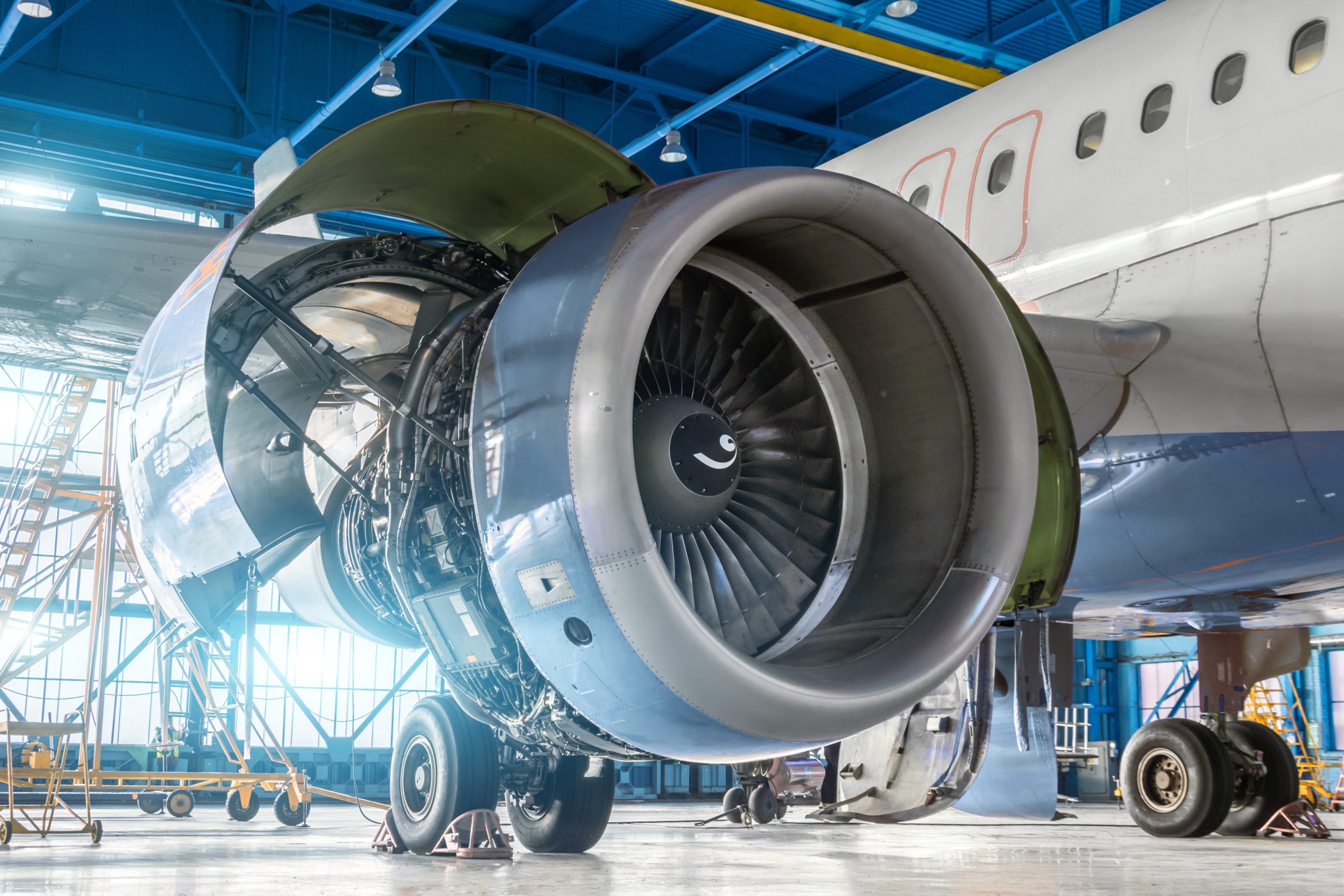
Modern aerospace systems are generating more data than humans can realistically monitor, forcing a shift towards artificial intelligence that goes far beyond simple fault detection.
For Michael Foale, that shift is not a future scenario; it is already underway.
Speaking in an exclusive interview, the veteran astronaut, who spent more than 370 days in space across six missions, including time aboard Mir and as commander of the International Space Station (ISS), argues that aerospace has crossed a critical complexity threshold.
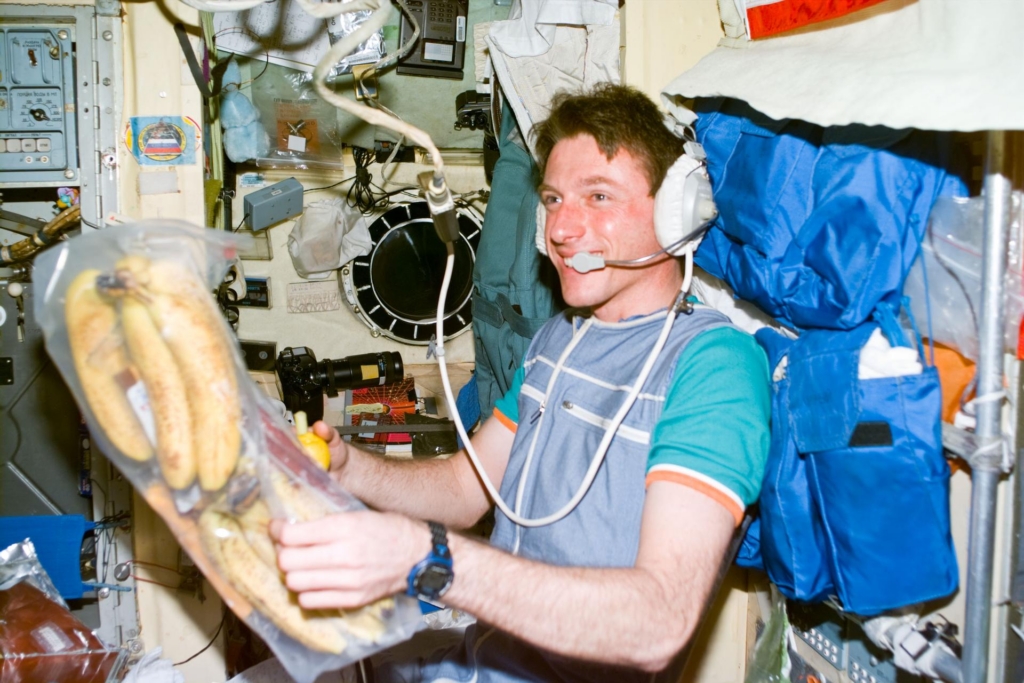
“Every engineer on a project wants to measure things, and they throw in sensors,” Foale explains. “Whereas the space shuttle only had about a thousand sensors, now on the ISS we have hundreds of thousands, maybe millions of measurements going on, and no human can watch them all.”
Aerospace data overload is forcing a shift to AI monitoring
That explosion in sensor data is not confined to space. It is increasingly mirrored in commercial aviation, where aircraft systems, engines and components generate vast streams of operational data.
The pressure to act on that data is also growing. Airlines are under constant commercial pressure to detect faults earlier, reduce maintenance costs and avoid disruption.
Aerospace Global News previously reported that easyJet’s maintenance, repair and overhaul (MRO) spend rose to £451 million in 2025, up from £390 million a year earlier.
The challenge is no longer collecting data; it is making sense of it.
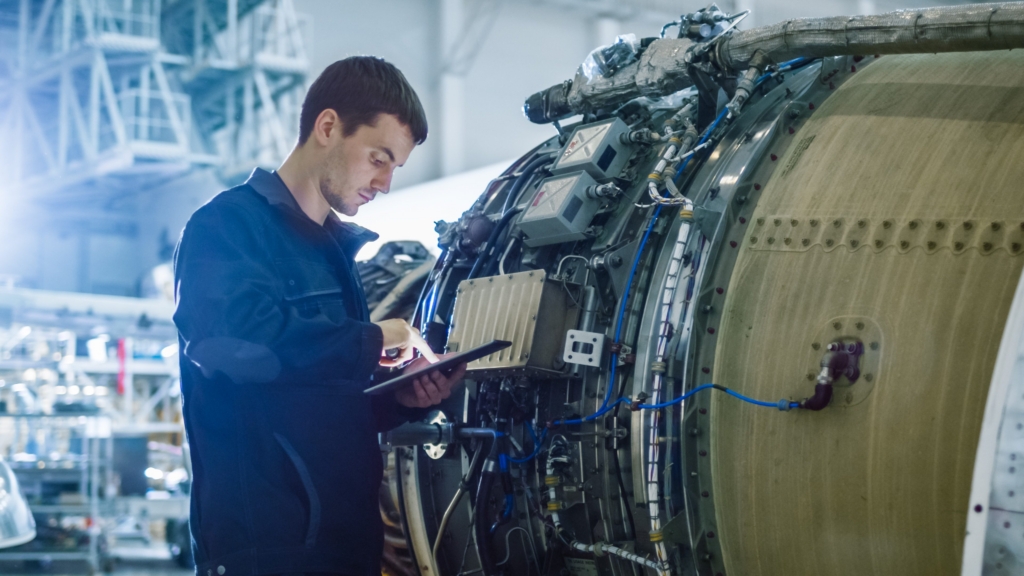
Historically, that task has fallen to engineers on the ground, manually reviewing system readings and looking for anomalies. But as Foale notes, that model is no longer viable.
“In the last 50 years, all system monitoring has been done on the ground by humans,” he says. “But now you can’t do that. Aerospace is crossing a complexity threshold.”
From fault detection to prediction: how AI is evolving in space systems
Artificial intelligence is already being used in parts of the aerospace sector, but its role remains relatively limited.
Foale describes current systems as primarily focused on detecting when something has already gone wrong, rather than anticipating failures before they occur.
“Only what I would call ‘stupid systems’ are being used just to spot failure,” he says. “Prediction of failure is not happening on the ISS on board.”
Instead, predictive analysis is still largely conducted on the ground, using powerful computing systems to process data after it has been transmitted from orbit.
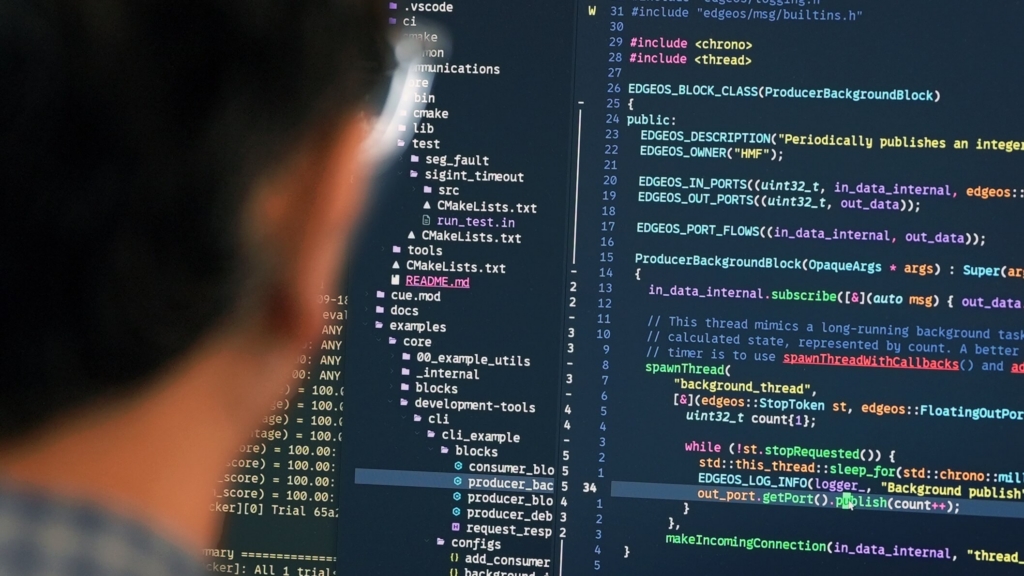
However, there are signs of change. Foale points to work by Airbus, which has developed neural network-based systems to analyse large volumes of spacecraft data.
Using what is known as an autoencoder model, these systems are trained to recognise normal behaviour patterns across thousands of measurements. When a parameter moves “out of family”, deviating from expected behaviour, it can flag a potential issue for engineers to investigate.
“That’s how AI is being used to do predictive fault analysis,” Foale explains.
Latency and autonomy: Why space pushes AI further than aviation
While aviation can still rely on real-time human oversight, space operations face a more fundamental constraint: distance.
For missions beyond Earth orbit, communication delays make continuous human control impractical. Signals between Earth and Mars, for example, can take up to 22 minutes each way. That delay forces a shift in where decisions are made.
“A rover on Mars cannot wait comfortably for someone on Earth to diagnose every problem,” Foale says. “That decision-making is one AI has to be developed to solve.”
In this context, AI is not just a tool for efficiency; it becomes essential for mission success.

Foale argues that future space exploration will depend on AI systems capable of making operational decisions autonomously, whether that involves navigating obstacles, managing system failures or responding to unexpected environmental conditions.
“AI solving that kind of problem is really critical,” he says.
The next frontier: When AI moves from monitoring to decision-making
Despite advances in data analysis and predictive maintenance, integrating AI into real-world aerospace operations remains a major challenge.
“The hardest part isn’t the model,” Foale says. “It’s integrating it into operations safely, and we haven’t really done that yet in space.”
That challenge applies equally to aviation. While predictive maintenance and data analytics are becoming more sophisticated, handing over decision-making authority to AI systems raises questions around safety, certification and trust.
Foale believes the industry’s focus should shift towards decision-making capabilities, particularly in environments where human intervention is limited or delayed.
“I think AI decision-making is actually the right place to put emphasis,” he says.
Aerospace’s defining question: Can the industry trust the machine?
As aerospace systems continue to grow in complexity, the role of AI will inevitably expand. The question is not whether the technology will be used, but how far it will be allowed to go.
Foale’s central argument is that AI cannot remain a passive monitoring tool indefinitely. As systems become more autonomous, they will need to move closer to the point of action.
That raises a fundamental question for the industry: When does AI stop watching and start deciding?
For now, the answer remains uncertain. But as data volumes continue to rise and missions push further from Earth, the pressure to trust machines with more responsibility is only likely to increase.
In Foale’s view, the future will not be defined by humans versus AI, but by how effectively the two work together.
“I think it’s all going to be okay,” he says. “We’re going to be in partnership with AI.”
Michael Foale now works as an astronaut and aerospace speaker, sharing first-hand insight from six space missions and his time aboard Mir and the International Space Station.
Featured image: aapsky / stock.adobe.com
Sign up for our newsletter and get our latest content in your inbox.


More from


October 17, 20264 min read