


UPS MD-11 hearing raises deeper questions over Boeing certification and fail-safe design

6 min read
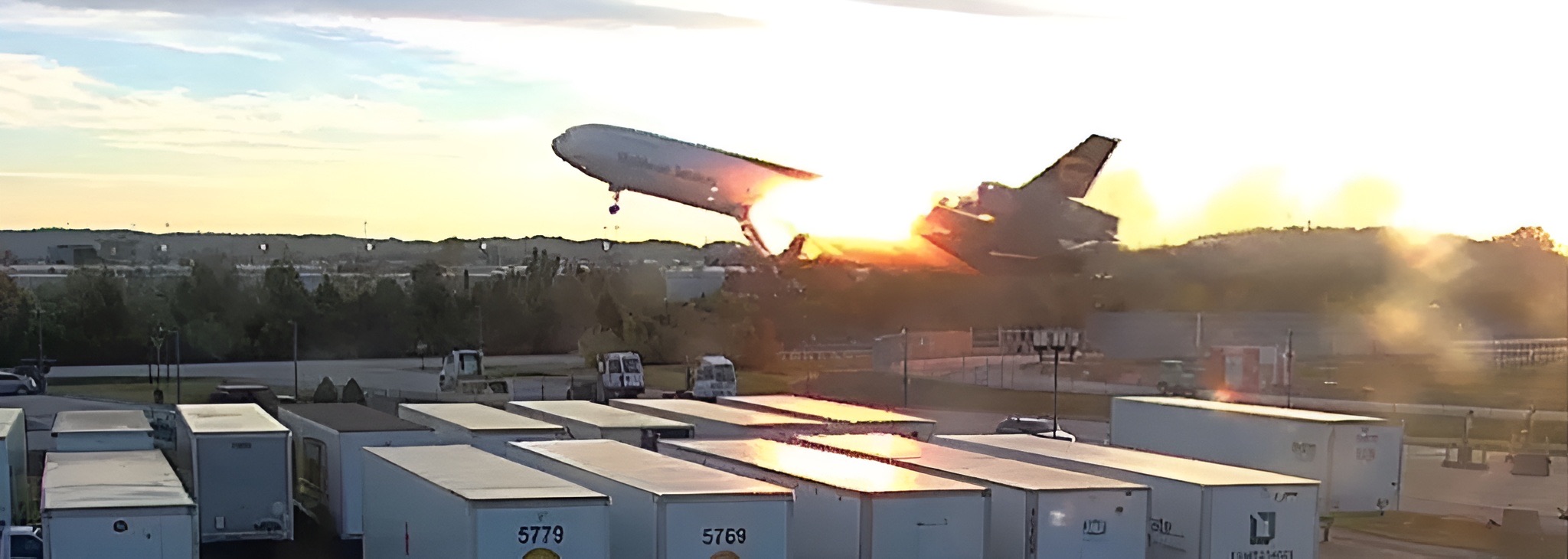
The National Transportation Safety Board’s hearing into the fatal UPS MD-11 crash took a deeper turn on its second day, shifting focus from missed maintenance warnings to possible flaws in the aircraft’s engine pylon design.
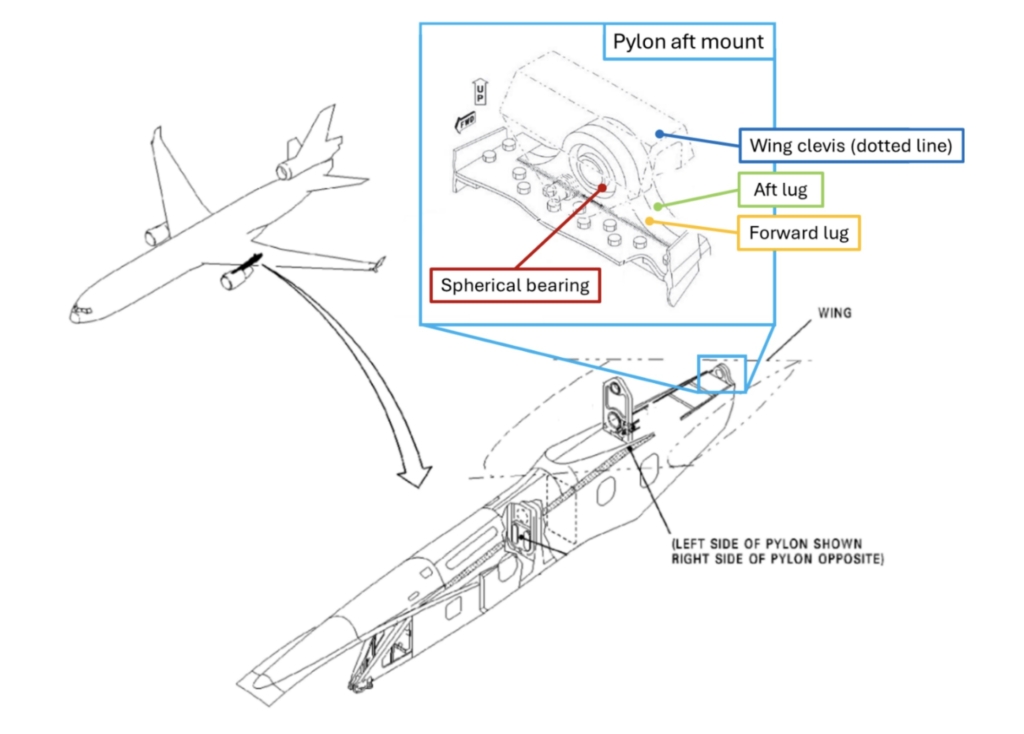
By the close of the second day of hearings in Washington on 20 May, Boeing officials had acknowledged that the failed aft pylon spherical bearing on the MD-11 should have been treated as a “Principal Structural Element” during certification, a classification that would likely have triggered stricter inspections and maintenance requirements years earlier, Louisville-based WDRB television station reported.
The hearings centred on the November 4, 2025, crash of UPS Flight 2976 shortly after takeoff from Louisville, Kentucky, while operating a heavily fuelled nine-hour cargo flight to Honolulu.
The aircraft’s left engine and pylon separated during takeoff rotation, triggering a fire before the aircraft crashed into a nearby industrial area. Fifteen people were killed, including the three crew members and 12 people on the ground. Twenty-three others were injured.
Boeing and FAA face growing scrutiny over long-running pylon bearing failures
Much of the second day focused on the MD-11’s aft pylon bulkhead spherical bearing, a key component connecting the engine pylon to the wing structure. Investigators believe fatigue fractures inside the bearing altered the structural load path and caused both aft pylon lugs to fail during takeoff.
Boeing testified that the pylon structure had originally been designed as “fail safe,” meaning one lug could continue carrying the load if the other failed. But investigators questioned whether the crash itself demonstrated that assumption was fundamentally flawed.
“Doesn’t that establish that this was not a failsafe, and was ultimately proved not to be a failsafe design?” NTSB board member Thomas Chapman asked during the hearing, WDRB reported.
FAA officials later acknowledged that earlier understanding of the bearing failures may have underestimated the severity of the problem.
“There was a misunderstanding initially, 20 years ago, about the severity of the event that might result from the failure of this bearing,” FAA engineer Melanie Violette testified. “That would have changed the safety determination.”
The hearing revealed that Boeing had already seen at least 10 prior in-service failures involving the same aft pylon bearing assembly between 2002 and 2022.
Bradley M. Cosgrove, partner at Clifford Law Offices in Chicago, who filed the first wrongful death lawsuits in Kentucky and who was in attendance at the hearings with some of his clients, said,
“It is unbelievable how Boeing repeatedly fails to properly design, certify, and maintain the airworthiness of its fleet. The communication among parties as to how a plane is to be safely maintained simply isn’t there either. Boeing clearly isn’t learning any lessons from its checkered design, certification, and continuing airworthiness history, and its transparency to its customers about what needs to be done must be examined.”
Despite those incidents, Boeing maintained for years that the failures did not represent a direct flight safety issue.
Investigators heard that Boeing had redesign studies and internal reviews dating back to 2007 showing that bearing failures could potentially damage the adjoining pylon lugs. Yet the bearing itself was still not classified as a Principal Structural Element, or PSE.
That designation matters because PSE components are subject to far more stringent inspection schedules, damage tolerance analysis and life-limit controls under FAA regulations.
“If that part had been considered a principal structural element, there may have been additional inspections or life limits for the part,” investigators noted during the hearing.
Investigators question why earlier warning signs failed to trigger stronger action
The hearings repeatedly returned to one central issue: how so many earlier warning signs failed to trigger stronger corrective action.
NTSB Chair Jennifer Homendy pressed both Boeing and the FAA on why earlier bearing failures, fractured races and structural lug damage did not lead to broader fleet-wide intervention.
“It seems like it took an accident for us to start asking these questions,” one NTSB investigator observed during testimony.
UPS officials testified during the first day that Boeing’s service bulletins described the problem in language that “sounded almost benign” and did not fully explain the extent of potential structural damage that could result from bearing failures.
“I think if we would have known that at UPS, I think we would have asked a lot of different questions over the years,” UPS engineering official David Springer told investigators.
The FAA also acknowledged that it relies heavily on manufacturers to identify and report emerging structural concerns.
“The FAA relies on the applicant for data supporting such requests,” an FAA witness testified during discussions over inspection threshold changes for the MD-11 fleet.
Investigators are now examining whether fragmented reporting systems between Boeing, operators and maintenance contractors prevented regulators from seeing the full pattern developing across the MD-11 fleet.
NTSB examines aircraft system failures after MD-11 engine separation
The second day moved beyond structural fatigue and into how the aircraft’s systems were routed around the pylon itself.
Investigators examined fuel, hydraulic, electrical and fire detection systems located near the wing-mounted engine attachment area.
Boeing officials testified that the aircraft had not been designed around the possibility of a complete in-flight pylon separation outside specific emergency landing scenarios.
“We design, we ensure that there will not be a pylon separation,” FAA aerospace engineer Todd Martin said during the hearing.
That assumption now appears central to the crash sequence.
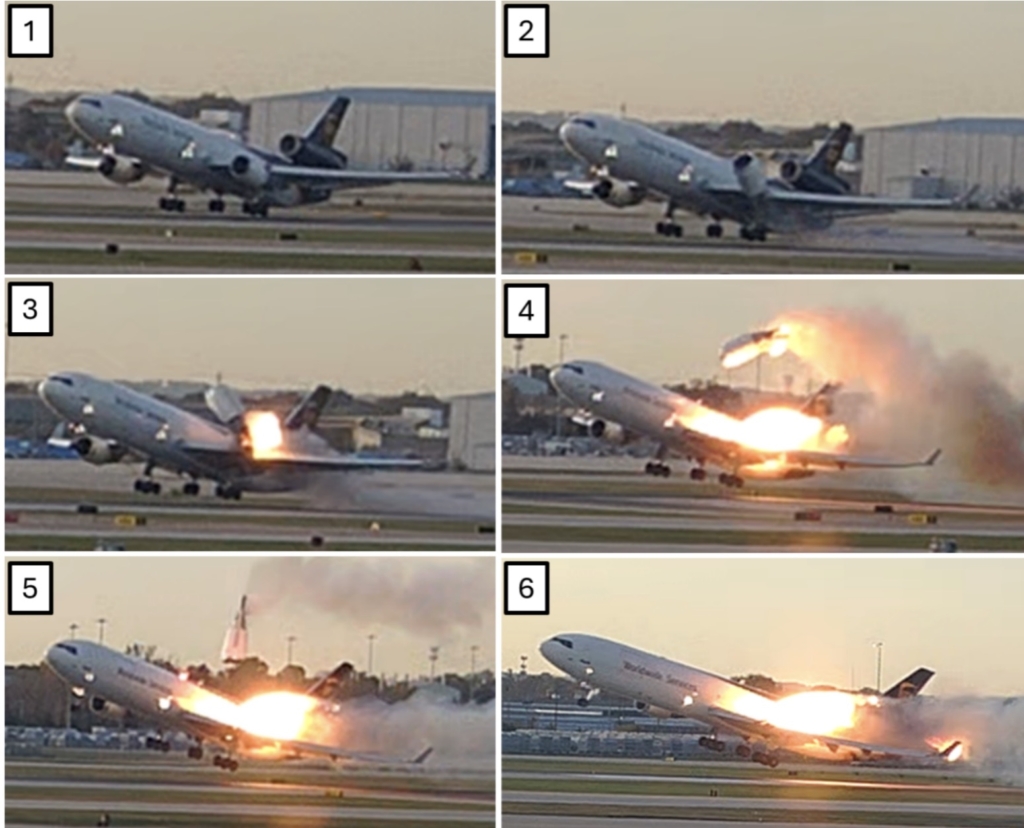
Investigators revealed that once the pylon separated, wiring connected to the engine fire shutoff system was compromised.
“If that pylon separated, that wiring would be compromised. So there would be no way to operate the fuel shut-off valve,” Boeing vice president Steve Chisholm testified, according to Spectrum News.
The hearing also revealed that the crew never received an oral cockpit fire warning during takeoff because the warning system was inhibited at low altitude.
“When the engine separated, the flight data recorder parameter changed to engine one fire,” Homendy said. “However, there’s no indication on the cockpit voice recorder transcript of an oral alert.”
Investigators draw parallels with the 1979 American Airlines DC-10 disaster
The NTSB also revisited the 1979 American Airlines Flight 191 disaster in Chicago, where an engine and pylon detached from a McDonnell Douglas DC-10 during takeoff, killing 273 people.
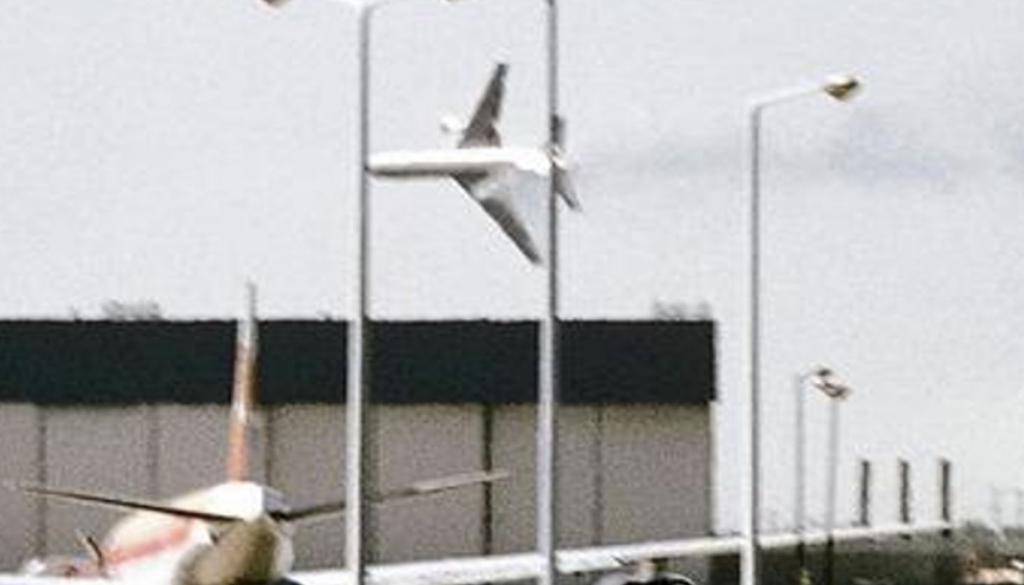
Investigators noted similarities between the DC-10 and MD-11 pylon architecture.
The comparison added weight to criticism that some structural vulnerabilities may not have been fully resolved despite lessons from earlier accidents.
MD-11 fleet now faces tighter inspections and possible redesign changes
Boeing told investigators it is now reviewing similar pylon and bearing installations across the remaining MD-11fleet while working with the FAA on new inspection thresholds, bearing replacements, and revised certification requirements before grounded aircraft can fully return to service.
The NTSB has asked parties involved in the investigation to submit written comments and recommendations by June 19.
A final report determining probable cause is expected later this year.
Featured image:
Sign up for our newsletter and get our latest content in your inbox.


More from


October 17, 20264 min read





