Why planes don’t fly in straight lines: Holding patterns, weather and ATC explained

4 min read
The popularity of flight-tracking apps has given rise to the increasingly popular past-time of following aircraft across the sky as they snake and weave, sometimes apparently without following a logical route.
However, these occasionally unusual tracks are not accidental. Behind many of them is a complex web of decision making that involves input from many different sources: from air traffic control to the airline flight planners and the pilots themselves.
Air traffic management involves controllers continuously adjusting aircraft routings to maintain separation, manage airport capacity, avoid weather and keep traffic flowing.
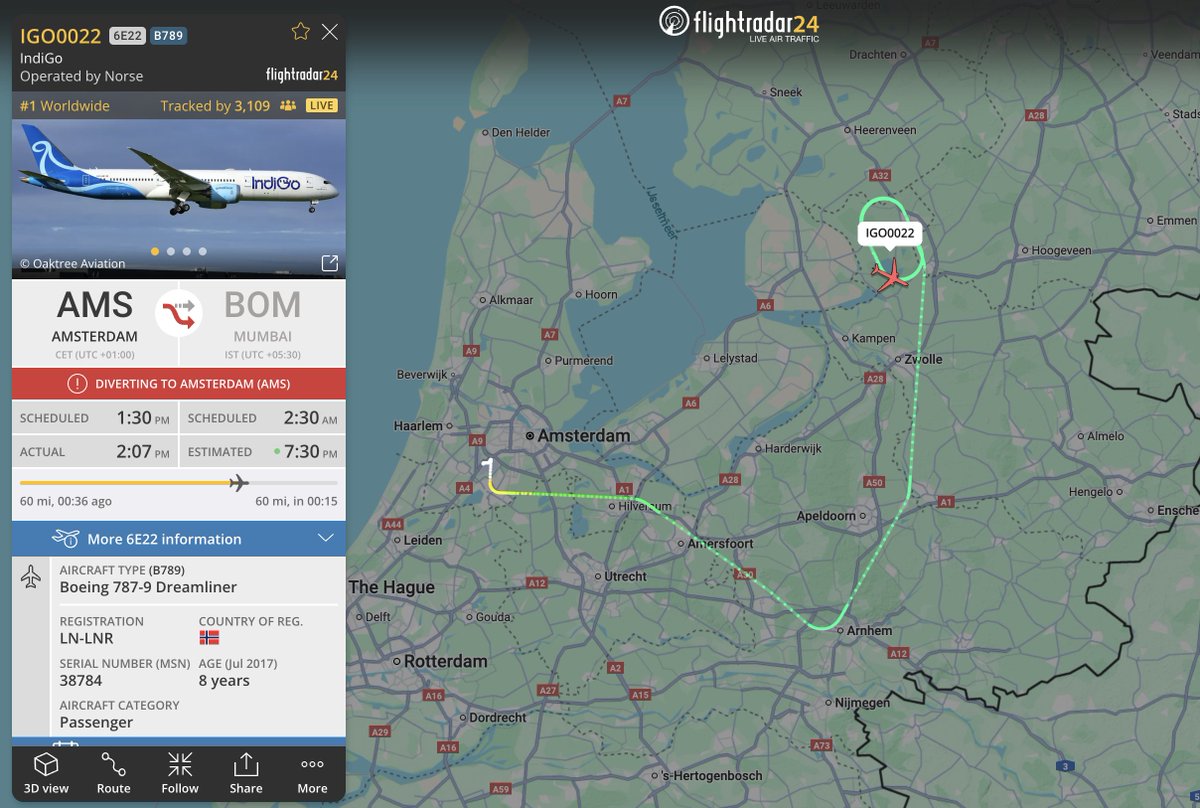
When an aircraft flies a circuitous route rather than the great circle track, that may be due to the flight planning department seeking to avoid congested airspace which would otherwise generate a departure slot for the flight.
It could also be due to the pilots deciding that a storm cell or other weather phenomenon requires avoiding action, most commonly in the form of a requested heading to deviate from their intended track. This could also take the form of a request to climb or descend, or if the route ahead is completely blocked, a request to return or divert.
Why planes fly in holding patterns before landing
Holding patterns are another example of aircraft not flying in a straight line from A to B.
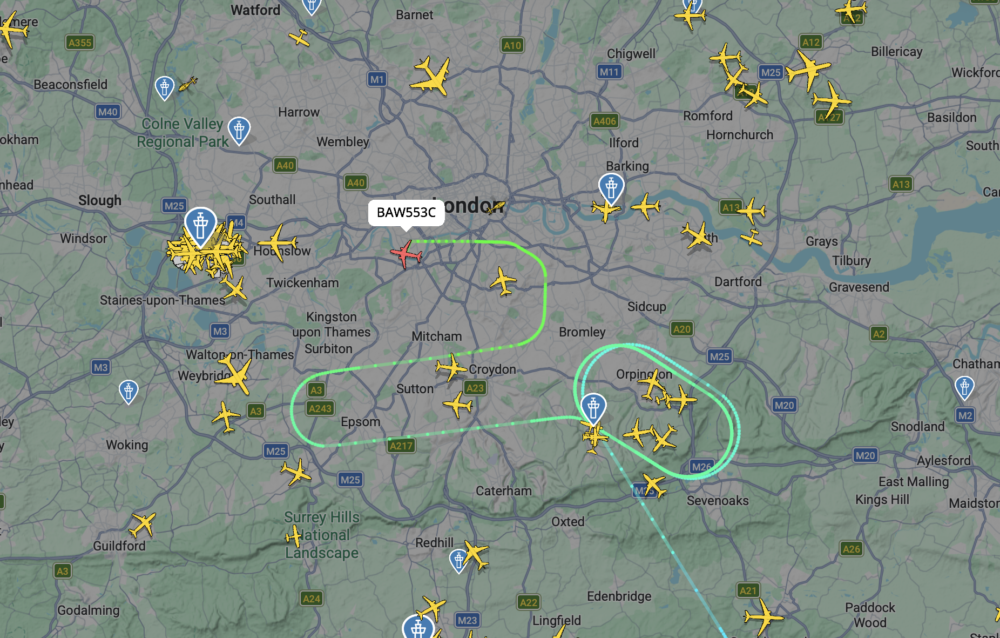
One of the clearest examples of this can be seen around London Heathrow, where arriving aircraft may be routed into established holding patterns to the north and south of the capital.
This happens when demand temporarily exceeds the airport’s ability to land aircraft, or when an issue such as a grass fire, which occurred on Thursday, renders part of the airport unusable.
Rather than allowing aircraft to approach the runway in an uncontrolled mass, air traffic controllers can place them into racetrack-shaped patterns at designated fixes.
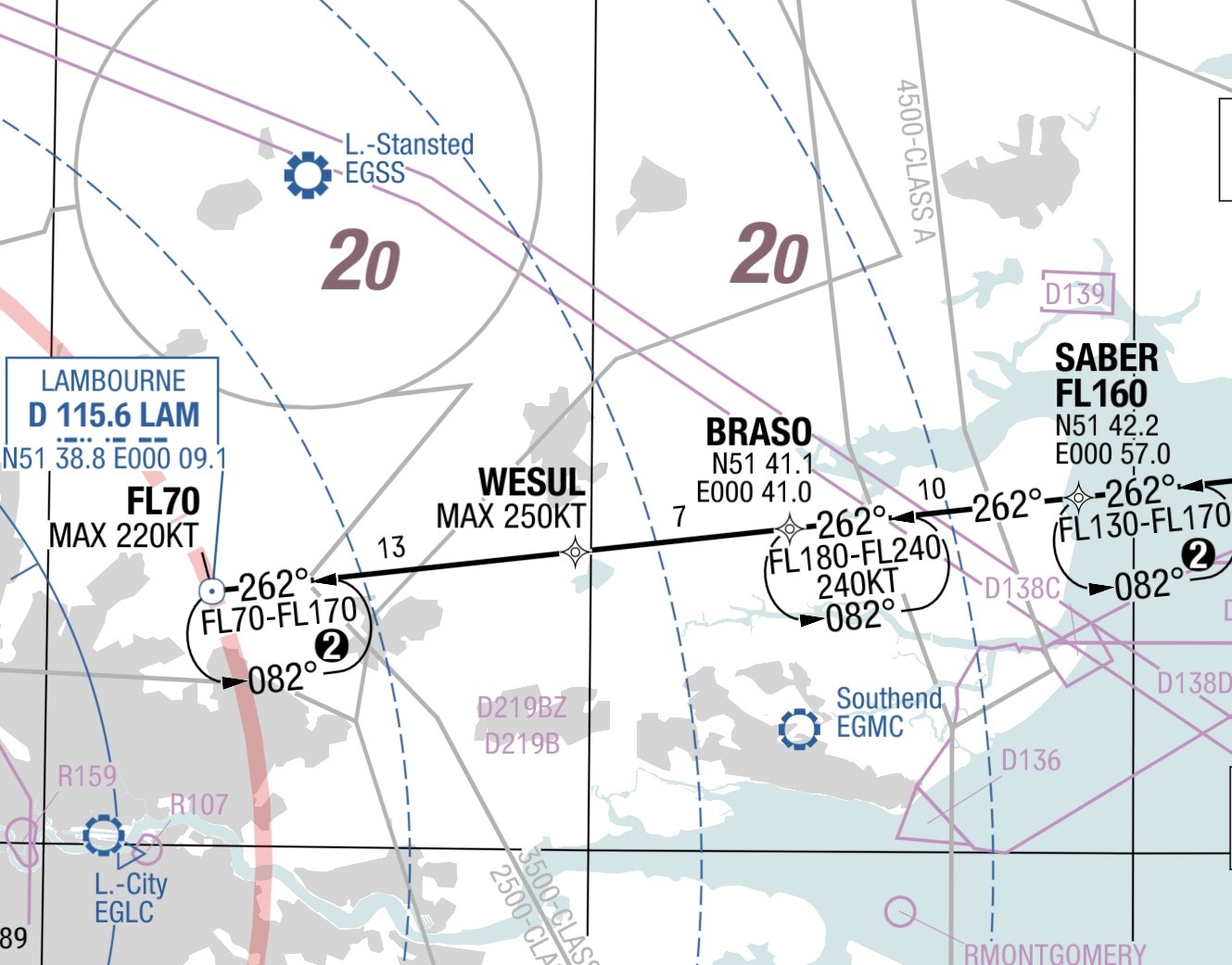
Each aircraft is given instructions on the location, speed and altitude at which the hold pattern should be flown.
Airfield charts give additional information such as whether the holding pattern should be performed with left or right-hand turns and the inbound radial for the manoeuvre.
Aircraft fly repeated circuits, often at different levels, before being released towards the airport in a predetermined and controlled sequence.
The technique can look wasteful on a flight-tracking map, but it allows controllers to regulate the flow of aircraft.
EUROCONTROL says Heathrow typically has an arrival rate of more than 40 aircraft an hour during much of its operating day, with aircraft spending an average of around three minutes holding.
Holding is not necessarily planned long in advance. A sudden deterioration in weather, a runway problem or a change in wind direction can require aircraft already airborne to hold before landing.
Why ATC sometimes sends aircraft on zigzag routes
Other apparently strange tracks are created by controllers deliberately extending or altering an aircraft’s route.
When several aircraft converge on the same arrival routing or waypoint, controllers can use headings, speed restrictions and additional track miles to merge them safely and create the required spacing.
An aircraft that appears to be taking an unnecessary detour on a tracking app – such as FlightRadar24 – may therefore have been instructed to fly several miles away from its optimum route before being turned back towards the airport.

This is particularly important in busy terminal airspace, such as London, Paris or Frankfurt, where controllers must constantly balance the demands of arriving and departing aircraft.
How weather forces aircraft to change course
Weather is another major source of unusual tracks. Aircraft are required to avoid most thunderstorms rather than simply flying through them, and pilots can request deviations from their planned route.
ATC may then issue headings to fly around areas of hazardous weather, while ensuring the aircraft remains separated from other traffic and can subsequently rejoin its assigned route.
The resulting flight track can look like a series of sharp turns, doglegs or detours around a storm system.
Why planes don’t always fly in a straight line
A flight’s path is the result of several requirements rather than simply the shortest distance between origin and destination.
The aircraft’s flight management system may calculate an efficient route, but that trajectory exists within an airspace structure containing fixed routes, dangerous or restricted areas, other aircraft and capacity constraints.
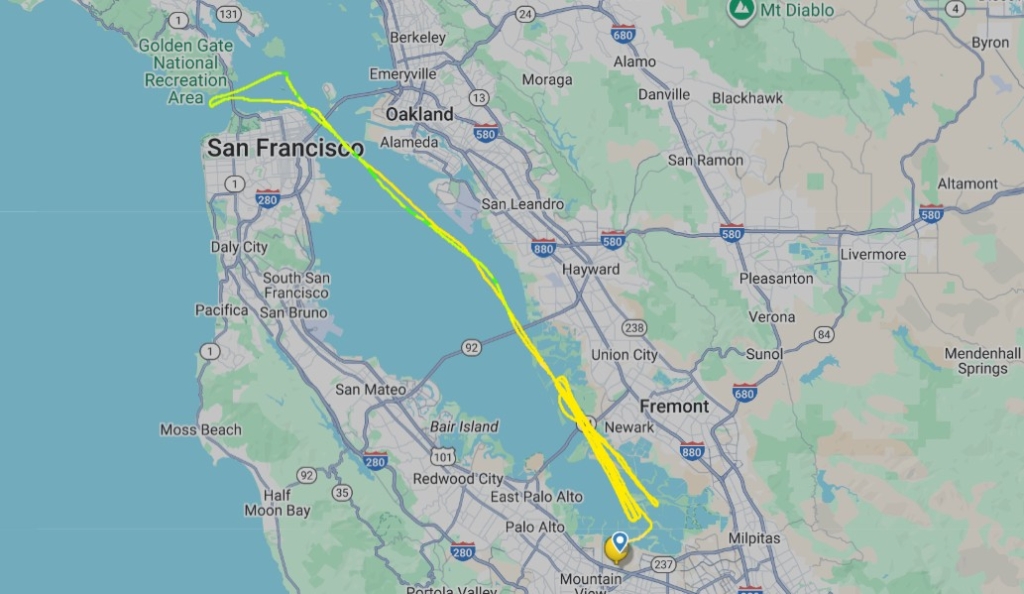
Controllers can modify the aircraft’s path when circumstances demand it, while pilots remain responsible for operating the aircraft safely within their clearance.