Aircraft are built to survive lightning strikes: AI could help airlines avoid them altogether

5 min read
Lightning has long been accepted as an unavoidable part of flying. Artificial intelligence could change that.
Working with Japan Airlines (JAL), Mitsubishi Heavy Industries (MHI) has developed an AI-powered lightning prediction system that forecasts where lightning is likely to occur before a flight reaches the area.
Rather than making aircraft more resistant to lightning, the technology aims to help airlines avoid the conditions in which strikes are most likely, reducing maintenance inspections, delays and operational disruption.
According to MHI, the system has been in operational use with several Japanese airlines since 2024.
The development marks a subtle but important shift in aviation. For decades, aircraft manufacturers such as Airbus have focused on designing airliners capable of safely withstanding lightning strikes.
Artificial intelligence is now adding another layer of protection by helping flight crews stay clear of the highest-risk weather.
Mitsubishi’s AI system predicts where lightning is most likely to develop
Known as Lilac, the system combines artificial intelligence with real-time meteorological information supplied by the Japan Meteorological Agency (JMA).
Instead of simply identifying thunderstorms, it analyses atmospheric conditions to forecast where lightning is most likely to occur, allowing dispatchers and flight crews to make informed operational decisions before an aircraft enters a high-risk area.
Lilac uses JMA’s observation data, requiring no equipment for weather observations, such as a dedicated radar system.
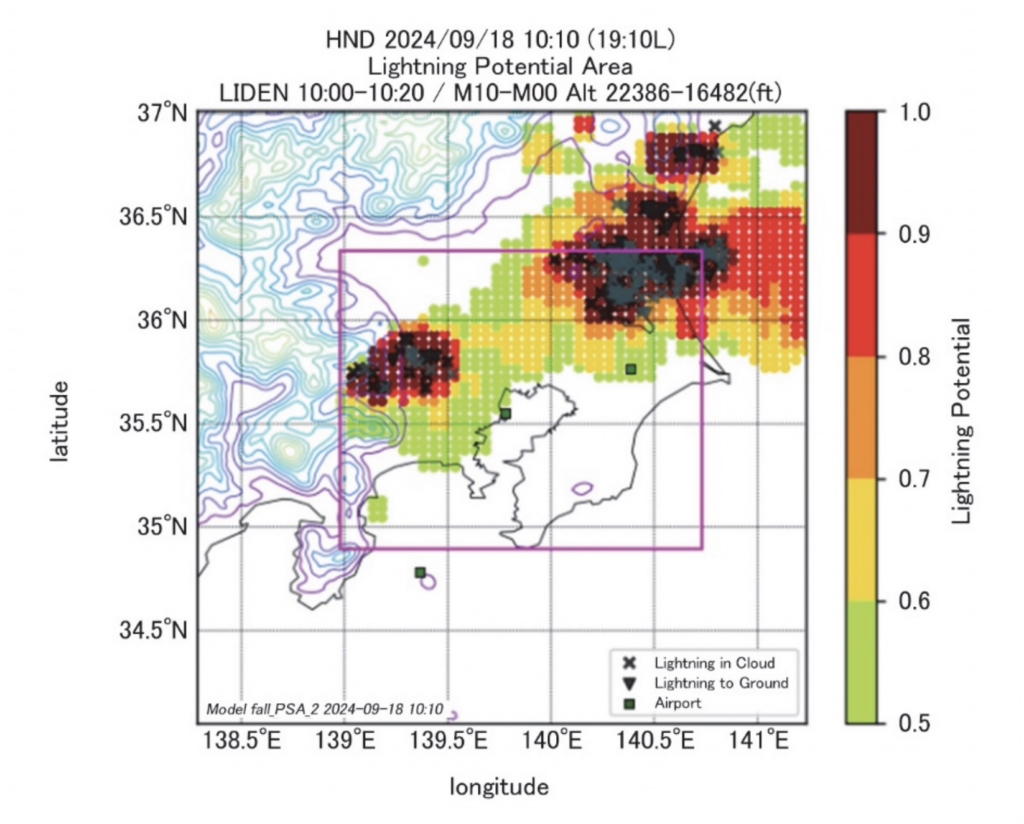
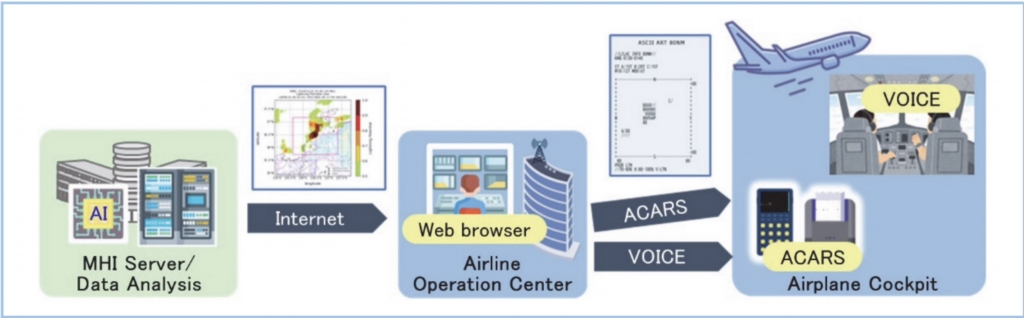
No initial costs are needed to implement Lilac, as the AI model’s predictions about lightning strike risk are provided via the Web.
Airline operations staff can monitor predicted lightning activity through a web-based interface, while pilots receive simplified graphical information through cockpit Wi-Fi or the Aircraft Communications Addressing and Reporting System (ACARS).
The information can be used when planning departures, arrivals or route adjustments, particularly during periods of rapidly changing weather.
According to MHI, airlines using the system have reported fewer aircraft lightning strikes despite a rise in lightning activity around major Japanese airports.
The company says operators have also recorded reductions in maintenance inspections, delays, cancellations and aircraft substitutions.
It estimates that lightning-related inspections, repairs and operational disruption cost airlines more than $2 billion each year worldwide.
Modern aircraft are built to carry lightning safely across the airframe
The idea of an aircraft being struck by lightning can sound alarming, but modern airliners are engineered with exactly that scenario in mind.
Commercial aircraft are struck surprisingly frequently, typically about once every year, or around every 3,000 flight hours, but serious damage is rare because the aircraft is designed to provide lightning with a controlled path across its exterior rather than allowing electrical energy to pass through critical systems or the passenger cabin.
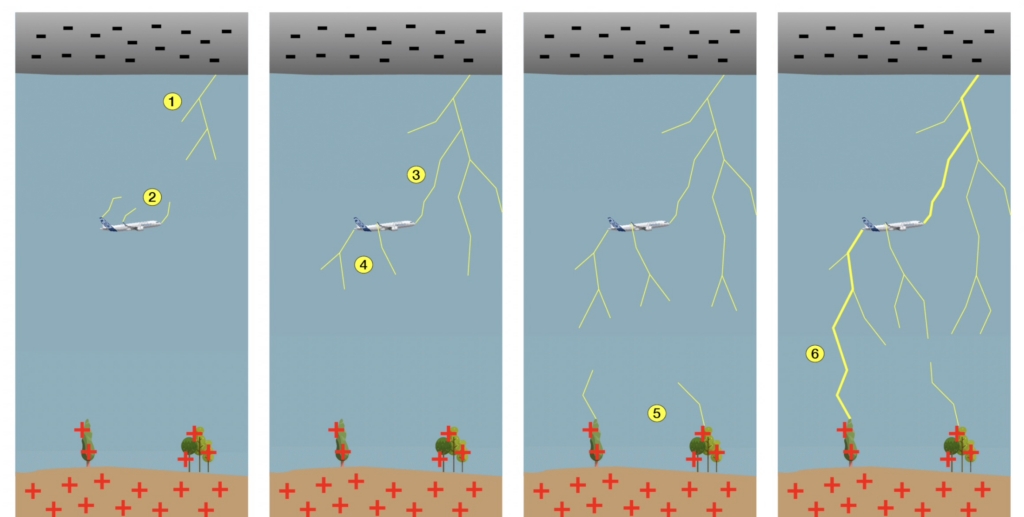
A lightning strike usually attaches itself to an exposed point such as the nose, wingtip or vertical stabiliser before travelling along the aircraft’s outer skin and exiting through another extremity, often the tail.
The entire event lasts only fractions of a second, and in many cases, passengers notice little more than a brief flash outside the window.
Traditional aluminium airframes naturally conduct electricity, making them highly effective at safely dispersing lightning currents.
As manufacturers introduced larger composite structures on aircraft such as the Airbus A350, engineers developed new methods to achieve the same level of protection.
Fine copper or aluminium meshes are embedded within composite panels to create conductive pathways, allowing electrical current to flow safely around the aircraft despite the lower conductivity of carbon-fibre materials.
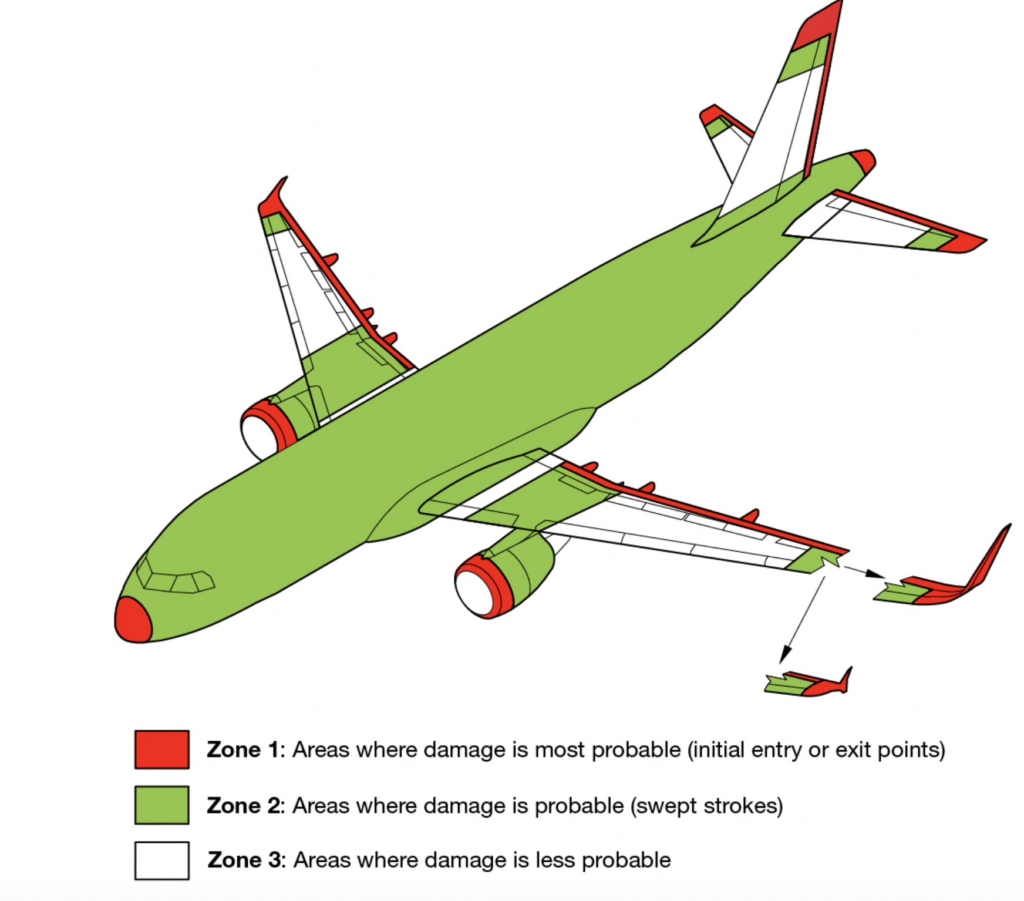
Lightning protection extends well beyond the airframe itself. Bonding straps electrically connect structural sections throughout the aircraft, while static discharge wicks fitted to the trailing edges of the wings and tail continuously dissipate built-up electrical charge during flight.
Lightning receptors, shielded wiring and surge protection systems help prevent electrical energy from damaging sensitive avionics, fuel systems and flight controls.
Critical aircraft systems are also designed with multiple layers of redundancy to ensure continued safe operation should one component be affected.
Before any commercial aircraft enters service, it must undergo extensive certification testing that simulates lightning strikes under controlled conditions.
Regulators require manufacturers to demonstrate that the airframe, fuel systems, avionics and flight controls can withstand high-energy electrical discharges without compromising the aircraft’s structural integrity or continued safe flight.
Avoiding a lightning strike could be as valuable as surviving one
While aircraft are designed to withstand lightning, airlines would still prefer not to experience a strike.
Every lightning event requires engineers to inspect the aircraft after landing. Technicians examine the points where the electrical current entered and exited the airframe, together with antennas, radomes, composite panels and electronic systems, before the aircraft can return to service.
Even when no damage is found, these inspections consume time and can affect aircraft utilisation across an airline’s network.
BREAKING – SriLANKA – Aviation – Accident
— LW World News (@LW_WorldNews) June 13, 2026
🔴 SRI LANKA : PANIC ABOARD AN AIRBUS DEPARTING FROM COLOMBO INTL AIRPORT IN ROUTE TO SYDNEY AUSTRALIA
Sri Lankan Airbus A330-243 with 207 passagers was struck by lightning shortly after takeoff.
Lightning struck one of the engines… pic.twitter.com/AwSPgTukoq
That is where predictive technology could make a difference.
Rather than replacing conventional weather radar or pilot judgement, AI systems such as Lilac provide an additional layer of operational awareness by highlighting areas where lightning is expected to develop.
Dispatchers can consider alternative routings before departure, while flight crews receive more detailed information to support weather-related decisions during flight.
Artificial intelligence is becoming another layer of aviation safety
Artificial intelligence is already being used across aviation to optimise maintenance schedules, improve fuel efficiency and support air traffic management.
Lightning prediction is another example of how AI is moving into operational decision-making, helping airlines anticipate disruption before it occurs.
MHI believes future versions of the system could extend forecasting capability from hours to several days in advance, providing airlines with greater flexibility when planning aircraft schedules and fleet operations.
The same technology could also support airports, energy infrastructure and other sectors vulnerable to lightning activity.
While the service is currently in operation at Japanese airports, MHI aims to implement it at overseas airports with frequent lightning occurrences.
The scope of the service will be broadened by adding other functionalities such as forecasting future lightning strikes (e.g., 10 minutes in advance), thereby further contributing to safety in the sky.
Sign up for our newsletter and get our latest content in your inbox.


More from


October 17, 20264 min read