Upgraded F-35 Lightning: Block 4 improvements explained

4 min read
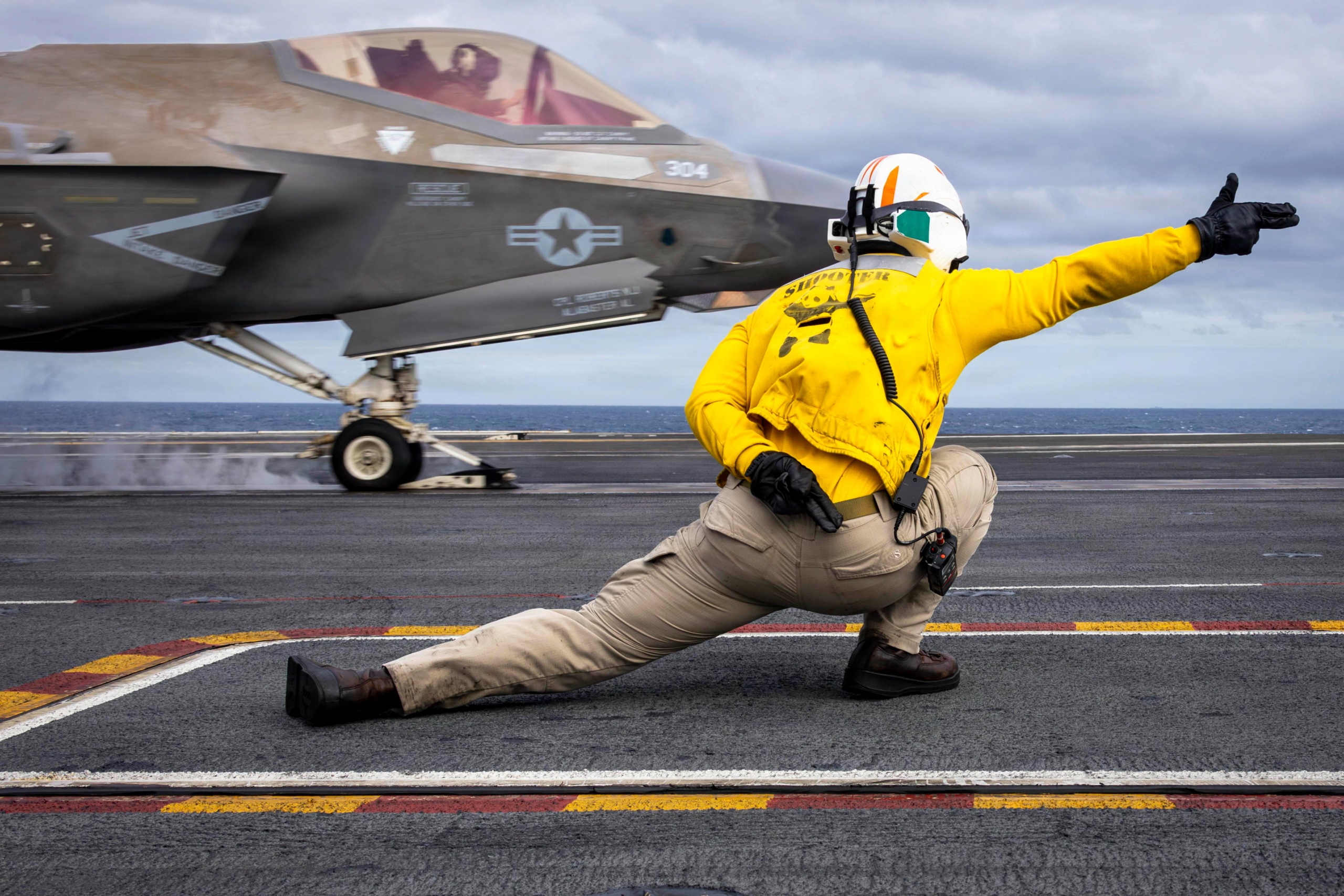
Block 4 can be understood as the mid-life upgrade for the F-35 Lightning II. Technology Refresh 3 (TR-3) improvements provided the computing infrastructure that allows the Block 4 combat capabilities to be built on top.
Those new sensors, electronic warfare systems and computing hardware consume substantially more electrical power. Much of that energy ultimately becomes heat, creating one of the programme’s biggest engineering challenges.
Thermal management is a Block 4 bottleneck
One of the biggest engineering hurdles to Block 4 upgrades is thermal management. A useful analogy is a smartphone overheating while charging, running power-hungry apps, and exposed to direct sunlight.
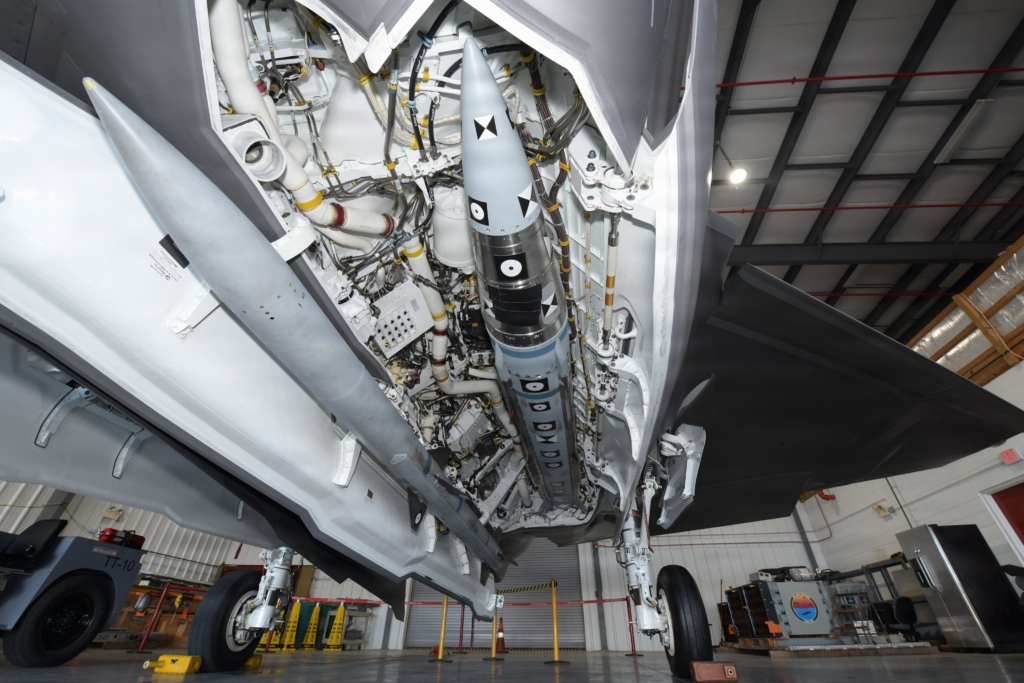
The F-35 was designed from the ground up with some of the world’s most advanced thermal management to eject heat, but the existing system is insufficient for Block 4.
Collins Aerospace recently completed altitude testing of its Enhanced Power and Cooling System (EPACS), which is to offer a potential solution to the F-35’s urgent power and thermal management needs. EPACS has demonstrated 80kW of cooling, which is over double the aircraft’s current capacity.
The existing power and cooling architecture is already overtasked, and Block 4 will stress this much more. This is already adding to the wear and tear on the F135 engine and causing it to operate beyond its design parameters. It is adding to the overall costs of the programme by around $38 billion in extra maintenance expenses.
The Joint Program Office is currently exploring options for the F-35’s Power Thermal Management Upgrade (PTMU). Lockheed is scheduled to complete a two-year analysis in December 2026 and present its findings.
The Department of Defense plans to complete its independent cost estimates for thermal-management options in March 2027.

The GOA watchdog reports, “Delays to the PTMU effort would likely affect the Block 4 capability delivery schedule. Currently, the program plans to begin production of the PTMU in 2033.
It then warns, “the same year that post–Block 4 capabilities will require the increased power and cooling, providing limited, if any, time for schedule delays should they occur.”
The F-35’s incoming Block 4 upgrades
The Block 4 upgrades will make the F-35 significantly more capable, but will have little to no effect on the popular metrics that fighter jets are often ranked by. It won’t meaningfully increase its speed, payload, range, climb rate, ‘dogfighting’, supermaneuverability, etc.

Instead, the Block 4 will come with much more processing capability and improved fusion of its sensor and network data. It will be equipped with the future AN/APG-85 AESA Radar offering better detection, tracking, and targeting.
The aircraft will gain an Advanced Electro-Optical Targeting System (EOTS) with higher-resolution imaging, short-wave infrared (SWIR) capability, and improved target identification, allowing it to detect and identify targets at greater ranges and in more challenging conditions.
The jet will have a much more advanced EW/non-kinetic suite of capabilities able to better detect, classify, locate, and counter hostile radars and other emitters.
It will be integrated with newer and more air-to-air missiles, with increased missile capacity for some configurations. Improvements will better enable it to engage hostile targets while remaining outside the enemy’s weapon envelope.
More of its computing architecture will be open architecture, which will make subsequent upgrades considerably easier. This is considered particularly important.
Returning to the smartphone analogy. Compare a modern smartphone and one from 15 years ago: externally they may appear surprisingly similar, but that disguises the internal enormous leap in processing power, sensors, and software.
Blurring the line with 6th-generation fighter jets
Lockheed Martin describes Block 4 as “the most significant evolution of F-35 capabilities to date,” with more than 70 major upgrades across all three variants, including increased missile capacity, advanced electronic warfare, and improved target recognition.
A common misconception is that fighter generations are neat categories into which aircraft can be cleanly sorted. In reality, the boundaries are much blurrier. The generation system is useful as a shorthand, but it can also obscure how different aircraft evolve over decades through successive upgrades.
For example, a so-called 4.5-generation F-15EX Eagle II arguably possesses more advanced networking, sensor fusion, and digital mission systems than Russia’s nominally 5th-generation Sukhoi Su-57 Felon. Meanwhile, the Su-57 was designed from the outset around low-observable shaping and internal weapons bays.
A Block 4 F-35 will incorporate a large number of features associated with 6th-generation aircraft, like MUM-T, increased sensor fusion, advanced networking, advanced electronic warfare, and more.
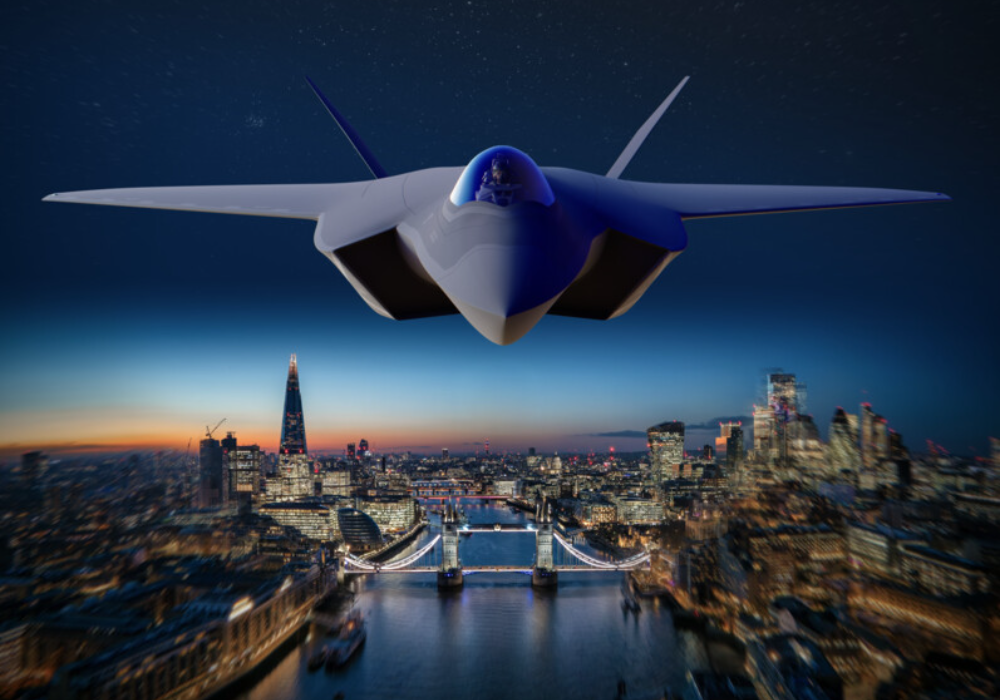
A future Block 4 or Block 5 F-35 is therefore expected to be one of the principal export competitors to 6th-generation programmes (e.g., GCAP/Tempest). Particularly among countries seeking many of the same networked and electronic warfare capabilities without developing an entirely new fighter.