F-47 vs F-35: What will America’s next fighter do differently?
5 min read
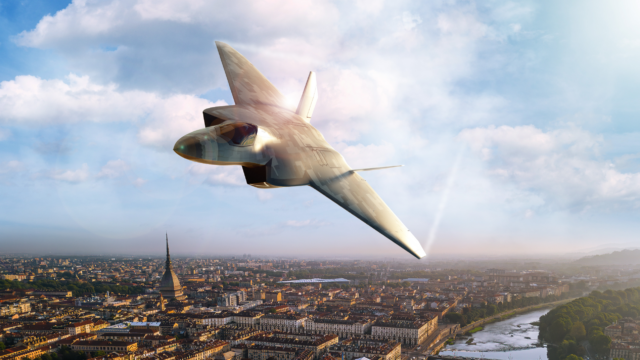
As the US Air Force releases new details about the F-47’s range, planned fleet size and role within its Next Generation Air Dominance programme, a clearer picture is emerging of how America’s future fighter force will operate.
Rather than replace the F-35, the sixth generation Boeing F-47 is being designed to work alongside it. It will take on the most demanding air-dominance missions while the F-35 continues as the backbone of the USAF’s future manned combat power.
How the F-47 fits into the USAF future fighter fleet
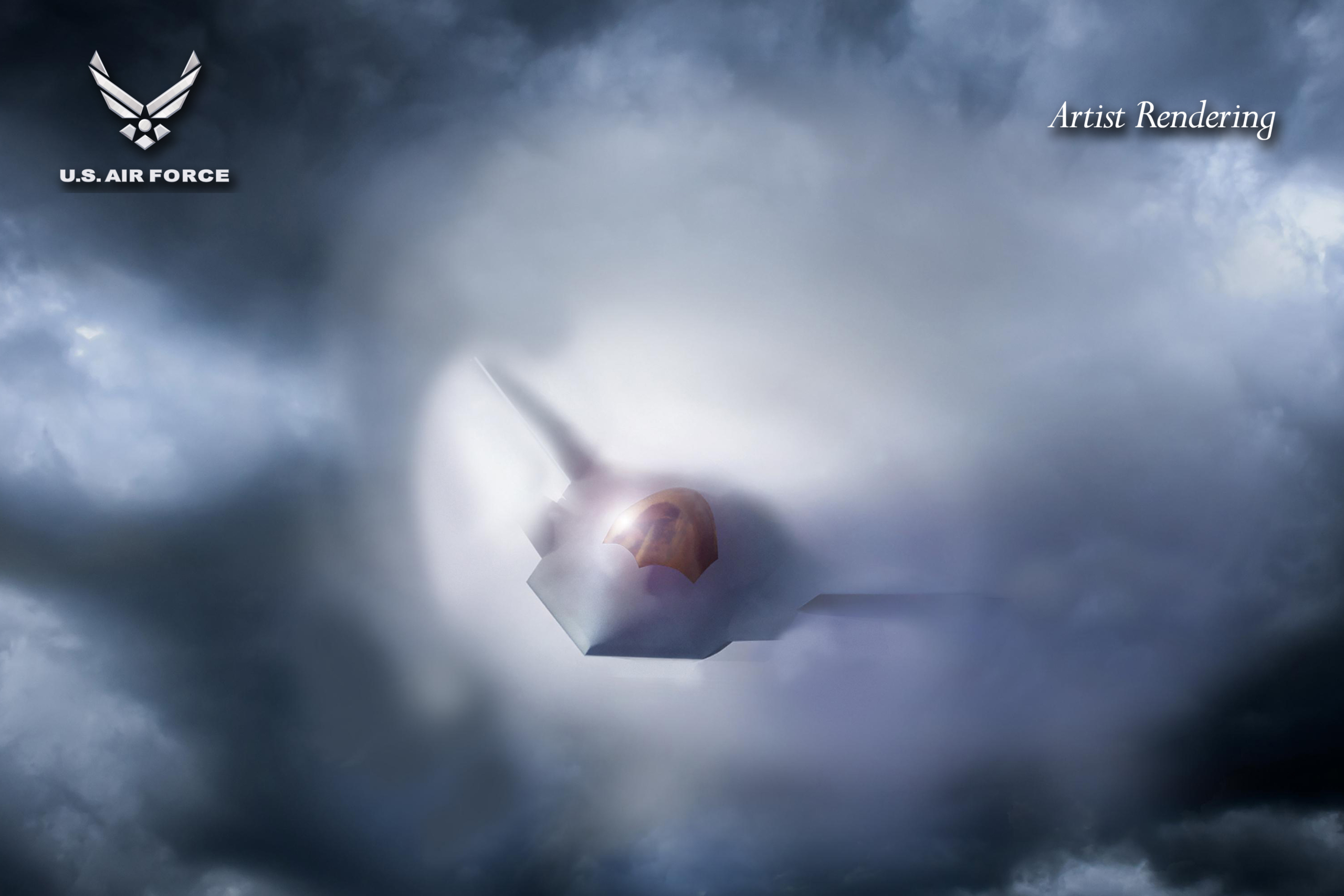
The upcoming Boeing F-47 air-dominance fighter is the manned component of the larger 6th-generation Next Generation Air Dominance (NGAD) programme.
NGAD, as an operational/family-of-systems concept, includes Collaborative Combat Aircraft (CCA) and other next-generation technologies supporting the ecosystem. Many of these technologies are directly related to F-35s and other fighters.
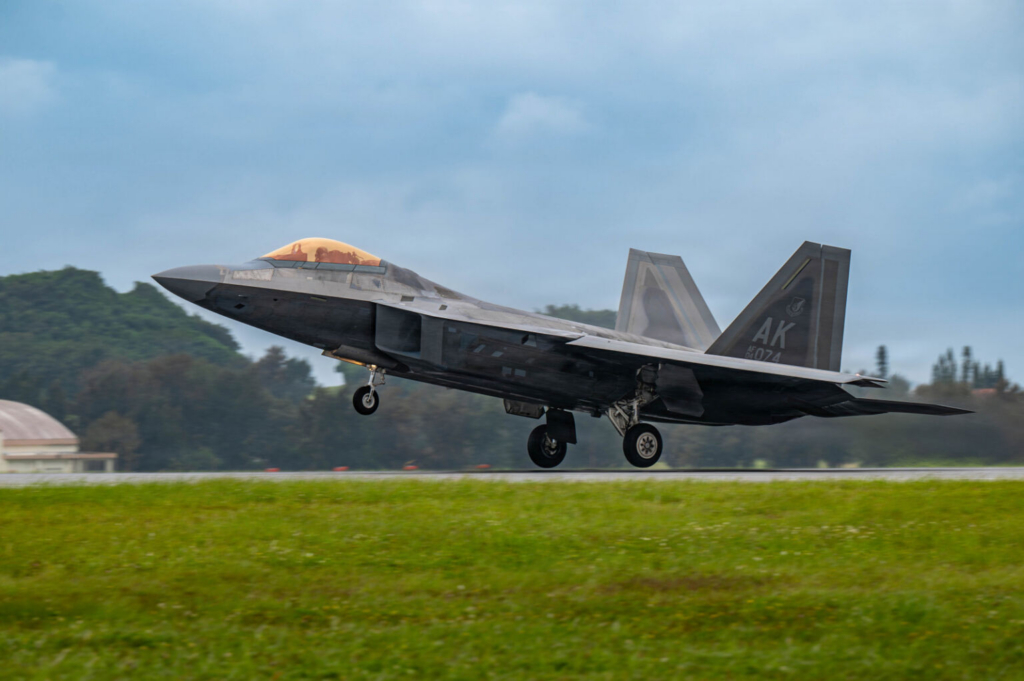
The best comparison for the F-47 is the F-22 Raptor, as that is the aircraft it is being designed to replace, while the F-35 is the aircraft it is designed to complement.
The F-22 was conceived as an air-superiority fighter at a time when combat aircraft relied more heavily on their own sensors and support from platforms such as AWACS. By contrast, the F-35 was designed from the outset as a highly networked sensor and data-sharing platform.
The F-22 may take cueing from off-board platforms like ground-based radars, but it is the platform likely to strike enemy fighter jets. An F-35 can identify and track a target, pass the relevant information through the network, and enable another platform such as a Typhoon to engage it or engage the target itself.
| US Air Force’s 5th/6th gen fighters | F-22 Raptor | F-35 Lightning II | F-47 |
| Combat radius | 590 nm | 670 nm (F-35A) | >1,000 nm |
| Number planned | 187 produced | 1,763 F-35As (USAF only) | At least 185 |
| Expected service date | 2005-2040s | 2016-2080s | Late 2020s/ early 2030s (planned) |
| Primary role | Air dominance | Stealth multirole fighter; strike, air-to-air, ISR and sensor/network node | Next-gen air dominance / penetrating counter-air; crewed node for MUM-T and NGAD family of systems |
This is an oversimplification, and as time goes on, the distinctions increasingly blur. The F-22 is undergoing a range of mid-life updates that will see its networking enhanced, and it is expected to be the first fighter jet to be paired with CCAs by 2029.
Why the F-47 was designed for long-range combat and drone teaming
One often misunderstood aspect of the F-47 is that it is not just replacing the F-22; it is fundamentally designed to operate alongside the F-35. The F-22 is the F-47’s direct predecessor, while the F-35 is its principal complementary fighter within the wider US tactical-airpower architecture.
The F-47 is intended to take the concepts of the fighter as a networked node, sensor-fusion platform, and mission coordinator considerably further. While the F-22s and F-35s are being modified to operate future CCAs, the F-47 will be designed from the outset for Manned-Unmanned Teaming (MUM-T).

With the F-47, the emphasis appears to shift further towards long-range sensing, networking and command-and-control. The aircraft will still be able to directly engage in air-to-air combat.
An infographic released by the Air Force shows the F-35A with a combat radius of 670 nautical miles, the F-22 with a combat radius of 590 nautical miles, and the F-47 with a combat radius of 1,000+ nautical miles. The F-22’s range is increasingly seen as an issue in the Pacific.
F-47 vs F-35: Air-dominance specialist versus multirole workhorse
One of the better ways to understand the F-47 and the F-35 is through the lens of their roles. The F-47 is designed for long-range air dominance operations, particularly those envisioned in the Indo-Pacific.
The US Air Force currently plans to acquire at least 185 of the fighters (a one-for-one F-22 replacement). This is low by USAF standards; initially, the force had plans to procure 750 F-22s.
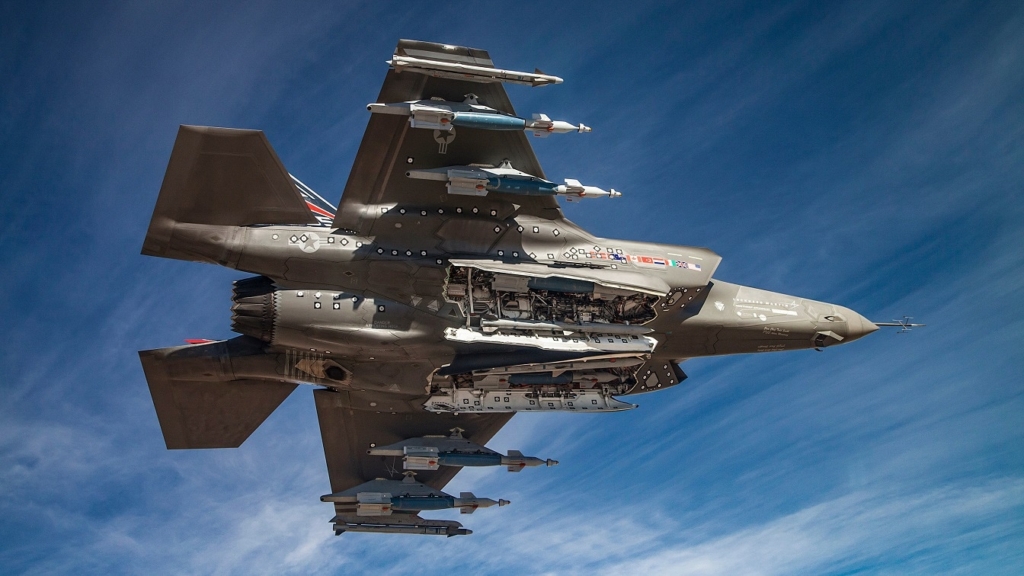
By contrast, the programme record for the F-35 remains at 1,763 fighter jets, plus the Marine Corps’ 420 F-35s and the Navy’s 273 F-35s. The Air Force is also moving to increase its F-15EX procurement target to 267, also more than the F-47.
The F-35 is designed as a stealthy strike fighter with an emphasis on penetrating enemy air defences and conducting SEAD and DEAD roles. But it is also a multirole fighter designed to be able to carry out a broad range of tasks and to be comparatively affordable, allowing it to be procured in decent numbers.
What advantages will the F-47 have over the F-35?
Compared with the F-35, the F-47 will be stealthier, longer-ranged, faster, have more advanced thermal management, be more networked, generate more electrical power, and so on.

It is not possible to explain all of these here, but it’s important to note that the apparent tailless design is perhaps more distracting than helpful for many onlookers. Removing the tails will help reduce the Radar Cross-Section, but these designs have been around for decades (e.g., McDonnell Douglas A-12 Avenger II), and it is not a ‘requirement’ for a 6th-generation fighter.
Two of the most important sets of innovations for the F-47 will be mostly hidden from view. One is that the fighter jet is widely expected to be powered by adaptive-cycle engines, which will increase fuel efficiency and improve thermal management. (Its final propulsion architecture hasn’t been confirmed.) The other factor is thermal management.
One of the greatest engineering constraints of next-generation fighter jets is the extent to which the aircraft can manage and reject heat (like a smartphone overheating). The heat is generated by AESA radars, EW, high-power processors, high-bandwidth comms, potentially lasers, and more.
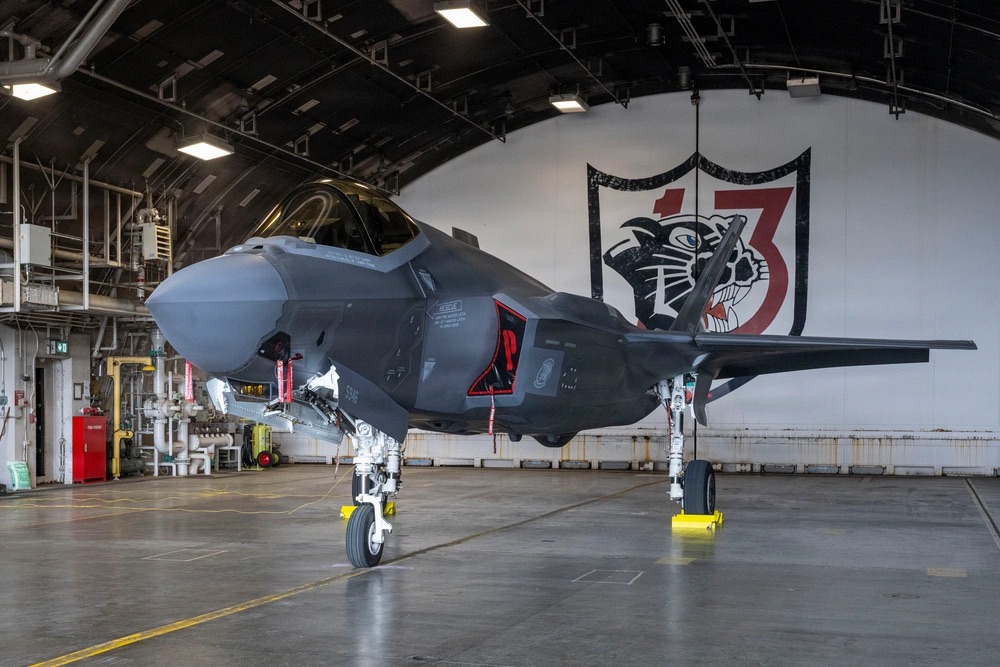
The F-35 has one of the most advanced thermal management systems in the world, allowing it to incorporate Block 4 upgrades. But it is unclear what fundamental limitations in its thermal management will limit a future Block 5 upgrade.
The F-47 is being designed to be able to incorporate a much greater electrical suite and handle the heat generated.