


Cloud seeding: How it works and the aircraft that do it

3 min read
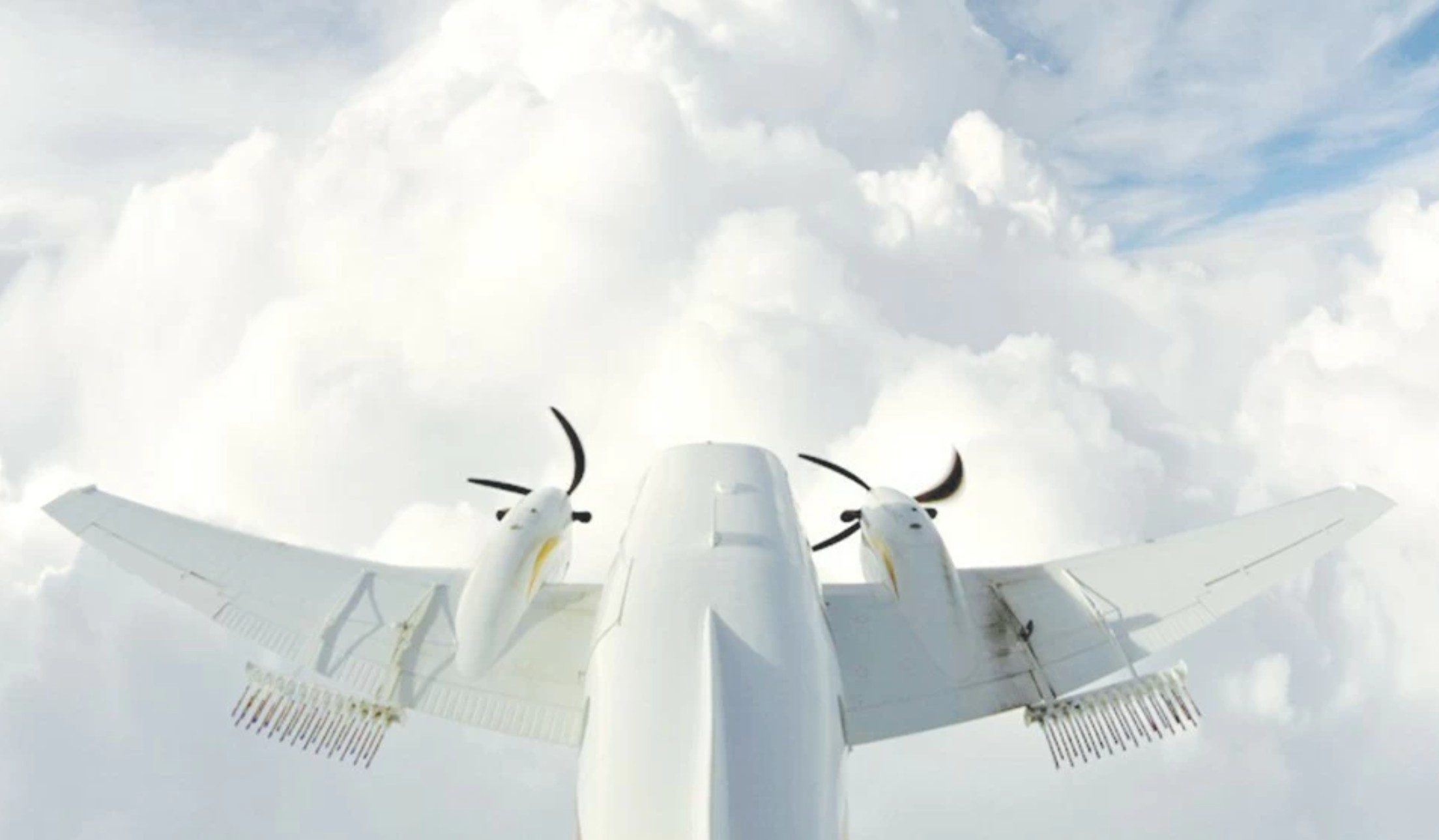
Cloud Seeding is a human-induced weather modification technique to alter precipitation and climate patterns. It is achieved by dispersing specialised substances, such as potassium iodide and silver iodide, into the clouds to encourage the formation of larger raindrops and snowflakes. Cloud seeding programs utilise multiple techniques, including ground-based generators and special-mission aircraft, to deliver these substances into clouds.
The primary objective of cloud seeding is to enhance rainfall and snowfall in the areas where it is needed the most, particularly in drought-prone regions. The dispersed substances create minuscule drops of vapour and ice nuclei in clouds, allowing them to accumulate into larger pellets.
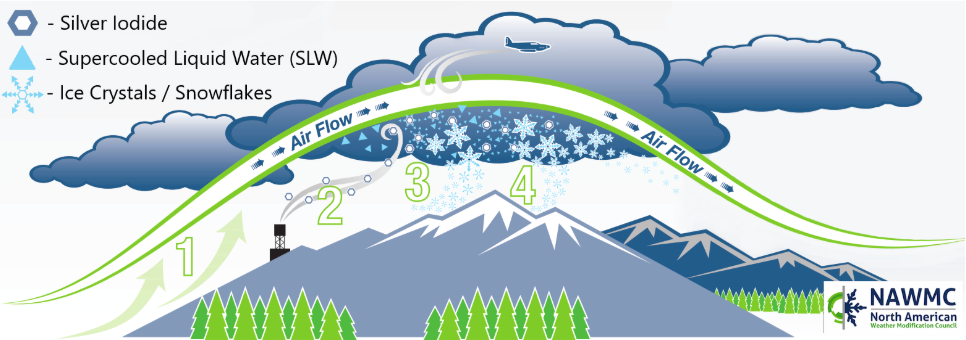
With increased precipitation, large cloud pellets become heavy, resulting in rainfall or snowfall. Cloud seeding is also used to minimise the effects of thunderstorms and hailstorms, preventing land and property damage.
The effectiveness of cloud seeding
The effectiveness of cloud seeding largely depends on the environment and the seeding mechanism utilised. Seeding altitude, presence of moisture in the clouds, and surrounding atmospheric conditions determine the effectiveness of the process.
The DRI Cloud Seeding Research Program utilises remotely operated ground-based generators to release silver iodide (Agl) into the atmosphere. Researchers place ground generators at higher elevations to allow the released substance to travel upwards and act as a nucleating agent upon reaching the clouds.
Aerial cloud seeding offers greater success rates
Aerial cloud seeding is the most effective way of seeding clouds, particularly at higher altitudes.
Aircraft spray iodide substances using specialised flares at different altitudes depending on the type of cloud and availability of moisture.
Aerial cloud seeding is performed for a variety of reasons, including recharging groundwater supplies in desert regions, fighting droughts, or minimising the impact of wildfires.
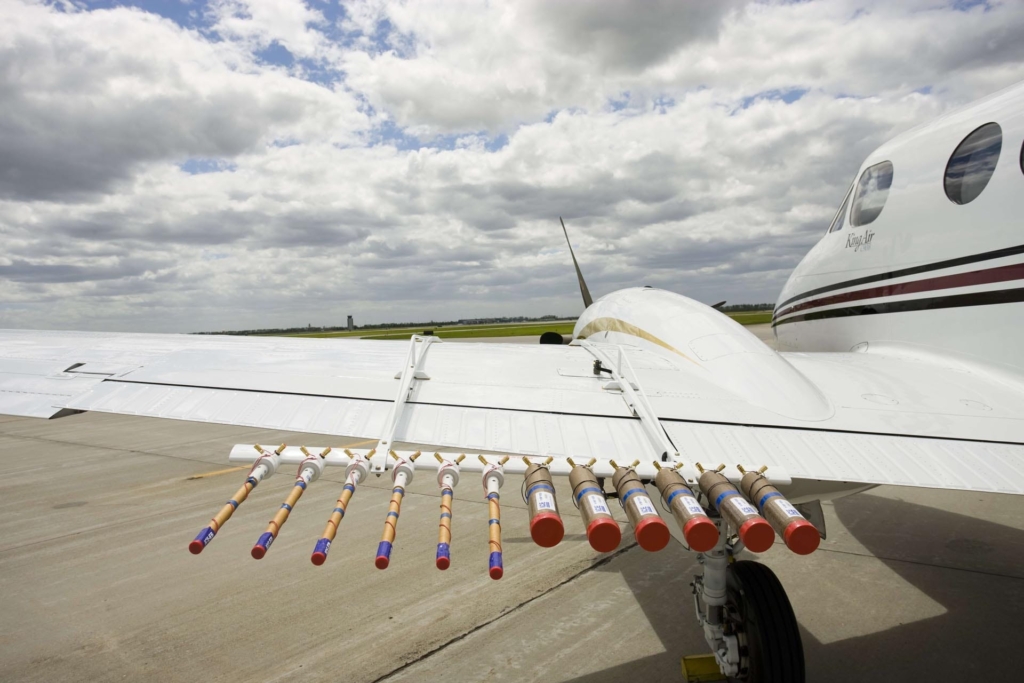
Aerial cloud seeding programs generally utilise General Aviation (GA) aircraft because of their flexibility and aftermarket modification capabilities. A range of aircraft types, including fixed-wing, turboprops, and remotely controlled unmanned aerial vehicles (UAVs), can be configured for cloud seeding missions. The type selection depends on the capability, seeding technology, desired outcome, and environmental constraints.
The common types of aircraft used for cloud seeding are Beechcraft King Air, Cessna Caravan, and Piper Seneca II. With the ability to fly at higher speeds and altitudes, these aircraft offer greater effectiveness at diverse locations.
Special Mission Beechcraft King Air 350
The modified Beechcraft King Air 260/350 is the most commonly used type for cloud seeding, thanks to its design and adaptability for weather and atmospheric research. Fargo Jet Center, an expert in aircraft modification for special missions, has modified more than 100 King Air 350s, installing specialised equipment for aerial dispersion and measurement missions.
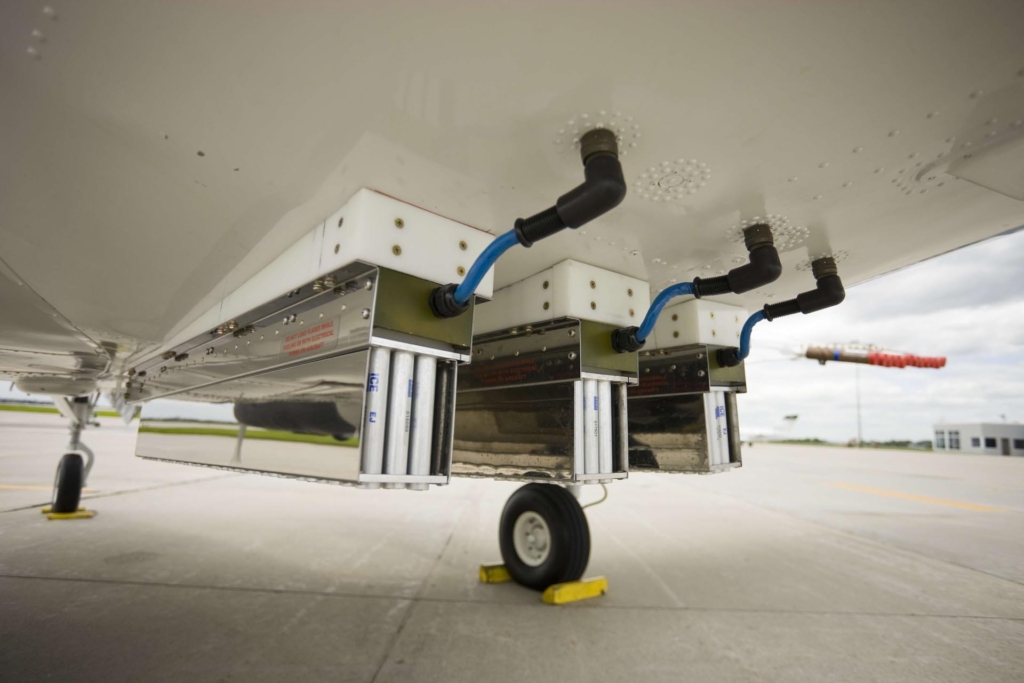
A typical cloud seeding modification includes installation of:
- Fuselage ejectable flare rack
- Left and right burn-in-place flare racks
- Firing control boxes
- Datalogger
- GPS antenna
- Cockpit display, and
- Supplemental operating manuals
- Benefits of aerial cloud seeding
Unlike ground-based methods, aerial cloud seeding allows greater control and flexibility to achieve desired results. While clouds carry water, not all clouds are capable of enhancing precipitation.
Aerial cloud seeding targets specific clouds at different altitudes to achieve the right amount of moisture, temperature, and wing conditions. Aerial cloud seeding research continues worldwide to alleviate the ecological impacts of drought, hailstorms, and wildfires.
Featured Image: Fargo Jet Center


