Airbus unveils U145 uncrewed helicopter based on proven H145 platform

5 min read
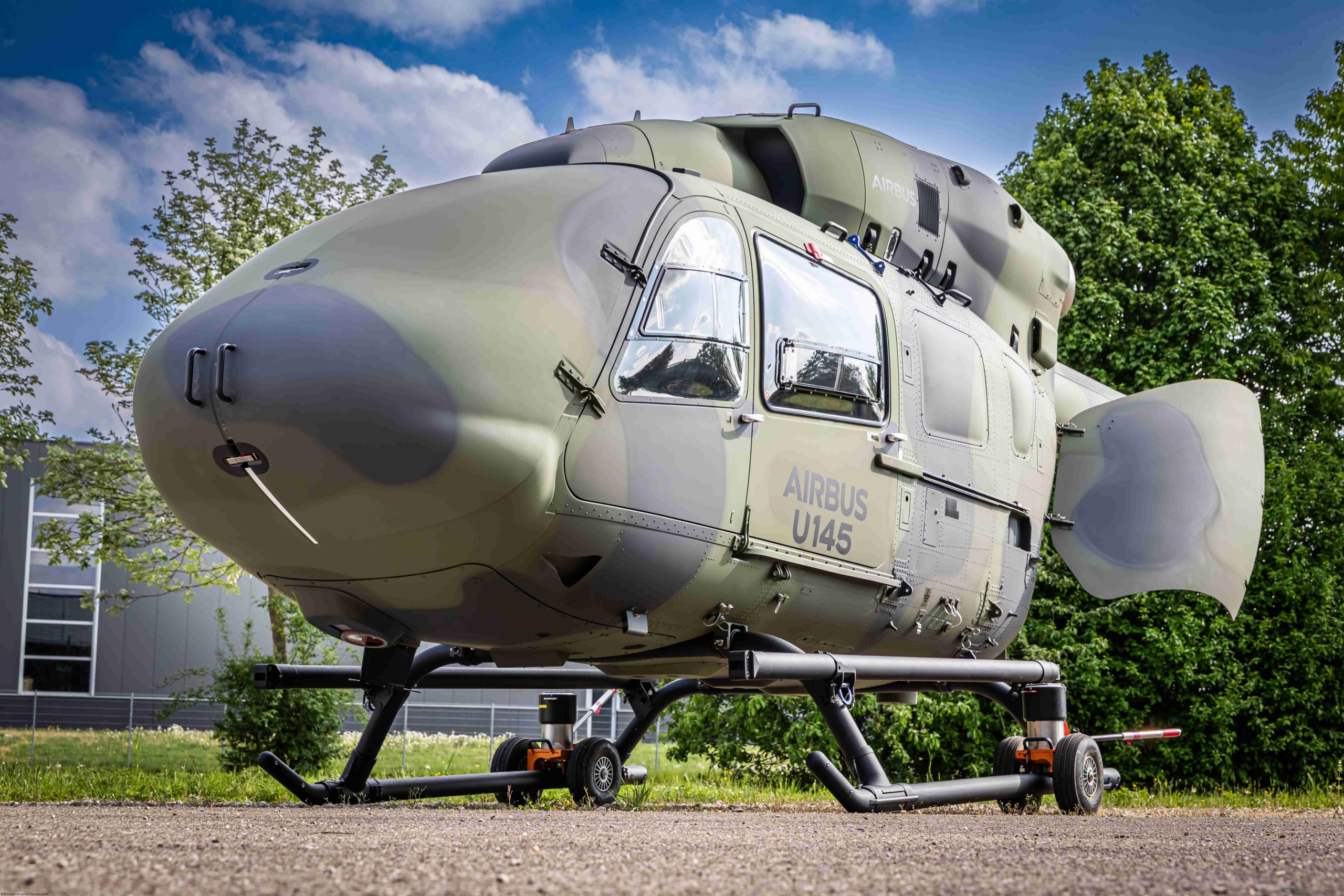
Airbus Helicopters has unveiled plans for the U145, an autonomous and uncrewed derivative of its widely used H145, marking the company’s latest step towards integrating proven rotorcraft into the rapidly evolving world of autonomous aviation.
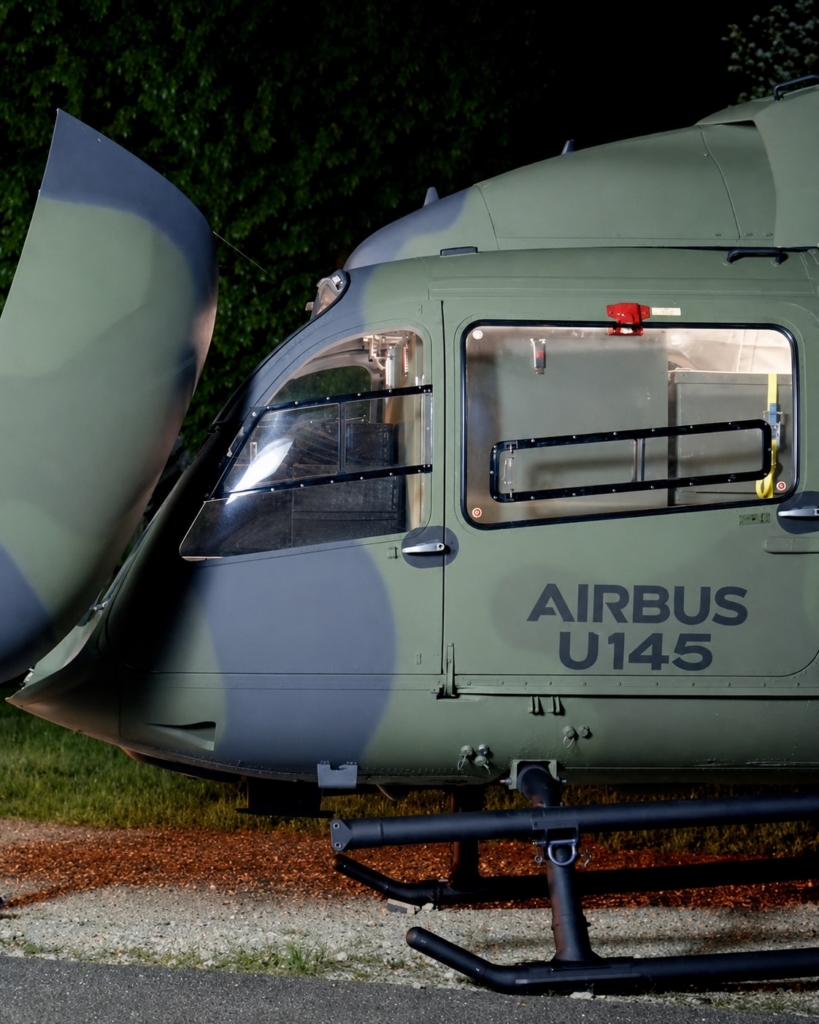
The aircraft was formally introduced at the ILA Berlin Air Show, where Airbus displayed a full-scale mock-up of the new platform.
A maiden flight with a safety pilot on board is planned for the end of 2026, while entry into service is targeted for the early years of the next decade.
Unlike many emerging uncrewed aircraft programmes, the U145 is not a clean-sheet design. Instead, Airbus is building on a platform that is already established in military, emergency services, law enforcement and commercial operations around the world.
That decision offers an insight into how the European manufacturer sees the future of rotorcraft autonomy: not as a replacement for conventional helicopters, but as an evolution of them.
“With the U145, we are offering our customers an autonomous, uncrewed version of our H145 helicopter – combining the proven airframe, power and useful load of the H145 with the autonomy of a UAS,” said Matthieu Louvot, chief executive of Airbus Helicopters.
“To develop the U145 and its capabilities as a multi-mission UAS, we will be teaming up with leading autonomous mission partners to further expand the UAS ecosystem in Europe,” he added.
Airbus U145 builds on proven H145 helicopter platform
The choice of the H145 as the basis for the programme is significant. Few helicopters in its class have accumulated such a broad operational record.
More than 1,800 helicopters from the H145 family are currently in service worldwide, supporting military, parapublic and civil missions. Collectively, the fleet has logged more than 8.5 million flight hours.
The twin-engine helicopter has become a familiar sight in air ambulance operations, police aviation units, offshore transport, search and rescue missions and military fleets across Europe, North America, Asia and the Middle East.
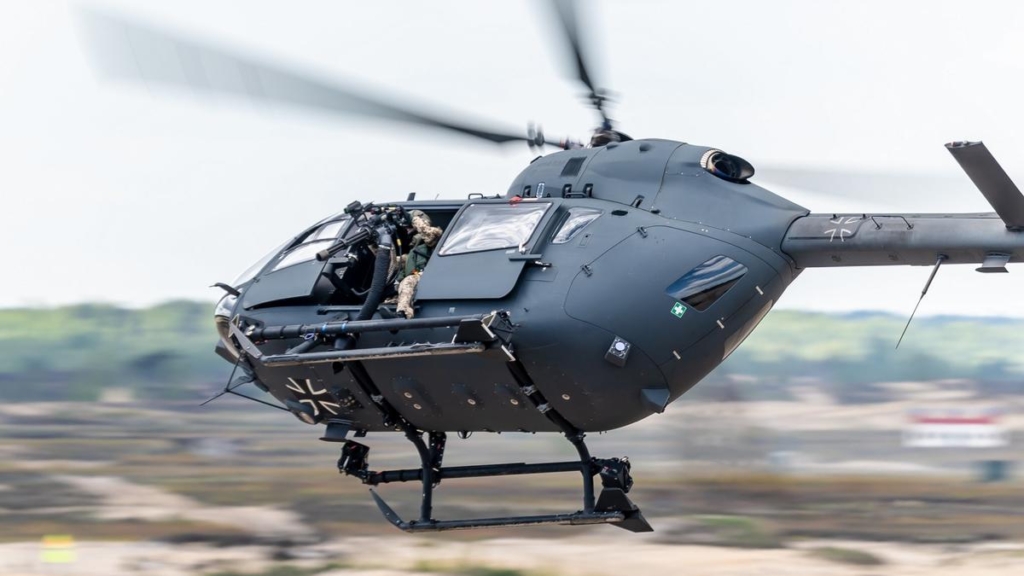
Powered by two Safran Arriel 2E engines equipped with full authority digital engine control systems, the H145 has built a reputation for reliability, low operating costs and operational flexibility.
Airbus is now attempting to transfer those characteristics into an aircraft that can operate without a pilot.
The U145 will become the second crewed helicopter platform converted into an uncrewed system by Airbus, following the VSR700 programme, which is derived from the Cabri G2 light helicopter.
Uncrewed Airbus U145 removes cockpit for cargo and mission payloads
While the U145 retains the airframe and performance characteristics of the H145, its internal layout differs considerably from the helicopter on which it is based.
Most notably, there is no cockpit.
The aircraft will rely on a dedicated sensor suite and artificial intelligence systems to enable fully autonomous operations.
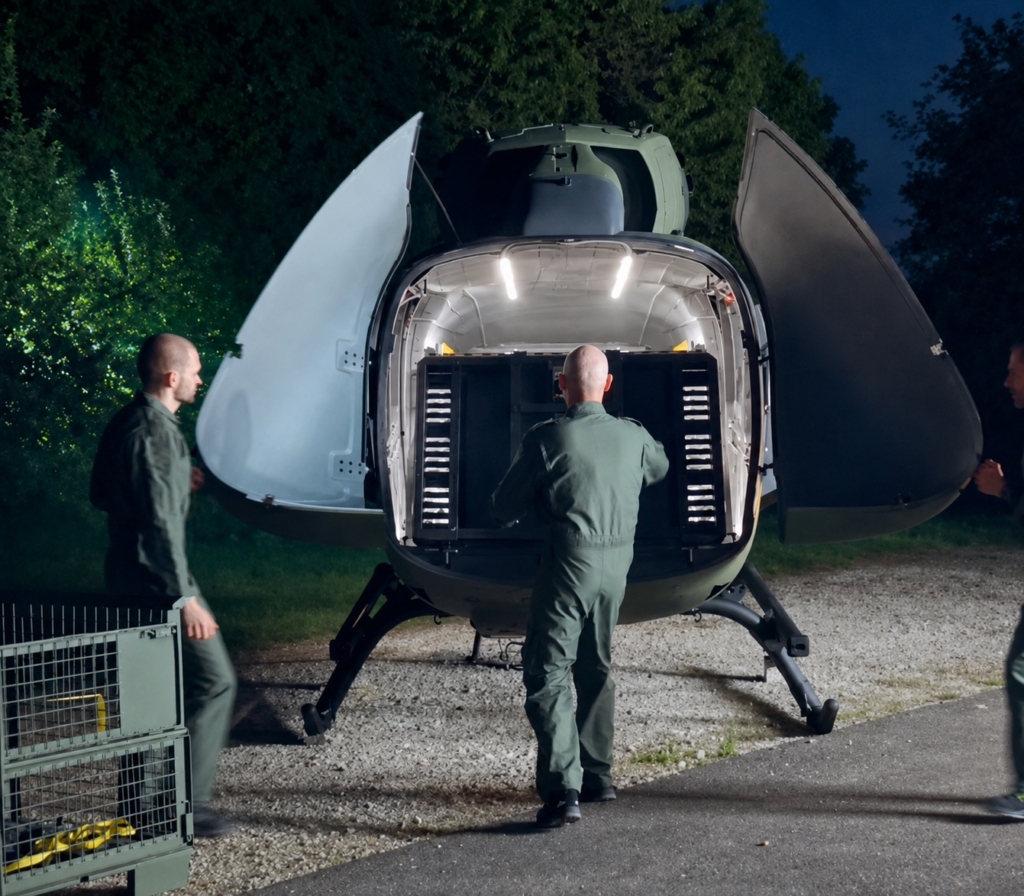
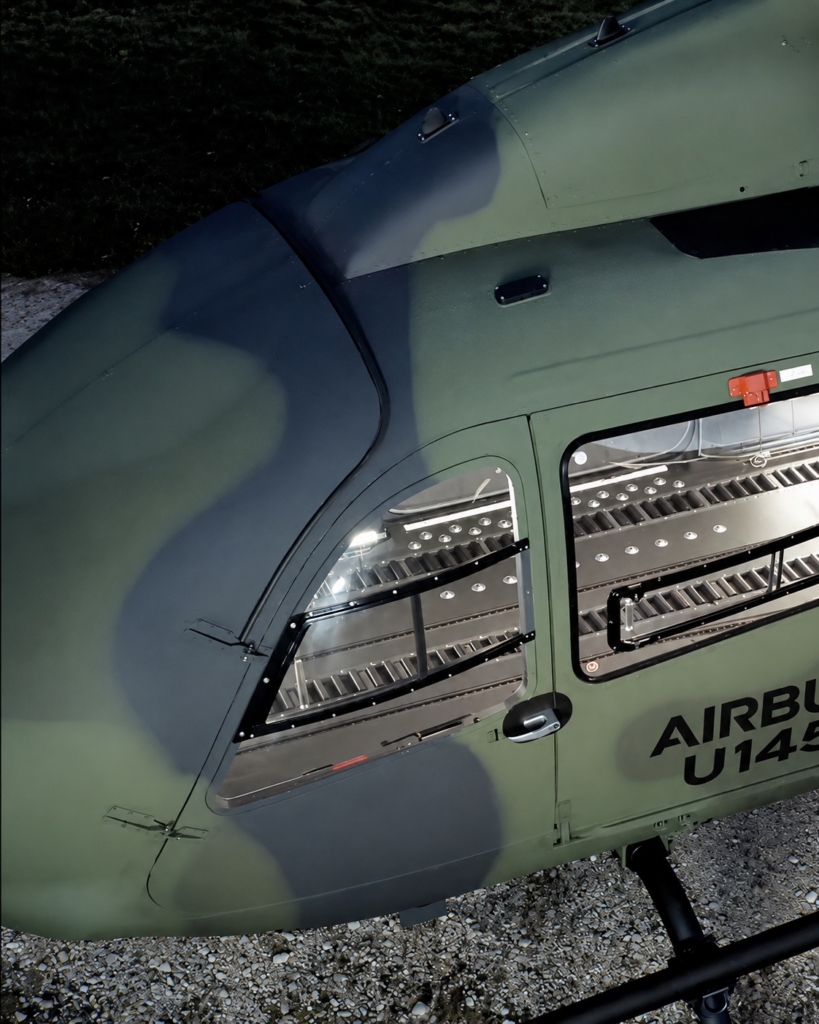
The removal of the cockpit has allowed Airbus to redesign the aircraft around cargo transport and mission equipment.
The U145 will feature an integrated nose-loading door, a foldable loading table and a dedicated cargo floor intended to simplify loading and unloading operations.
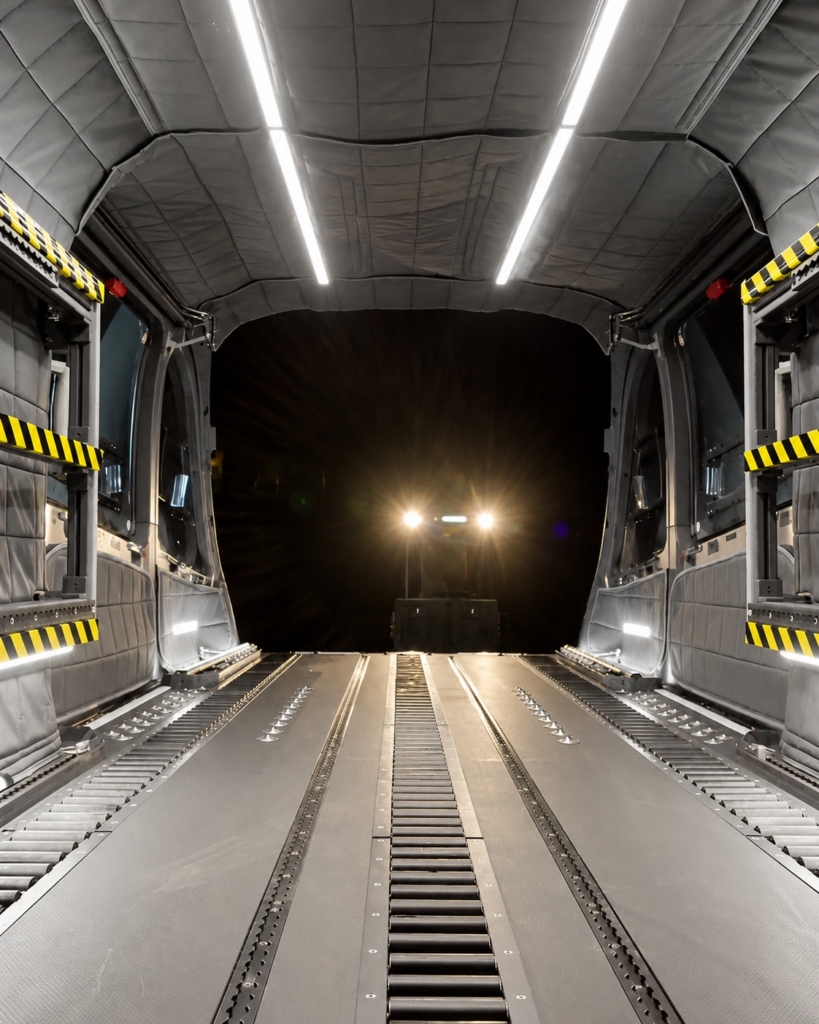
With a maximum take-off weight of 3,800kg, Airbus is positioning the aircraft primarily as a high-volume logistics platform capable of moving supplies into areas where sending crews may be difficult, costly or dangerous.
That focus reflects a wider trend within autonomous aviation.
Cargo operations are increasingly viewed as the most practical entry point for autonomous aircraft because they eliminate the challenges associated with carrying passengers while still delivering significant operational benefits.
Airbus targets military logistics and battlefield missions with U145
Although logistics is expected to be the aircraft’s primary role, Airbus has designed the U145 as a multi-mission platform.
The company believes the aircraft could support disaster relief operations, emergency response missions and aerial firefighting activities, while military operators could employ it for surveillance, reconnaissance and battlefield resupply.
The programme also reflects changing military thinking about uncrewed systems.
Modern armed forces are increasingly looking beyond traditional drones and towards larger autonomous aircraft capable of carrying meaningful payloads.
Among the concepts being explored for the U145 is the ability to operate as a drone mothership capable of deploying air-launched effects. Airbus is already working with missile manufacturer MBDA in this area.
The aircraft is also expected to support crewed-uncrewed teaming missions, allowing manned aircraft and autonomous platforms to operate together as part of a single mission package.
That concept is becoming increasingly important as militaries seek ways to extend sensor coverage, increase survivability and reduce workload on aircrews.
U145 joins Airbus portfolio of autonomous and uncrewed aircraft
The announcement is about more than a single aircraft.
It forms part of a much broader Airbus effort to develop autonomous and uncrewed systems across multiple domains.
The company’s portfolio already includes the VSR700 rotary-wing drone, the Eurodrone programme, the Flexrotor tactical UAS, the SIRTAP tactical aircraft and the solar-powered Zephyr high-altitude platform.
A key element linking many of those systems is Airbus’s HTeaming architecture.
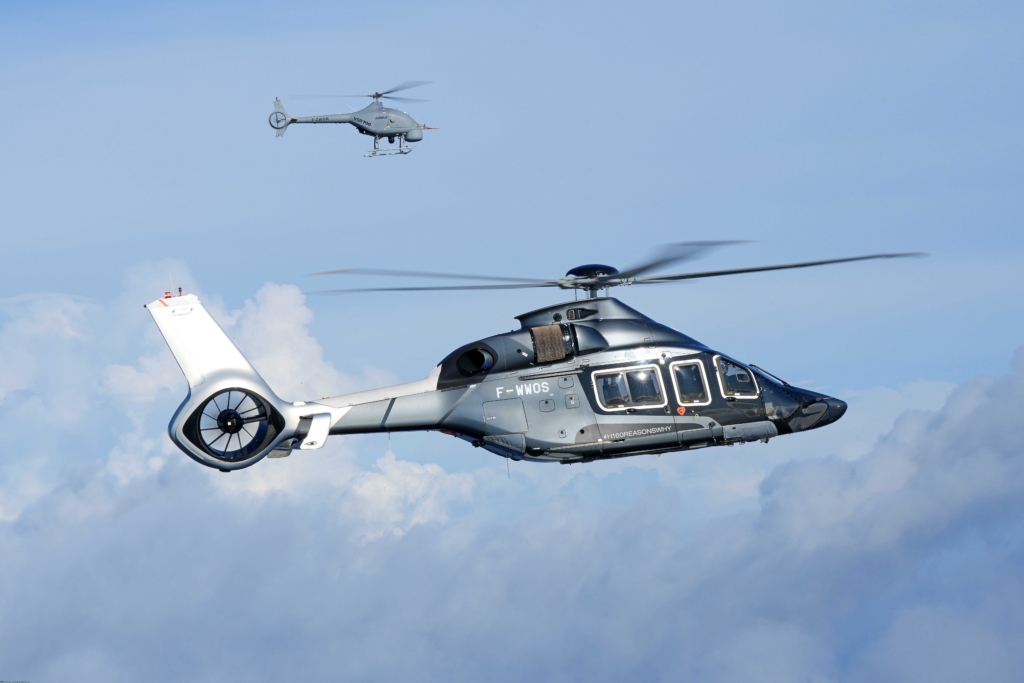
The system allows helicopter crews to control and task uncrewed aircraft directly from the cockpit, integrating sensors and mission data from autonomous platforms into crewed operations.
Airbus describes it as a modular crewed-uncrewed teaming solution that gives helicopter crews direct control of UAS assets during flight.
According to Airbus, HTeaming can operate either as a standalone system or as part of an integrated mission suite, enabling crews to manage reconnaissance, surveillance and other tasks while remaining focused on their primary mission.
The company is also developing MARS Autonomy, a system intended to coordinate missions involving multiple crewed and uncrewed platforms.
Together, these programmes point towards a future in which helicopters, drones and autonomous aircraft increasingly operate as interconnected systems rather than standalone platforms.
Airbus U145 reflects a wider shift to autonomous rotorcraft
Airbus is not alone in pursuing autonomous rotorcraft.
Across the Atlantic, Airbus US Space & Defense is working with Shield AI, L3Harris and Parry Labs on the MQ-72C, a fully autonomous derivative of the UH-72B Lakota being offered to the US Marine Corps.

Sikorsky has converted an ex-US Army UH-60L Black Hawk into the autonomous S70-AS U-Hawk, replacing the cockpit with clamshell doors to create 25% more cargo space and enable uncrewed heavy-lift missions.
The aircraft, developed in just 10 months, is designed to be flown by an operator using a tablet, with autonomous systems handling the flight and future roles including cargo resupply, UGV transport and drone deployment.

For Airbus, however, the U145 represents one of the clearest indications yet that autonomy is moving beyond small drones and experimental demonstrators.
Featured image: Airbus