One standard, many customers: How Aero Excellence is helping global aerospace supply chains scale

7 min read


Across aerospace, defence and space, the challenge facing supply chains is no longer simply whether demand exists. It is whether the industrial base can scale quickly, consistently and reliably enough to meet it.
As manufacturers increase production rates, larger suppliers with multiple sites are being asked to demonstrate that their processes are mature, resilient and repeatable across different locations and customer programmes. They are also being asked to do so in a way that supports collaboration, rather than adding another layer of duplicated assessment.
That is where Aero Excellence aims to play a role.
The programme gives the industry a shared framework for assessing and improving industrial maturity across operational excellence, environmental sustainability and cyber security. For global suppliers, the value is not only in reducing repeated assessments, but in creating a common, mutualised view of maturity that customers and suppliers can use to improve capacity, resilience and consistency across the supply chain.
By giving companies and their customers a single harmonised assessment framework, Aero Excellence supports the collaboration needed for rate ramp-up. Instead of each customer asking a supplier to prove maturity differently, the programme creates a common baseline that can be understood, recognised and acted on across the global aerospace ecosystem.
A shared framework for global ramp-up
For RTX, one of the main attractions of Aero Excellence is its ability to give customers and suppliers a shared language around process maturity.
“At RTX, we recognise the value of having aligned, capable and mature processes,” said Raquel Rivera, SVP Quality and CORE at RTX. “When we found out about Aero Excellence, we were excited because it provides a standard framework for our supply chain and our internal sites to understand the maturity level of our key processes in critical domains, such as manufacturing, supply chain, planning and logistics.”
For a global aerospace ecosystem trying to increase output, that shared framework provides an important foundation. If customers and suppliers are working from different maturity models, improvement can become fragmented. A mutualised assessment gives both sides a common baseline, making it easier to identify constraints, compare strengths and focus improvement activity where it will have the greatest impact.
“If we can have one standard being utilised within our industry, we can eliminate a lot of the redundant work and a lot of the multiple audits that are going on through our supply chain,” Rivera said.
Instead, she said, suppliers can focus their energy on “assessing the maturity of the key processes” and improving them, rather than preparing multiple recovery plans for different OEMs and customers.
RTX is already putting the programme to work across its own network. Rivera said the company assessed about 12 supply chain sites last year, with most coming in at Bronze level, which she described as “a very high bar”. This year, RTX plans to assess another nine internal sites and multiple suppliers, supported by more than 60 assessors trained over the past year.
“We’re very focused on where our strengths are, so that we can continue to benchmark each other,” Rivera said. “We’re also very focused on the areas and the key processes that need to further mature, so that we can deliver the value that our customers are looking for.”
Building consistency across multiple sites
Aero Excellence is not only about reducing duplication. It also provides a way for larger suppliers to show that improvement is being managed consistently across complex, multi-site organisations.
Nexteam Group has been involved in the process since the end of 2023. According to Alexandre Lacombrade, Head of Group Continuous Improvement, the company assessed its first site in 2024 before evaluating three more sites in 2025. All four sites have achieved Bronze level.
Lacombrade noted that the programme has helped turn improvement into a more structured, group-wide activity.
“It allowed our group to better define and better structure an improvement trajectory for the group’s sites,” Lacombrade said. “It was also an opportunity to harmonise practices and align methods and tools between sites.”
That standardisation has value inside the business, but it also changes the way the company engages with customers. For a supplier operating across multiple facilities, a shared maturity framework can help demonstrate that processes are not only improving at one site, but becoming more consistent across the wider group.
“It has allowed, and it allows, us to strengthen trust in our customers,” he said. “It gives us the opportunity to show our commitment and our willingness to raise our maturity.”
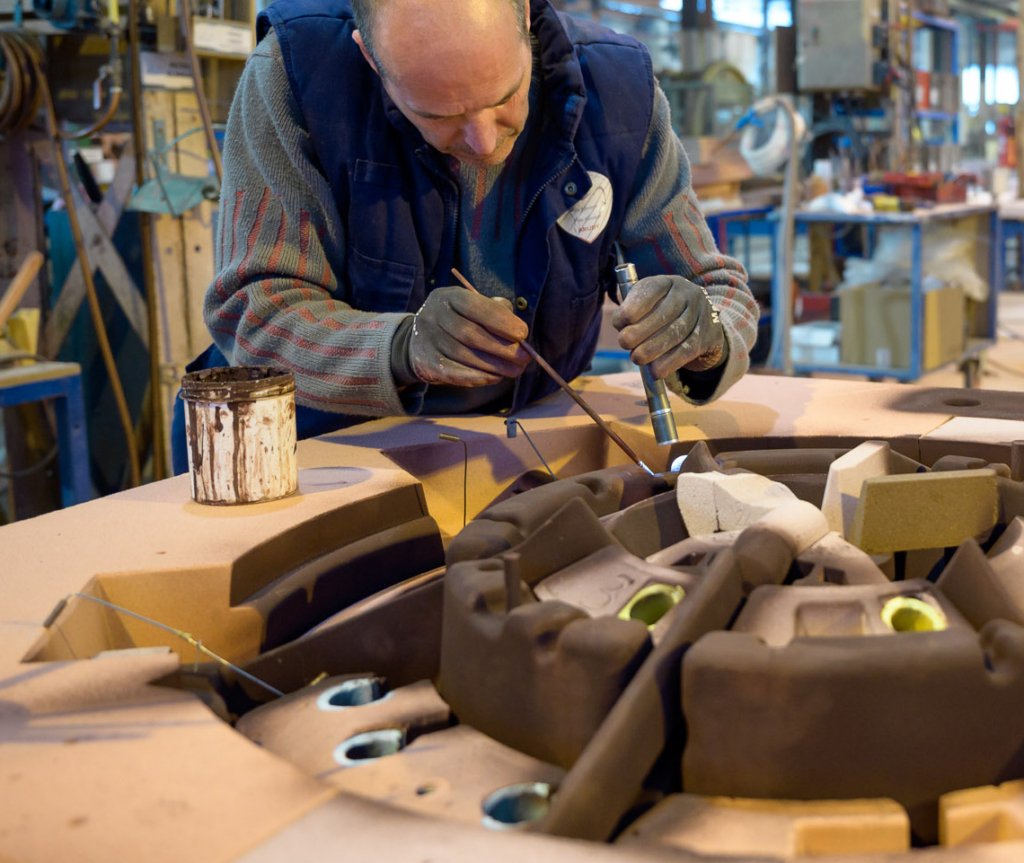
A common benchmark also helps reduce the need for customers to conduct separate maturity checks. Lacombrade said customers had previously approached Nexteam “in a dispersed way” to assess the company’s industrial maturity. Aero Excellence has helped rationalise that process.
“Today, with the fact of being integrated in Aero Excellence, it has allowed us to rationalise maturity assessments,” he said.
For customers trying to secure capacity across a pressured global supply chain, that rationalisation can remove unnecessary friction.
Supporting international competitiveness
The same logic applies beyond Europe. For Amphenol Interconnect India, Aero Excellence is closely linked to international competitiveness and the growing importance of India within global aerospace manufacturing.
For suppliers in fast-growing manufacturing markets, a harmonised assessment can also help demonstrate readiness to international customers without each customer having to start from a different baseline.
Shrikant Gramopadhye, Director Export Marketing at Amphenol Interconnect India, said the Make in India agenda and the interest of global customers in Indian manufacturing were important factors behind the company’s engagement with the programme.
“Most global customers are trying to establish manufacturing out of India,” Gramopadhye said. “The methodology of Aero Excellence, which is for improving international competitiveness, is what motivated us.”
He said the ability to be assessed against operational, environmental and cyber maturity criteria trusted by OEMs worldwide could support business transformation and help the company strengthen its position with customers.
“Aero Excellence has given us a wide perspective of how it can help us in improving operational excellence in terms of supply chain and continuous improvement,” Gramopadhye said. “We are able to map various opportunities for how we can work to improve performance.”
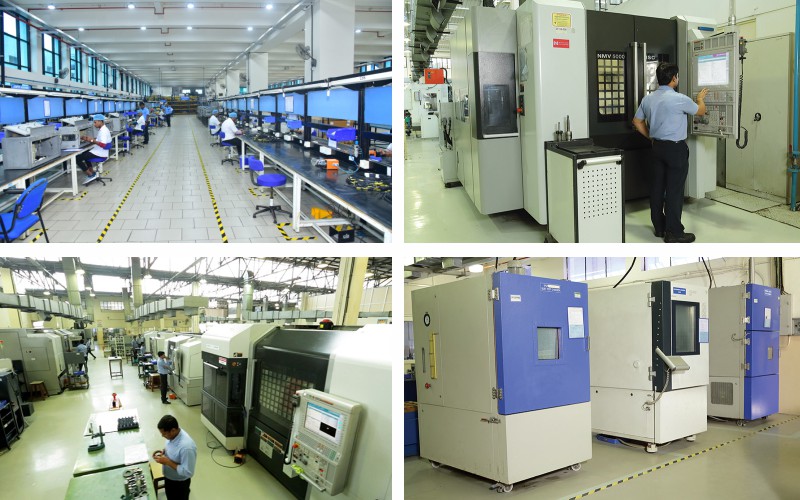
Gramopadhye said another customer even asked to join the process after learning that the company was already being assessed.
“We were getting assessed in India through Aero Excellence, and we got a call from another customer saying they understood we were getting assessed and would like to join the assessment,” he said. “That is where we found that it is definitely helping.”
The example points to one of Aero Excellence’s central promises. If a recognised assessment can be trusted by more than one customer, it can reduce duplication while strengthening confidence across the supplier-customer relationship.
It also supports a more frictionless global supply chain. As aerospace manufacturing becomes more international, suppliers need ways to show that their processes, capacity and improvement plans can meet the expectations of global customers. A single, shared framework can help turn that into a collaborative process rather than a repeated test.
From repeated checks to shared improvement
Aero Excellence is gaining traction at a time when aerospace, defence and space supply chains are under pressure to deliver more output, more reliably and with greater transparency.
For suppliers and customers, the benefit is more than administrative. A mutualised assessment can help both sides collaborate around the same evidence, focus on the same improvement priorities and build greater consistency across the global aerospace ecosystem.
By creating a common language around operational excellence, sustainability and cyber security, Aero Excellence is aiming to help the sector move from repeated assessments to shared improvement.
For manufacturers under pressure to scale without adding unnecessary friction, that shift could be as valuable as the assessment itself.
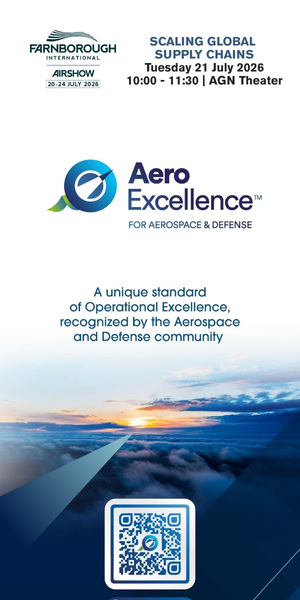
Find out more about Aero Excellence at FIA2026
Aero Excellence International will host the Aero Excellence International Event during Farnborough International Airshow 2026 on Tuesday, 21 July, from 10:00 to 11:00, at the Aerospace Global News Theatre in Hall 3.
The session will include a keynote from Hugo Torres, Managing Director of Aero Excellence International, an industrial panel featuring senior leaders from RTX, Hexcel, Denroy and Safran, supplier testimonies and the Aero Excellence International ’26 Award ceremony.
The event will explore the strategic and operational value of Aero Excellence, how it creates tangible value across global supply networks, and how a shared assessment framework can support a more aligned global aerospace ecosystem.
Sign up for our newsletter and get our latest content in your inbox.